

The Symbolic Language of Flowers in Jewelry
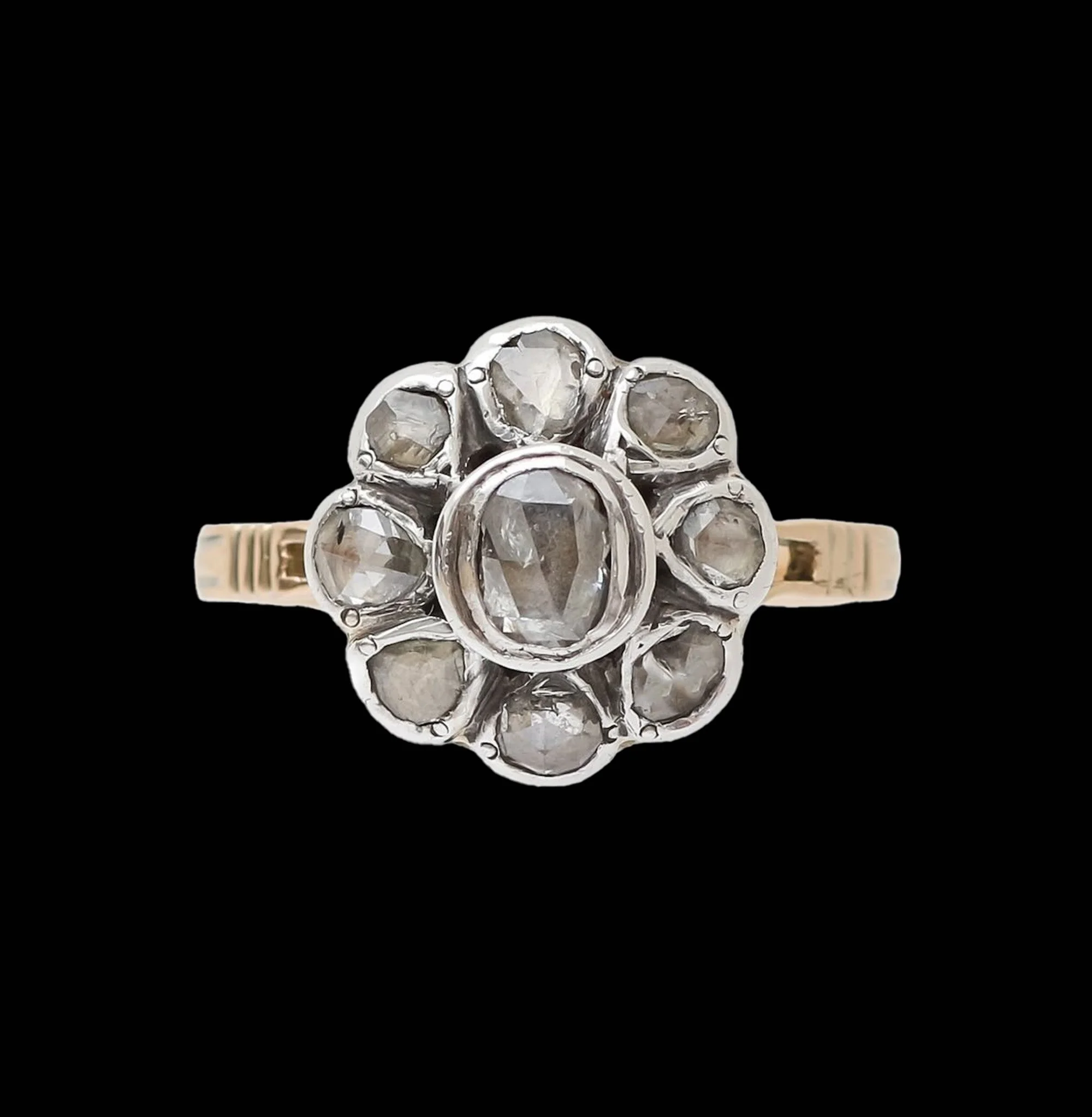
Victorian Daisy
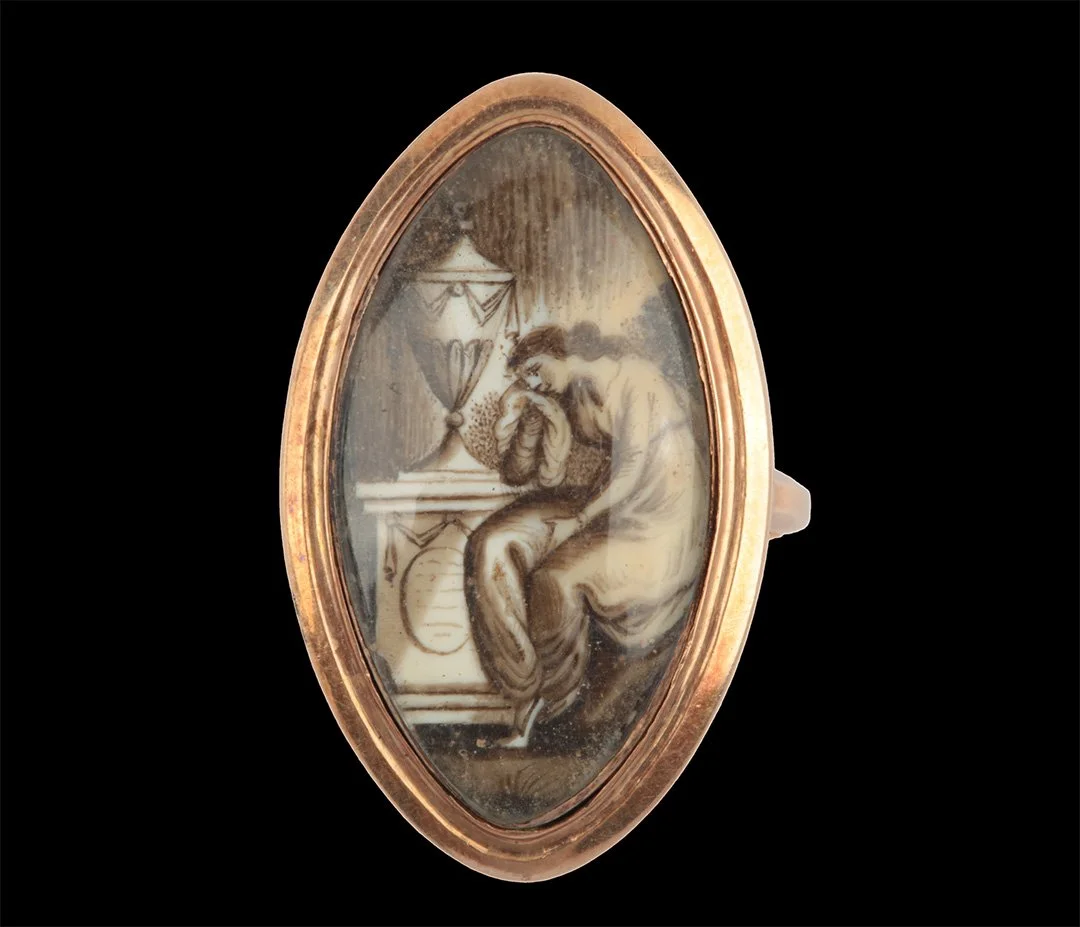
Georgian Weeping Willow
Georgian, Victorian, Belle Époque and Edwardian Symbolism
For centuries, flowers in jewelry were more than ornament. A rose, forget-me-not, lily or pansy could communicate affection, fidelity, remembrance, innocence or grief without a word being spoken. By the nineteenth century, this symbolic vocabulary had developed into an elaborate visual language, shaped by courtship rituals, mourning customs, botanical fashion and the changing aesthetics of European society. Known today as the language of flowers, or floriography, this tradition reached its greatest popular expression during the Victorian period, but its roots extend much further back. Floral imagery appeared throughout Georgian jewelry and was subsequently transformed by the naturalism of the Victorians, the sensuous botanical forms of the Belle Époque and Art Nouveau, and the refined delicacy of Edwardian design.
The meaning of an individual flower was never completely fixed. Contemporary flower dictionaries sometimes assigned different meanings to the same plant, while color, arrangement and context could alter the message. Jewelry should therefore be interpreted as part of a broader symbolic culture rather than as a rigid code. Nevertheless, certain flowers acquired remarkably persistent associations.
Georgian Era: c. 1714–1830
Georgian jewelry often carried intensely personal meaning. Sentimental rings, lockets, brooches and mourning jewels incorporated flowers alongside urns, weeping willows, clasped hands, hearts, hairwork and miniature inscriptions. The natural world provided an ideal vocabulary through which love and loss could be expressed. Floral designs were frequently stylized rather than botanically exact. Flowers might be painted in miniature, carved into gemstones, constructed from seed pearls, represented in enamel or arranged around a memorial inscription.
The rose was among the most enduring symbols of love and beauty. A rosebud could suggest youth or a love not yet fully realized, making it particularly
poignant in memorial jewelry commemorating someone who died young.
The forget-me-not, as its name suggests, became associated with remembrance and enduring affection. Its small blue flowers were particularly suited to
sentimental jewels in which the wearer wished symbolically to preserve the presence of an absent or deceased loved one.
The lily carried associations with purity, innocence and spiritual virtue. In Christian imagery, the white lily was closely connected with the Virgin Mary and
consequently with chastity and divine purity.
The violet was associated with modesty, humility and faithfulness. Its small scale and tendency to grow close to the ground reinforced the idea of
unassuming virtue.
The daisy, with its simple white petals, suggested innocence, childhood and purity. In sentimental jewelry it could convey an affection perceived as
sincere and uncomplicated.
Flowers in Georgian mourning jewelry could be particularly poignant. Combined with hair, pearls or inscriptions recording a name, age and date of death, botanical imagery transformed jewelry into a portable memorial: an intimate object worn against the body.
Victorian Era: 1837–1901
Under Queen Victoria, floral symbolism reached extraordinary levels of popularity. The Victorian fascination with botany coincided with strict conventions governing courtship and social behavior. Flowers consequently offered a means of expressing emotions that could not always be stated openly. Books devoted to the language of flowers proliferated, assigning meanings to individual species and encouraging flowers to be read almost as words in a private correspondence.
The rose remained the supreme emblem of love. Red roses signified passionate affection, while white roses suggested innocence or purity. Rosebuds
could represent youth, beauty and the beginning of love.
The forget-me-not communicated remembrance and enduring attachment. It appeared frequently in sentimental and mourning jewelry, particularly in
enameled rings, lockets and brooches.
The pansy became a particularly charming emblem of remembrance. Its symbolism was reinforced by its French name, pensée, meaning “thought.” To give
a pansy jewel could therefore suggest think of me or you are in my thoughts.
The violet represented modesty, faithfulness and constancy. When combined with other flowers, it could reinforce a message of loyal affection.
The lily of the valley, with its tiny white bells, was associated with purity, sweetness and the return of happiness. Its delicate form made it especially suited to
jewels celebrating marriage and romantic devotion.
The Orange blossom became strongly associated with marriage, chastity and bridal virtue. Queen Victoria's use of orange blossom in her bridal attire helped
strengthen its nineteenth-century association with weddings. Wreaths and sprays of orange blossom consequently appeared in bridal jewelry and accessories.
Ivy represented fidelity, attachment and enduring affection. Because the plant clings tenaciously to its support and remains evergreen, it provided a particularly
apt metaphor for constancy.
The acacia could signify enduring affection and remembrance and was particularly appropriate to memorial imagery.
The daisy retained its associations with innocence and purity, while primroses could suggest youth or young love.
The fuchsia, geranium, carnation and chrysanthemum also entered the increasingly expansive Victorian floral vocabulary, although their precise meanings
could vary between published flower dictionaries.
Flowers frequently appeared together. A Victorian bouquet jewel might therefore function almost like a sentence: a rose for love, a forget-me-not for remembrance and ivy for fidelity combining to create a message of enduring devotion.
Belle Époque: c. 1871–1914
During the Belle Époque, floral jewelry underwent an important transformation. Symbolism remained significant, but increasingly the flower itself—its movement,
asymmetry and fleeting natural beauty—became the subject. This development reached its most expressive form in Art Nouveau jewelry, where flowers were not merely decorative motifs but manifestations of nature's cycles of growth, sensuality, transformation and decay. Orchids, irises, lilies, poppies and exotic blossoms replaced some of the more conventional Victorian bouquets. Designers studied plants closely, reproducing curling stems, opening petals and irregular silhouettes in enamel, horn, glass, gemstones and precious metals.
The orchid suggested exoticism, rarity and sensual beauty. Its unusual forms made it particularly attractive to Art Nouveau designers fascinated by the mysterious
and unconventional aspects of nature.
The iris carried long-standing associations with faith, wisdom and hope, but its elegant, curving petals also made it ideally suited to the sinuous lines of Art Nouveau.
The lily retained associations with purity while simultaneously acquiring a more sensual visual character in fin-de-siècle design. Its elongated petals and dramatic
silhouette allowed artists to explore the boundary between innocence and seduction.
The poppy could evoke sleep, dreams and death—associations derived partly from the narcotic properties of opium poppies and from older mythological traditions.
In late nineteenth-century jewelry its languid form fitted perfectly with the era's fascination with dreams and altered states.
The chrysanthemum, influenced partly by the European enthusiasm for Japanese art, became admired for its complex radial form. Japanese botanical imagery
profoundly affected European decorative arts during this period.
The wisteria likewise entered the Western decorative vocabulary through the fascination with Japanese aesthetics. Its cascading blossoms lent themselves to
the flowing lines characteristic of Art Nouveau.
Rather than simply stating “remember me” or “I love you,” Belle Époque floral jewelry could suggest something broader: the transience of beauty itself.
Edwardian Era: c. 1901–1914
Edwardian jewelry returned flowers to an atmosphere of extraordinary refinement. Advances in platinum working allowed jewelers to create delicate, almost weightless structures resembling lace, garlands and embroidered fabric. Where Georgian flowers could be intimate and symbolic and Victorian flowers densely sentimental, Edwardian flowers often appeared as elegant garlands, wreaths, bows and swags, executed in platinum, diamonds and pearls.
The rose continued to signify love and beauty, and was frequently rendered as part of a formal garland rather than as an isolated sentimental emblem.
The lily of the valley remained associated with purity and happiness and was especially compatible with the delicacy of Edwardian jewelry.
Laurel leaves and wreaths, although botanical rather than floral, carried classical associations with victory, achievement and honor and frequently
appeared within the period's neoclassical vocabulary.
Forget-me-nots and violets continued the nineteenth-century traditions of remembrance, modesty and faithfulness.
The daisy and other small blossoms were particularly suited to diamond cluster jewelry. Their radial arrangement could be translated naturally into a
central gemstone surrounded by smaller stones, creating a flower that sparkled rather than faded.
Garlands themselves carried meaning. Wreaths and continuous arrangements could suggest eternity, unity and enduring affection, while their classical ancestry connected Edwardian jewelry with eighteenth-century aristocratic taste.
A Garden of Meaning
Throughout the two centuries of jewelry, flowers provided jewelers with a remarkably adaptable symbolic vocabulary.
Rose — love, beauty, passion
Rosebud — youth, innocence, emerging love
Forget-me-not — remembrance, enduring affection
Pansy — thought, remembrance, “think of me”
Violet — modesty, faithfulness, humility
Lily — purity, innocence, spiritual virtue
Lily of the valley — purity, sweetness, return of happiness
Orange blossom — marriage, chastity, bridal love
Daisy — innocence, purity, youthful affection
Ivy — fidelity, attachment, constancy
Primrose — youth and young love
Acacia — remembrance and enduring affection
Orchid — rarity, exotic beauty and sensuality
Iris — faith, hope and wisdom
Poppy — sleep, dreams and remembrance of death
Chrysanthemum — complex meanings varying by culture, increasingly important through Japanese influence
Wisteria — beauty and botanical elegance, strongly associated with Japanese-influenced decorative design
Laurel — victory, honor and achievement
Yet the most important characteristic of floral jewelry is not that every blossom possessed one immutable definition. Its power came from association. A flower could recall a garden, a wedding bouquet, a courtship, a person or a grave. Unlike an inscription, it did not have to declare its meaning openly. It could preserve a private message between giver and wearer. This ambiguity is part of what makes historic floral jewelry so compelling today. A flower fashioned in gold and gemstones preserves something that the living flower cannot: a moment that refuses to disappear.
The rose does not wither.
The forget-me-not does not fade.
The garland remains unbroken.
In jewelry, the ephemeral flower was transformed into an enduring object of memory.