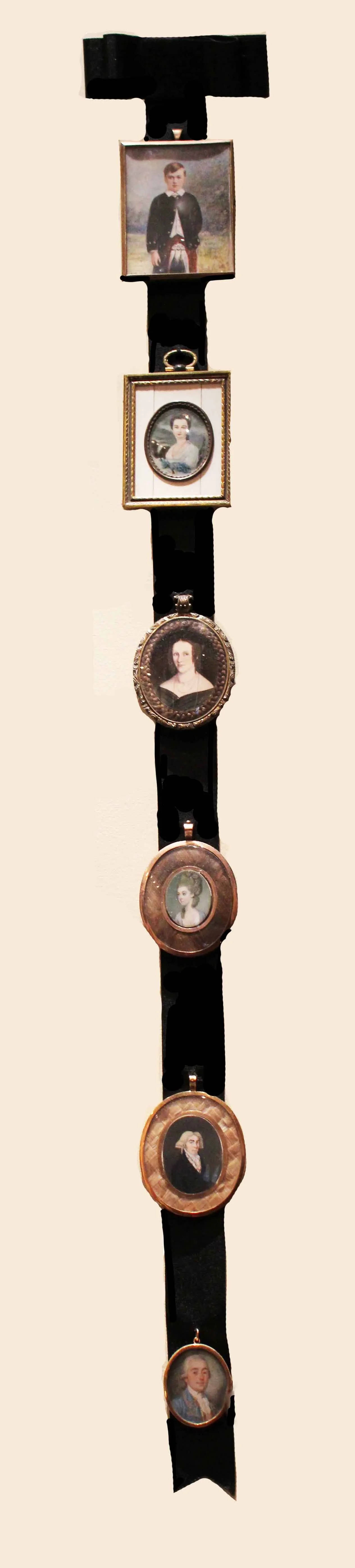
Portrait Miniatures: The Intimate Art Preserved in Miniature
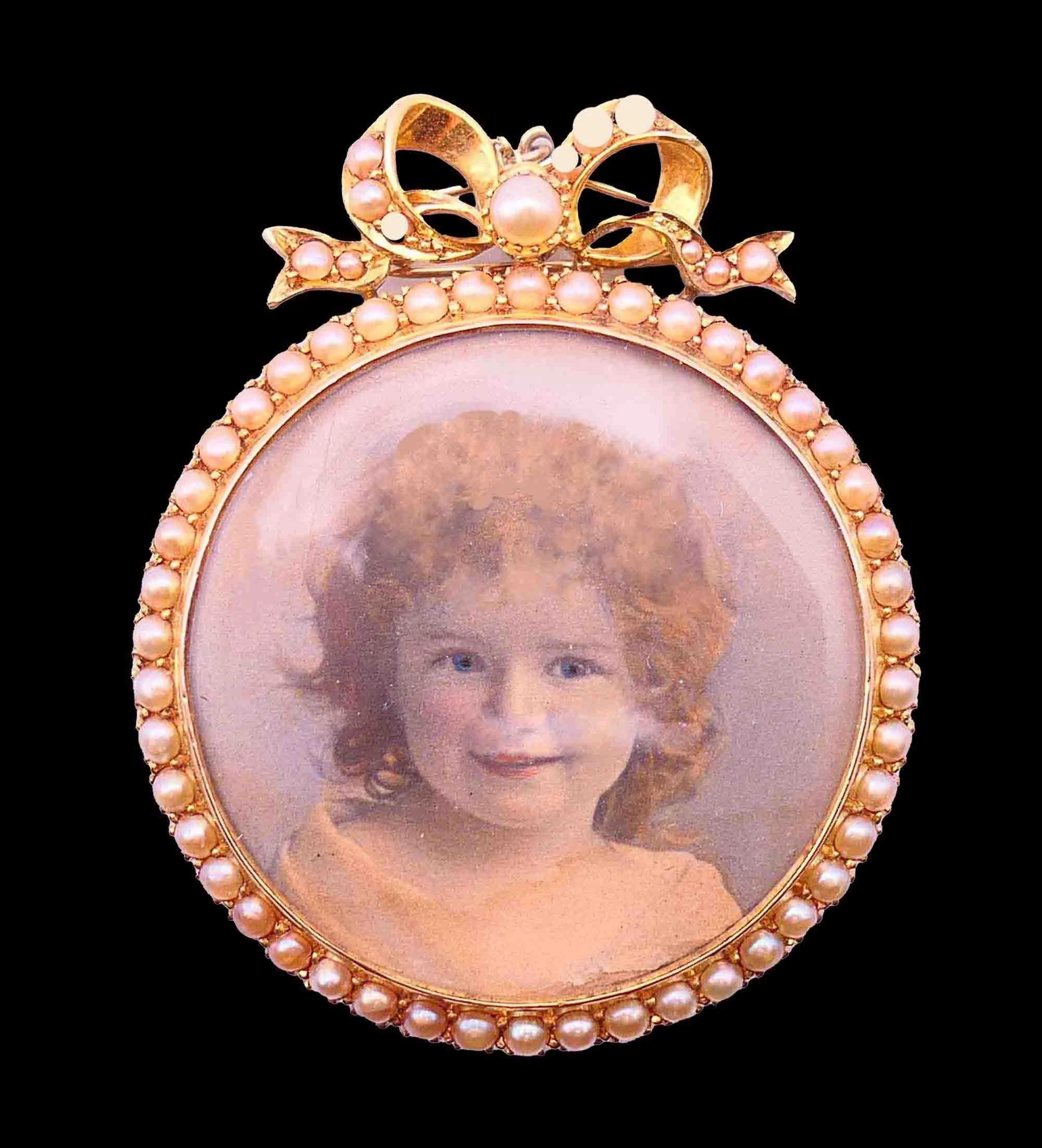
A Love That Could Be Held in the Hand
Portrait miniatures are among the most intimate objects ever created in the history of decorative arts—small enough to be concealed within the palm, yet powerful enough to contain an entire emotional world. Emerging prominently in Europe during the 16th century and flourishing through the Georgian and Victorian eras, these exquisitely detailed likenesses were not merely portraits; they were embodiments of presence, memory, and devotion.
Long before the advent of photography, a portrait miniature was often the only way to carry the image of a beloved. Worn close to the body—in lockets, rings, brooches, or suspended from a chain—they functioned as deeply personal talismans: a husband carried by a wife, a child remembered by a grieving parent, a lover held in secret against the heart.
Origins and Historical Significance
The tradition of portrait miniatures finds its roots in the illuminated manuscripts of the late medieval period, where artists developed techniques for painting highly detailed figures on vellum. By the reign of Elizabeth I of England, miniature portraiture had evolved into a refined courtly art, with artists such as Nicholas Hilliard elevating the form into an object of political and romantic exchange.
Throughout the 18th century, portrait miniatures became central to aristocratic and bourgeois culture across Britain and continental Europe. During the Georgian era, they were often commissioned prior to marriage or exchanged during periods of separation—particularly in times of war. By the Victorian period, their role expanded further into mourning culture, where miniatures preserved the likeness of the deceased, often accompanied by hairwork or symbolic motifs of remembrance.
Craftsmanship: Painting the Soul in Miniature
The creation of a portrait miniature demanded extraordinary technical mastery. Most were painted in watercolor on thin slices of ivory, whose translucent surface allowed light to penetrate and reflect back through the pigment, giving the sitter’s skin a luminous, almost lifelike glow.
Artists worked with brushes of astonishing fineness—sometimes composed of a single hair—building the image through delicate stippling and layering. Every eyelash, curl, and glint of light was rendered with precision. The scale intensified the intimacy: the viewer must come physically close to the object, mirroring the emotional closeness of the relationship it represents.
Many miniatures were encased in gold frames, often with glazed covers to protect the fragile surface. The reverse side frequently held an additional secret: a compartment containing a lock of hair, woven or arranged beneath crystal—a silent relic of the person depicted.
Romantic Symbolism and Emotional Language
Portrait miniatures occupy a unique space within the symbolic language of love. Unlike allegorical jewelry—hearts, arrows, or flowers—the miniature presents the beloved directly, without metaphor. It is both representation and presence.
To wear a portrait miniature was to carry a living memory. In an era defined by distance—naval voyages, military campaigns, and strict social codes—the miniature bridged absence. It allowed lovers to remain psychologically and emotionally connected despite physical separation.
They were also deeply entwined with secrecy. Miniatures could be concealed within lockets, hidden behind hinged panels, or worn beneath clothing. In this sense, they often functioned within private narratives of affection, forbidden love, or unspoken attachment.
Mourning, Memory, and the Afterlife of Love
During the 19th century, portrait miniatures became central to mourning practices. As part of the broader Victorian culture of remembrance, they preserved the image of the deceased at a moment suspended outside of time. Combined with hairwork, black enamel, or inscriptions, they transformed into objects of enduring grief and devotion.
In this context, the miniature becomes something more than a likeness—it becomes a vessel. It holds not only the image, but the emotional weight of absence. It is a way of resisting loss, of asserting that love persists beyond death.
The Enduring Talisman
With the rise of photography in the mid-19th century, the practical function of portrait miniatures diminished. Yet their symbolic power endures. Unlike photographs, which can be endlessly reproduced, each portrait miniature is singular—hand-painted, touched by the artist, and commissioned with intention.
Today, these objects are recognized not only as works of art, but as emotional artifacts. They speak to a time when love required physical expression through objects, when memory was something one could hold, open, and return to again and again.
In the context of a symbolism archive, portrait miniatures represent one of the purest forms of romantic material culture: a convergence of artistry, intimacy, and human longing. They are, quite simply, love made visible—and made enduring.