

Jewelers’ Maker’s Marks: Hidden Signatures of Craftsmanship
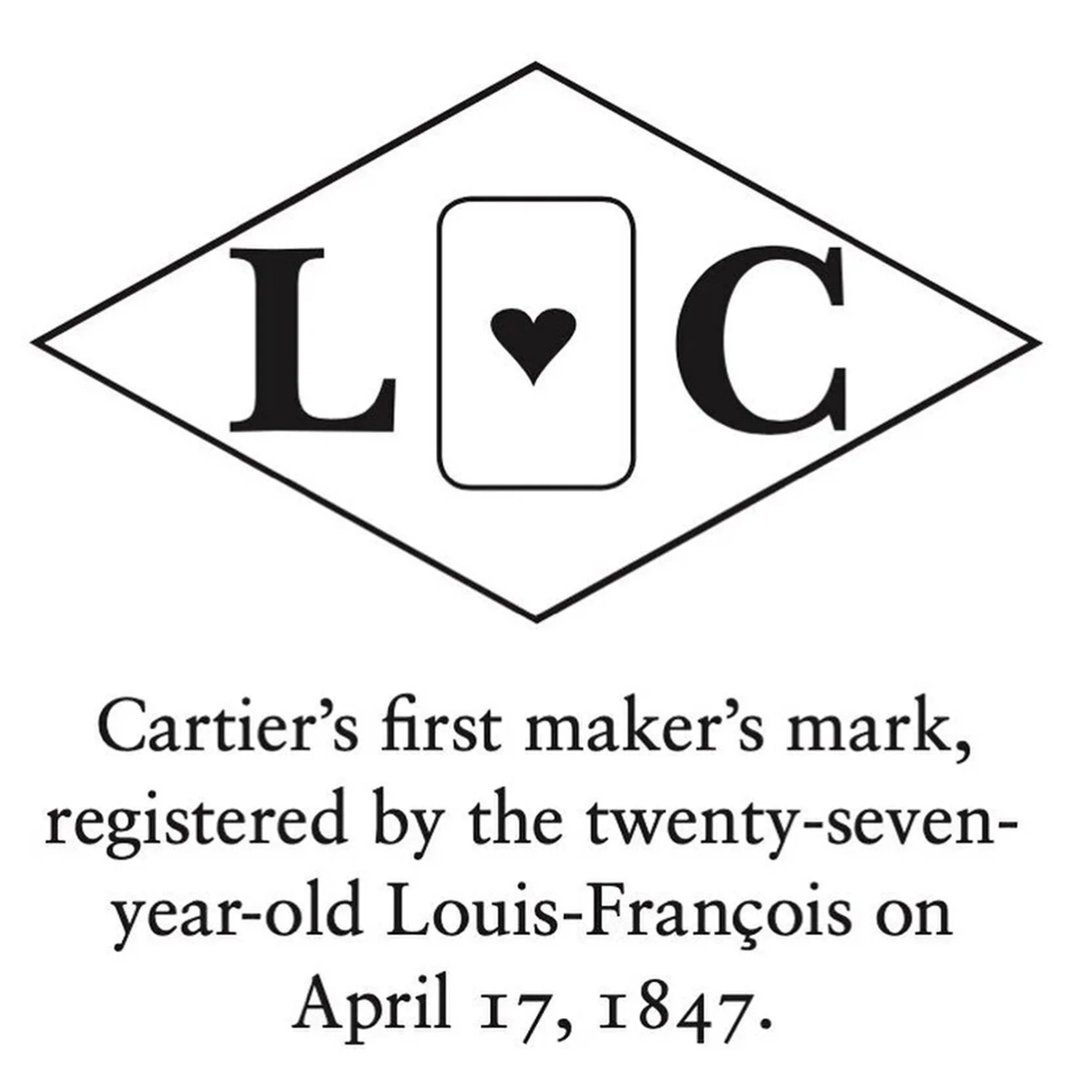
What Is a Maker’s Mark?
A maker’s mark is a stamped or engraved identifier placed on a piece of jewelry by its creator—typically a goldsmith, silversmith, or workshop. It differs from:
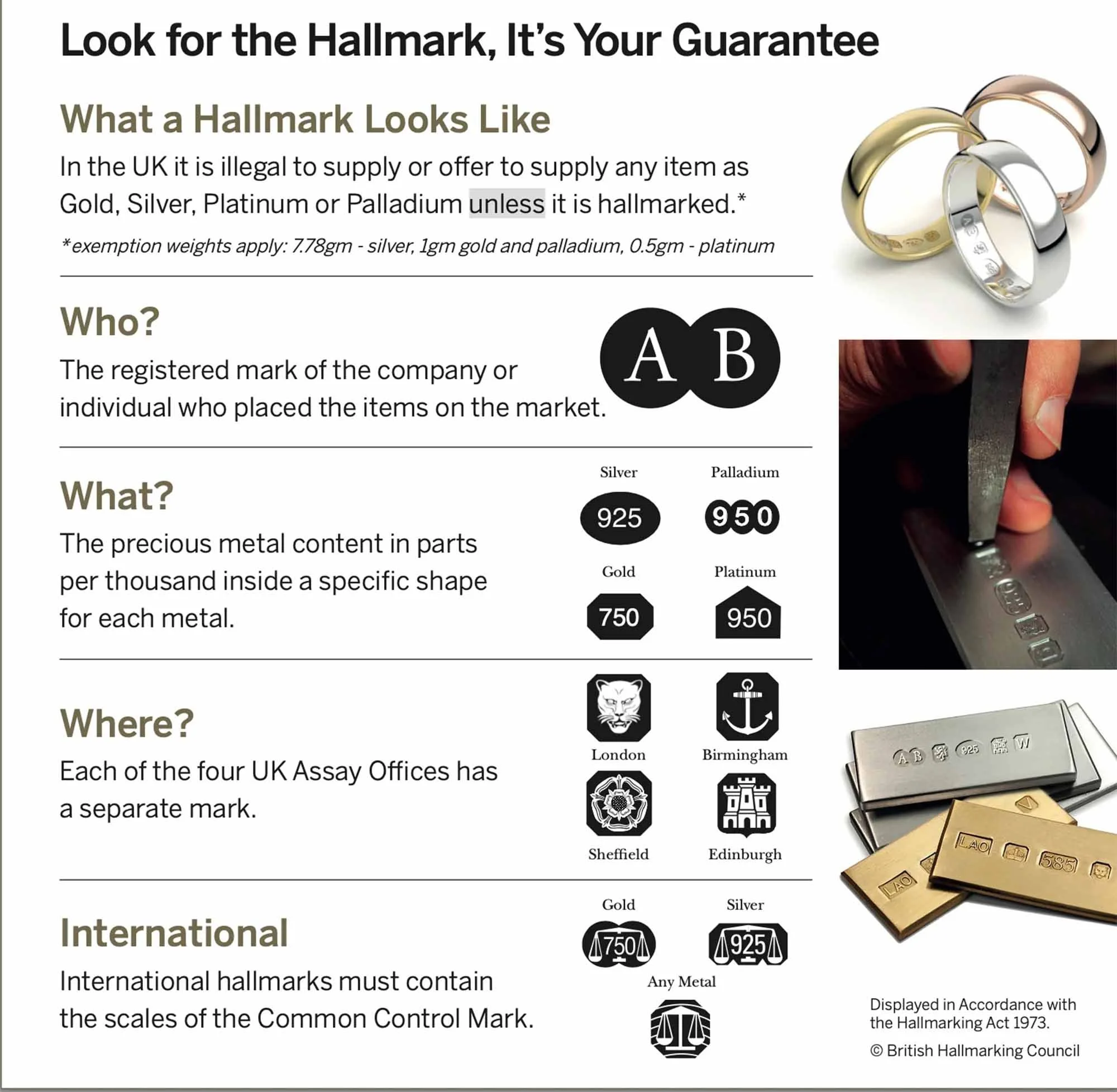
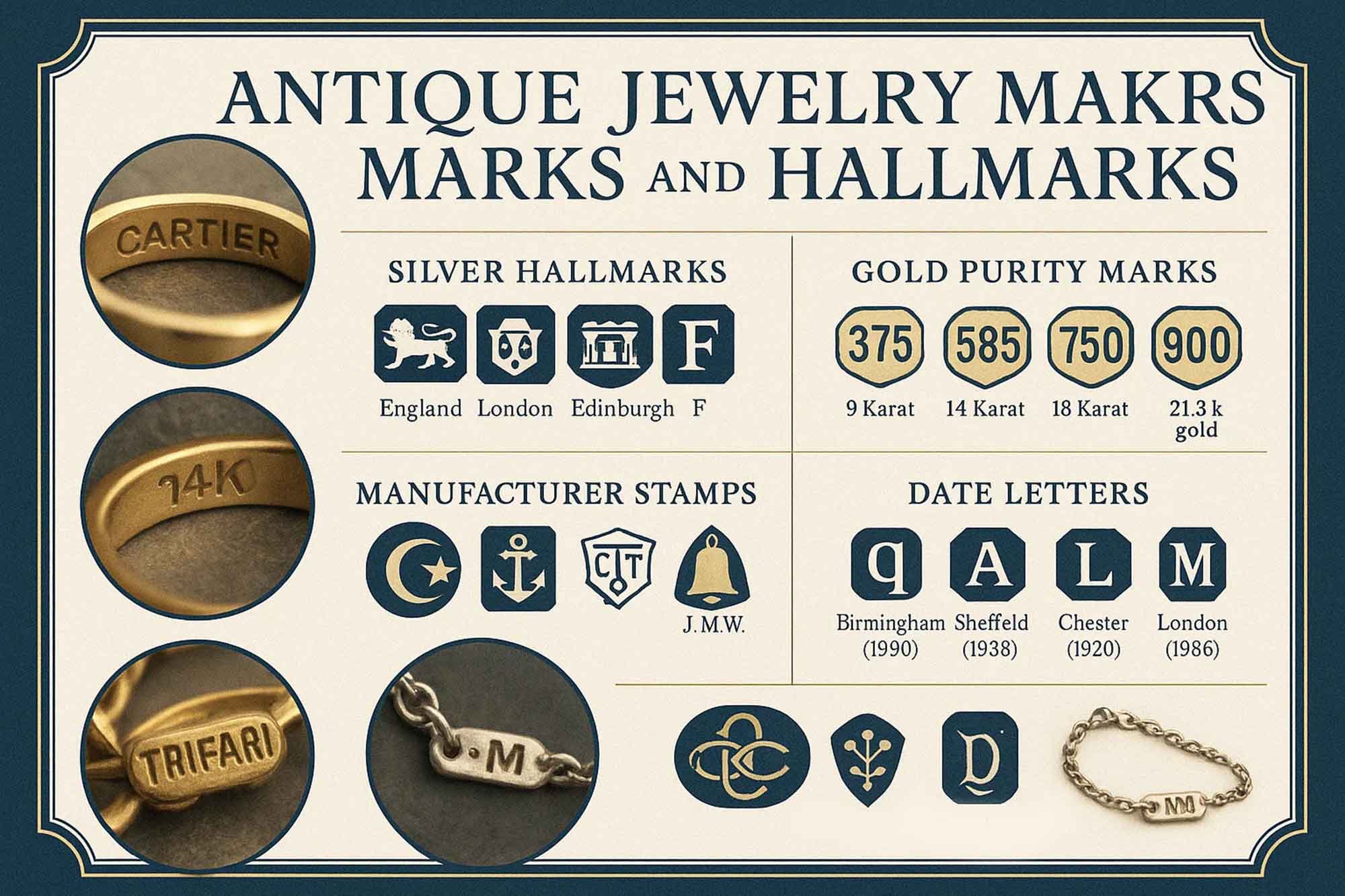
Assay marks (which certify metal purity)
Date letters (which indicate the year of assay)
Town marks (which identify the assay office)
Instead, the maker’s mark is personal:
a coded signature, usually composed of initials, symbols, or cartouches, unique to a specific craftsman or firm.
In Britain—home to the most systematic hallmarking tradition—these marks were legally required, forming part of a regulated system that dates back to the medieval guilds.
Georgian Era (1714–1837): The Age of the Goldsmith
In the Georgian period, maker’s marks were deeply tied to the individual goldsmith, not yet the industrial workshop.
Characteristics
Hand-punched and often irregular
Typically initials only (e.g., “TB,” “IH”)
Placed in simple geometric cartouches (rectangles, ovals)
Frequently worn or partially lost due to soft, high-karat gold
Context
Jewelry production in this era was artisanal and decentralized. A single craftsman might design, fabricate, and finish a piece entirely by hand. As such:
The maker’s mark represents a single hand, not a brand
Marks may be crudely aligned or unevenly struck
Variations in the same maker’s stamp are common
Collector Insight
Because Georgian marks are often faint or incomplete, authentication relies on convergence:
Construction techniques (closed-back settings, foiling)
Gem cuts (rose cut, table cut)
Metal composition (high-karat gold, often 18k–22k)
The mark alone is rarely definitive—but when present, it is a rare and intimate trace of authorship.
Victorian Era (1837–1901): Expansion, Industry, and Identity
The Victorian era marks a turning point: the rise of industrialization and larger workshops transformed jewelry production—and with it, maker’s marks.
Characteristics
More standardized and legible
Often include registered maker’s initials
Accompanied by full hallmark sets:
Assay office (e.g., Birmingham anchor)
Metal standard (e.g., 18, 15, 9)
Date letter
Struck with greater consistency due to improved tools
Context
With the expansion of cities like Birmingham and London:
Jewelry production became semi-industrial
Workshops employed multiple artisans under one registered mark
Maker’s marks began to function as proto-brands
Notable firms (e.g., Hunt & Roskell, later Garrard) established reputations tied to consistent marking practices.
Collector Insight
Victorian marks are often the most readable and interpretable:
Full hallmark sequences allow precise dating
Maker’s marks can be traced to registered firms
Consistency improves confidence in attribution
This era offers one of the strongest intersections between documentation and object.
Edwardian Era (1901–1910): Precision, Platinum, and Prestige
The Edwardian period represents the refinement of marking practices alongside technical innovation—most notably the widespread adoption of platinum.
Characteristics
Extremely fine, precise stamps
Use of platinum marks (e.g., “PLAT,” “PT”)
Continued use of British hallmark system, but with lighter, more delicate impressions
In French and continental pieces, pictorial marks (e.g., dog’s head for platinum)
Context
Jewelry of this era emphasized:
Lightness and lace-like construction
Advanced metalworking techniques
International luxury houses (Cartier, Boucheron) with distinctive marks
Maker’s marks now signified not just authorship, but elite provenance.
Collector Insight
Edwardian marks often require:
Magnification due to their delicacy
Familiarity with platinum standards and continental systems
Cross-referencing with house archives or known mark registries
When identified, they can anchor a piece within the highest tier of early 20th-century craftsmanship.
Reading a Maker’s Mark: A Collector’s Framework
Across all three eras, the interpretation of maker’s marks follows a layered approach:
1. Identify the Components
Initials or symbol (maker)
Surrounding cartouche shape
Associated hallmarks (if present)
2. Place Within a System
British hallmarking (most structured)
French/continental (pictorial and symbolic)
Unmarked or partially marked (common in Georgian work)
3. Cross-Reference
Hallmark databases
Assay office records
Known workshop registrations
4. Corroborate with Object Evidence
Construction techniques
Gem cuts and settings
Wear patterns and patina
A maker’s mark is never read in isolation—it is interpreted within the totality of the jewel.
Why Maker’s Marks Matter
For the serious collector, maker’s marks are not merely technical details. They are:
Proof of origin
Indicators of quality and regulation
Links to historical individuals and workshops
Anchors for dating and authentication
In a market where unsigned pieces abound, a clear maker’s mark can dramatically enhance both confidence and value.
The Philosophy of the Mark
Perhaps most compelling is what these marks represent on a human level.
In the Georgian era, a mark was the quiet assertion of a craftsman’s identity.
In the Victorian period, it became a bridge between artisan and industry.
By the Edwardian age, it signified entry into a world of international luxury and precision.
Yet across all eras, the act remains the same:
a maker pressing their identity into metal—leaving behind a trace meant to outlive them.