

Animal Symbolism in Antique Jewelry - Articulated Ornaments
Throughout the history of adornment, animals have served as one of the most enduring symbolic languages in jewelry. Far from mere decoration, these forms carried layered meanings—drawn from mythology, religion, natural philosophy, and personal sentiment—transforming gold and gemstone into narratives of identity, emotion, and belief.
In the 18th and 19th centuries, particularly during the Victorian era, animal motifs reached a profound level of expressive sophistication. Jewelry became a medium through which the natural world was not simply observed, but interpreted—its creatures acting as metaphors for human experience.
The Animal as Symbol: A Universal Language
Animals offered a symbolic vocabulary that transcended literacy. A serpent could speak of eternity, a bird of freedom or return, a fish of abundance or spiritual depth. These meanings were often culturally layered, allowing a single motif to carry both ancient and contemporary associations simultaneously.
Victorian society, deeply engaged with both scientific discovery and romanticism, embraced this duality. The rise of natural history, alongside a fascination with symbolism and sentiment, encouraged jewelers to render animals with increasing realism while preserving their metaphorical significance.
Articulated Animals: Movement as Meaning
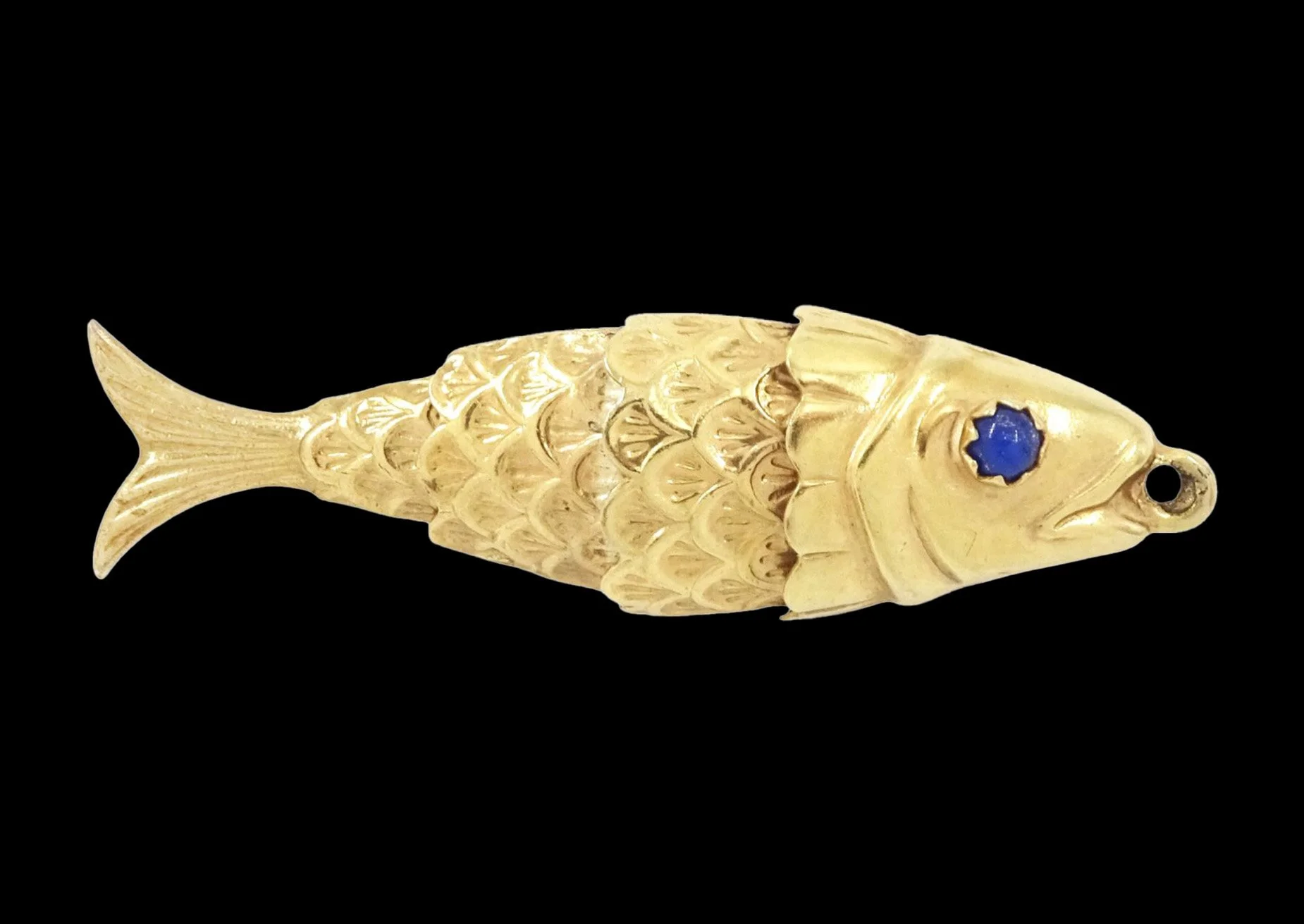
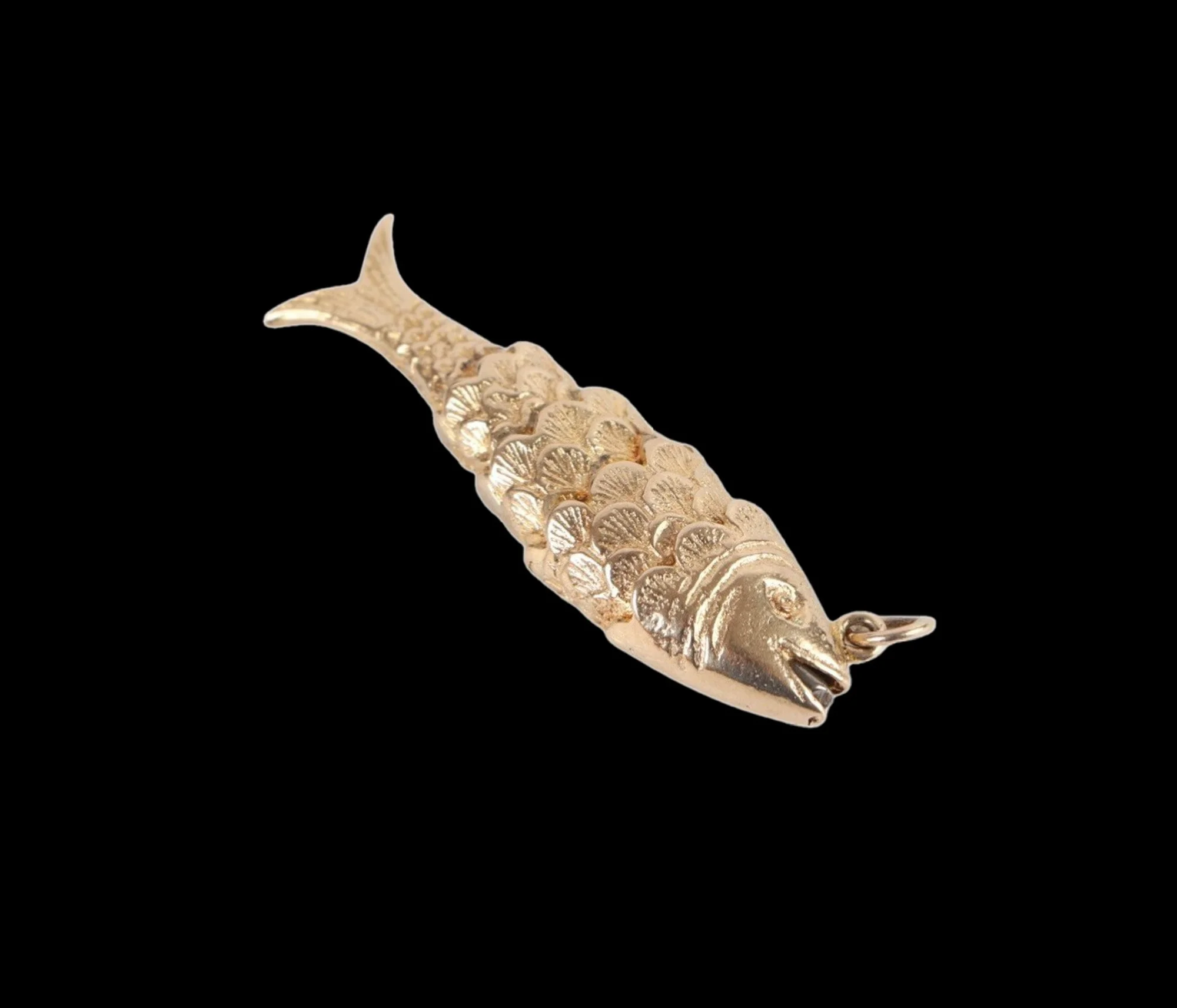
Among the most captivating expressions of animal symbolism is the articulated jewel—pieces constructed with moving segments that allow the form to shift, ripple, or glide when worn.
This movement was not merely technical virtuosity; it carried symbolic weight.
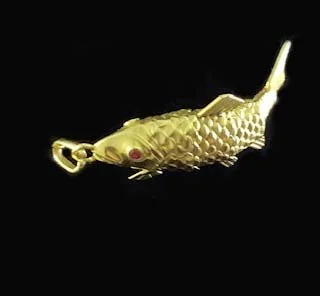
An articulated fish, for example, does not simply represent life in water—it moves like it. The subtle undulation of its body evokes fluidity, adaptability, and the unseen currents of emotion. In this way, motion becomes an extension of meaning, transforming the jewel into something almost animate.
Similarly, articulated serpents coil and flex around the body, reinforcing their associations with eternity, renewal, and protection. The physical responsiveness of these pieces creates an intimate relationship between object and wearer—one in which symbolism is experienced, not just observed.
Common Animal Motifs and Their Meanings
Victorian and earlier jewelers drew upon a rich bestiary of symbolic creatures:
Serpent — Eternity, rebirth, protection, and unending love
Swallow / Bird — Return, fidelity, the soul, and safe passage
Fish — Abundance, transformation, emotional depth, and spiritual symbolism
Butterfly — The soul, transformation, and the ephemeral nature of life
Beetle / Scarab — Protection, resurrection, and ancient continuity
Dog — Loyalty and devotion
Lion — Strength, courage, and nobility
Each animal functioned as a shorthand for complex emotional or philosophical ideas, often understood implicitly within the cultural context of the time.
Nature, Science, and Sentiment
The 19th century witnessed a convergence of scientific curiosity and emotional expression. Advances in taxonomy and natural observation led to increasingly accurate depictions of animals, while the Victorian preoccupation with memory, mourning, and love imbued these creatures with personal significance.
Jewelry became a space where empirical observation met symbolic interpretation—where a carefully rendered fish or bird could simultaneously reflect the natural world and the inner life of the wearer.
Jewelry as Living Object
Animal jewelry occupies a unique position within the decorative arts. Unlike static ornament, these pieces often suggest life—through posture, texture, and, in the case of articulated works, movement.
They invite interaction. They respond to the body. They shift with breath and gesture.
In doing so, they blur the boundary between object and organism, embodying the Victorian fascination with animation, transformation, and the unseen forces that govern both nature and emotion.
Enduring Appeal
Today, antique animal jewelry continues to resonate not only for its craftsmanship but for its symbolic richness. These pieces offer a connection to a time when adornment functioned as a deeply personal language—one in which meaning was embedded in form, and beauty carried narrative weight.
Whether worn as tokens of identity, memory, or belief, animal motifs remain among the most evocative expressions in the history of jewelry—small, luminous embodiments of the natural world and the human desire to find meaning within it.