

The Symbolism of Arrows in Antique Jewelry
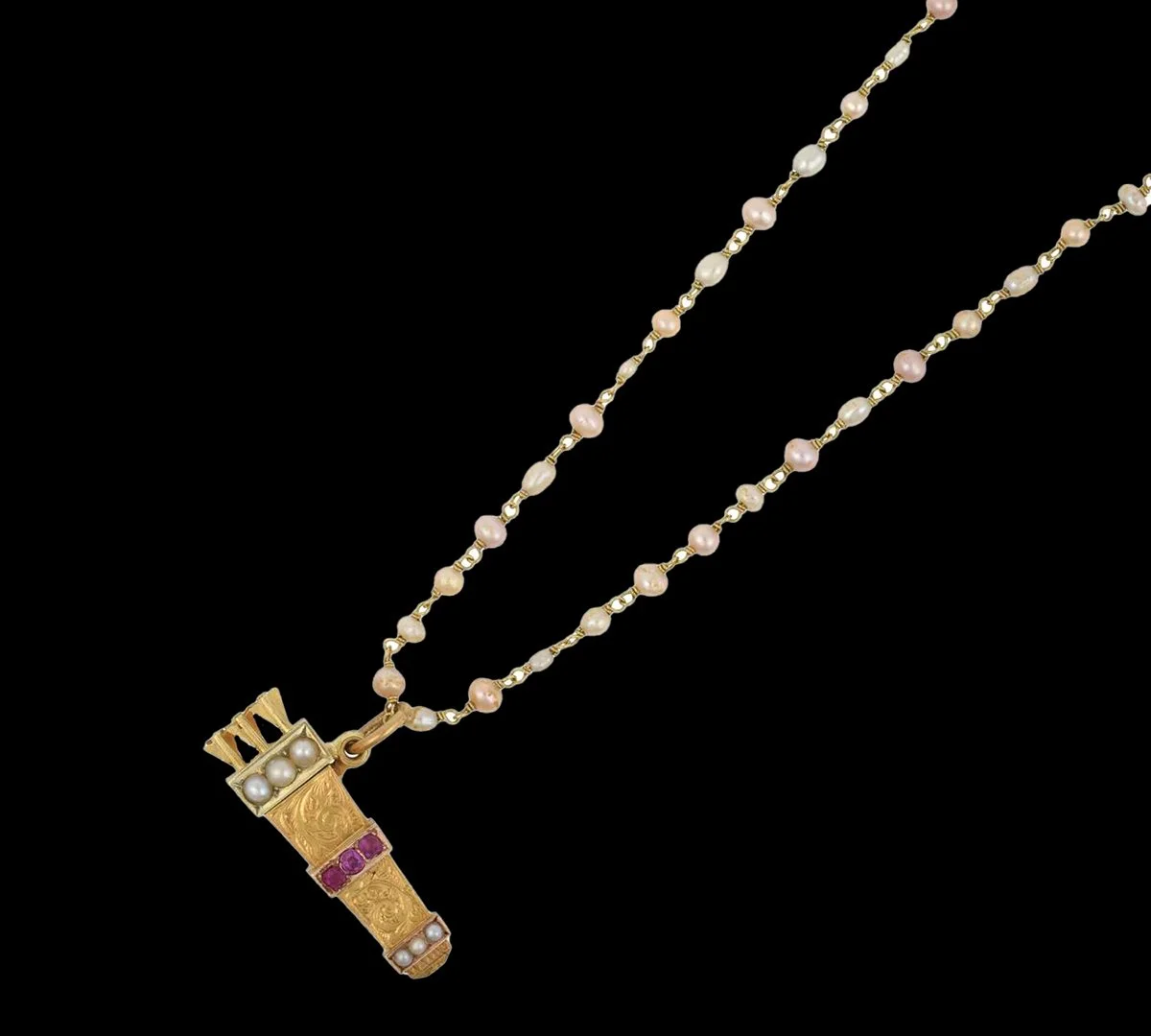
Across centuries of decorative art and personal adornment, the arrow has served as one of the most enduring symbols of love, destiny, and emotional vulnerability. In jewelry, particularly during the Georgian, Victorian, and Edwardian periods, the arrow motif conveyed a rich language of romantic meaning that would have been readily understood by nineteenth-century viewers.
The symbolism of the arrow in jewelry is closely tied to the mythology of Cupid, the classical god of love. According to ancient Roman tradition, Cupid carried a bow and arrows capable of striking the hearts of mortals and gods alike. Those pierced by his arrow would fall irresistibly in love. By the eighteenth century, this mythological imagery had become deeply embedded in European decorative arts, where arrows appeared frequently in objects associated with courtship and romantic devotion.
In sentimental jewelry, the arrow typically represented love that strikes unexpectedly or irresistibly. When depicted piercing a heart, the arrow signified the moment when affection overwhelms the heart—an image often interpreted as the triumph of love over reason. Jewelry bearing this motif was sometimes exchanged between lovers as a subtle acknowledgment that one's heart had been “captured” or “wounded” by another’s affection.
The arrow also carried connotations of direction and fate. Unlike other symbols of love that emphasize harmony or unity, the arrow suggests movement toward a destined emotional bond. For this reason, arrows often appear in combination with hearts, bows, or floral motifs in Georgian and Victorian jewelry, forming visual narratives of courtship and emotional commitment.
Another layer of meaning derives from the arrow’s association with devotion and loyalty. In classical symbolism, an arrow released from the bow travels toward a single target. This imagery could represent the focused intention of the lover whose affection is directed toward one beloved person alone. Jewelry bearing arrows therefore sometimes implied constancy and singular devotion.
During the Victorian period—an era deeply fascinated with symbolic language in art and ornament—the arrow motif appeared in brooches, lockets, rings, and charm pendants. Jewelers often rendered arrows in gold or set them with gemstones, occasionally pairing them with hearts, crescents, or bows to heighten their romantic significance. These objects functioned as discreet tokens of affection, communicating emotional messages that might otherwise have been difficult to express openly.
Today, antique jewelry featuring arrows continues to resonate with collectors because the motif retains its emotional clarity. Even centuries after its adoption into decorative art, the arrow still conveys the universal experience of being struck by love. In this way, arrow jewelry stands as a reminder that romantic symbolism has long allowed individuals to transform deeply personal feelings into enduring objects of beauty.