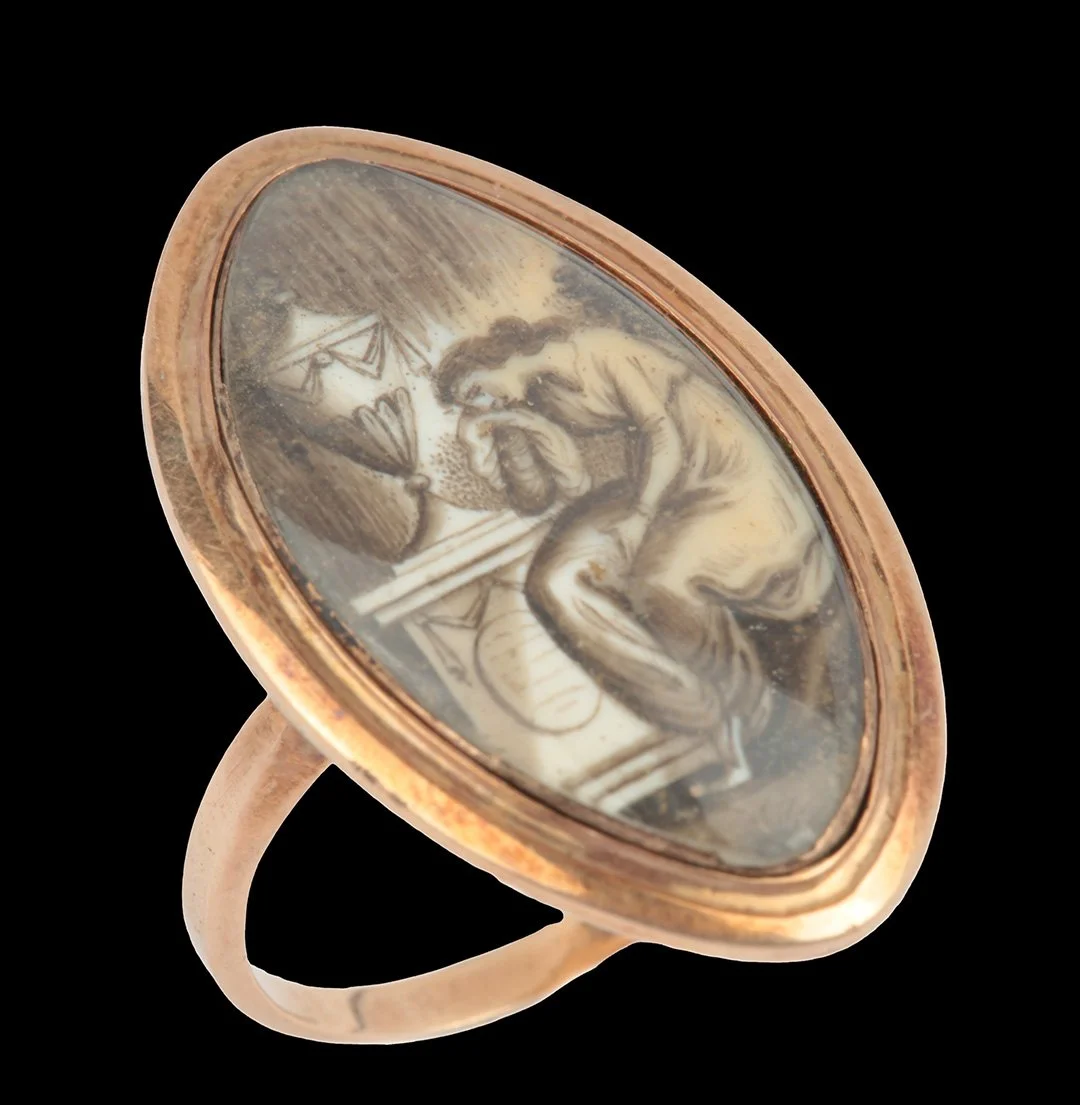
George III Gold Mourning Ring with Sepia Ivory Miniature

$5,800.00
Only 1 available

Georgian Era 18K Gold mounting

Hand-painted sepia miniature on ivory

Glazed navette bezel

Memorial inscription

Ring size: P

Setting length: 1.22 inches

Gross weight: approximately 7 grams

Purchased at auction West Sussex, United Kingdom

Understand The Poetry of Georgian Mourning Rings

Includes original or period-appropriate antique presentation box.

Georgian Era 18K Gold mounting

Hand-painted sepia miniature on ivory

Glazed navette bezel

Memorial inscription

Ring size: P

Setting length: 1.22 inches

Gross weight: approximately 7 grams

Purchased at auction West Sussex, United Kingdom

Understand The Poetry of Georgian Mourning Rings

Includes original or period-appropriate antique presentation box.

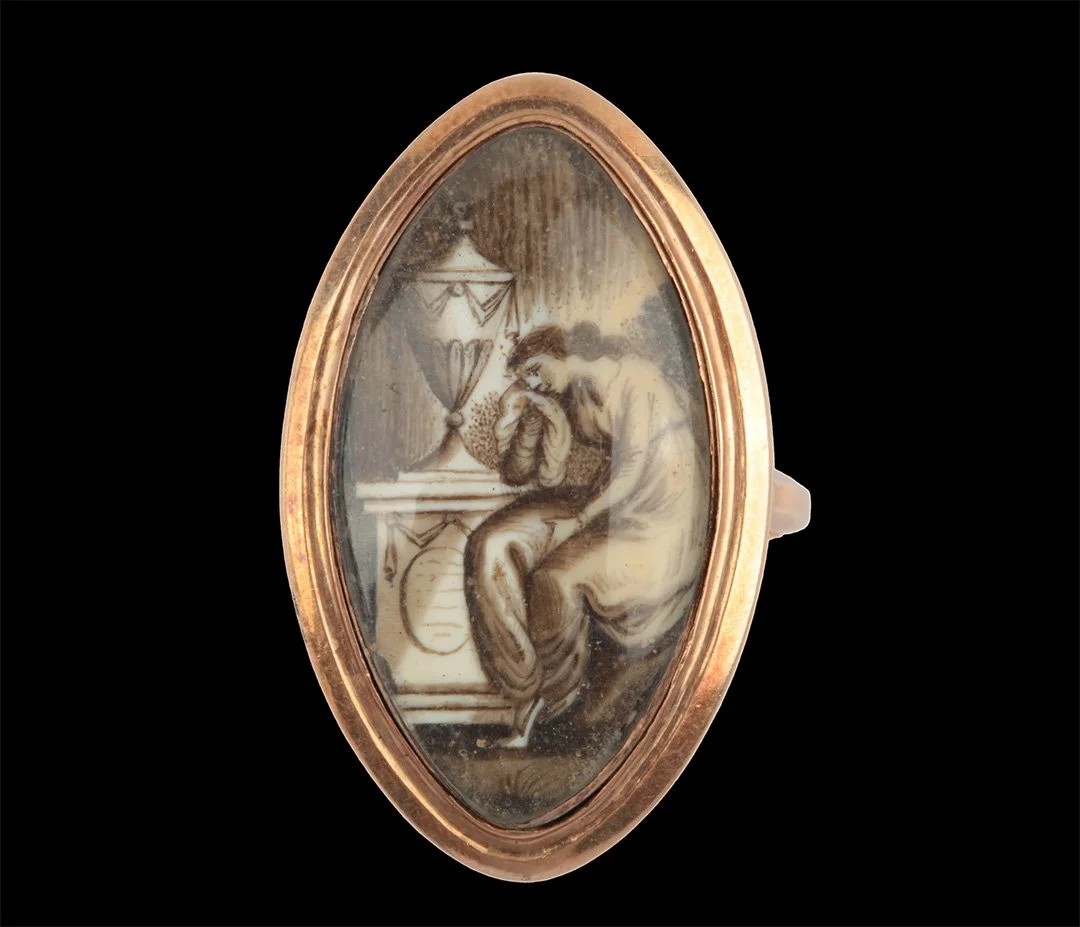
This exquisite George III mourning ring, dating to 1790, is a remarkable survival from the golden age of British memorial jewelry. Fashioned in gold, the navette-shaped bezel contains a finely painted sepia miniature on ivory depicting a mourning woman seated beside a classical funerary urn beneath the sheltering branches of a willow tree—one of the most enduring allegories of grief and remembrance in eighteenth-century art.

Executed with remarkable delicacy, the miniature belongs to a highly refined tradition of portrait and memorial painting that flourished in England during the late Georgian period. The restrained monochrome palette enhances the solemnity of the composition while revealing the accomplished hand of a miniature artist familiar with the neoclassical vocabulary of mourning.

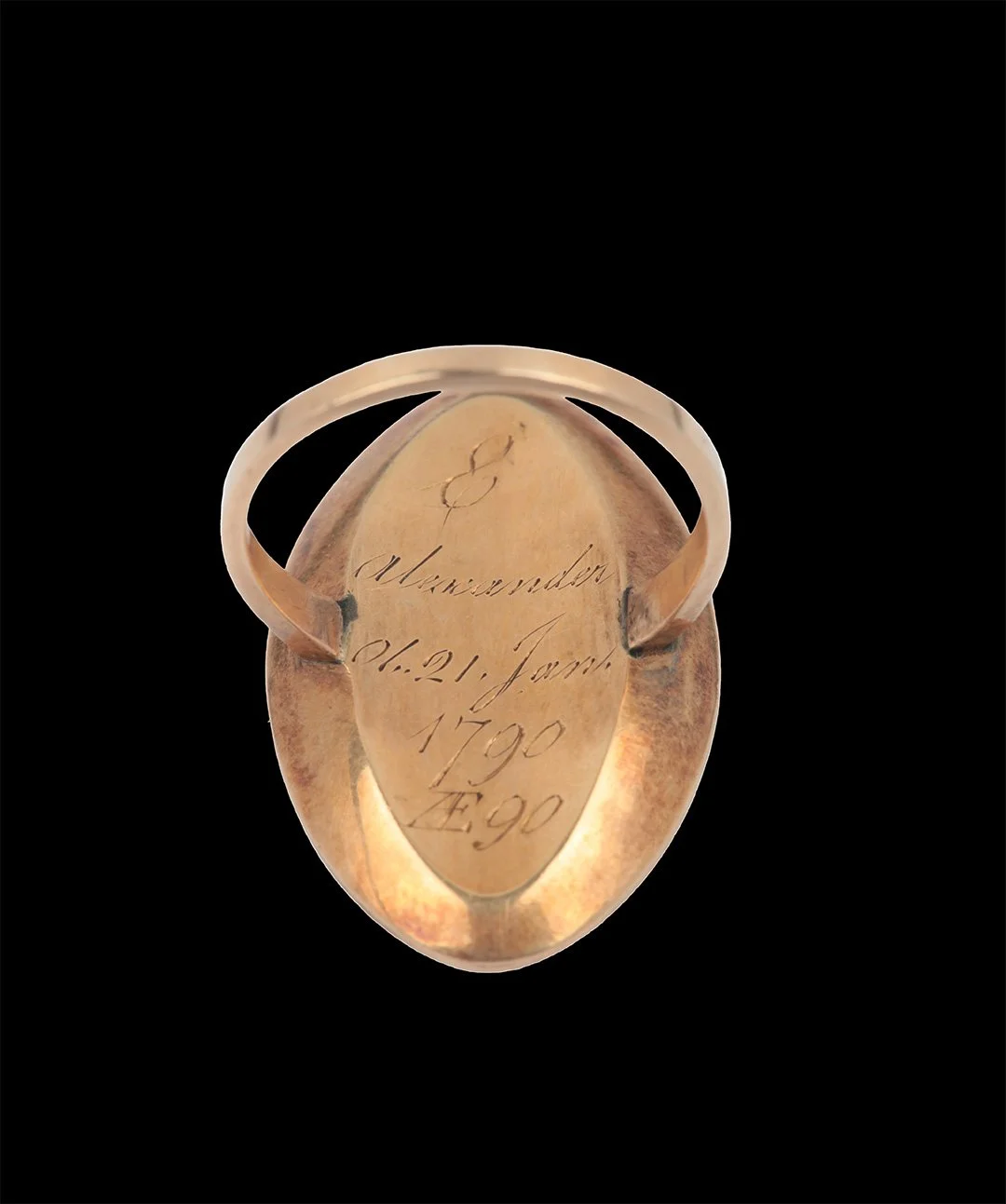
The reverse bears the beautifully preserved inscription:

"E Alexander
Ob. 21 Jan. 1790
Æ 90"
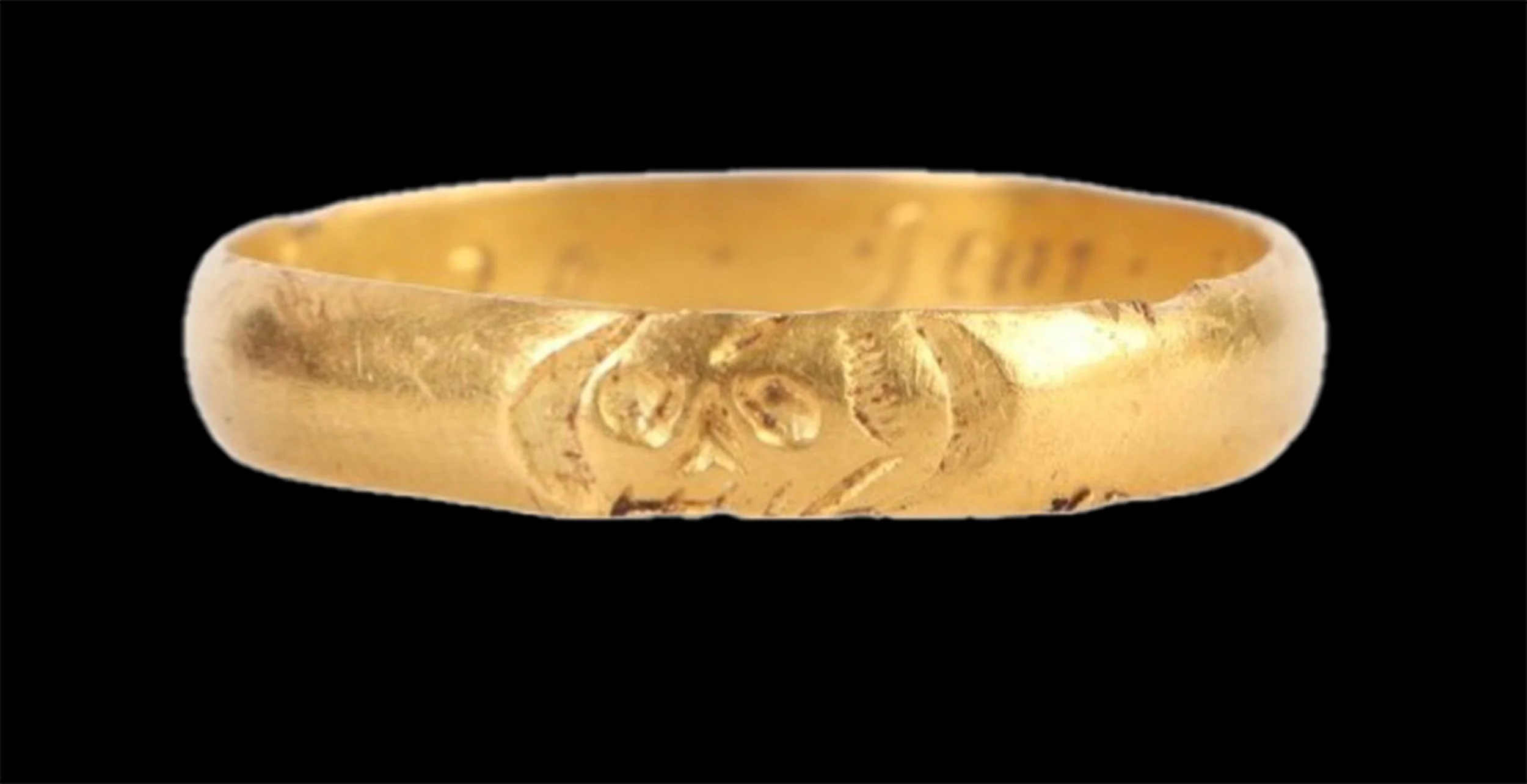
The abbreviation "Ob." (obiit) signifies "died," while "Æ 90" (aetatis 90) records that the deceased reached the remarkable age of ninety years. Such inscriptions transformed mourning jewelry into intimate memorials, preserving both identity and biography in precious metal.

The iconography is deeply rooted in late eighteenth-century sentiment. The grieving female figure represents fidelity and enduring affection; the classical urn symbolizes the ashes of the departed; and the weeping willow had become the universal emblem of mourning throughout Britain following the publication of sentimental literature and the popularity of neoclassical funerary monuments.

Unlike later Victorian mourning jewelry, Georgian memorial jewels possess a restrained elegance inspired by classical antiquity. This ring embodies that aesthetic perfectly, uniting refined goldsmithing, accomplished miniature painting, and deeply personal remembrance.

Few Georgian mourning rings survive with their original painted miniature, complete inscription, and excellent preservation. This example represents an important expression of eighteenth-century commemorative art and offers a poignant glimpse into the culture of remembrance during the reign of George III.

England, circa 1790