Before photography, a mourning ring was among the most intimate forms of remembrance a family could commission. During the Georgian period, these jewels were not merely decorative objects—they were portable memorials, carrying the memory of the deceased wherever the wearer travelled.
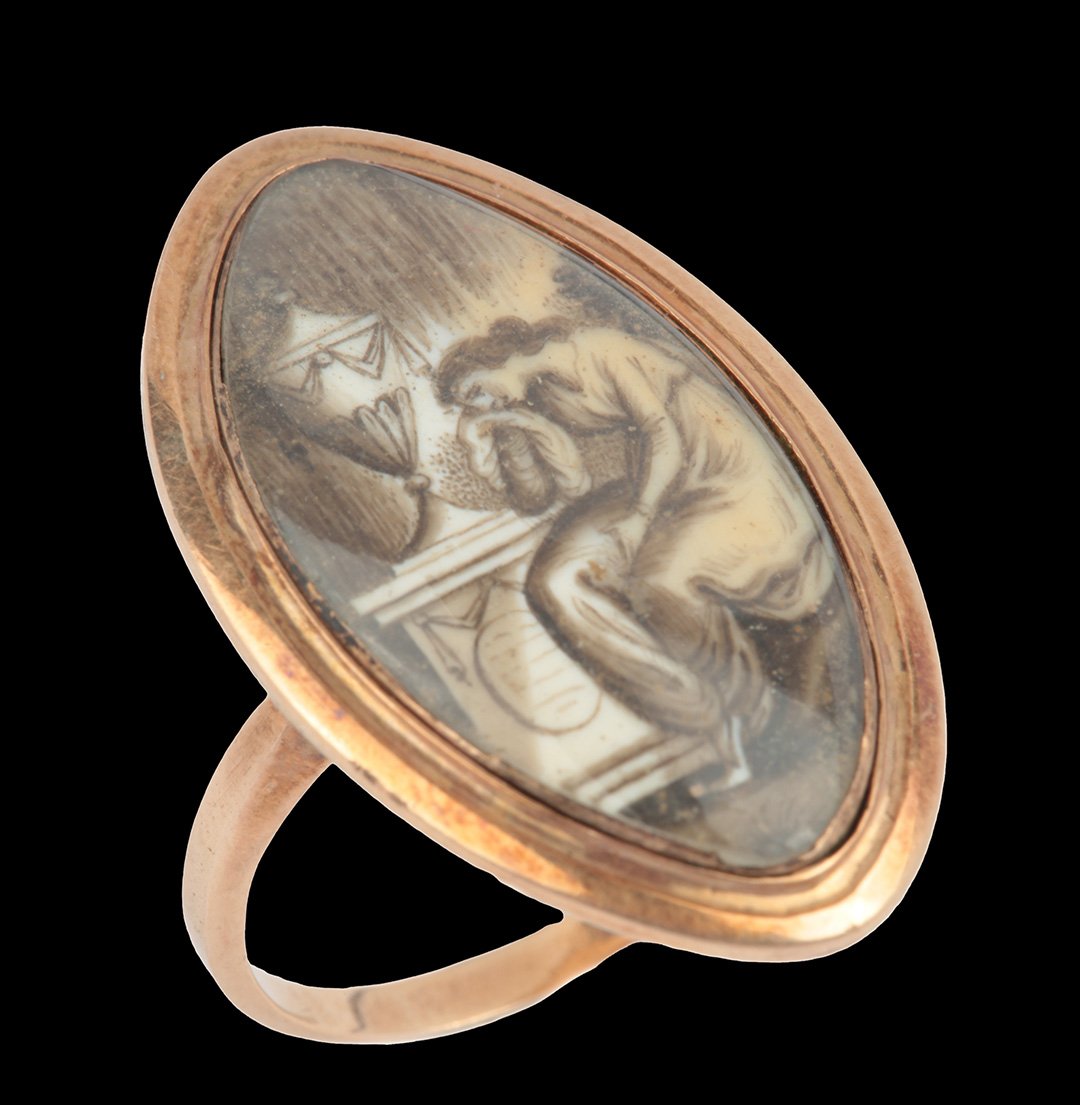
The imagery on this ring is drawn from the language of Neoclassicism, which transformed the symbols of the ancient world into expressions of private grief. The urn recalls Roman funerary monuments, representing the physical remains of the departed, while the weeping willow, introduced into British mourning iconography in the late eighteenth century, became an enduring symbol of sorrow, fidelity, and hope beyond death. The solitary woman leaning upon the urn embodies the ideal of steadfast remembrance, a visual meditation on love that survives mortality.
The inscription records E. Alexander, who died on 21 January 1790 at the remarkable age of ninety. During a period when average life expectancy was far lower, reaching such an age would have been exceptional, making this jewel not only a memorial but also a tribute to a long and well-lived life.
Unlike mass-produced nineteenth-century mourning jewelry, each Georgian ivory miniature was painted by hand. No two are precisely alike. This individuality, combined with the dated inscription and beautifully preserved composition, elevates the ring beyond an ornament—it is a unique work of eighteenth-century memorial art.
Unique from later Victorian mourning jewelry, Georgian memorial jewels possess a restrained elegance inspired by classical antiquity. Few Georgian mourning rings survive with their original painted miniature, complete inscription, and excellent preservation.