

Glücksschwein: Agricultural Prosperity to Royal Patronage
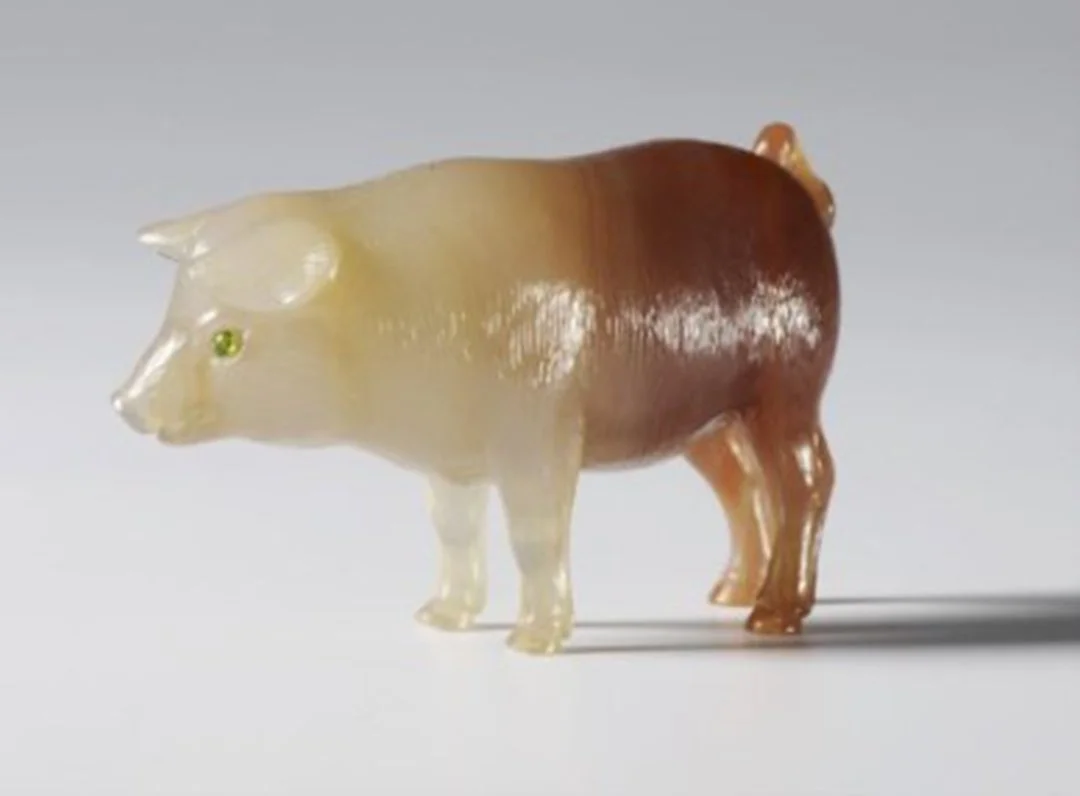
Fabergé: The Sandringham commission of King Edward VII
The Historical Symbolism of the Lucky Pig in European Jewelry
Throughout eighteenth- and nineteenth-century Europe, the pig occupied a distinctive place in the symbolism of prosperity, fertility, abundance, and good fortune. In societies where agricultural wealth underpinned both rural livelihoods and aristocratic estates, livestock represented far more than a source of nourishment. Animals embodied economic security, productive landownership, and the continuity of wealth across generations.
The pig was particularly associated with abundance. Its fertility, rapid growth, and capacity to provide sustenance made it a natural emblem of material prosperity. Within German-speaking Europe, these associations found enduring expression in the Glücksschwein, literally the "lucky pig," a symbol of fortunate circumstances and the hope of increasing wealth.
By the nineteenth century, the lucky pig had become an established motif in European popular culture, appearing in decorative objects, personal talismans, and gifts intended to convey wishes for prosperity and happiness. Particularly associated with New Year's celebrations, the Glücksschwein expressed the hope that the coming year would bring abundance, security, and favorable fortune.
From the Farmyard to the Royal Collection
The cultural significance of agricultural animals extended into the highest circles of European society, where animal husbandry, pedigree breeding, and the management of great estates were important expressions of aristocratic identity and accomplishment.
One of the most remarkable manifestations of this tradition occurred in 1907, when King Edward VII and Queen Alexandra became the subjects of Fabergé's celebrated Sandringham Commission, an extraordinary undertaking that transformed the animals of their Norfolk estate into miniature works of art.
King Edward VII maintained a deep personal interest in agriculture and animal breeding. At Sandringham, the royal estate included prize cattle, horses, dogs, poultry, and other farm animals. The King and Queen regularly entered their livestock in agricultural exhibitions, where their animals achieved considerable success.
When Henry Charles Bainbridge, Fabergé's London representative, proposed creating miniature portraits of the royal animals, the King enthusiastically approved. His ambitions extended well beyond the initial suggestion of a few favorite horses and dogs. The resulting list encompassed the entire farmyard, including hens, turkeys, bulls, heifers, horses, and pigs.
The commission was entrusted to Fabergé's remarkable craftsmen, who modeled the animals from life before reproducing them in carefully selected Russian hardstones, embellished with gold and precious gemstones.
These miniature sculptures transformed familiar agricultural creatures into objects of extraordinary refinement. The animals were no longer represented solely as productive assets of a great estate, but as subjects worthy of the same artistic attention traditionally reserved for royal portraiture and precious decorative objects.
The Sandringham Commission, completed principally between 1907 and 1909, became one of Fabergé's most celebrated British undertakings. Many of the resulting animal portraits remain in the British Royal Collection.
The Royal Fascination with Miniature Animals
The Sandringham Commission belonged to a broader tradition of royal collecting in which miniature animals, precious objets d'art, and sentimental gifts occupied an important place.
Queen Alexandra was an enthusiastic admirer of Fabergé, and the exchange of the firm's small decorative treasures became a cherished practice among members of the British, Danish, and Russian royal families.
These objects combined extraordinary craftsmanship with intimacy and sentiment. Their appeal lay not merely in the intrinsic value of precious materials, but in their capacity to commemorate beloved animals, express affection, and preserve personal associations.
The tradition continued under King George V and Queen Mary, whose enthusiasm for Fabergé further enriched the Royal Collection.
The Lucky Pig in Antique Jewelry
Against this cultural background, the miniature gold pig occupies an intriguing position between popular symbolism and aristocratic taste.
Its traditional associations with abundance and good fortune originated in the agricultural economy, yet its transformation into a finely worked jewel reflected the broader nineteenth-century fascination with naturalistic animal ornament.
During the Victorian and Edwardian periods, jewelers created miniature animals in gold and silver, sometimes embellished with diamonds, rubies, emeralds, and other gemstones. Worn as charms, pendants, or brooches, these small works combined sentiment, humor, craftsmanship, and personal symbolism.
The golden pig united two complementary expressions of prosperity: the animal's historical association with agricultural abundance and the precious materials used to represent it.
Although Fabergé's Sandringham animals were sculptural portraits rather than conventional lucky charms, their royal patronage demonstrates the extraordinary elevation of the farmyard animal within Edwardian decorative arts.
The Glücksschwein thus preserves a fascinating intersection of European agricultural history, folklore, aristocratic collecting, and the art of the goldsmith.
What began as an emblem of sustenance and material security evolved into an enduring symbol of optimism and good fortune, equally at home in the traditions of rural Europe and the refined world of antique jewelry.
Historical references
Victoria and Albert Museum, Fabergé: The Sandringham Commission.
Royal Collection Trust, Fabergé in the Royal Collection: A Royal Menagerie in the Making.
Royal Collection Trust, Fabergé, overview of royal patronage and collecting.