Faith, Eternity, and Devotion: A Gold and Diamond Cross Pendant
Twentieth Century
An elegant vintage cross pendant fashioned in 9-carat gold and ornamented with small diamonds, combining the enduring symbolism of the Christian cross with the decorative refinement of twentieth-century jewelry. The pendant is composed of a traditional Latin cross, its elongated lower arm balanced by three shorter arms of rectangular form. Each arm is bordered by polished gold and contains a recessed panel embellished with a succession of small, illusion-set diamonds, their reflective settings creating the impression of a continuous ribbon of light.
At the intersection of the cross is a distinctive four-looped ornament, arranged symmetrically around a central diamond. Its interlacing, petal-like forms introduce an element of softness to the otherwise geometric composition, recalling both a stylized flower and an ornamental knot. The central motif provides the visual focus of the pendant, its curving goldwork contrasting with the disciplined linear arrangement of the cross. The result is a composition that unites religious symbolism with decorative craftsmanship. A fluted gold suspension bail completes the pendant, allowing it to hang freely from a chain. The reverse reveals the construction of the diamond settings, while the gold purity mark 375 identifies the metal as 9-carat gold. Measuring approximately 1.5 inches in height, including the bail, and 0.75 inches across, the pendant has a substantial presence while retaining the restrained proportions appropriate to a personal devotional ornament.
The Cross: An Enduring Symbol of Faith
The cross is among the most recognizable symbols in the history of Western art and religious ornament. Within Christianity, it represents the Crucifixion of Jesus Christ and, by extension, the theological concepts of sacrifice, redemption, resurrection, and eternal life. Although the cross appeared in early Christian art, its widespread adoption as a personal devotional ornament developed over subsequent centuries as Christian imagery became increasingly integrated into everyday material culture. By the medieval period, crosses were worn as pendants, incorporated into reliquaries, and presented as objects of religious devotion. Their forms ranged from simple metal constructions to elaborate examples enriched with gemstones, enamel, and precious materials. The tradition continued through the Renaissance and into the eighteenth and nineteenth centuries, when crosses became important elements of both ecclesiastical and personal jewelry.
During the Victorian period, crosses were frequently exchanged as gifts commemorating religious milestones, including baptism, confirmation, and other significant occasions. They could also serve as expressions of remembrance, personal faith, or enduring attachment.
By the twentieth century, the gold cross had become a familiar form of devotional jewelry, often combining traditional Christian symbolism with the prevailing decorative tastes of its period. The present pendant belongs to this long tradition, preserving the essential form of the Latin cross while introducing a distinctive ornamental treatment at its center.


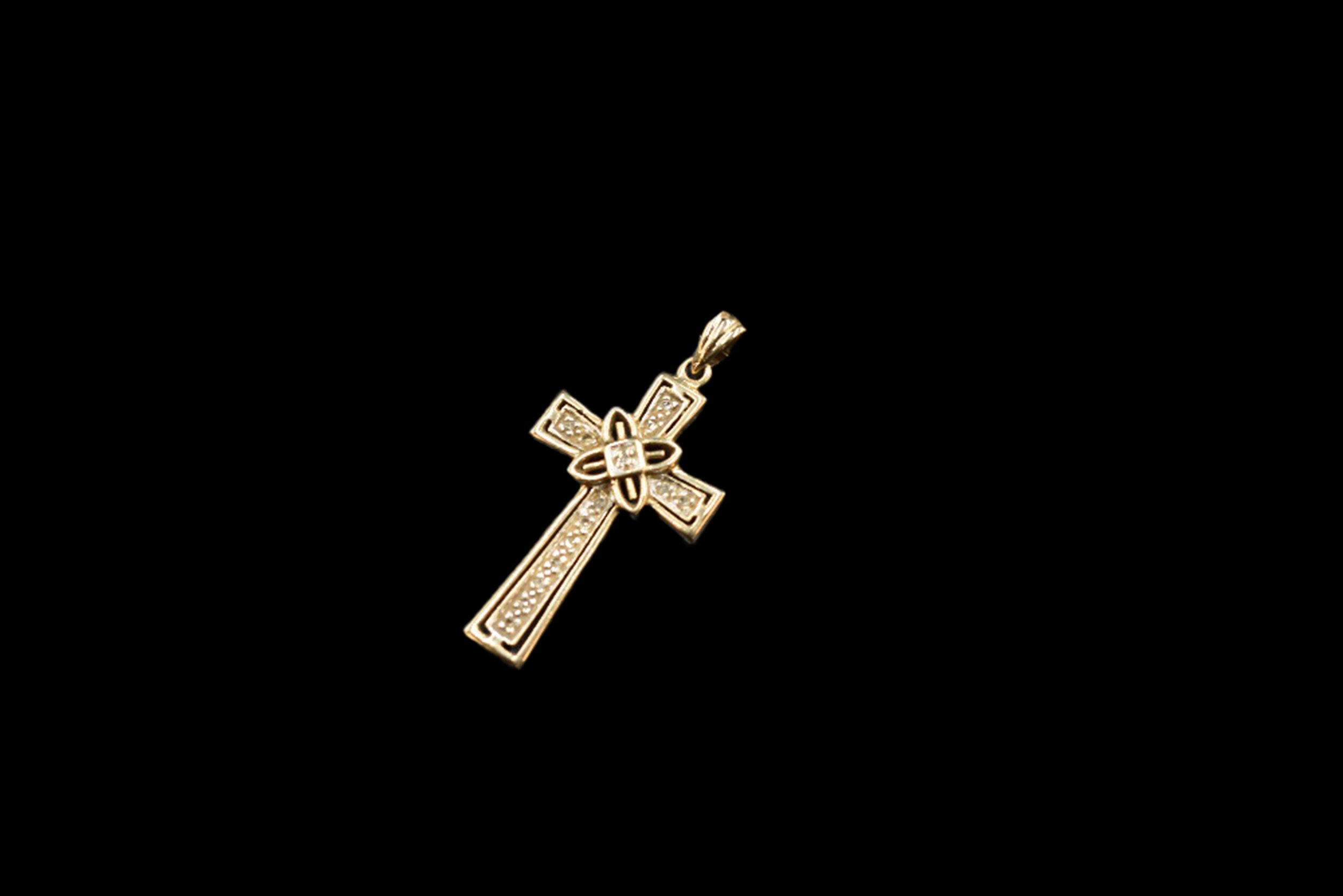 Image 1 of 5
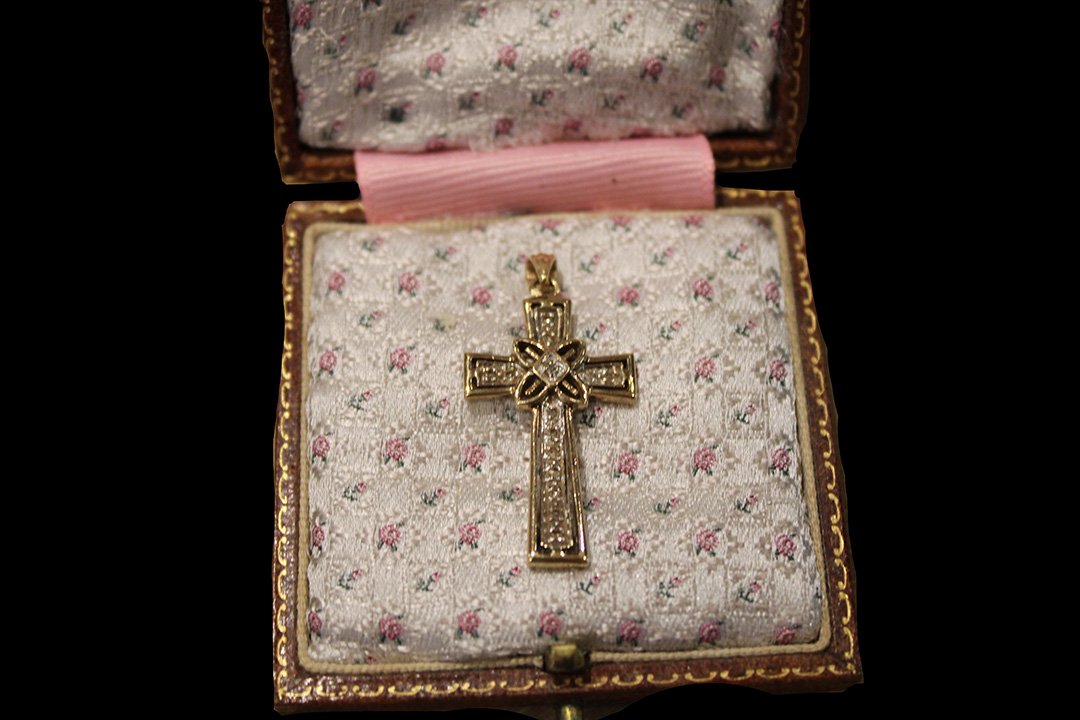 Image 2 of 5
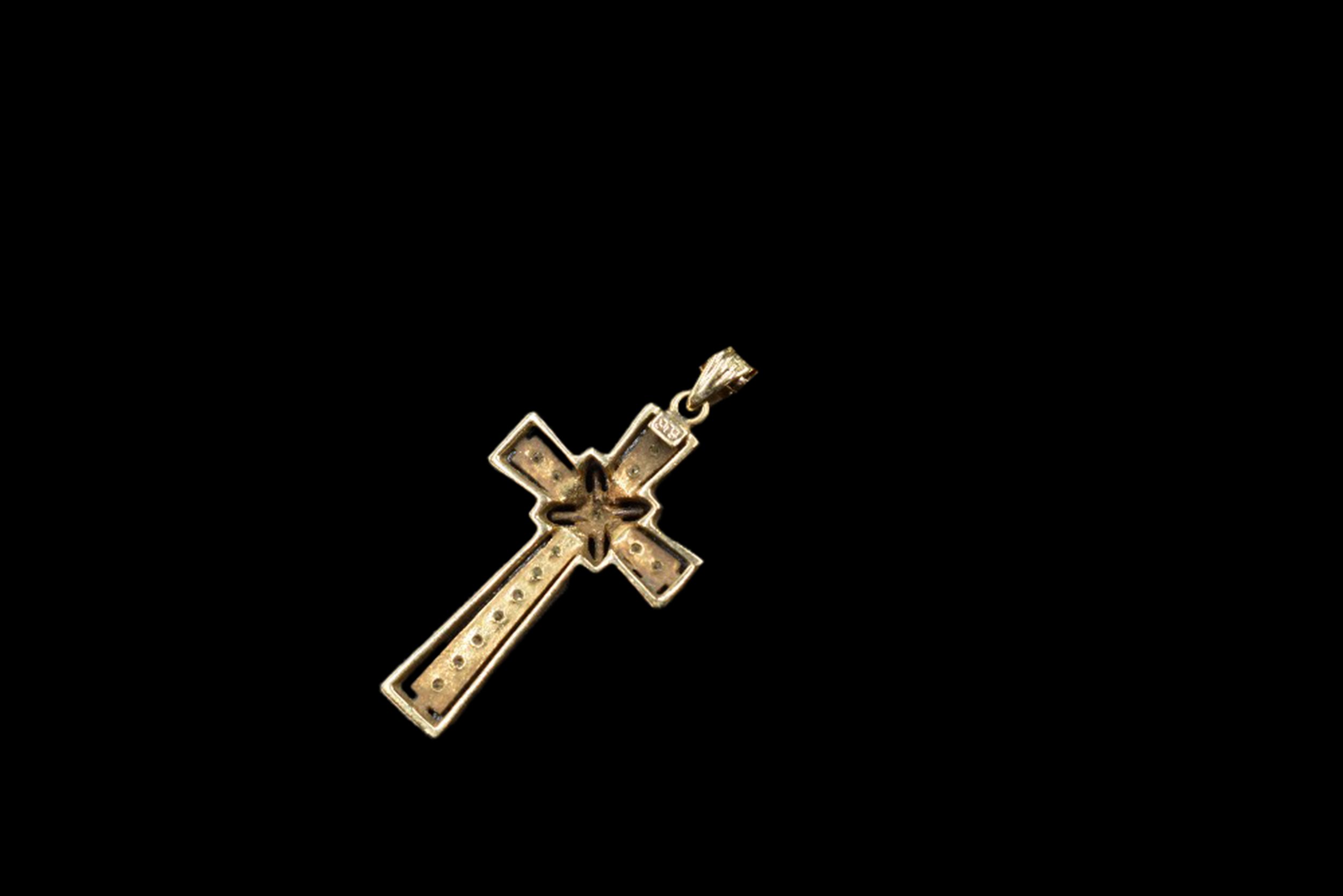 Image 3 of 5
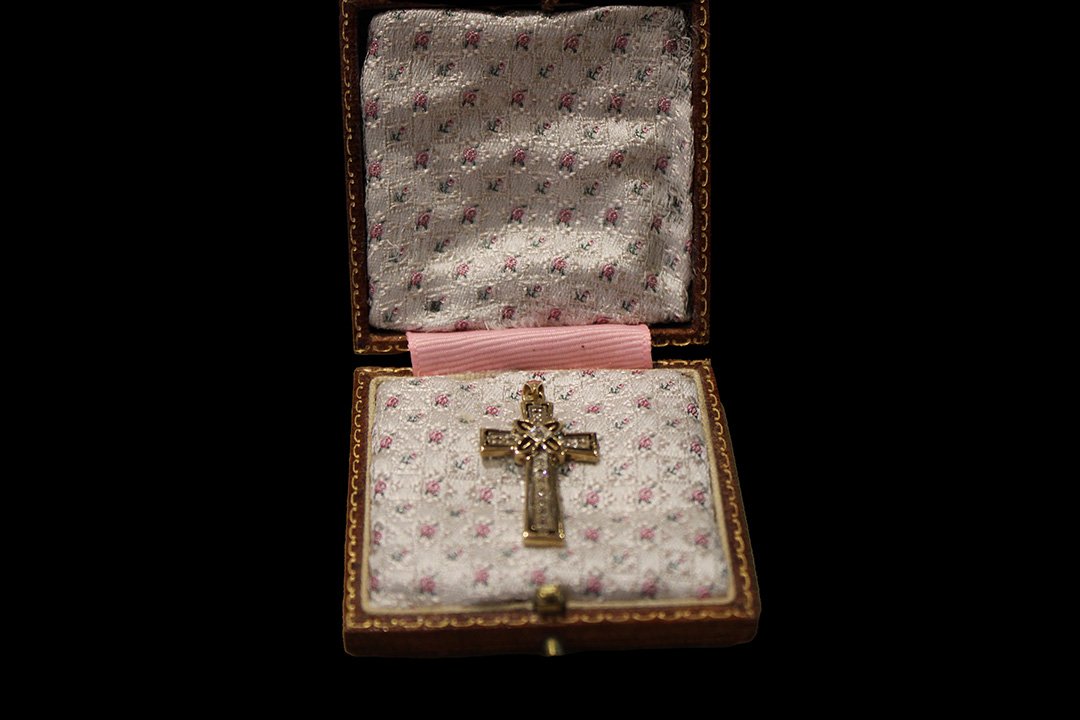 Image 4 of 5
 Image 5 of 5