 Image 1 of 5
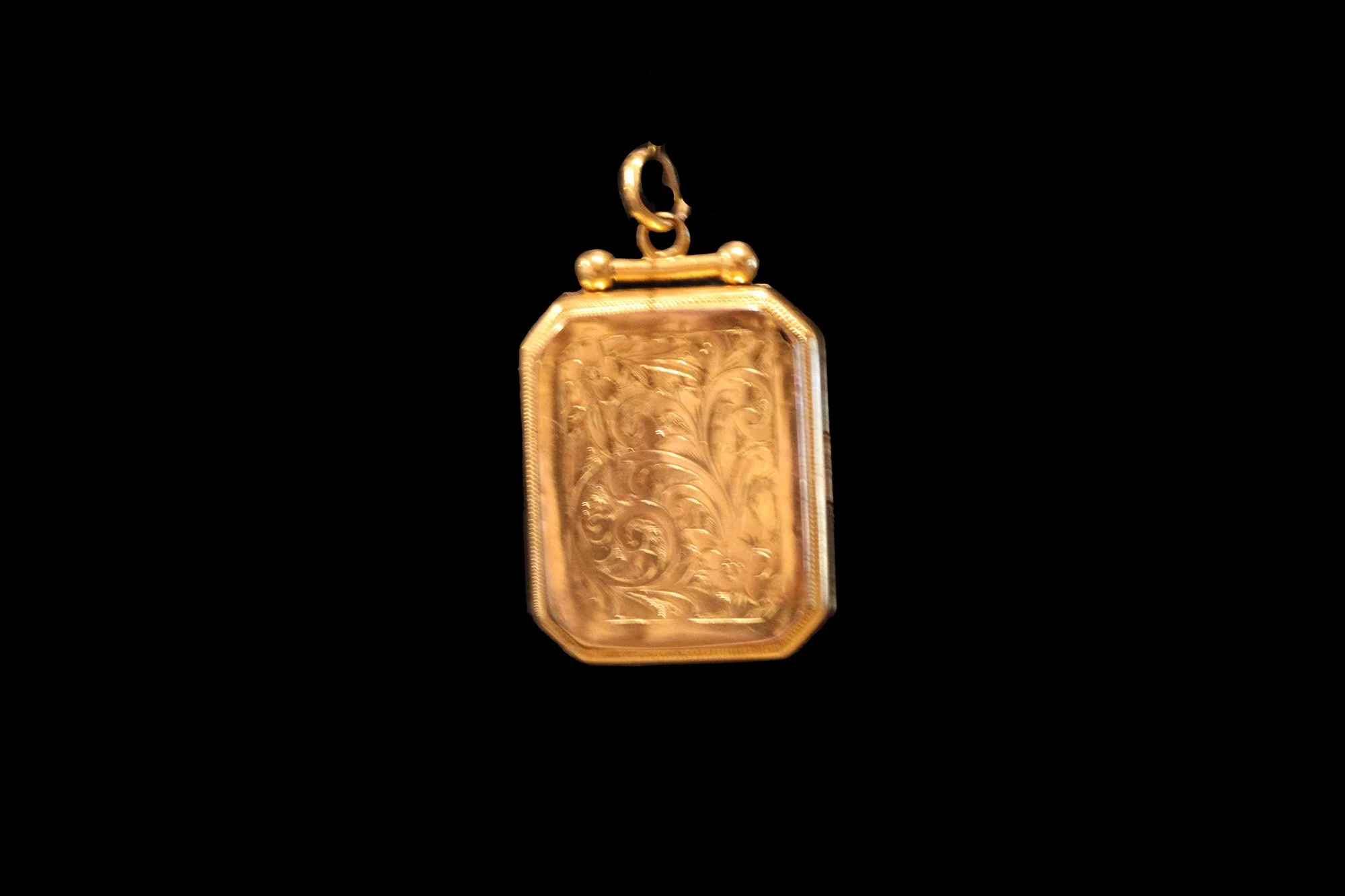 Image 2 of 5
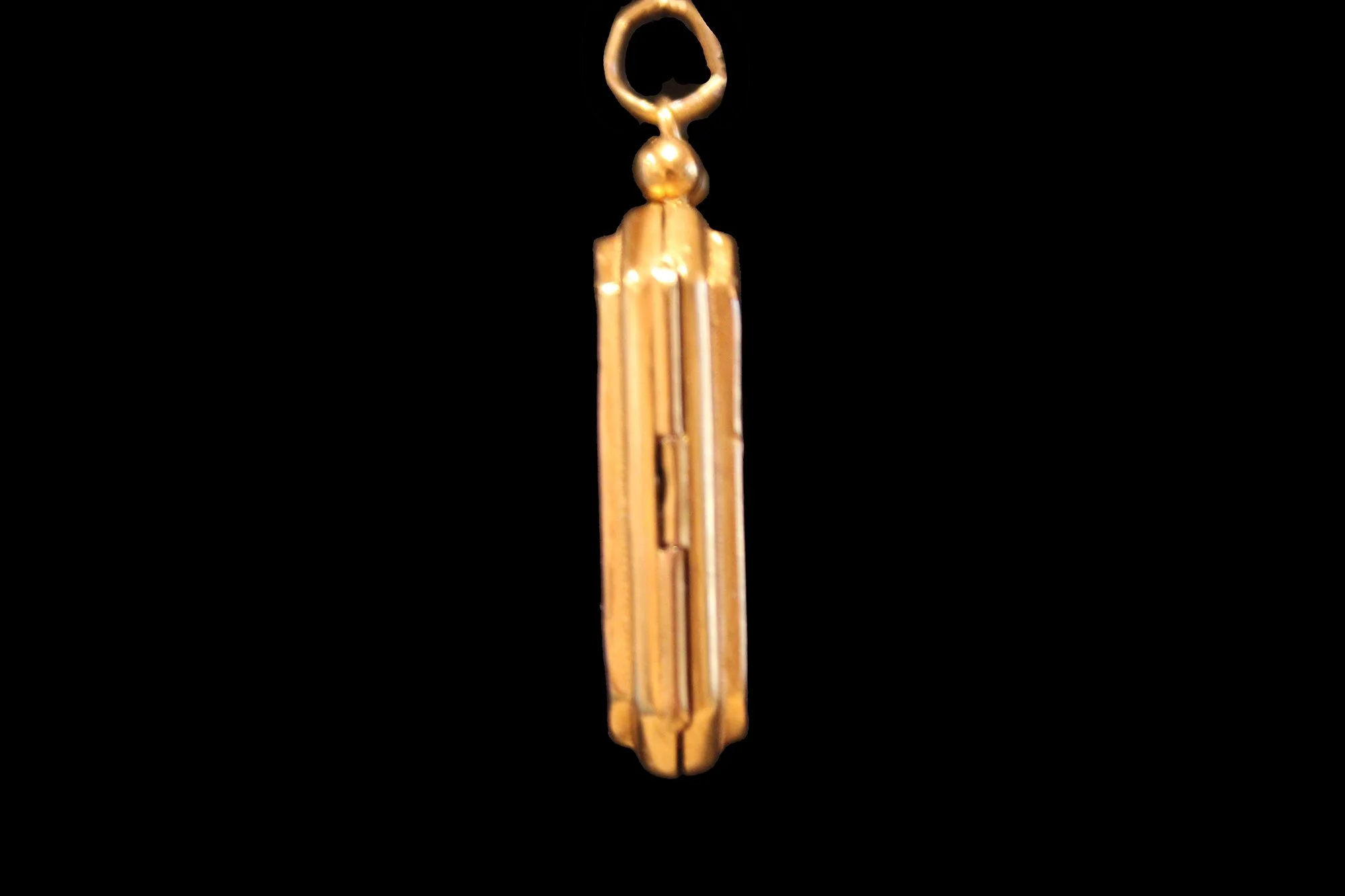 Image 3 of 5
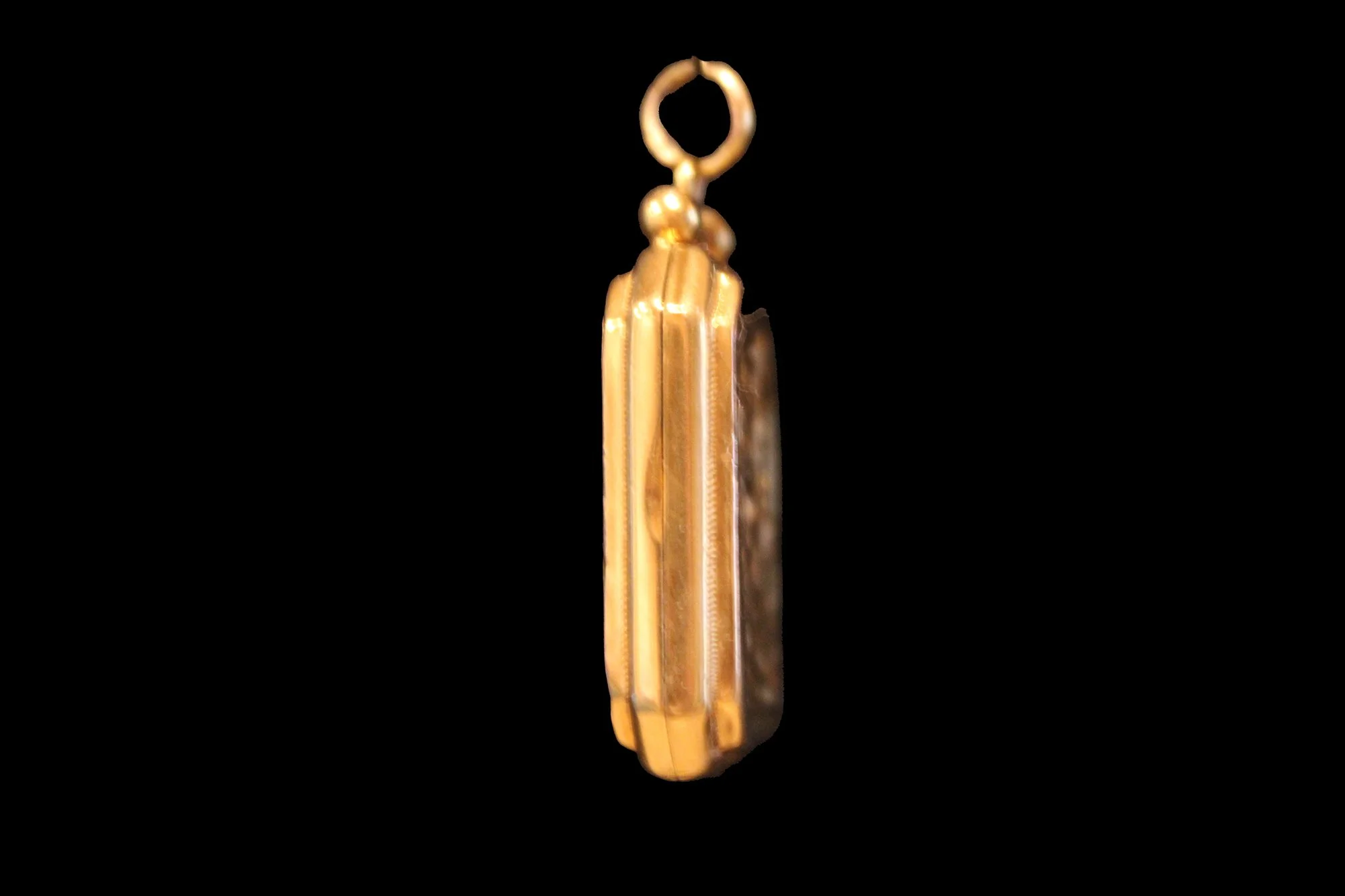 Image 4 of 5
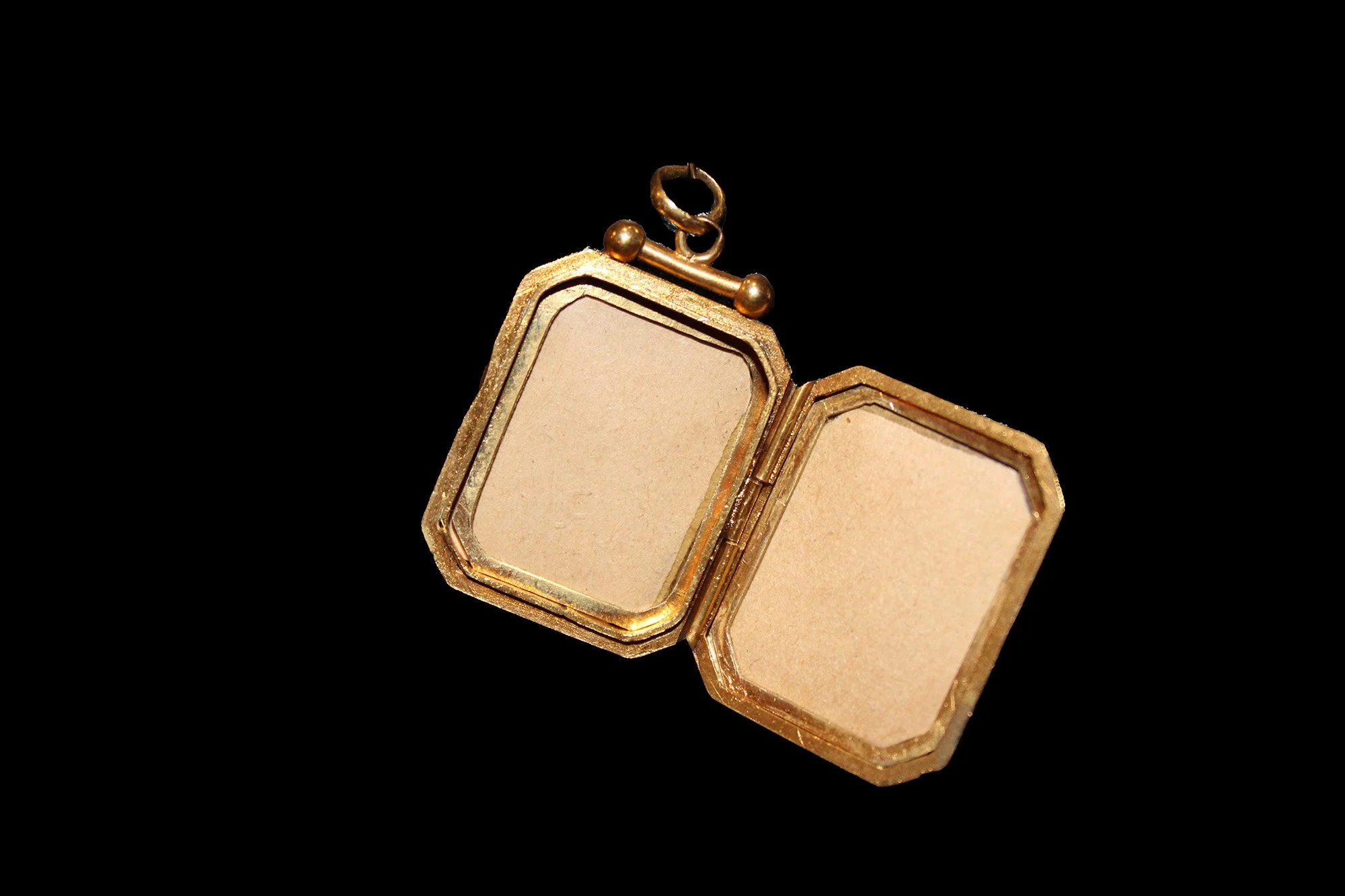 Image 5 of 5
Late Victorian Gold Double-Compartment Locket
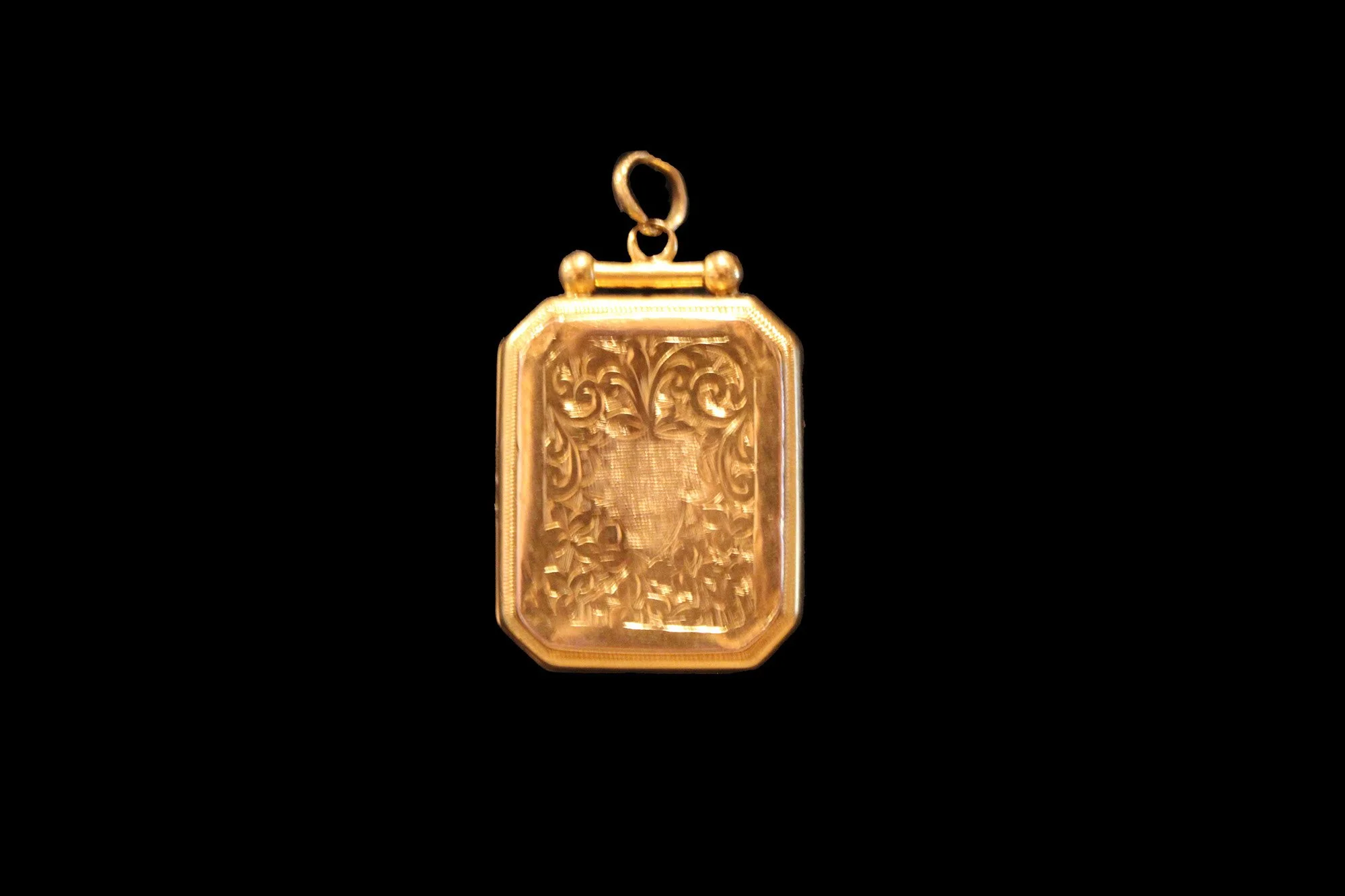
A rectangular gold locket of cut-cornered form, dating to the late nineteenth century, its exterior richly engraved with scrolling foliage surrounding a finely textured central reserve. Opening on a hinged edge, the locket reveals two glazed compartments designed to preserve photographs, locks of hair, miniature images, or other intimate keepsakes.
The locket occupied a particularly important place within Victorian jewelry. More than an ornament, it was a private repository: an object worn publicly while concealing something deeply personal within. Portraits of husbands, wives, children and parents might be carried close to the body; locks of hair could preserve a physical trace of someone loved, whether living, absent or deceased. The distinction is important. Although lockets became closely associated with mourning and remembrance during the nineteenth century, they were equally jewels of affection, family and romantic attachment.
This example's double glazed interior intensifies that intimate function. Two compartments allowed relationships to be preserved together—a pair of portraits, perhaps, or an image accompanied by hair. Without its original contents, their identities and meaning are now unknowable. The empty compartments nevertheless preserve the architecture of remembrance for which the jewel was made.
Its exterior belongs unmistakably to the nineteenth-century decorative vocabulary. Engraved foliate scrolls spread across the surface in an intricate composition of curling leaves and tendrils. Foliage was ubiquitous in Victorian ornament, reflecting both the period's fascination with the natural world and the enduring decorative traditions inherited from earlier European art. Individual plants could carry highly specific meanings in Victorian culture, but generalized foliate scrollwork such as this should not automatically be assigned the symbolic meaning of a particular species.
The contrast between exterior and interior is particularly evocative. On the outside, elaborate gold ornament presents itself to the world; inside, two protected spaces were reserved for things intended for the wearer alone.
This duality lies at the heart of the Victorian locket.
It was simultaneously jewel and container, display and concealment, ornament and memory. Closed, it revealed nothing of the identity of those held within. Opened, it transformed from an object of adornment into an intensely personal archive.
The original contents have disappeared, but the spaces created to preserve them remain—a small and compelling testament to the Victorian desire to give memory a physical form.