A Victorian Diamond and Red Enamel Ring
England, Victorian period, circa 1874
An exceptionally evocative example of nineteenth-century sentimental jewelry, this Victorian gold ring combines the brilliance of old-cut diamonds with the unusual richness of translucent red basse-taille enamel. Its elongated navette-shaped bezel is set with three graduated diamonds, comprising a central cushion-cut stone flanked by two pear-shaped diamonds, with an estimated combined weight of approximately 0.70 carats.
The diamonds are enclosed within a continuous border of deep crimson enamel, its translucent surface revealing subtle variations in tone and the underlying worked metal. The enamel decoration extends onto the elegantly divided shoulders, creating a harmonious relationship between the elongated central setting and the architectural openness of the gold mount.
Concealed within the band is the ring's most historically significant feature: a hand-engraved memorial inscription recording the death of an individual named William Aikin on 14 January 1874. This inscription transforms the ring from an exquisite example of Victorian goldsmithing into a surviving document of personal remembrance and love.
The Unusual Symbolism of Red Enamel
Perhaps the most distinctive feature of this ring is its use of crimson rather than the black enamel conventionally associated with Victorian mourning jewelry. Red enamel is a less conventional choice for a ring bearing an explicit memorial inscription. Throughout European decorative traditions, red has carried associations with love, vitality, devotion, sacrifice, and the intensity of human emotion. In the context of sentimental jewelry, its presence may be understood as an evocative expression of enduring affection rather than solely the outward conventions of grief. Nevertheless, there is no established universal Victorian mourning code by which red enamel can be assigned one definitive meaning. Its selection may equally have reflected the personal preferences of the commissioner, the aesthetic intentions of the goldsmith, or a desire to create a memorial ornament suitable for continued. The distinction is historically important. Rather than interpreting the crimson enamel as evidence of a particular relationship, it is more appropriate to recognize its unusual visual character and the possibility of a deliberately personal symbolic choice.
Diamonds as Symbols of Permanence
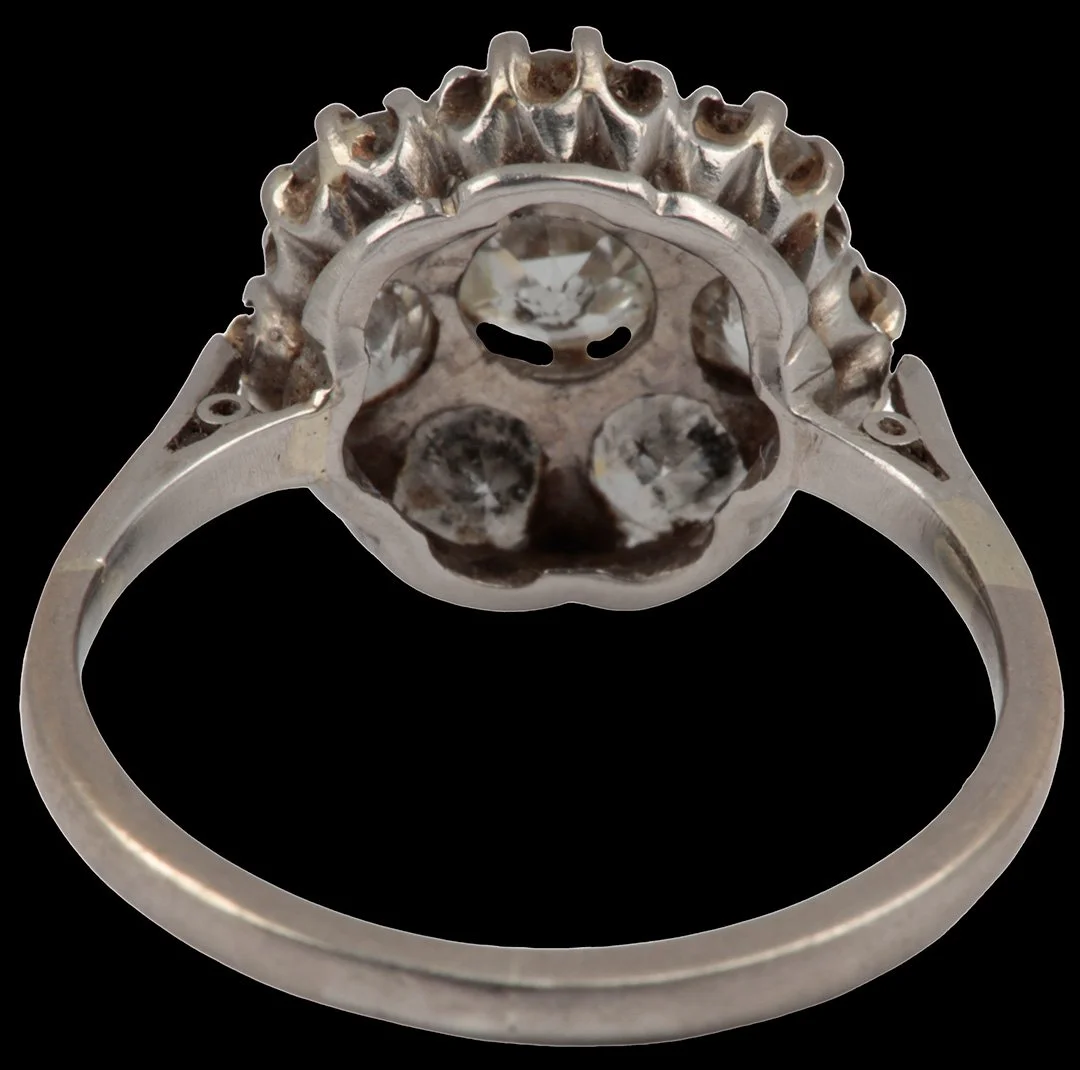
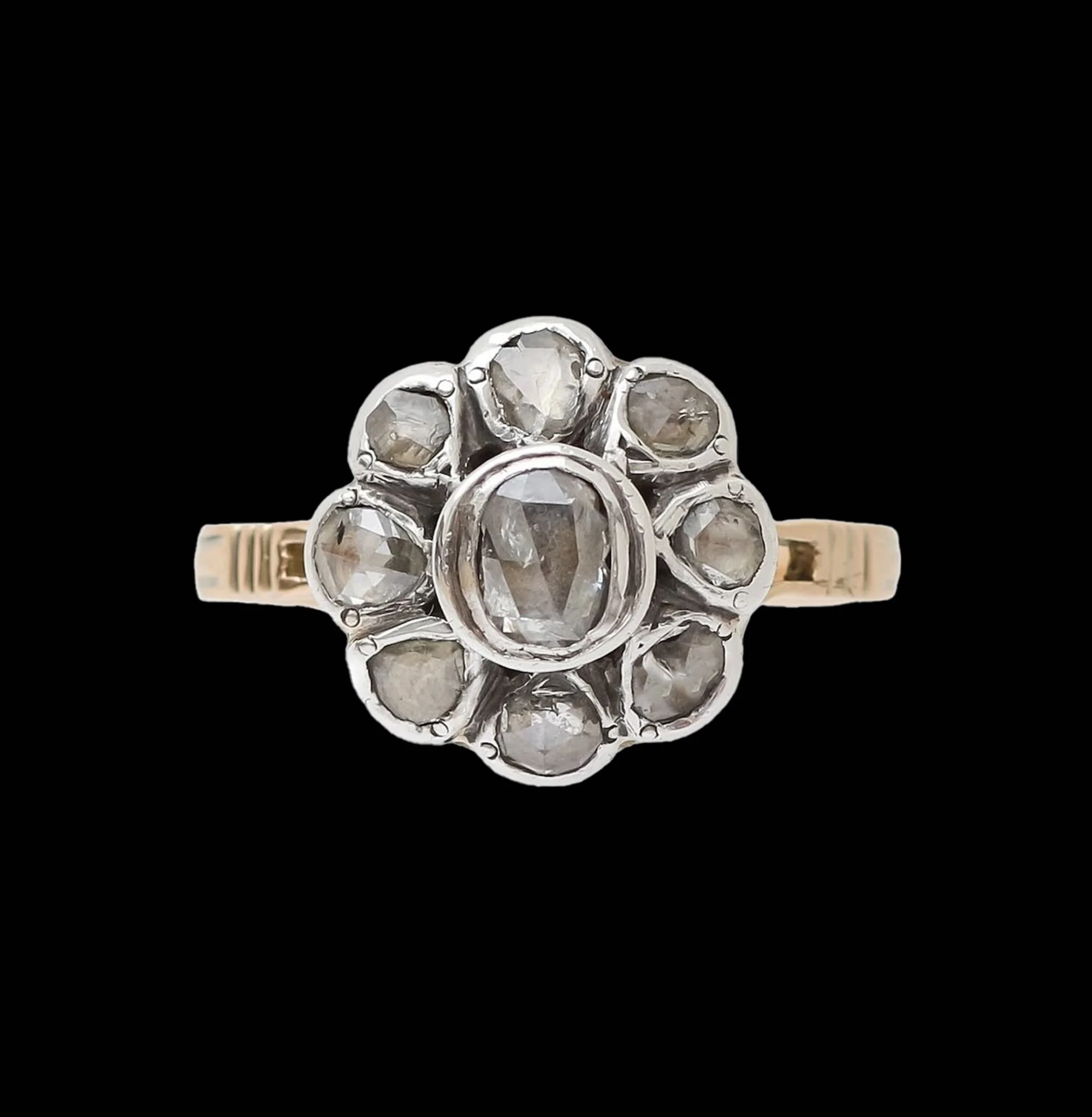
Diamonds occupied a prominent place in the language of nineteenth-century sentimental jewelry, their extraordinary hardness and durability lending themselves to associations with constancy, fidelity, purity, and enduring attachment. In this ring, three graduated diamonds form a luminous central composition, their antique cuts producing the softer, individualized reflections characteristic of diamonds fashioned before the standardization of modern brilliant cutting. The central cushion-shaped diamond is framed by two smaller pear-shaped stones, creating an elongated arrangement that complements the navette outline.
The contrast between the diamonds' pale brilliance and the deep red enamel is particularly striking. It establishes a visual dialogue between permanence and emotion, an interpretation consistent with the broader sentimental vocabulary of Victorian jewelry, though not a meaning that can be conclusively attributed to its original commissioner.
The Navette Form and the Goldsmith's Art
The navette, or marquise-shaped, outline had a long history in European jewelry, becoming particularly fashionable during the eighteenth century and continuing into the nineteenth. Its elongated, pointed silhouette was especially suited to rings incorporating miniature portraits, painted memorial scenes, hairwork, gemstones, or decorative enamel. The present example retains the elegant proportions of this tradition while introducing an unusually restrained three-diamond arrangement.
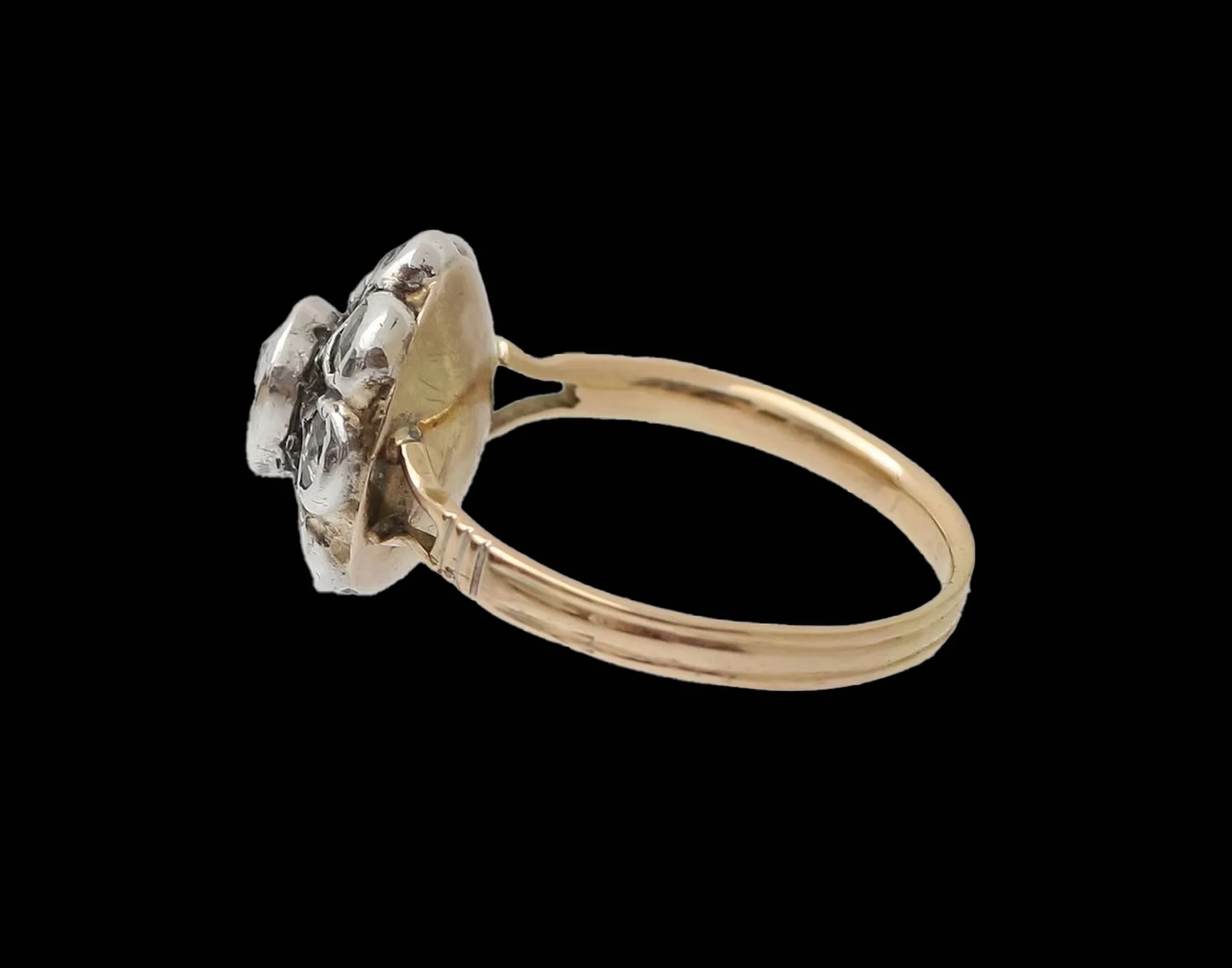
The split shoulders are carefully integrated into the design, their openwork construction lightening the appearance of the gold mount while allowing the red enamel to continue beyond the central bezel. The resulting composition is both architecturally sophisticated and visually cohesive. The application of translucent basse-taille enamel adds a further dimension of craftsmanship. In this technique, a transparent or translucent enamel is applied over a prepared metal surface, allowing the underlying relief or engraved decoration to influence the appearance of the finished color. The ring's combination of gold, diamonds, enamel, and personal engraving illustrates the considerable technical and artistic refinement that could be devoted to a single object of private remembrance.
Historical Significance
This Victorian mourning ring is distinguished by its uncommon crimson enamel, finely balanced antique diamond setting, and surviving memorial inscription. It demonstrates that nineteenth-century mourning jewelry was not confined to a rigid vocabulary of black ornamentation, but could accommodate individual aesthetic choices and highly personal expressions of attachment.
For the contemporary collector, the ring represents an intersection of decorative craftsmanship, Victorian emotional culture, and documentary history.


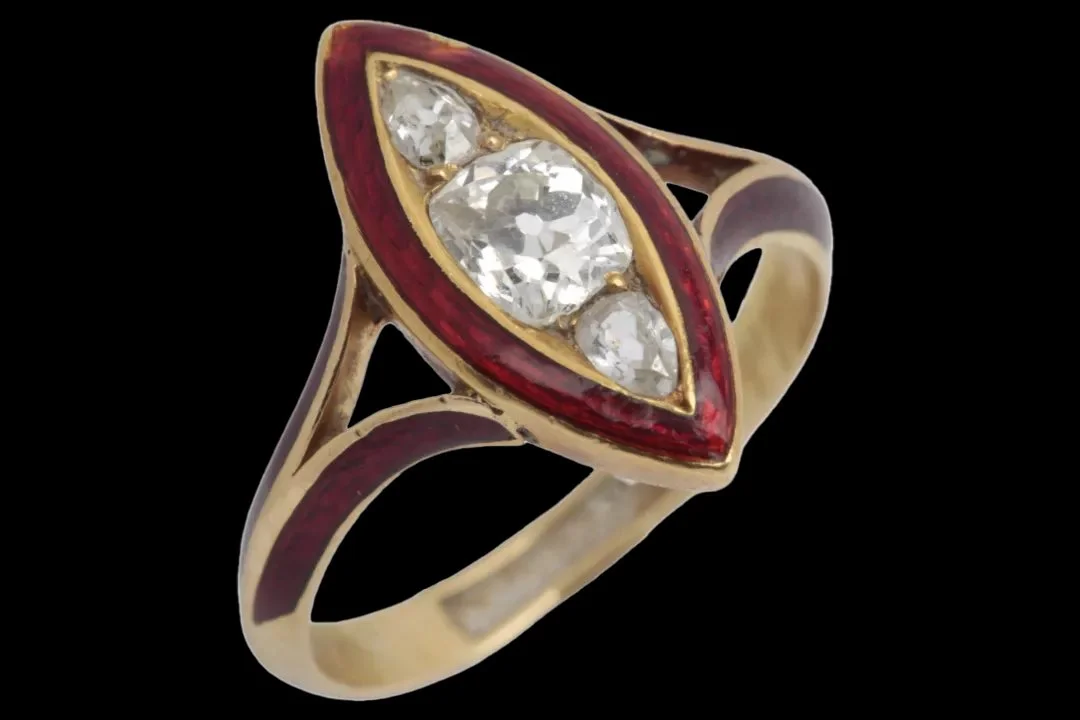 Image 1 of 5
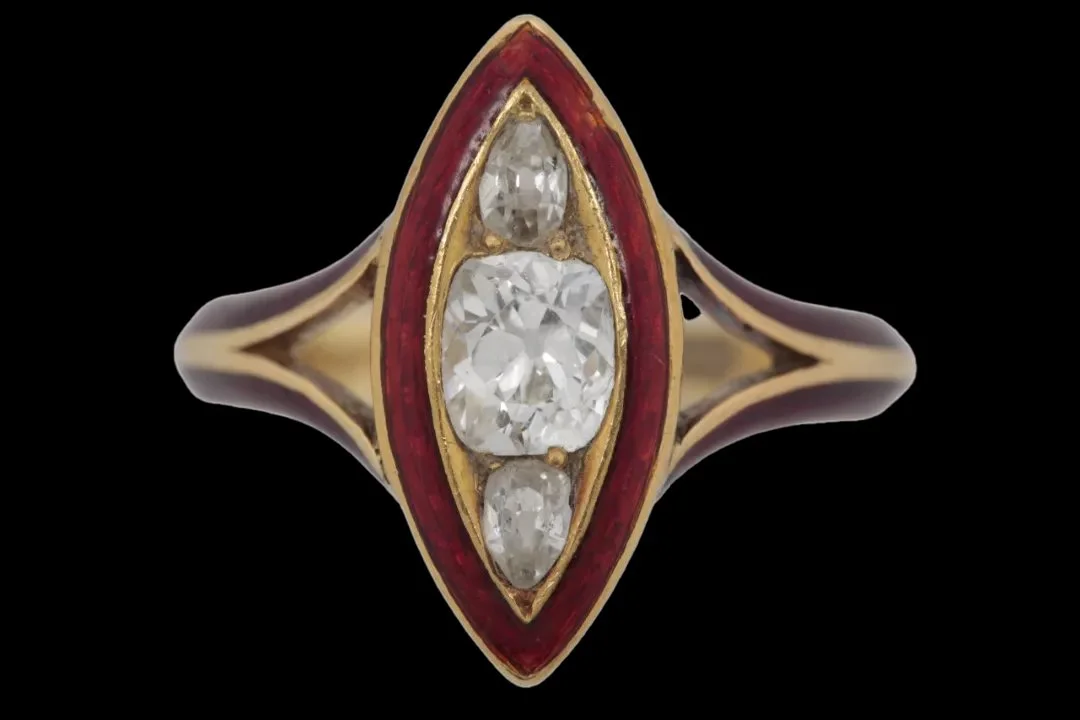 Image 2 of 5
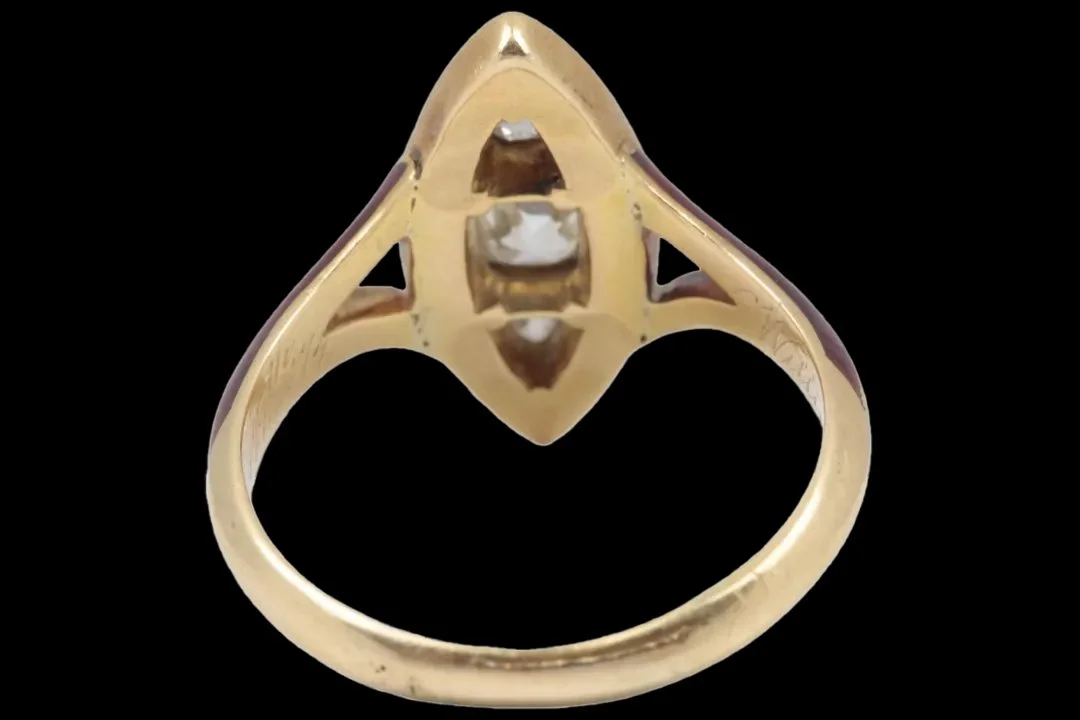 Image 3 of 5
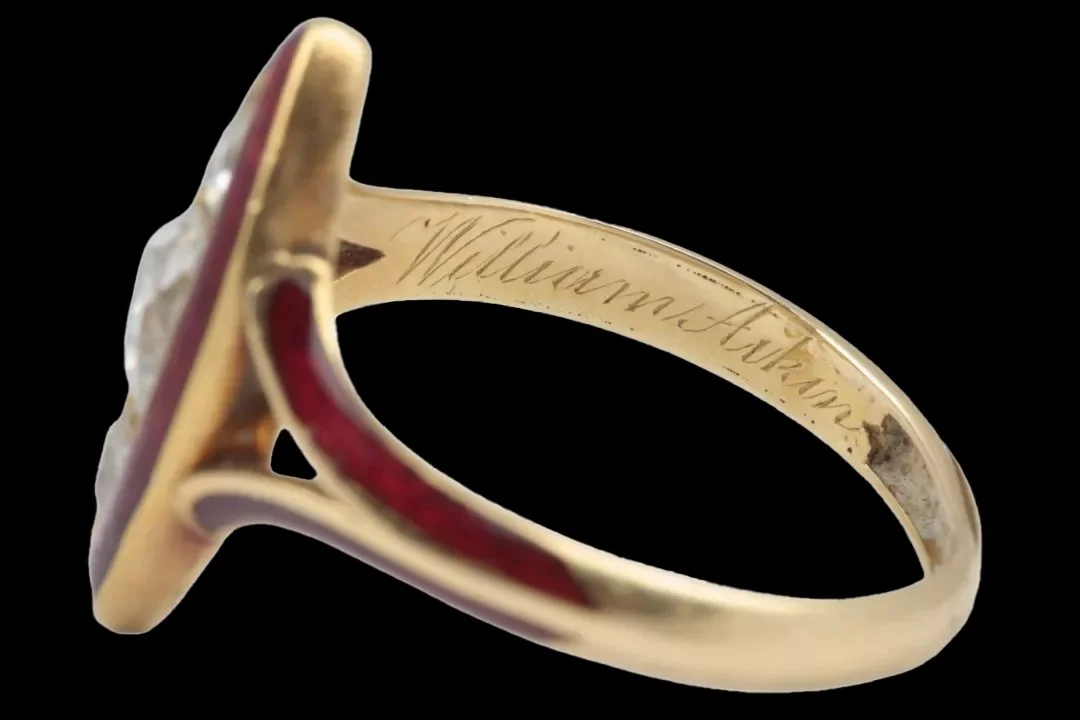 Image 4 of 5
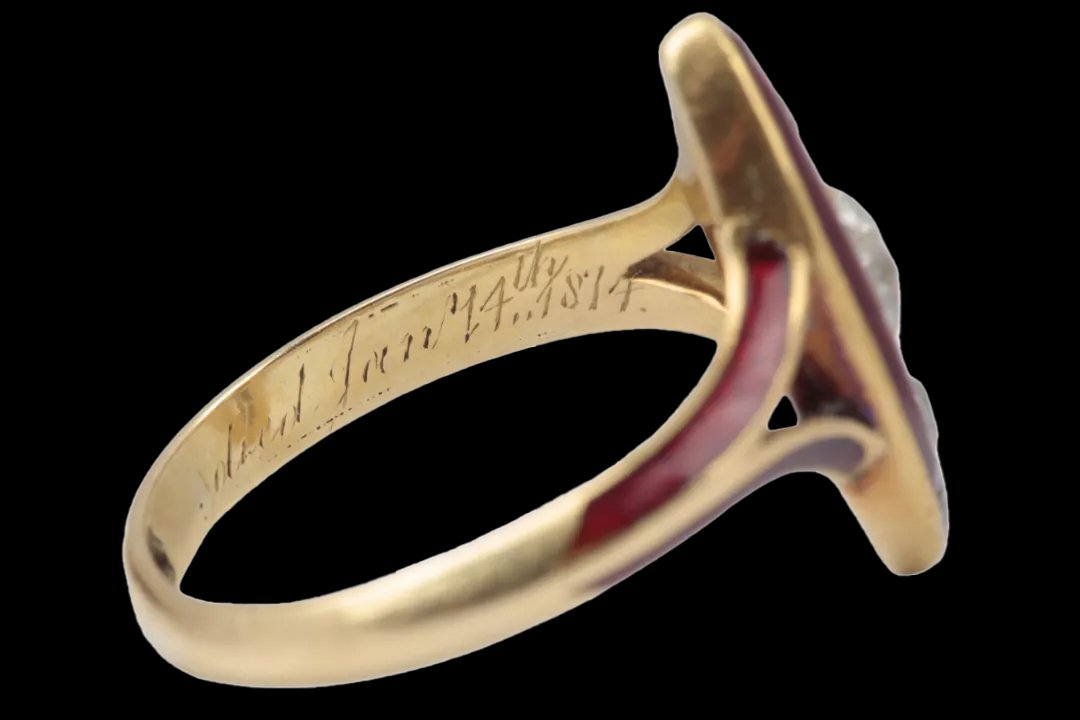 Image 5 of 5