 Image 1 of 6
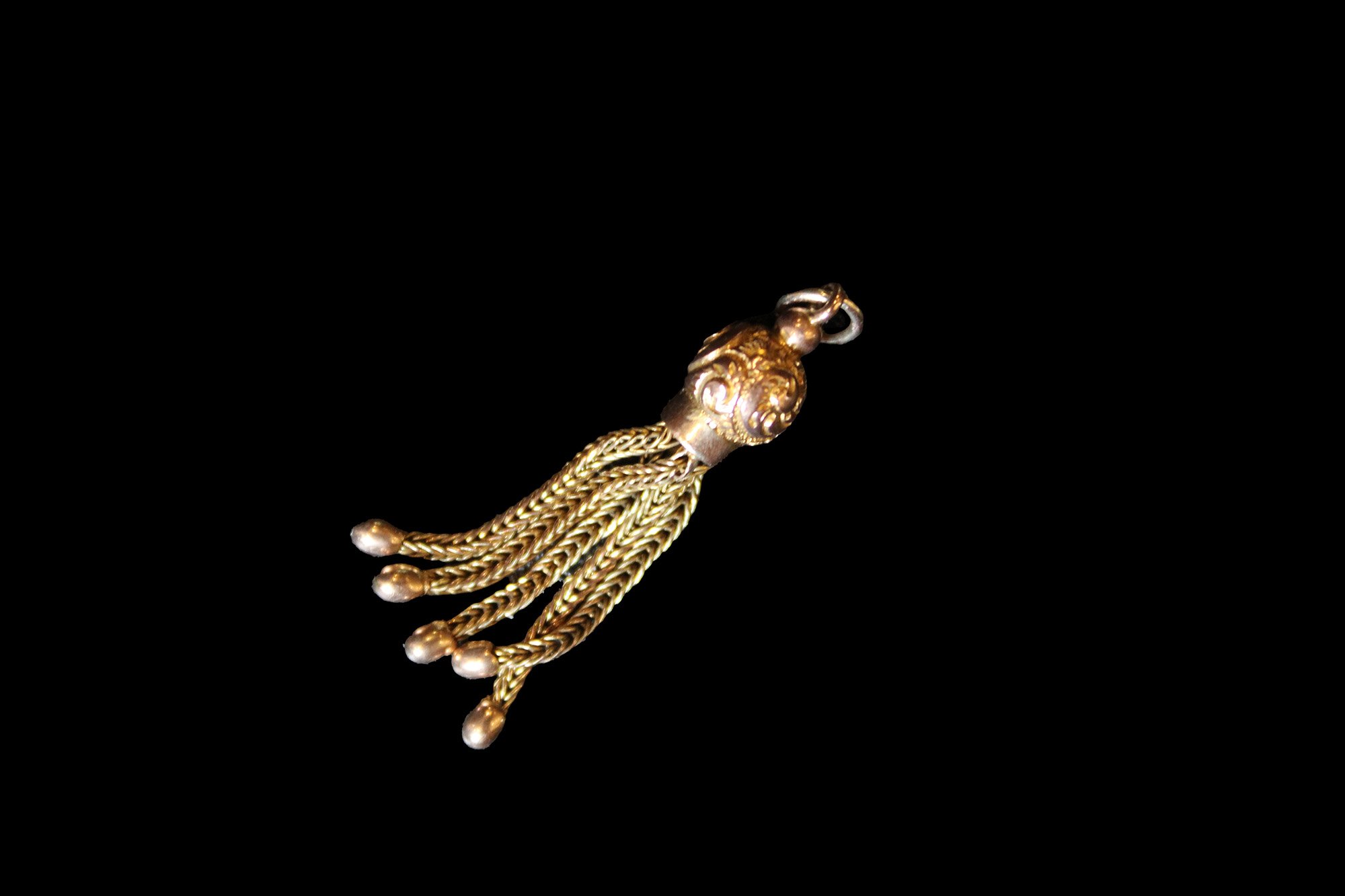 Image 2 of 6
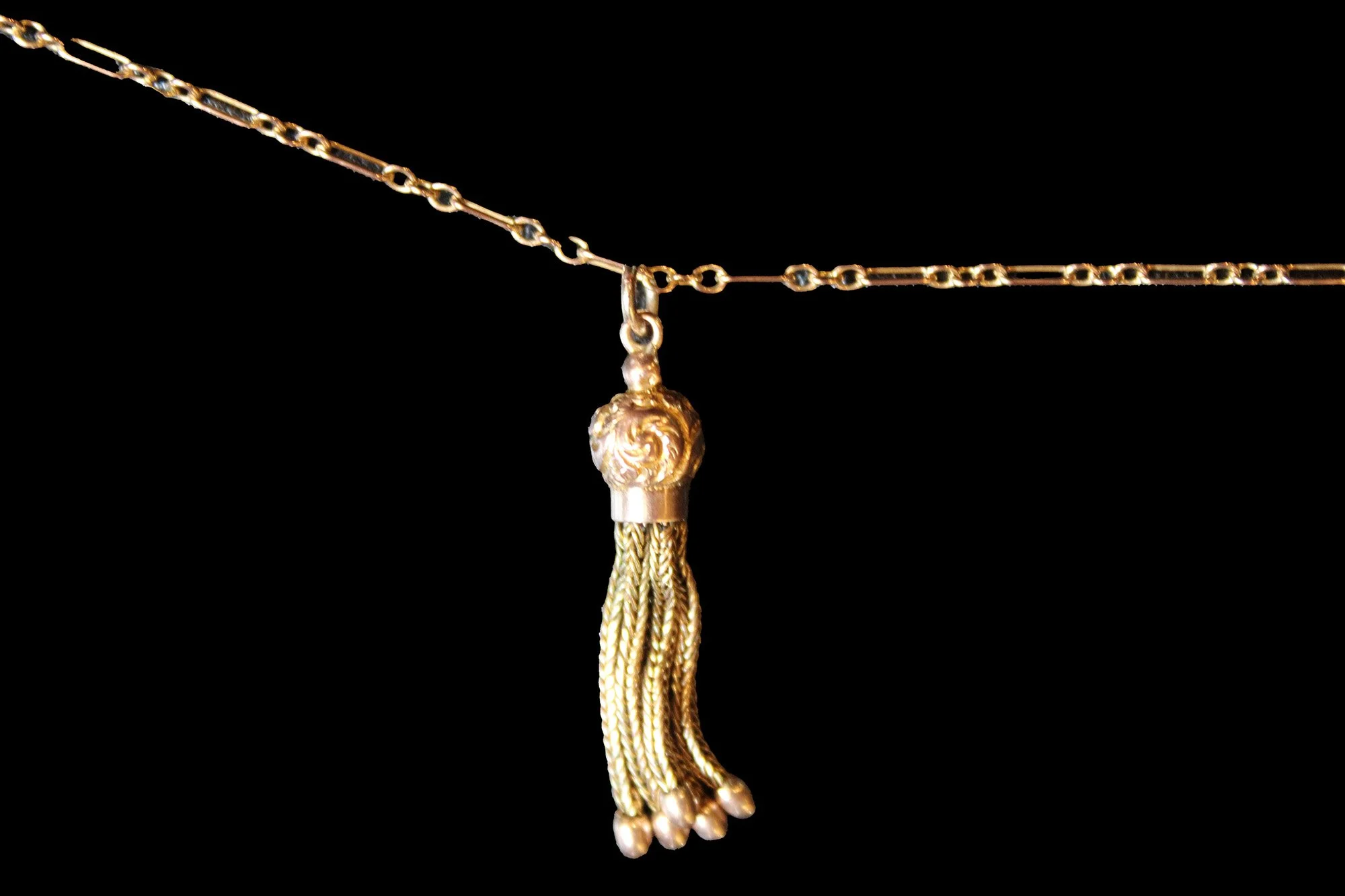 Image 3 of 6
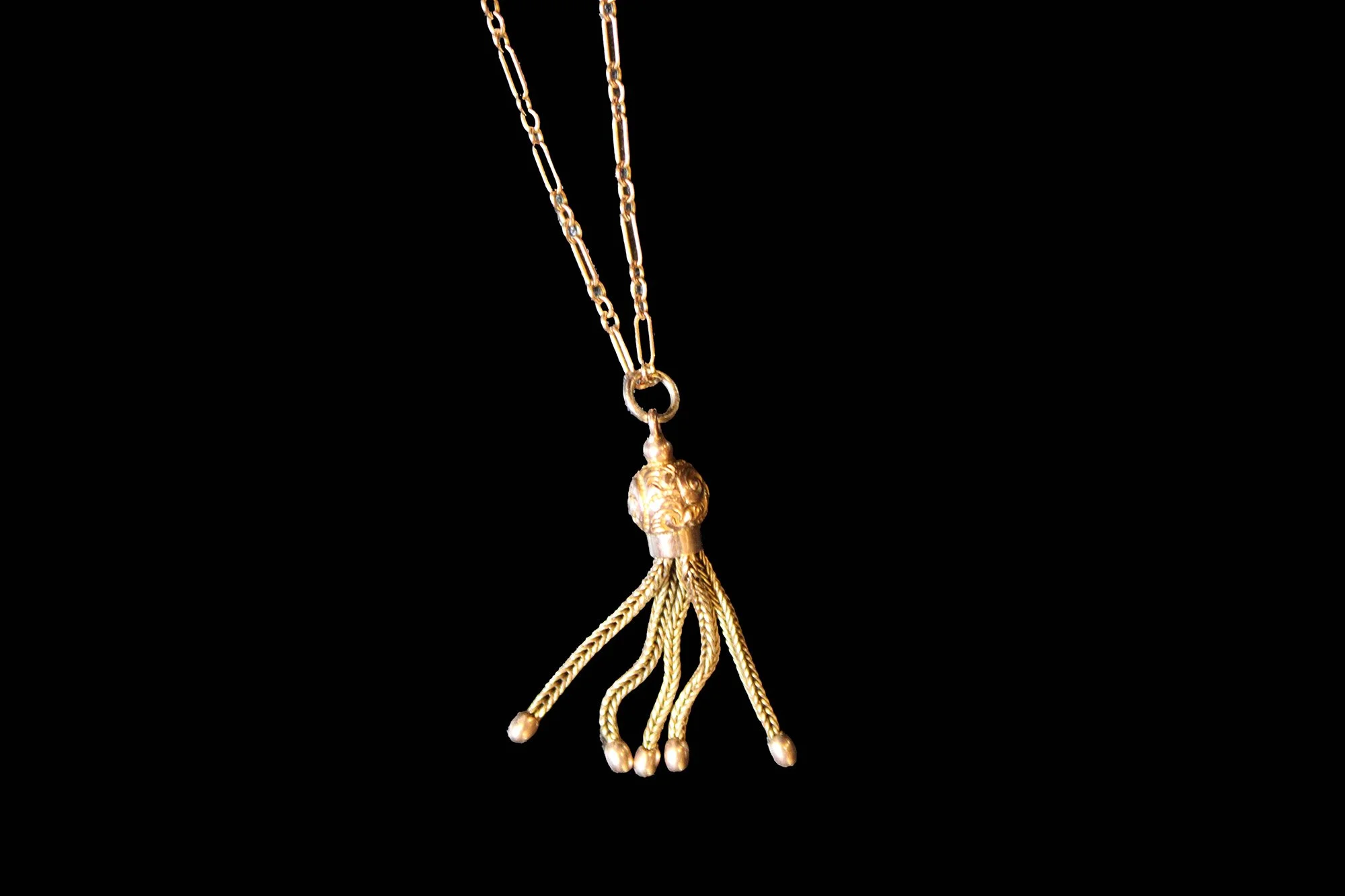 Image 4 of 6
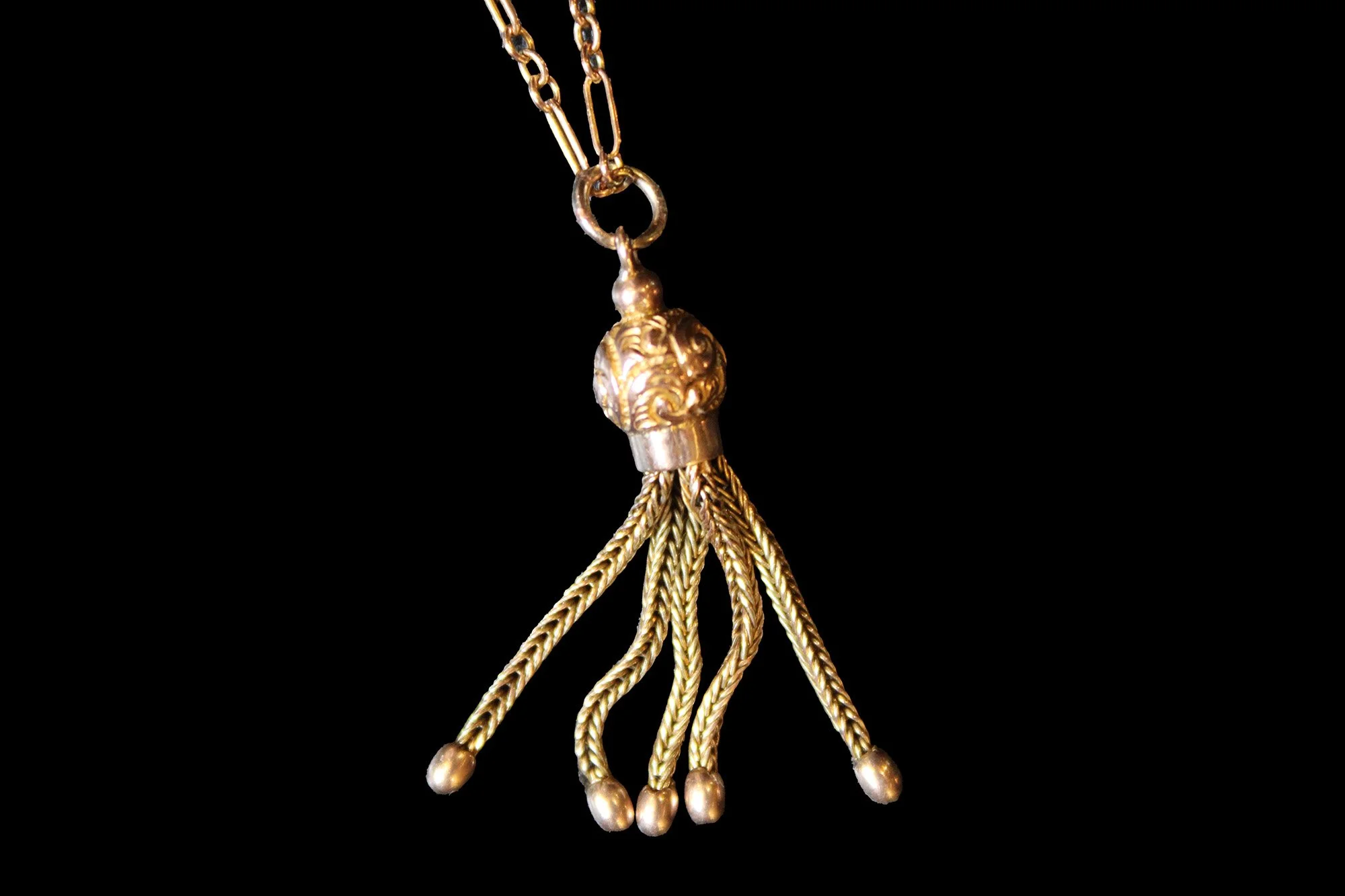 Image 5 of 6
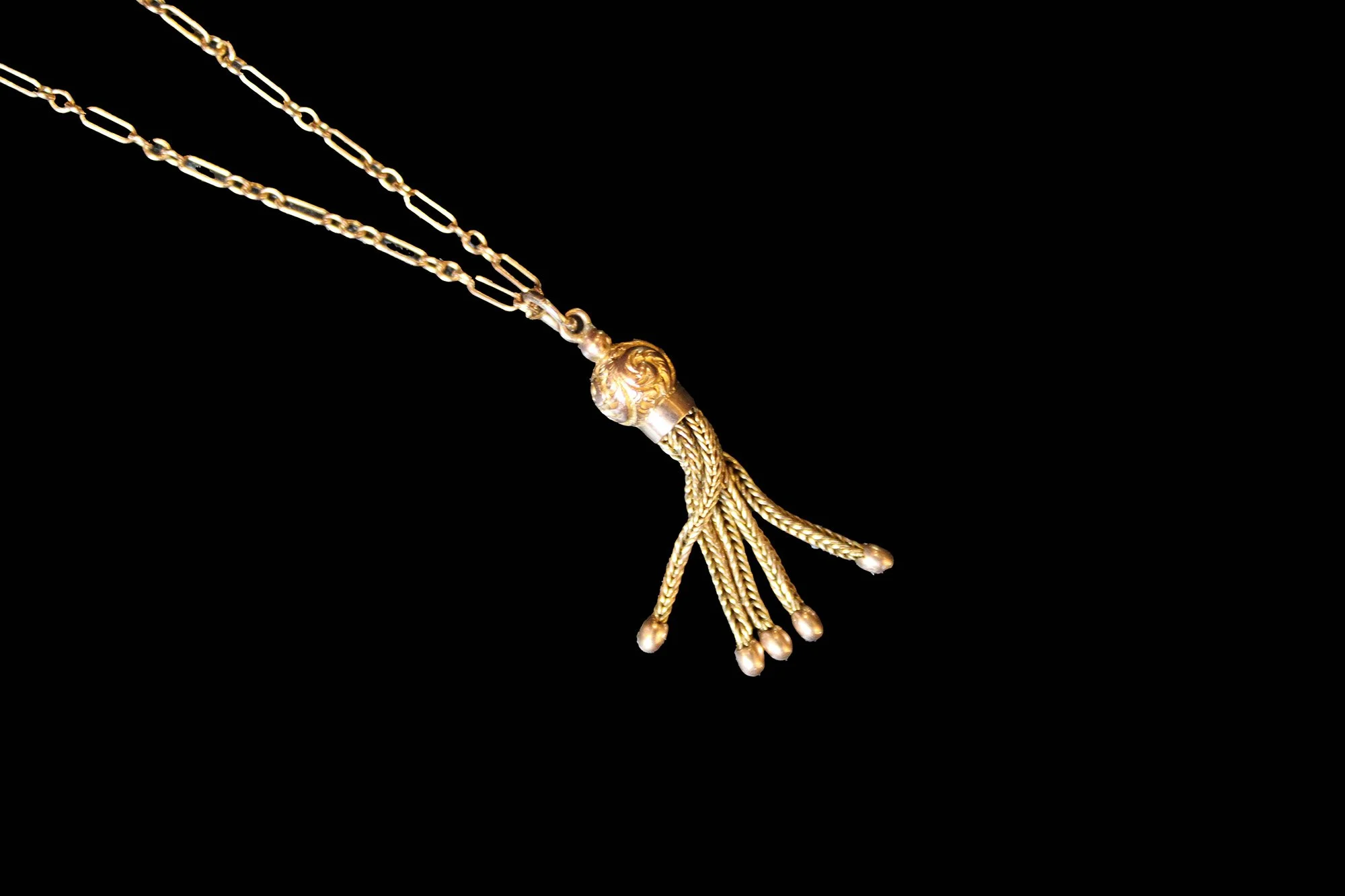 Image 6 of 6
Victorian 9ct Gold Tassel Pendant
19th Century | Acquired in London, England
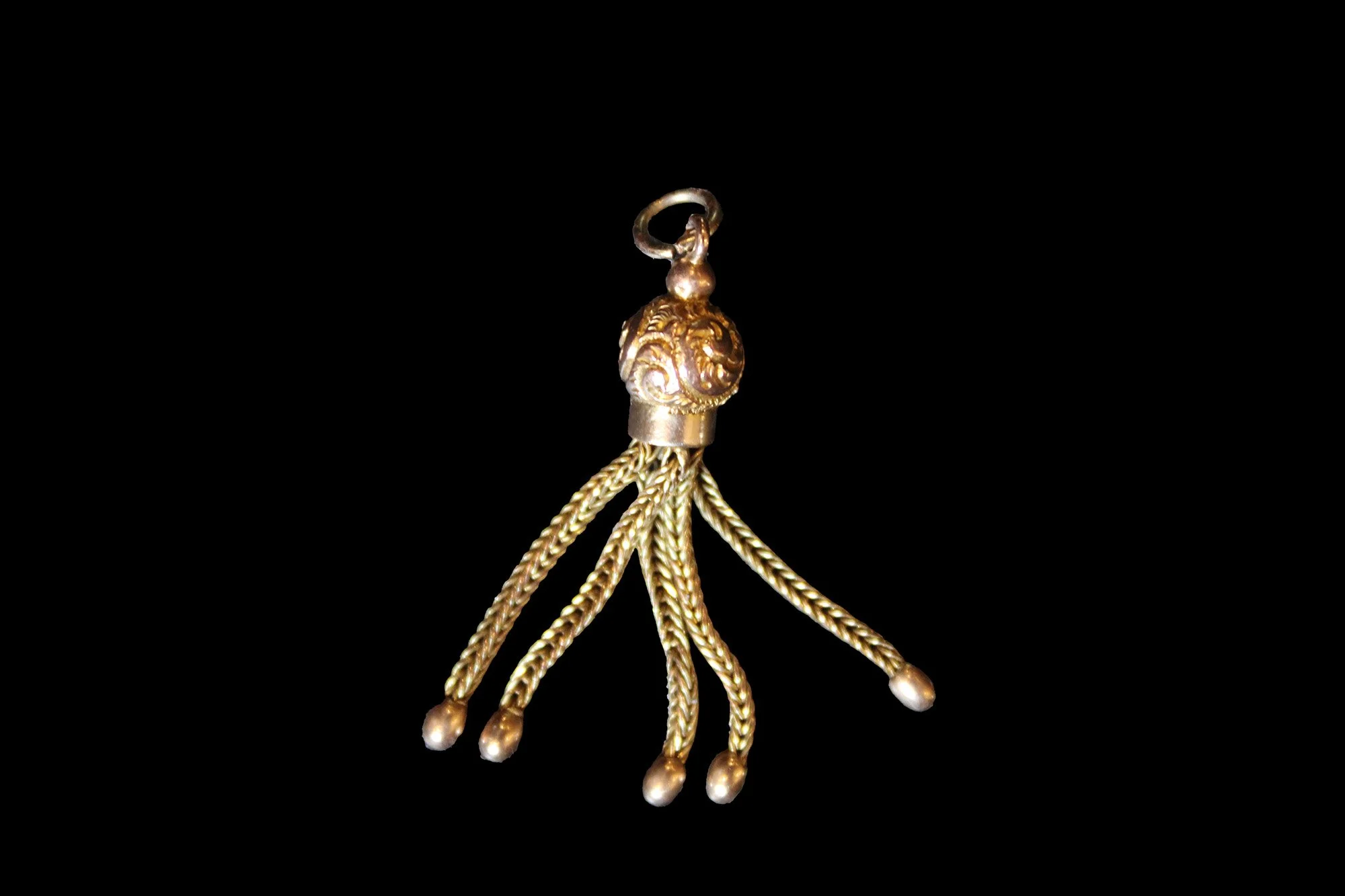
A delicate Victorian tassel pendant fashioned in 9K rose gold, composed of multiple articulated strands suspended from an ornamental domed cap. Each slender strand is constructed to resemble twisted or braided textile cord and terminates in a polished gold droplet, allowing the pendant to move freely with the wearer.
The jewel is a miniature translation of passementerie—the elaborate tradition of tassels, cords, braids and fringes used for centuries to ornament fashionable dress and luxurious interiors. Victorian goldsmiths borrowed freely from the textile arts, recreating the softness and movement of thread through articulated precious metal.
Here, that relationship is unusually explicit. The individual gold strands retain the appearance of braided cord, while the decorated cap imitates the element that would traditionally bind the threads of a textile tassel together. Even the small terminal drops perform the visual function of knots or weighted ends. The goldsmith has effectively preserved the architecture of a textile object while replacing its fragile fires with gold.
Tassels were particularly suited to nineteenth-century jewelry because movement formed an essential part of their beauty. Suspended from a chain, chatelaine, bracelet or other jewel, the individual strands separated and gathered again as the wearer moved, catching and reflecting light across their textured surfaces.
Historically, the tassel should not be assigned a single fixed Victorian meaning. Unlike recognizable sentimental motifs such as the forget-me-not, serpent or mourning urn, it belonged to a broader decorative language. Through its long use in fashionable dress, ceremonial costume and elaborate interiors, the tassel carried associations with luxury, refinement, craftsmanship and display.
Its construction nevertheless gives the form an appealing symbolic resonance: multiple independent strands are gathered and bound together before being allowed to fall freely. Modern interpretation may therefore find ideas of connection, unity and movement within the design, although these should not be presented as a codified Victorian meaning.
At only 1.5 inches long and weighing approximately 2 grams, the pendant is remarkably economical in its use of material. Its visual richness comes not from mass, but from articulation and craftsmanship. The many moving strands create an object considerably more animated than its diminutive scale might suggest.
A charming survivor of Victorian goldwork, the pendant captures one of the great pleasures of nineteenth-century jewelry: the transformation of an everyday decorative form into something precious, intimate and enduring.