The Art of Georgian Brilliance: Antique Gold and Silver Foil-Back Paste Earrings
Georgian period, circa 1780–1830
An exquisite pair of Georgian paste earrings, exemplifying the remarkable artistry of eighteenth- and early nineteenth-century jewelers who transformed finely cut glass into ornaments of extraordinary brilliance. Mounted in 9-carat gold and silver, each earring features a substantial circular paste stone secured within a traditional cut-down collet setting, surmounted by a smaller paste accent that provides a delicate architectural transition to the fastening.
The principal stones are fashioned with numerous facets designed to capture and reflect light, their brilliant surfaces displaying the distinctive optical character of historic paste. Beneath each stone, a reflective foil backing enhances luminosity, creating an effect that recalls the brilliance of diamonds in candlelit interiors.
The silver settings are particularly characteristic of Georgian jewelry, when white metals were frequently employed around colorless stones to enhance their apparent brightness. The individual cut-down collets, with their carefully shaped metal claws extending over the edges of the paste, reveal a method of setting associated with the refined craftsmanship of the period.
The reverse of each earring is enclosed by a smooth, gently domed gold backing. These closed settings served both a practical and decorative purpose, protecting the reflective material beneath the stones while creating a finished gold surface against the ear.
Measuring approximately 18.5 millimeters in length, the earrings possess a restrained elegance that belies the sophistication of their construction. Their substantial combined weight of approximately 11.3 grams further reflects the solid construction associated with historic closed-back jewelry.
Paste Jewelry and the Pursuit of Brilliance
During the eighteenth century, paste jewelry achieved a level of artistic and technical refinement that made it an important category of European luxury adornment. The finest examples were not merely inexpensive substitutes for diamonds. They represented a distinct tradition of decorative craftsmanship, requiring specialized knowledge of glass composition, cutting, polishing, metalworking, and optical effects.
The development of sophisticated paste cutting is particularly associated with eighteenth-century European jewelers, including the Parisian jeweler Georges Frédéric Strass (1701–1773), whose name became closely connected with high-quality diamond imitation. Strass's work contributed to the prestige of paste jewelry at a time when elaborate gemstone ornaments were essential elements of fashionable court dress. Paste could be cut into a remarkable variety of shapes, allowing jewelers to experiment with optical effects and compositions that were sometimes impractical or prohibitively expensive to execute in diamonds.
The present earrings belong to this tradition of decorative ingenuity, in which carefully cut glass was transformed into jewelry of exceptional visual sophistication.
Candlelight and the Georgian Social World
The brilliance of Georgian paste jewelry must be understood within the lighting conditions for which it was created. During the eighteenth and early nineteenth centuries, formal evening gatherings, assemblies, theaters, and private entertainments were illuminated primarily by candles. Under these conditions, the interplay between faceted paste, reflective foil, and polished silver settings could produce striking flashes of light. Unlike modern electric illumination, candlelight created a warm, moving source of reflection. Jewelry designed for evening wear responded to these shifting points of light, animating the face and neckline of the wearer.
Large paste earrings were particularly effective in this environment. Positioned close to the face, they caught the movement of candlelight and emphasized the elaborate hairstyles, powdered complexions, and fashionable dress of the period. The substantial circular stones in this pair would have created a luminous effect, while the smaller paste accents introduced an additional point of reflected light above each principal setting. Their restrained circular form also reflects the versatility of Georgian jewelry, which could combine decorative brilliance with comparatively simple geometric arrangements.
The Cut-Down Collet: A Distinctive Georgian Setting
One of the most historically significant features of these earrings is their cut-down collet construction. A collet is a metal setting designed to encircle and secure a gemstone or paste stone. In Georgian jewelry, collets were frequently shaped and cut to form small projections that extended over the edge of the stone. These projections, sometimes described as cut-down claws, secured the stone while allowing a greater proportion of its faceted surface to remain visible. The technique required considerable precision. Each metal projection had to be carefully formed to hold the stone securely without obscuring its brilliance. The resulting settings are recognizable by their scalloped or claw-like edges, creating a decorative rhythm around the circumference of the stone.
In these earrings, the cut-down silver collets provide an attractive contrast to the smooth gold backs, illustrating the combination of metals frequently encountered in Georgian jewelry.
Foil-Backed Settings and the Art of Reflection
The use of reflective foil beneath paste stones was an important feature of Georgian jewelry manufacture. In a closed-back setting, a thin layer of metallic foil could be positioned behind the stone to increase its apparent brightness and modify the quality of reflected light. Silvered foils were particularly effective beneath colorless paste, helping to create the impression of greater luminosity. This technique allowed jewelers to manipulate the optical appearance of glass, compensating for differences between paste and natural gemstones.
The closed gold backs of the present earrings are therefore integral to their construction rather than merely decorative additions. They form part of a carefully designed optical system in which the cut stone, reflective foil, silver collet, and gold enclosure work together to produce the desired brilliance. The preservation of these historic settings is especially important because the optical effect of foil-backed paste depends upon the relationship between the original materials.
Historical Significance
These Georgian paste earrings exemplify an important tradition of European jewelry in which technical ingenuity, optical experimentation, and fashionable ornament converged. Their significance lies not in their resemblance to diamond jewelry alone, but in the distinctive craftsmanship required to create brilliance through cut glass, reflective foil, and carefully engineered metal settings. The earrings preserve several characteristic features of historic paste jewelry: substantial faceted stones, cut-down silver collets, foil-backed construction, and enclosed gold reverses.
For the contemporary collector, they offer a tangible connection to the decorative culture of Georgian Europe and the sophisticated art of jewelry designed to respond to candlelight.
Created to capture the flickering brilliance of an earlier age, these earrings preserve the artistry of Georgian paste at its most elegant.


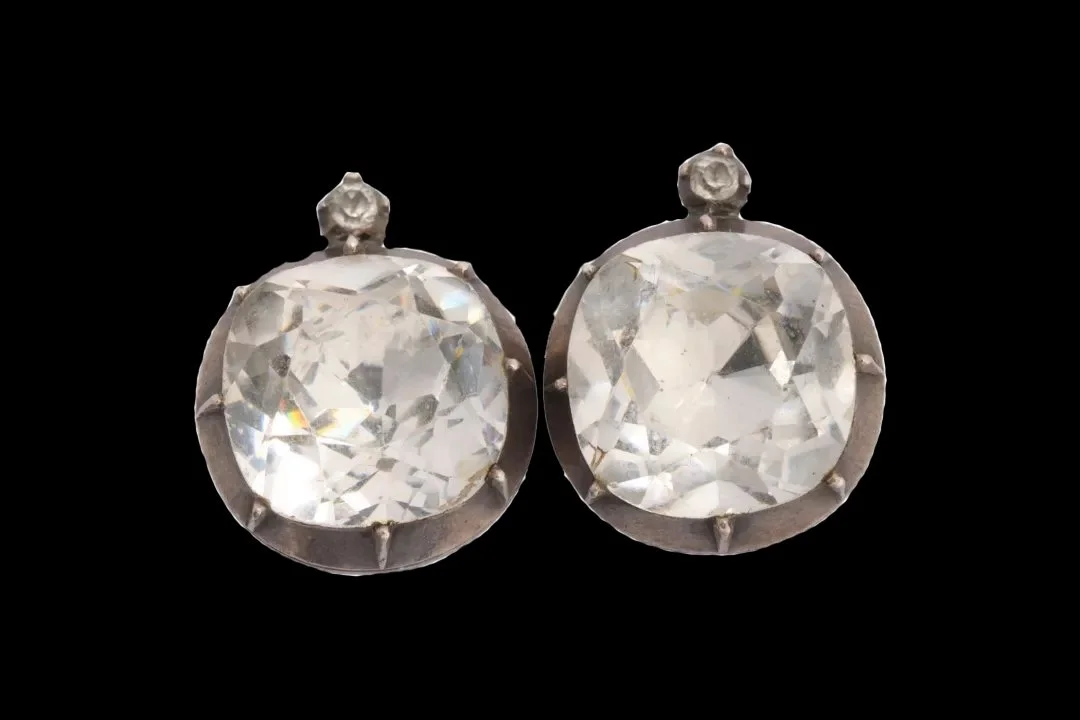 Image 1 of 3
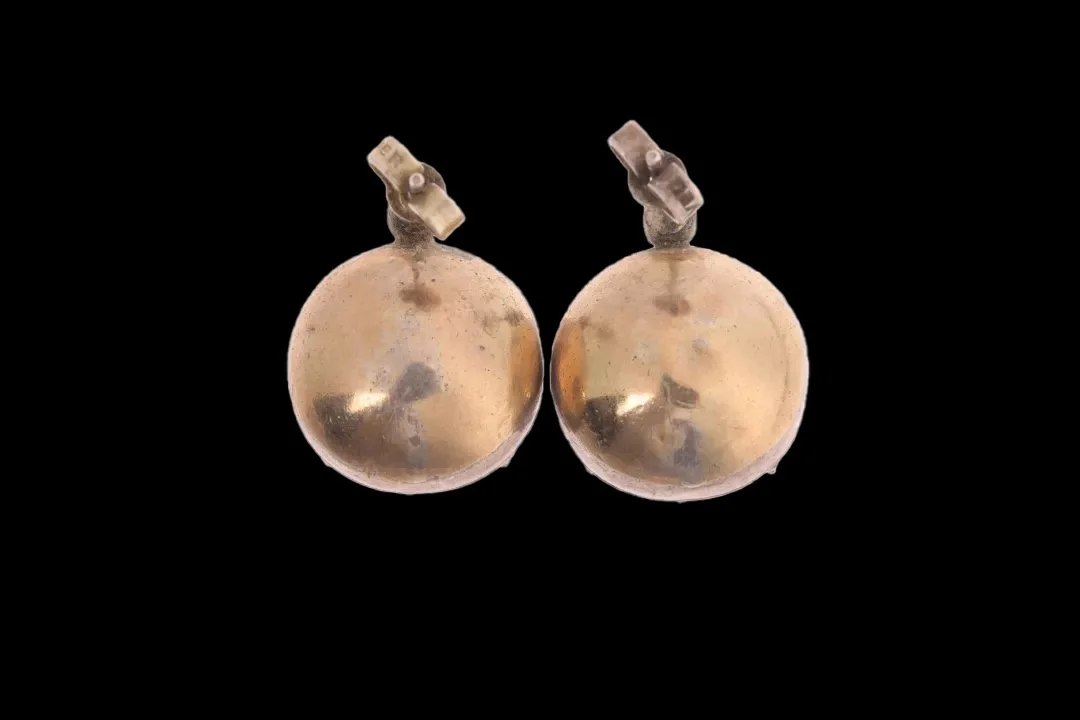 Image 2 of 3
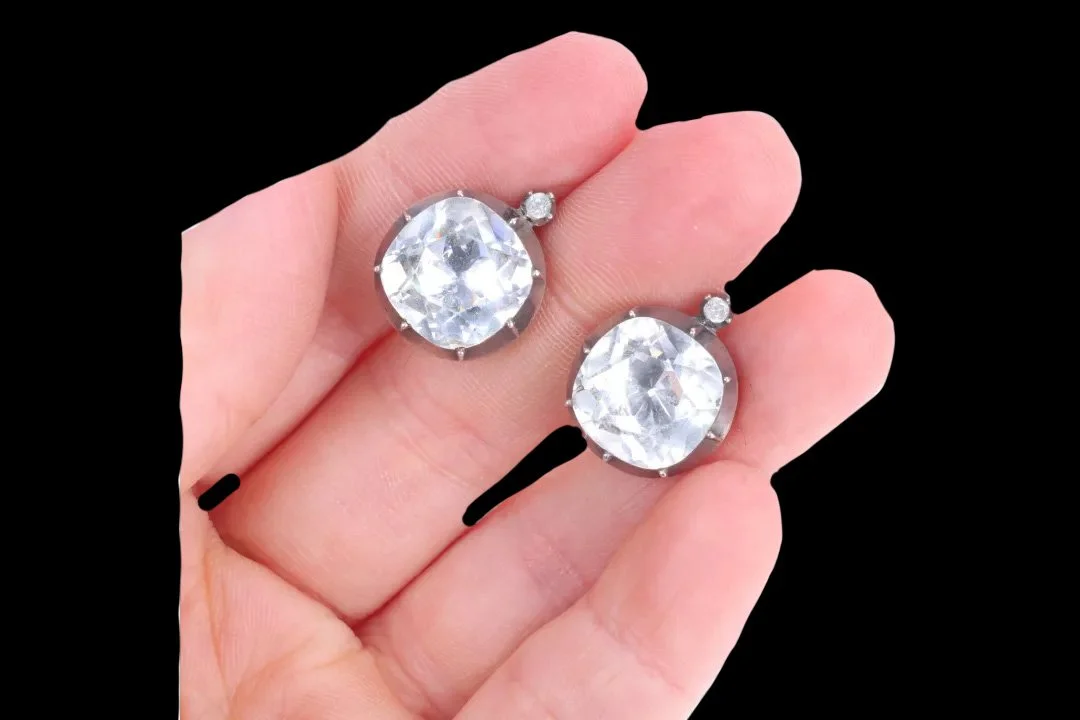 Image 3 of 3