Tokens of Fidelity and Affection: Edwardian Turquoise and Pearl Drop Earrings
Late Victorian to early Edwardian period, circa 1900
An elegant pair of antique gold drop earrings, dating to approximately 1900, combining the vivid blue of natural turquoise with the delicate luminosity of split seed pearls. Their graceful, articulated construction and stylized botanical ornament reflect the transition from the richly sentimental jewelry of the Victorian period to the lighter, more refined aesthetic associated with the Edwardian era. Each earring is suspended from a slender shepherd's hook fitting, beneath which a small, circular pearl-set terminal introduces a delicate point of light. A short-articulated connection leads to an openwork gold ornament composed of three-pointed, foliate elements, each accented with a split pearl. The arrangement recalls a stylized botanical spray, its symmetrical lower elements framing a suspended oval turquoise cabochon. The polished gemstone is secured within a smooth rub-over gold setting, allowing its uninterrupted blue surface to contrast with the warm gold and softly luminous pearls. The turquoise drops are articulated independently from the upper mounts, allowing gentle movement when worn. This mobility is an important aspect of the design, introducing a subtle play of light and color characteristic of fashionable earrings at the turn of the twentieth century. The goldwork is restrained yet carefully considered. Open spaces between the foliate elements lend lightness to the composition, while the small pearls punctuate the design with a rhythm of pale, rounded forms.
Turquoise: Protection, Fidelity, and Remembrance
Turquoise has been valued as an ornamental and protective gemstone for thousands of years, appearing in the jewelry and ceremonial objects of ancient Egypt, Persia, and numerous other cultures. During the nineteenth century, turquoise became especially fashionable in British sentimental jewelry. Its blue coloration was associated with fidelity, constancy, friendship, and remembrance, making it a favored gemstone for ornaments exchanged between loved ones.
Pearls: Purity, Innocence, and the Language of Affection
Pearls occupied an equally important position within nineteenth-century jewelry symbolism. Their luminous surfaces and natural origins contributed to longstanding associations with purity, innocence, virtue, and feminine refinement. During the Victorian period, seed pearls were frequently employed in sentimental jewelry, particularly in ornaments intended to commemorate affection, marriage, and remembrance. Their small scale made them especially suitable for delicate botanical designs, allowing jewelers to introduce points of light without overwhelming the underlying goldwork. In these earrings, the split pearls create a harmonious visual relationship with the turquoise. Their soft, creamy luminosity contrasts with the saturated blue gemstones, while their restrained size reinforces the delicate character of the gold settings.
Together, turquoise and pearls unite two materials historically associated with fidelity, affection, purity, and enduring personal attachment.
Historical Significance
These turquoise and pearl drop earrings exemplify the continuity of sentimental jewelry traditions across the transition from the Victorian to the Edwardian period. Their significance lies in the relationship between materials, symbolism, and design. Turquoise, historically associated with protection and fidelity, is combined with pearls, long regarded as emblems of purity and affection. The gemstones are united within a delicate botanical composition that reflects the enduring influence of nature upon European decorative arts. For the contemporary collector, the earrings offer an appealing example of turn-of-the-century jewelry in which historical symbolism and refined craftsmanship coexist.
A graceful union of turquoise and pearls, these earrings preserve the romantic vocabulary of nineteenth-century jewelry within the delicate elegance of the Edwardian age.


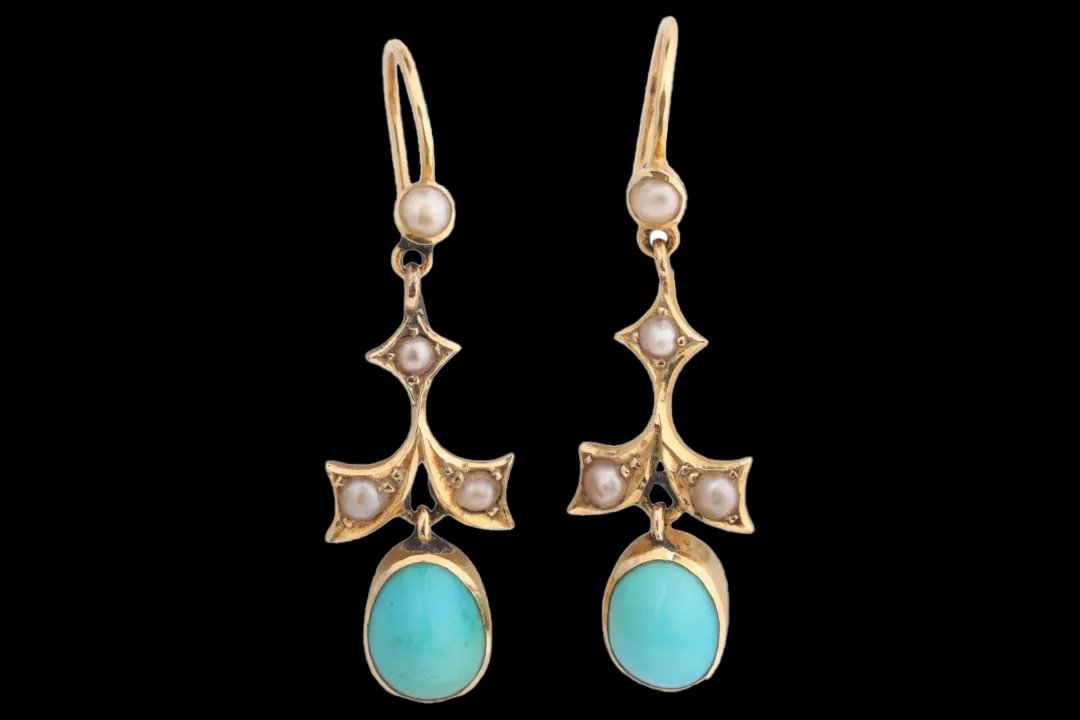 Image 1 of 3
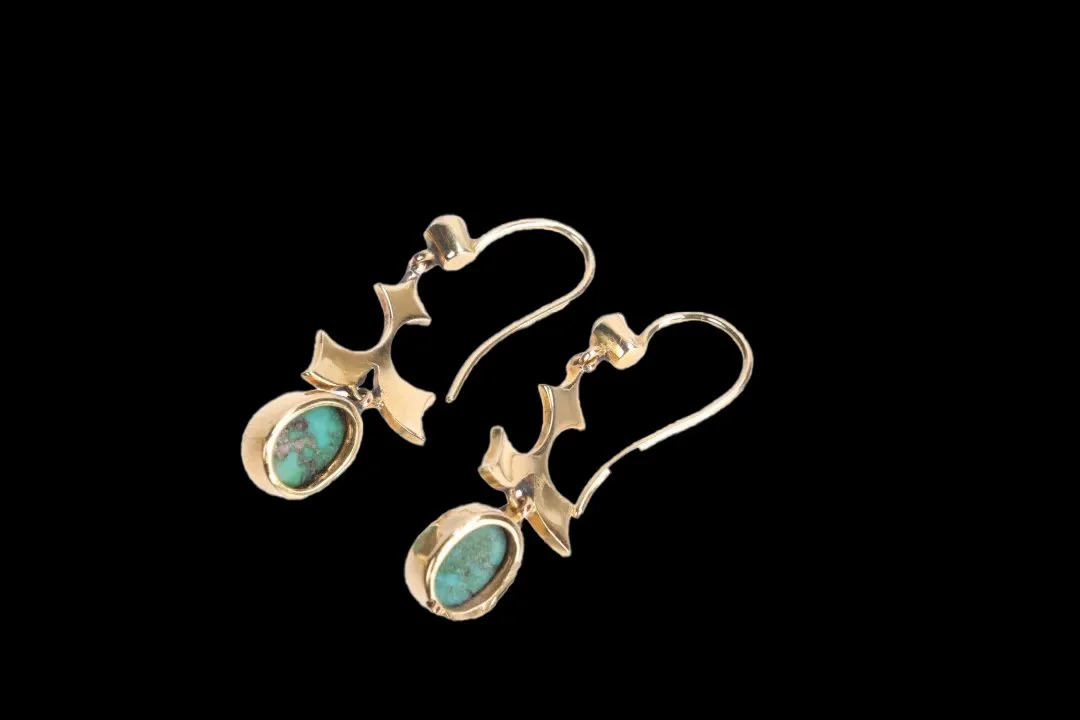 Image 2 of 3
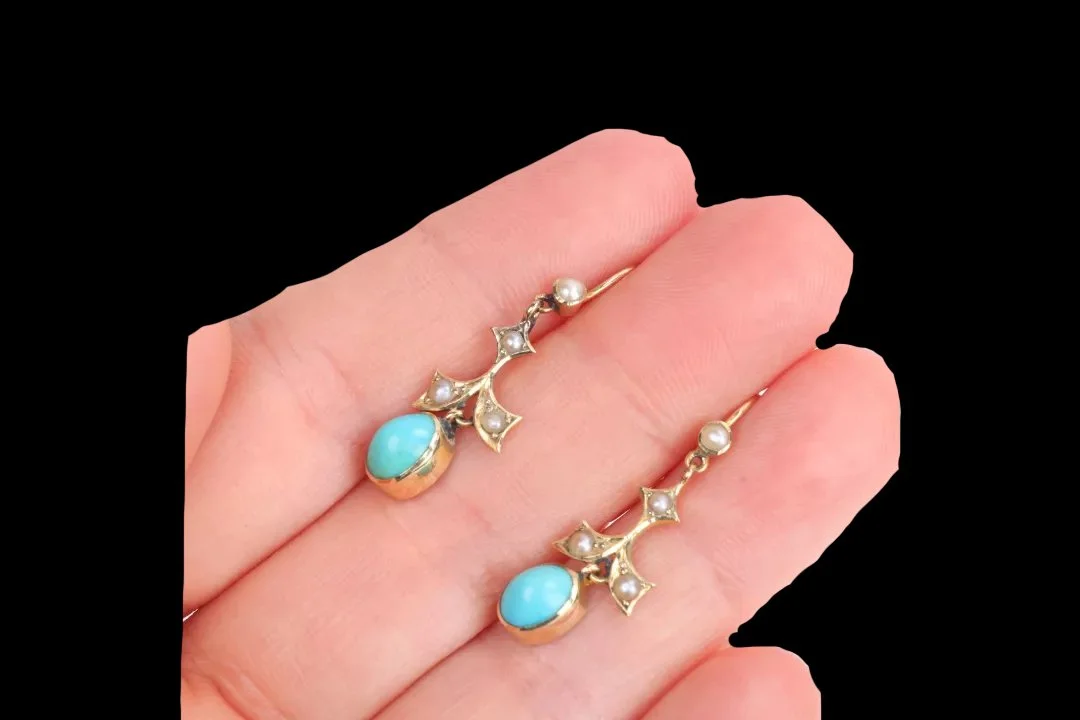 Image 3 of 3