An Early 19th-Century Swiss Gold & Polychrome Enamel Floral Vinaigrette
Switzerland | French Import Mark, 1819–1838 | Gold | Champlevé Enamel
An exquisite example of early nineteenth-century Swiss decorative craftsmanship, this beautifully preserved gold vinaigrette is adorned with a profusion of multicolored flowers rendered in delicate champlevé enamel. Combining the intimacy of a personal fragrance accessory with the artistry of a miniature painted jewel, the piece reflects the Romantic era's fascination with nature, sentiment, and the expressive possibilities of ornamental design.
Of shaped rectangular form, with softly scalloped edges and a circular suspension loop, the vinaigrette presents an enchanting botanical composition against a warm gold ground. Its surface is populated by an intricate arrangement of flowers and foliage in vivid shades of crimson, cobalt blue, emerald green, turquoise, rose pink, ivory, and golden yellow.
The flowers appear to grow organically across the surface, their stems and leaves intertwining in a lively composition that contrasts with the more formal symmetry characteristic of earlier Neoclassical ornament. The unusually varied palette lends the piece the appearance of a miniature botanical painting, capturing the Romantic period's delight in the natural world.
The enamel decoration employs the champlevé technique, in which recessed areas of a metal surface are filled with colored enamel and subsequently fired and finished. The result is a richly colored ornamental surface in which the gold remains an integral part of the composition, providing both structure and visual warmth.
The hinged case opens to reveal an exceptionally delicate pierced gold grille, its scrolling foliate ornament forming an intricate lattice of leaves, tendrils, and floral motifs. This beautifully worked interior component is both decorative and functional, originally designed to cover a small sponge or absorbent material saturated with aromatic vinegar or perfume.
The vinaigrette is reported to bear a French import mark used between 1819 and 1838, an important detail that places its entry into the French market within the first decades of the nineteenth century. Although Swiss in origin, the object reflects the international exchange of luxury goods between Switzerland and France, where finely enameled gold accessories were particularly admired.
The Language of Flowers: Sentiment and Remembrance
The abundance of floral imagery is especially evocative of nineteenth-century sentimental culture.
During the Georgian and Romantic periods, flowers increasingly served as visual expressions of affection, remembrance, friendship, and devotion. Their symbolism appeared in jewelry, miniature painting, embroidered textiles, personal correspondence, and decorative objects intended to be treasured or exchanged as gifts.
The blossoms adorning this vinaigrette suggest a miniature garden in perpetual bloom, an image readily associated with beauty, renewal, and the fleeting nature of life.
Within the historical language of flowers, individual blossoms could carry particular associations. Roses were connected with love and affection, forget-me-nots with remembrance, and violets with modesty and fidelity. While the stylized flowers on this piece cannot all be identified botanically, the overall composition participates in this broader tradition of floral sentiment.
The permanence of the enamel is itself a compelling contrast to the transience of the flowers it depicts. Blossoms that would naturally fade are preserved in precious metal and brilliant color, offering a lasting expression of beauty.
Historical Significance
Vinaigrettes were fashionable personal accessories throughout the late eighteenth and early nineteenth centuries. Designed to hold aromatic preparations, they were carried in pockets, suspended from chains, or worn as ornamental pendants.
Their use reflected contemporary practices surrounding fragrance, personal comfort, and fashionable refinement. Although practical in purpose, the finest examples were transformed by skilled goldsmiths and enamellers into miniature works of art.
Switzerland, particularly Geneva, became internationally renowned for its production of finely enameled gold objects, including watches, snuffboxes, miniature cases, and ornamental accessories. These objects were prized for their technical sophistication and richly colored decoration.
This vinaigrette is distinguished by the exuberance of its floral enameling, its softly contoured rectangular form, and the survival of its intricately pierced interior grille. Its reported French import mark provides an additional historical connection to the luxury trade of the early nineteenth century.
A captivating example of the marriage between functionality and ornament, this Swiss gold vinaigrette preserves the elegance, craftsmanship, and sentimental imagination of the Romantic age.


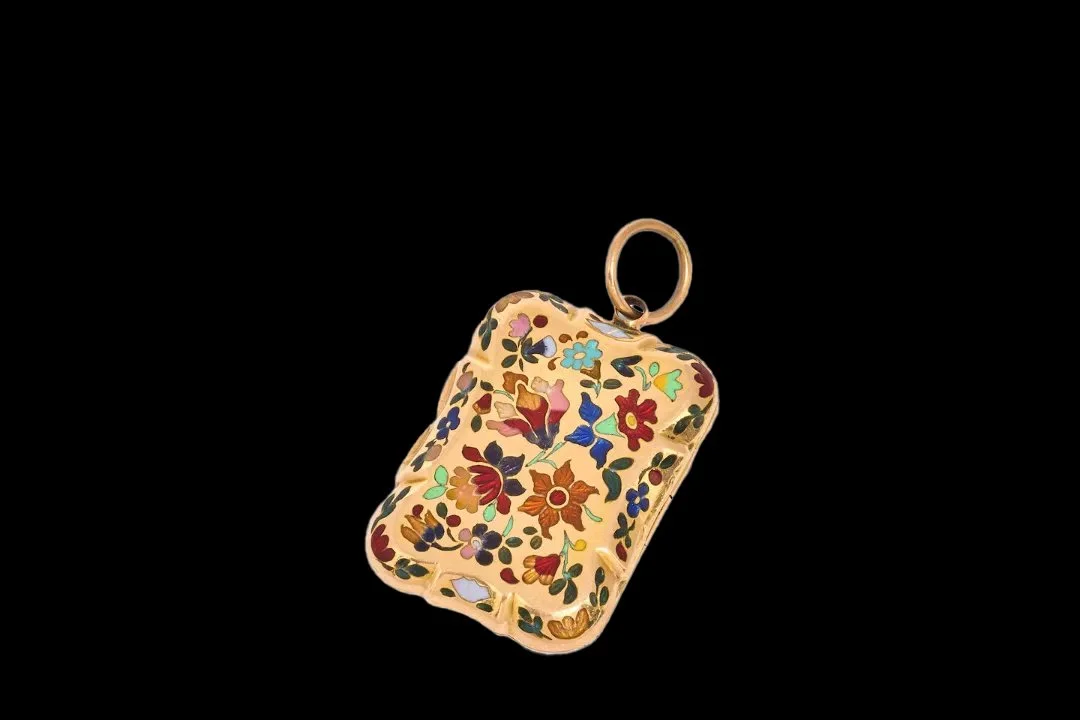 Image 1 of 3
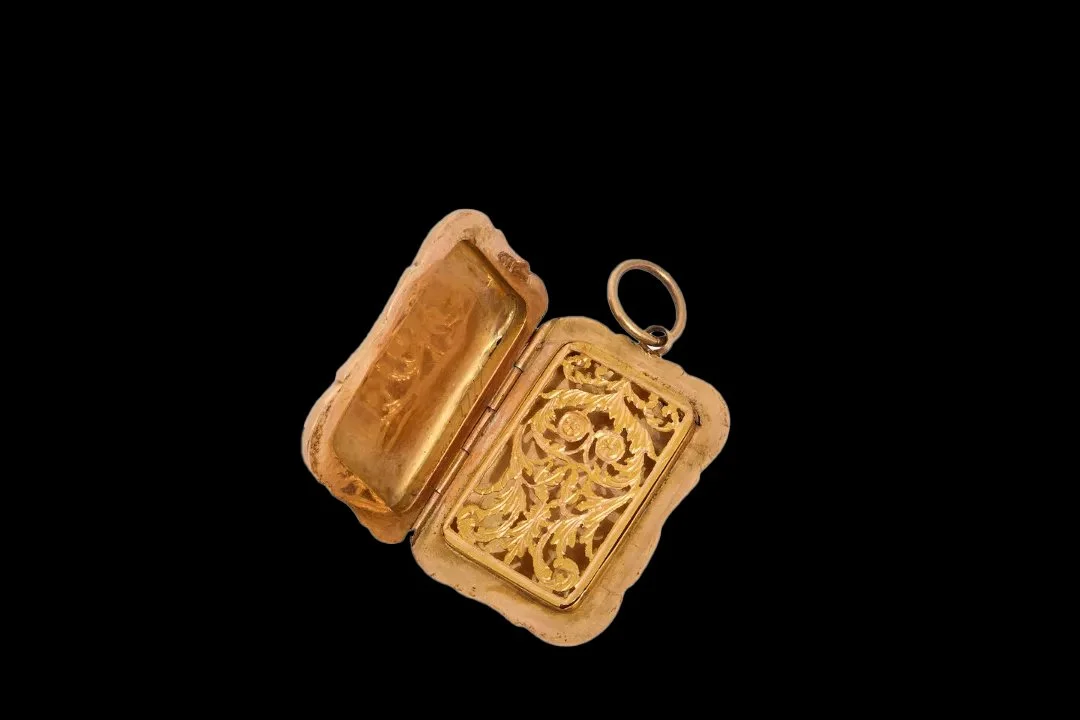 Image 2 of 3
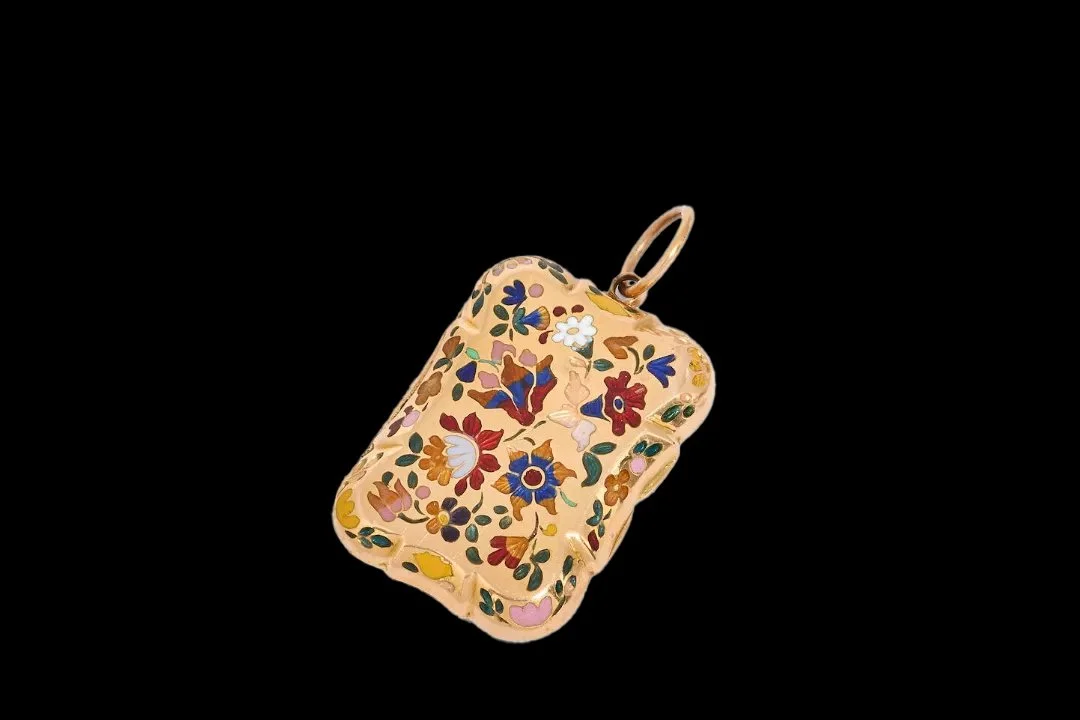 Image 3 of 3