The Golden Pig: An Antique Charm of Prosperity, Fortune, and Abundance
Late nineteenth to early twentieth century
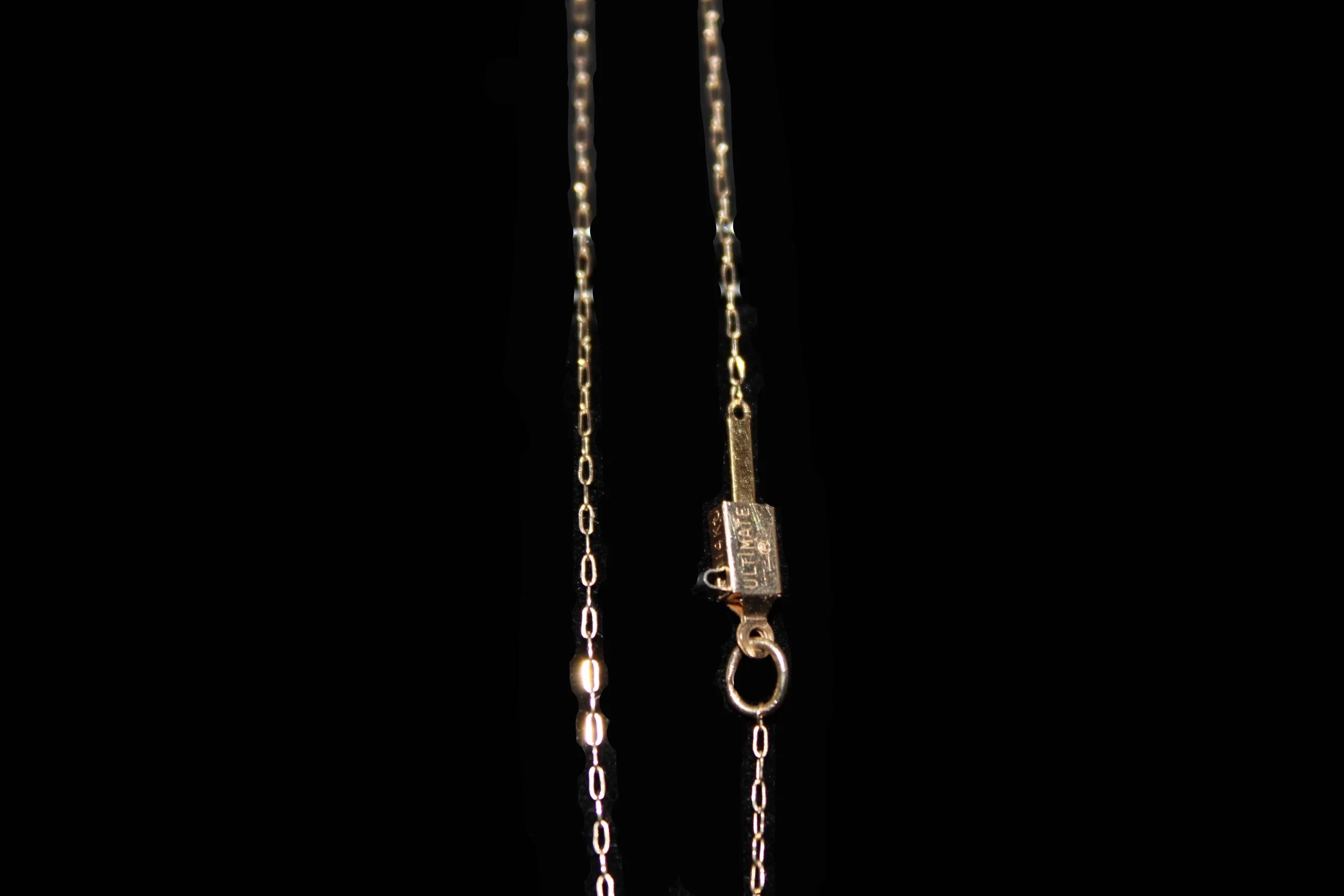
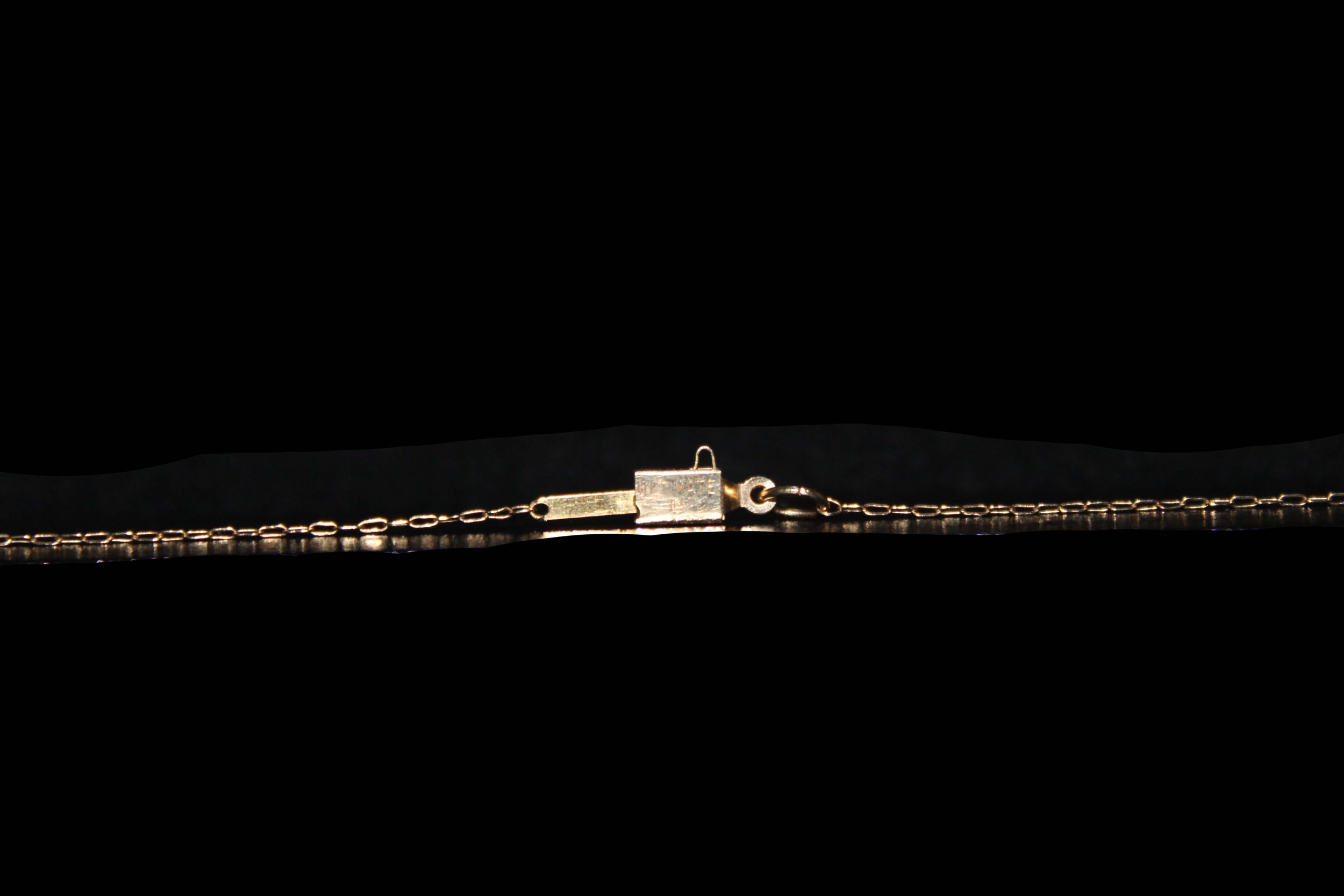
A charming example of antique figural jewelry, this miniature pig pendant is fashioned in hallmarked 9-carat gold, its carefully modeled form capturing the distinctive character of the animal through finely textured surfaces and naturalistic detail. Measuring just 23 millimeters in length, the diminutive sculpture combines the traditional symbolism of the pig as an emblem of prosperity with the playful sophistication of miniature goldsmithing. The animal is represented standing, with a gently rounded body, pointed snout, delicately articulated ears, four individually modeled legs, and a whimsical, curled tail. Fine engraved lines reproduce the texture of its bristles, giving the gold surface a tactile richness that contrasts with the polished suspension fittings. Encircling the pig's body is a narrow band of round-cut green paste stones, their emerald-like coloration introducing an unexpected decorative element to the naturalistic composition. The stones provide a vivid contrast against the warm gold, lending the miniature figure the appearance of an ornamented animal or cherished domestic mascot. A suspension loop allows the charm to be worn from a chain, bracelet, or collection of personal talismans.
Despite its diminutive scale, the pendant belongs to a much broader European tradition in which animals were transformed into symbols of good fortune, prosperity, protection, and personal affection.
The Pig as a Symbol of Prosperity in European Culture
The pig has long occupied an important position in European agricultural economies, where ownership of healthy livestock represented tangible wealth, food security, and the prospect of future abundance. Unlike animals valued primarily for labor or transportation, pigs were especially associated with the household economy. Their capacity to produce numerous offspring, convert available food into valuable nourishment, and provide provisions through the winter made them important symbols of material security. These practical associations gradually developed into a wider symbolic vocabulary in which the pig came to represent prosperity, fertility, abundance, and favorable fortune. In German-speaking regions, the expression Glücksschwein, literally meaning “lucky pig,” became an established emblem of good luck. Small pig figures were exchanged as tokens of encouragement and prosperity, particularly during New Year celebrations. By the late nineteenth and early twentieth centuries, lucky pigs appeared in decorative objects, greeting cards, confectionery, and jewelry, reflecting the widespread popularity of charms intended to attract happiness and material well-being. The symbolic importance of the pig was therefore grounded not simply in superstition but in centuries of agricultural experience, when the possession of livestock could signify the difference between economic insecurity and household abundance.
Miniature Goldsmithing and the Fashion for Animal Charms
The charm reflects the enduring appeal of naturalistic animal jewelry in the nineteenth and early twentieth centuries. European jewelers produced an extraordinary variety of miniature creatures, from domestic animals and birds to insects and exotic species. These ornaments could express affection for animals, reference sporting or rural pursuits, communicate symbolic meanings, or demonstrate the technical abilities of their makers. The present pig is particularly appealing for its combination of naturalism and humor. Its rounded body carefully rendered bristles, expressive ears, and curling tail are recognizable despite the miniature scale. The ornamental band introduces a decorative refinement that distinguishes the figure from a purely naturalistic representation. The goldsmith has preserved the essential characteristics of the animal while transforming it into a sophisticated and wearable object.
Historical Significance
This antique gold pig charm belongs to the European tradition of symbolic animal jewelry, in which familiar creatures were employed as emblems of personal hopes, cultural beliefs, and good fortune. Its significance lies in the relationship between the pig's longstanding association with agricultural prosperity and its transformation into a precious miniature ornament. The green paste decoration and finely textured gold surface further distinguish the charm as an example of playful, imaginative goldsmithing.
For the contemporary collector, it offers an appealing connection to the history of talismanic jewelry and the enduring human desire to carry symbols of happiness and abundance. A miniature emblem of prosperity rendered in gold, this charming pig preserves a centuries-old wish for good fortune, security, and a flourishing life.


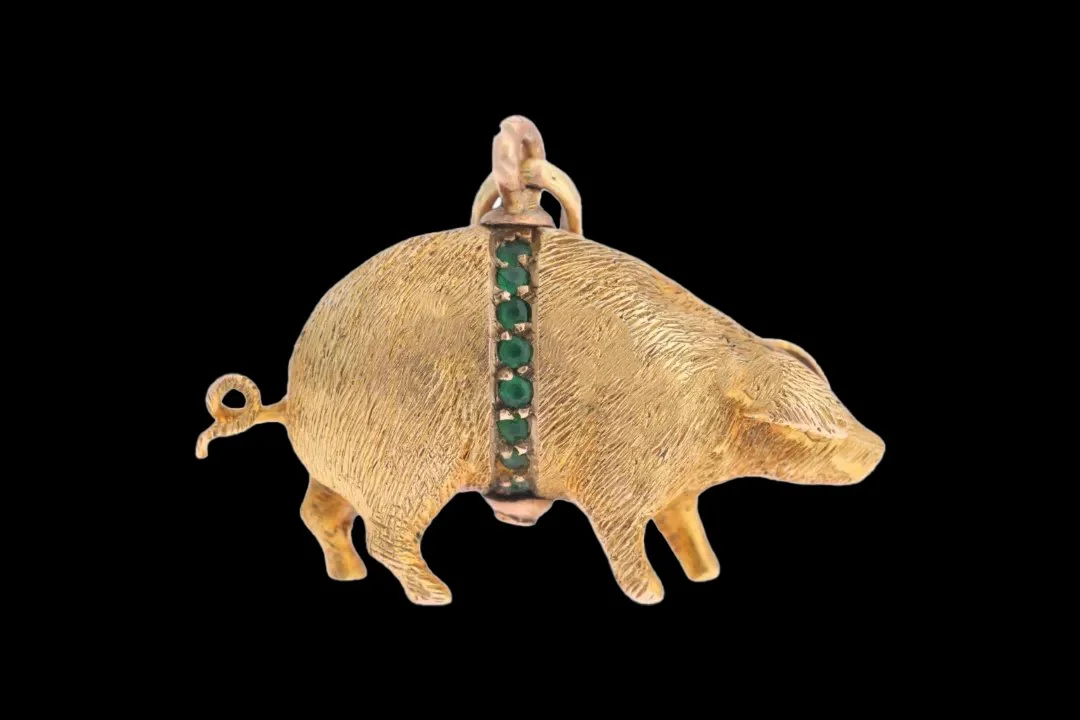 Image 1 of 3
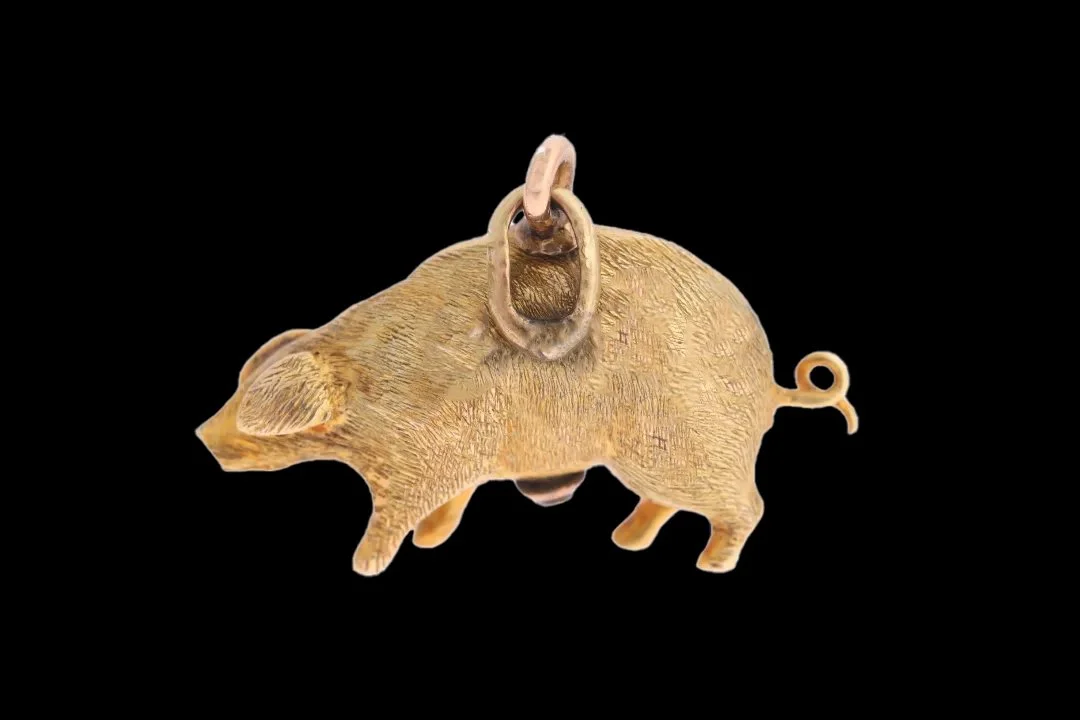 Image 2 of 3
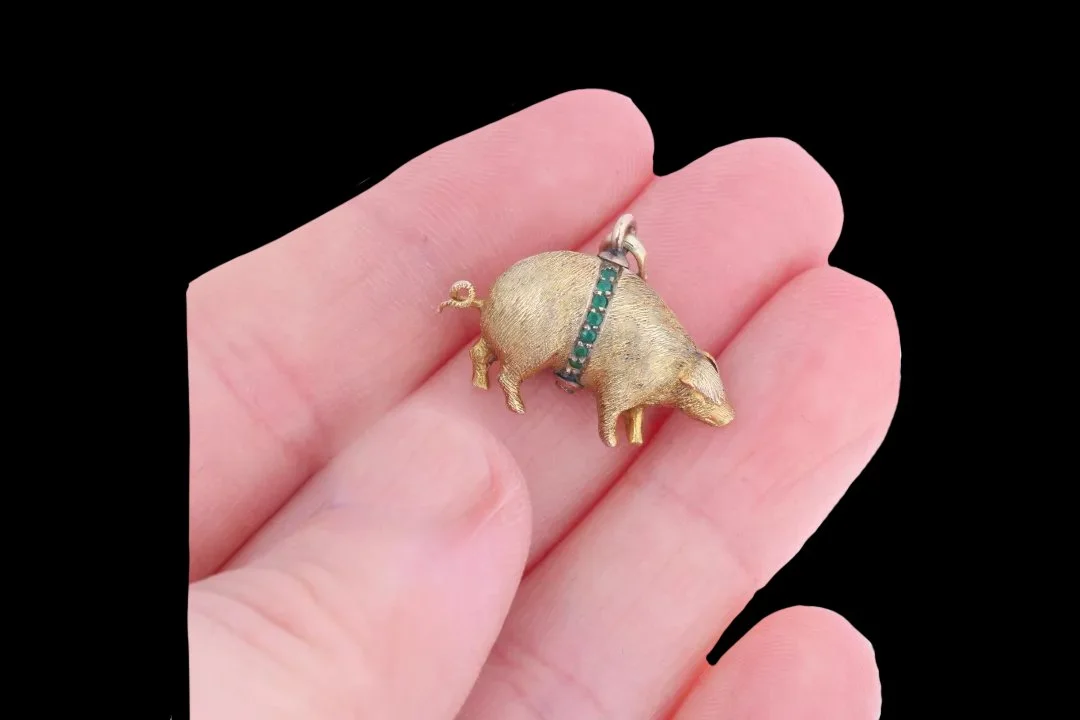 Image 3 of 3