A Secret Constellation of Memory: A Victorian Gold Folding Locket
England, late 19th century, circa 1870–1900
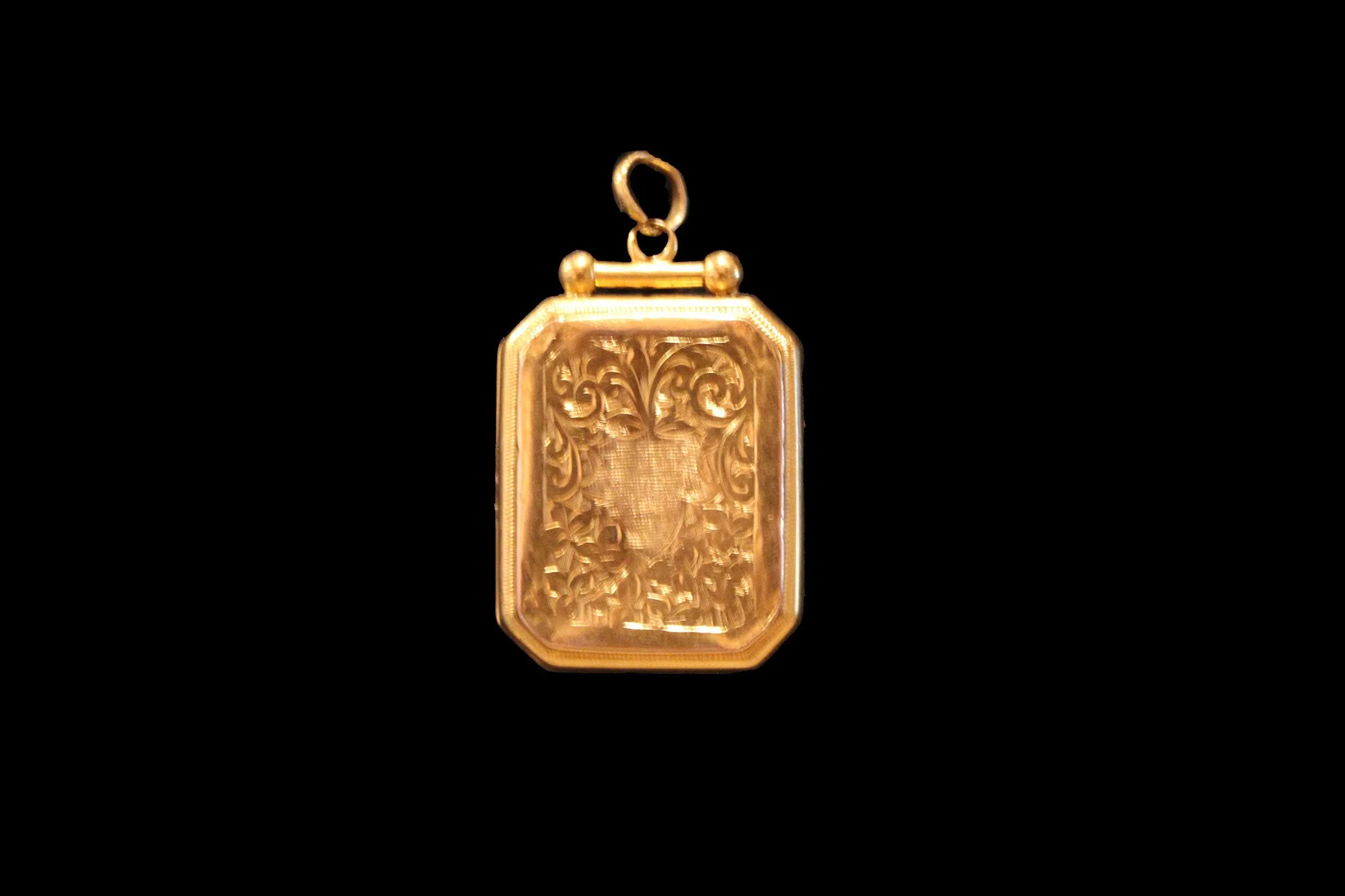
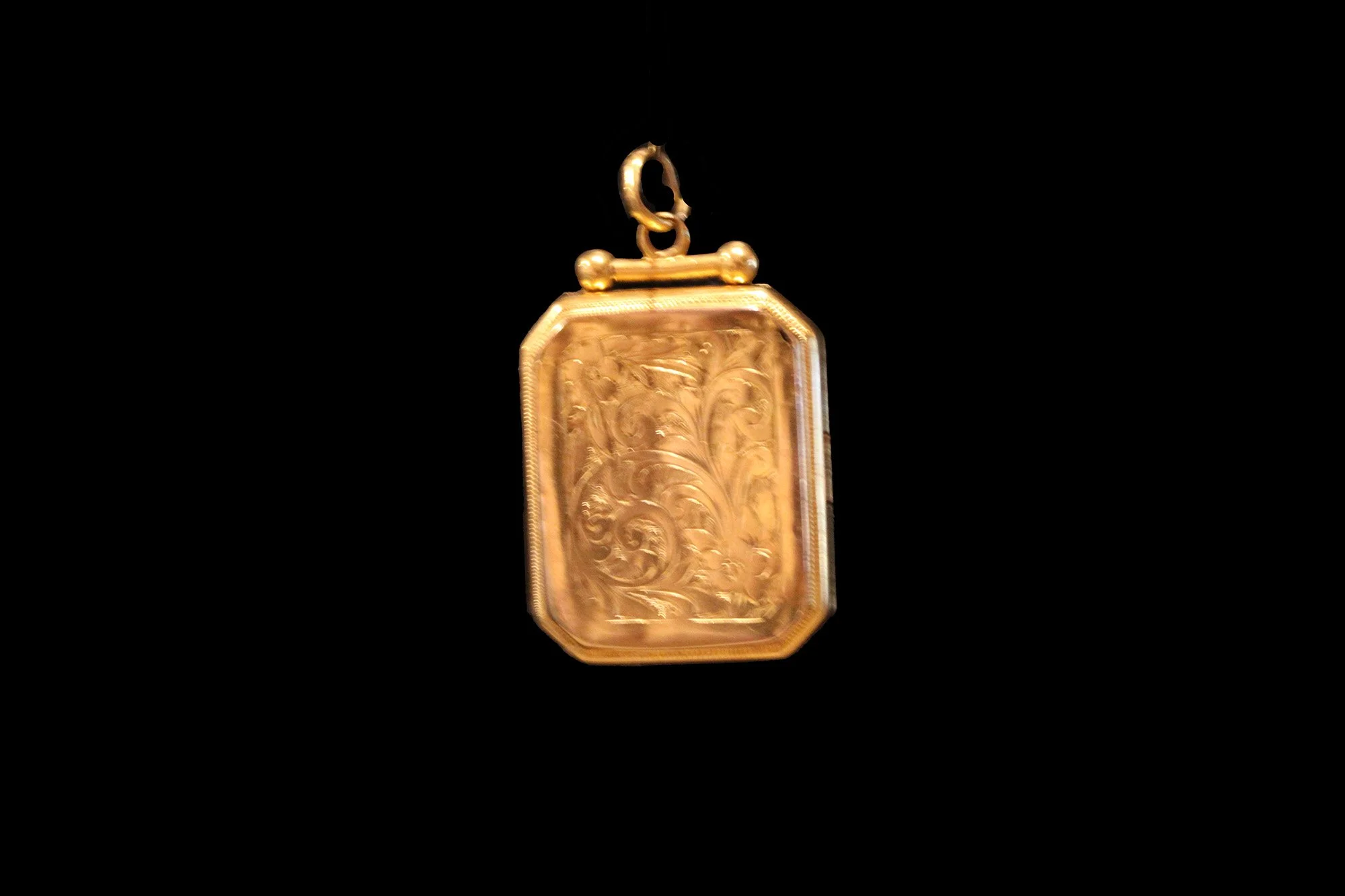
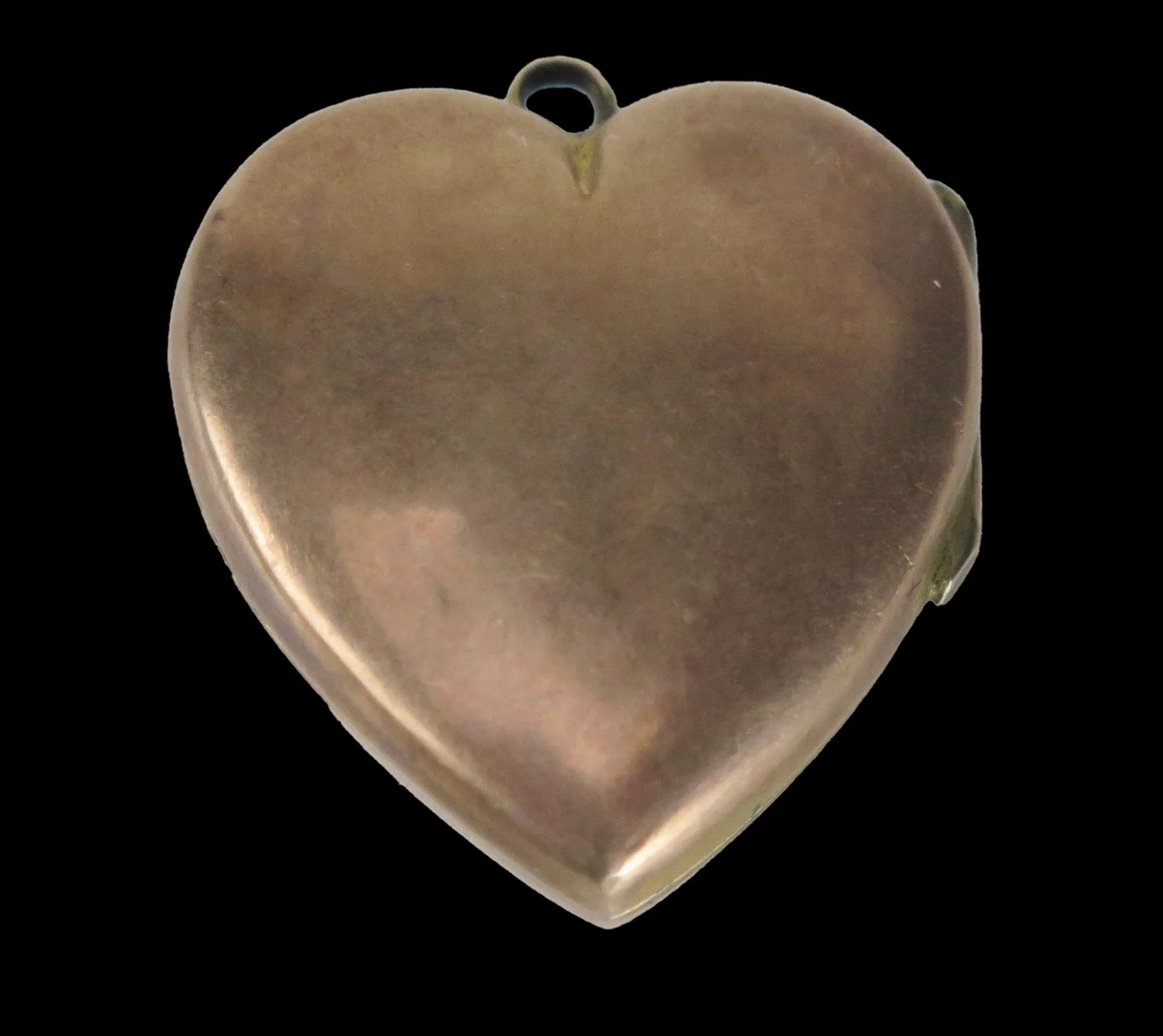
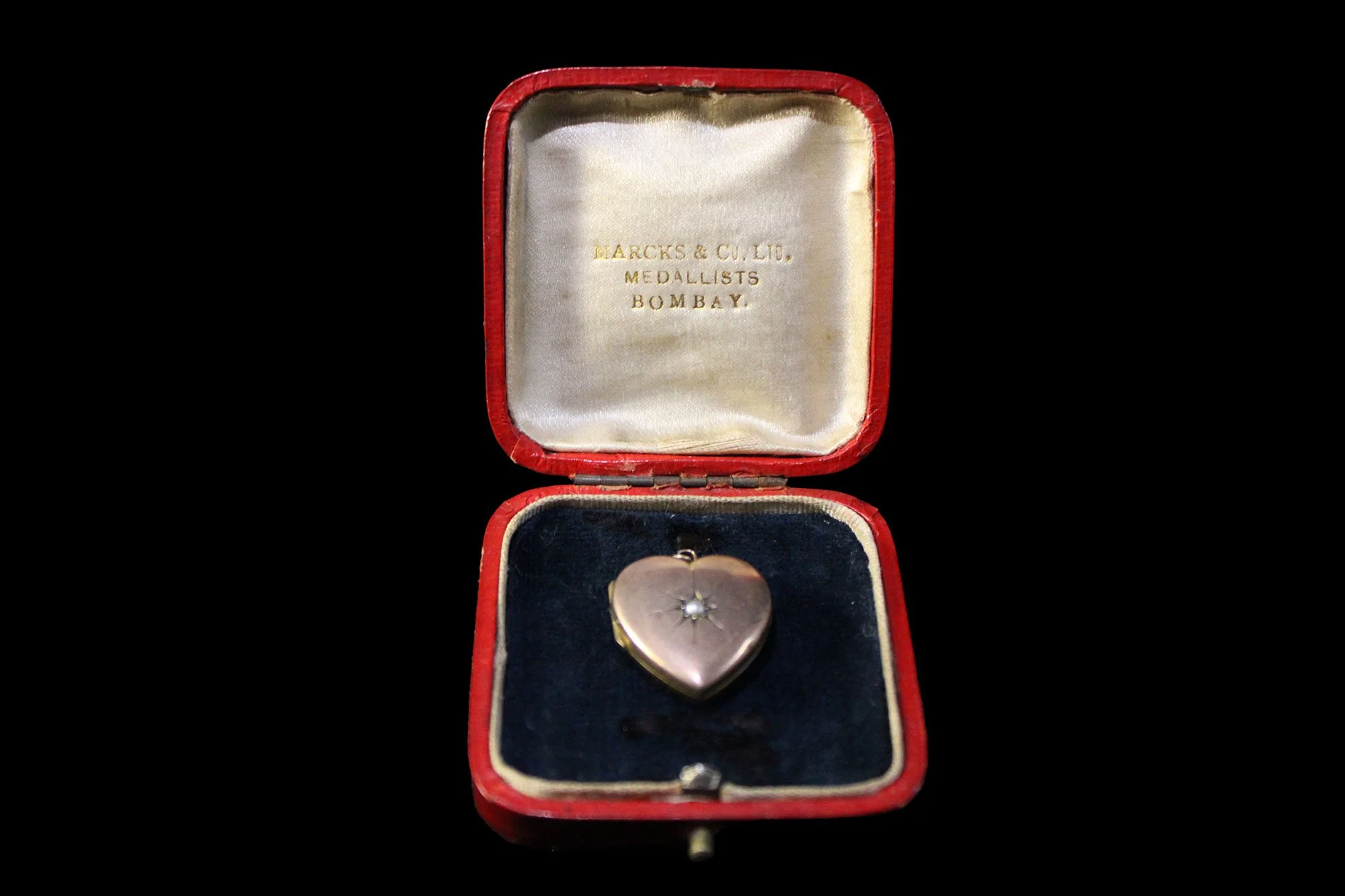
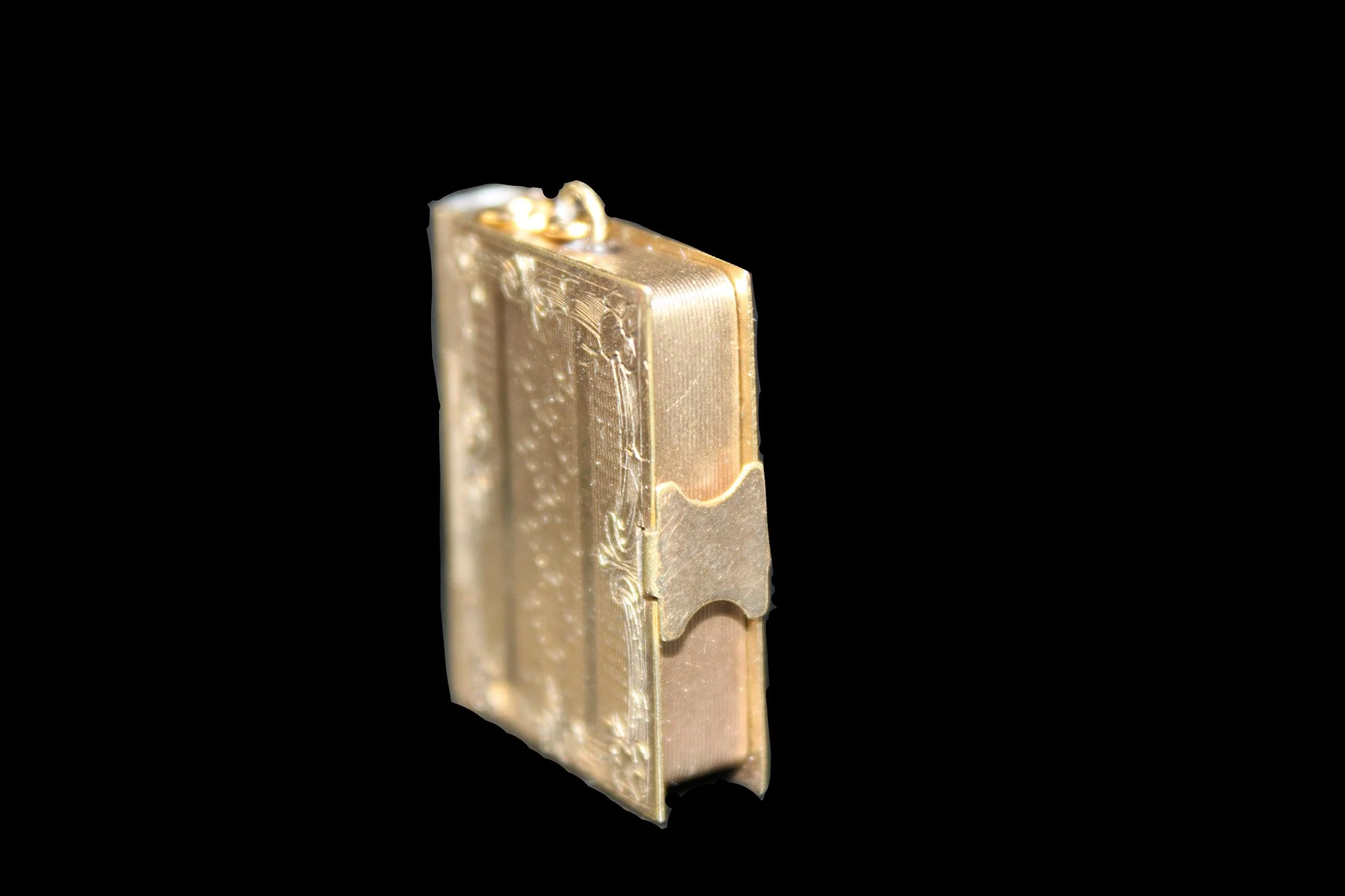
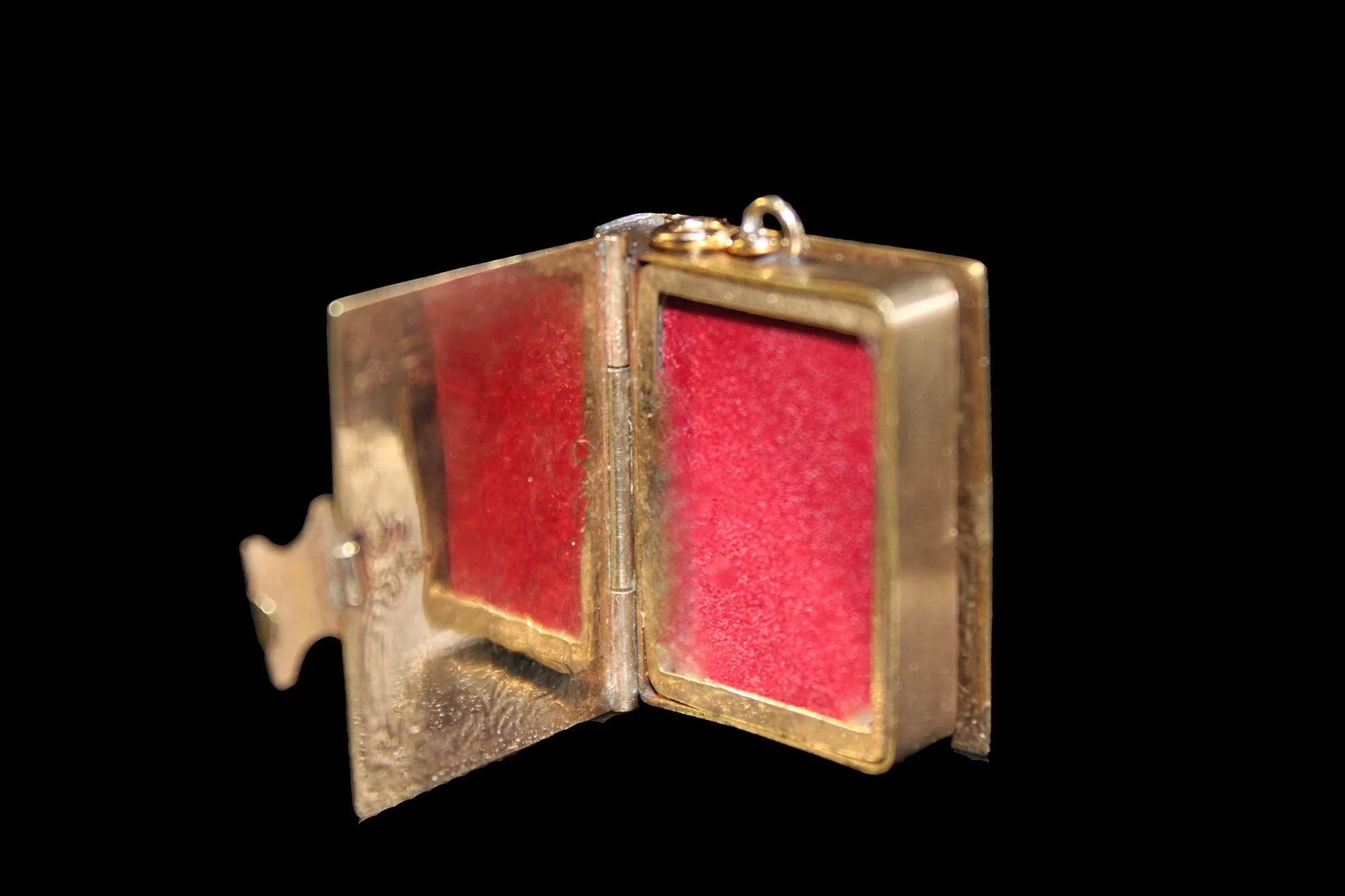
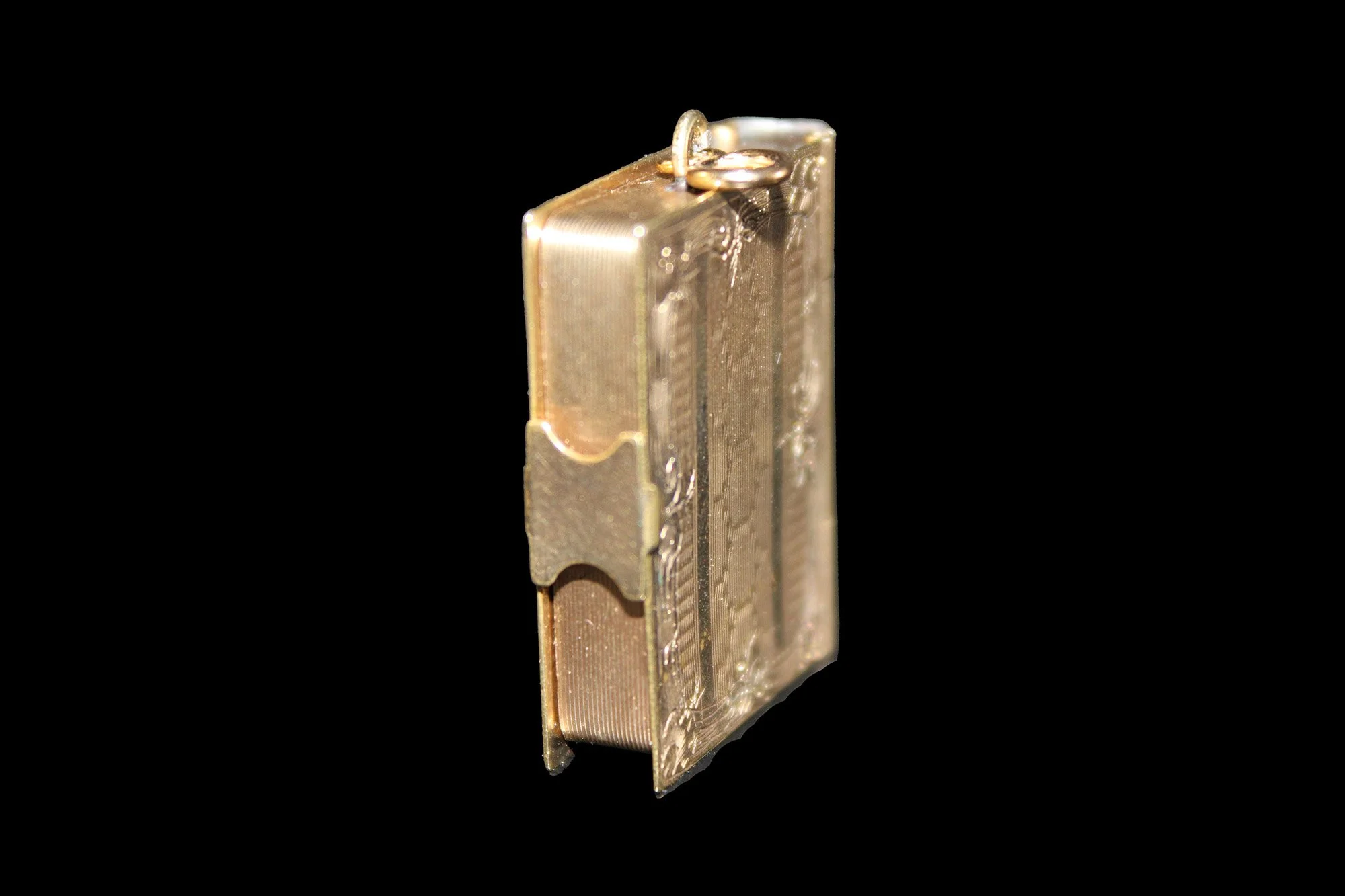
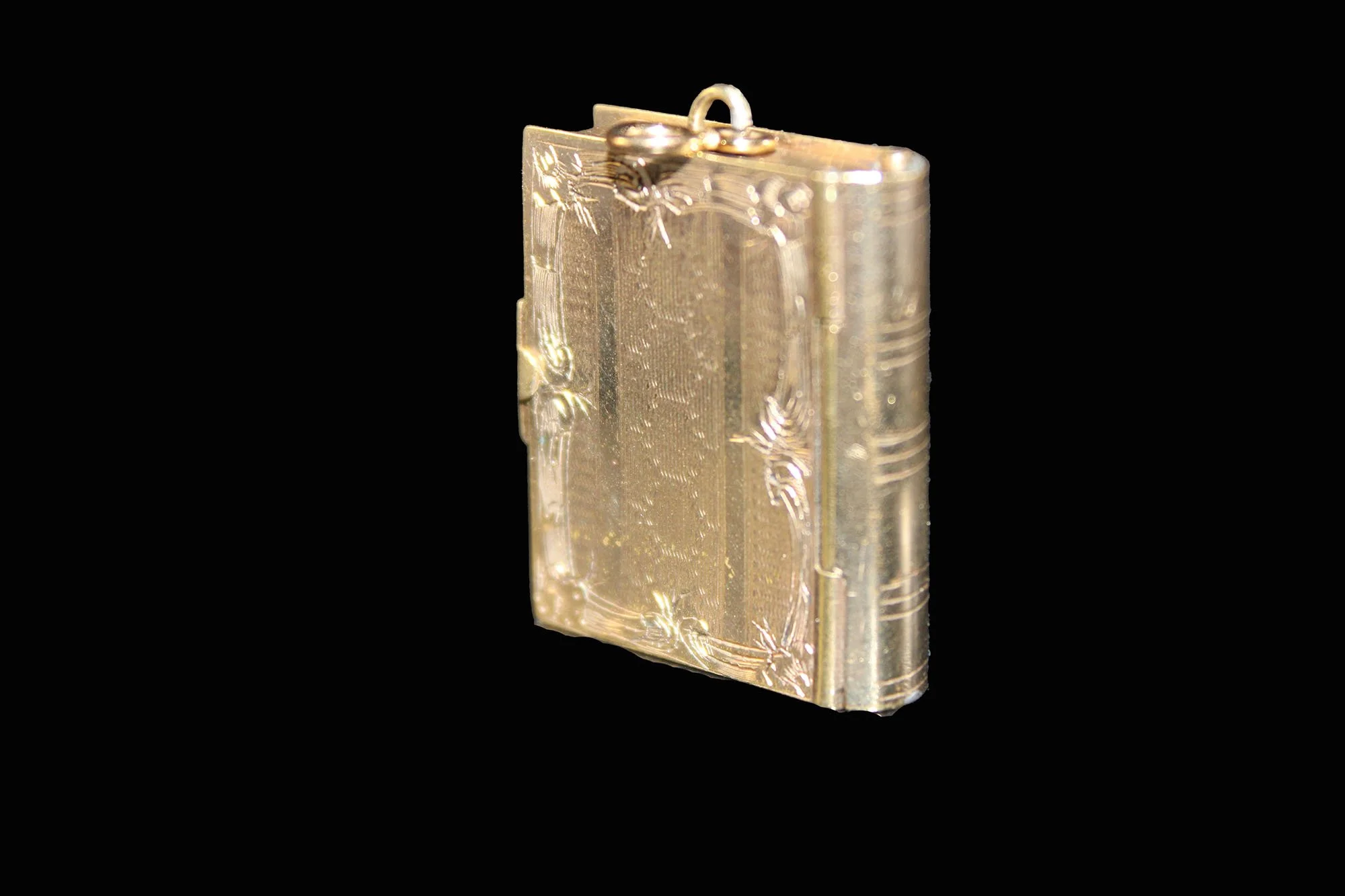
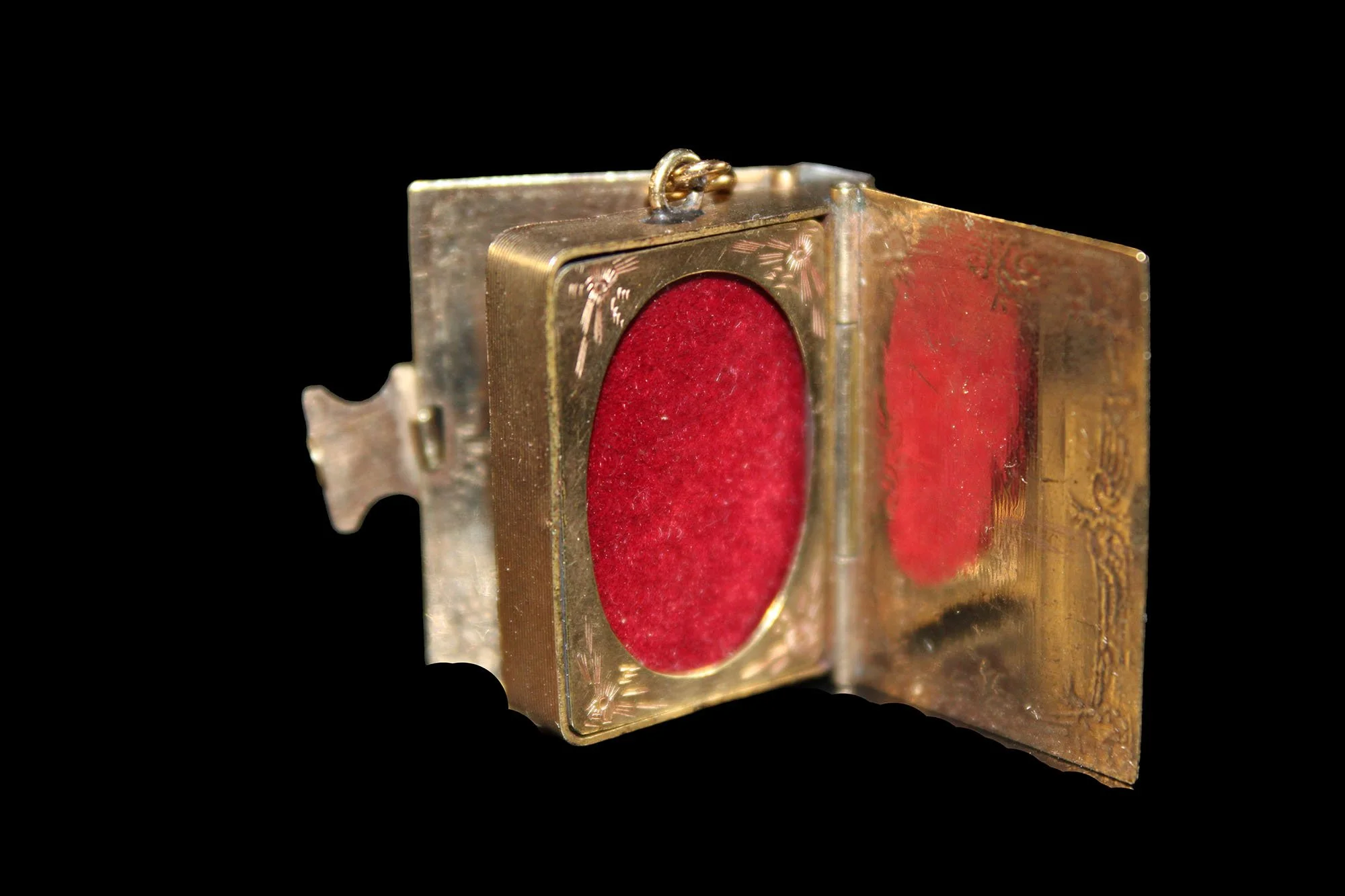
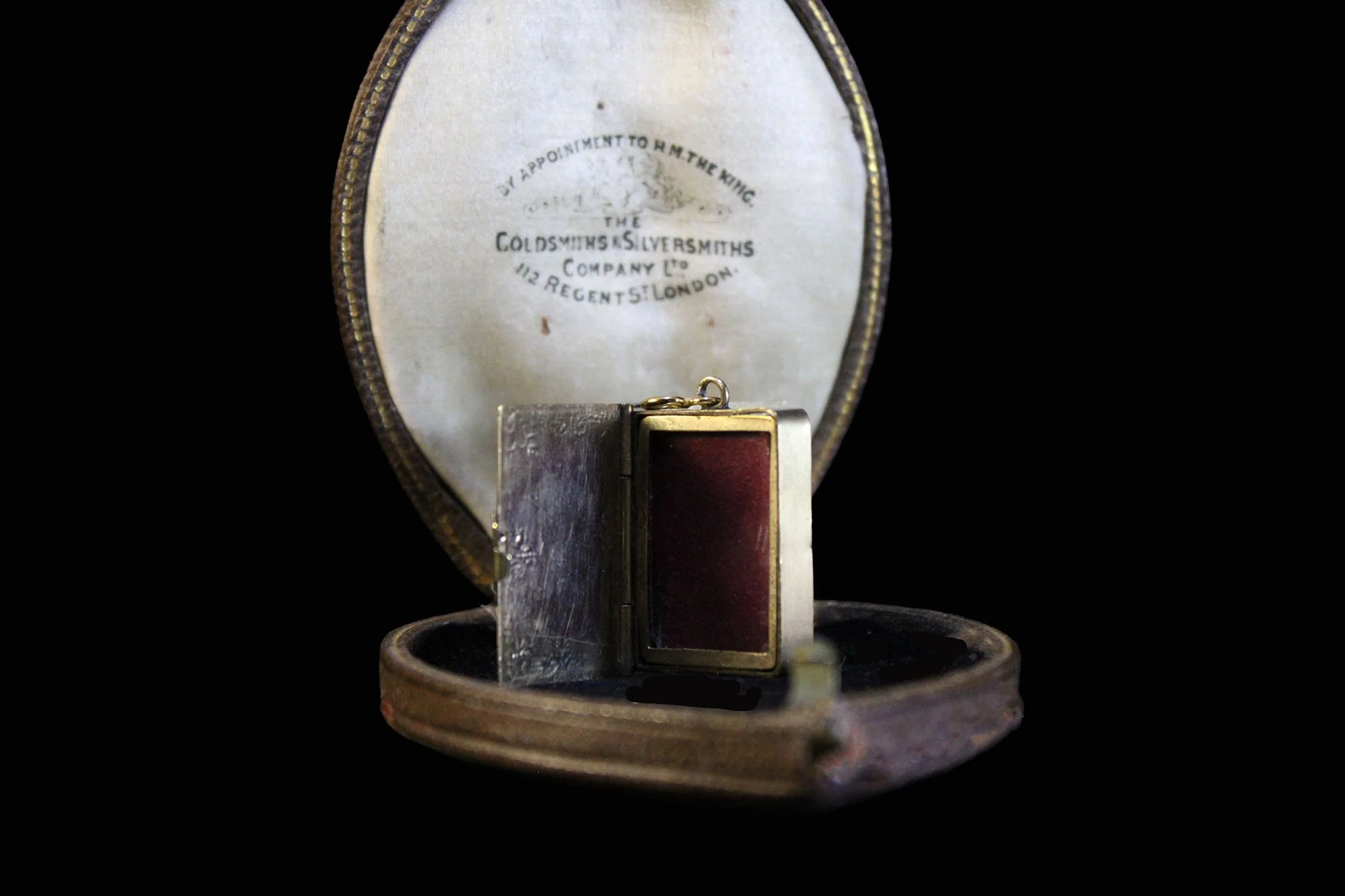
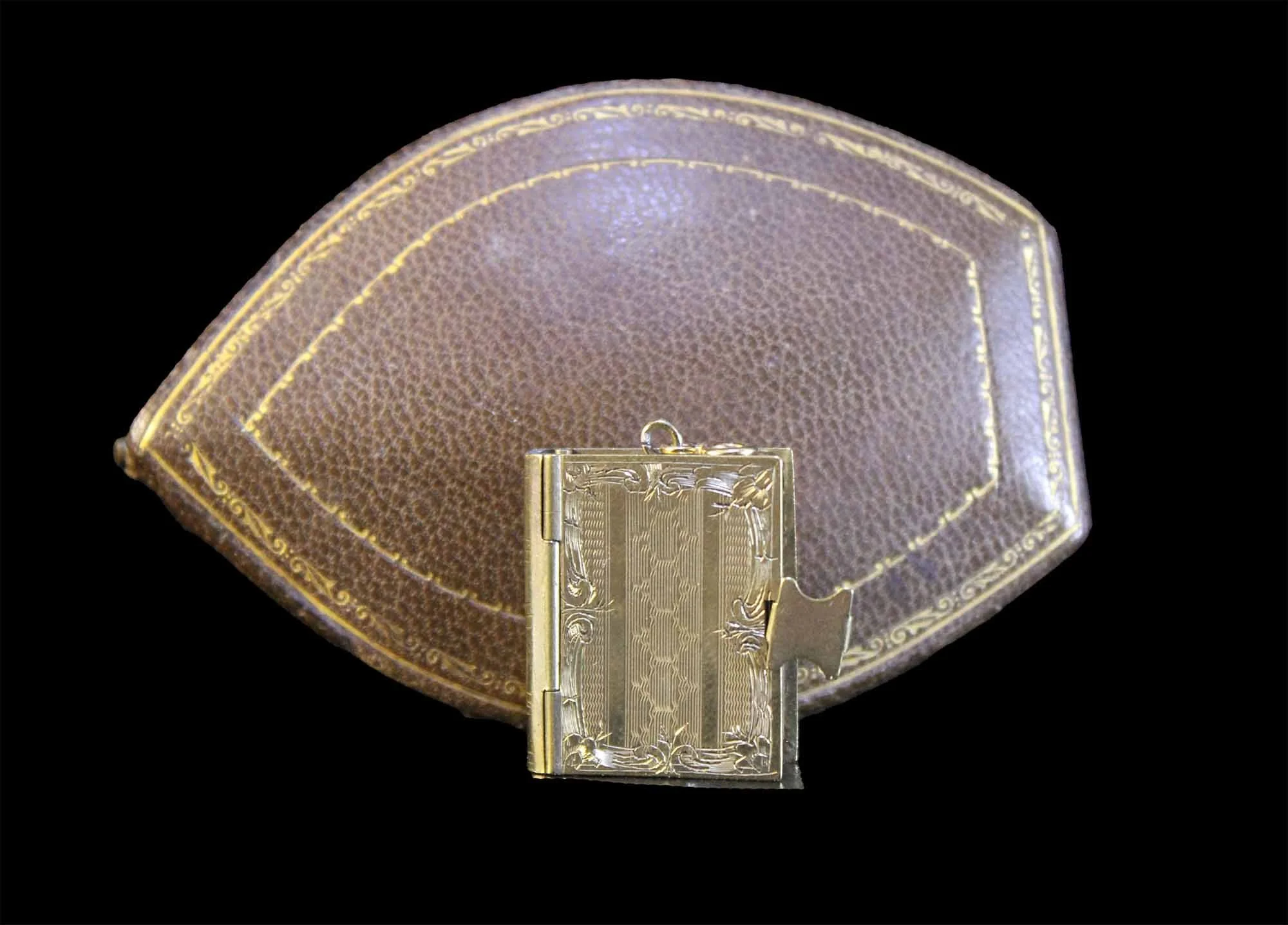
An ingenious example of late Victorian sentimental jewelry, this 9-carat gold folding locket conceals an extraordinary mechanical arrangement beneath its deceptively simple exterior. When closed, the pendant assumes the form of an elongated, arrow-shaped ornament, its polished gold surfaces embellished with finely engraved floral decoration, ornamental monograms, and delicate geometric borders. When opened, six individually hinged compartments radiate outward from a central point, transforming the compact pendant into a six-pointed star.
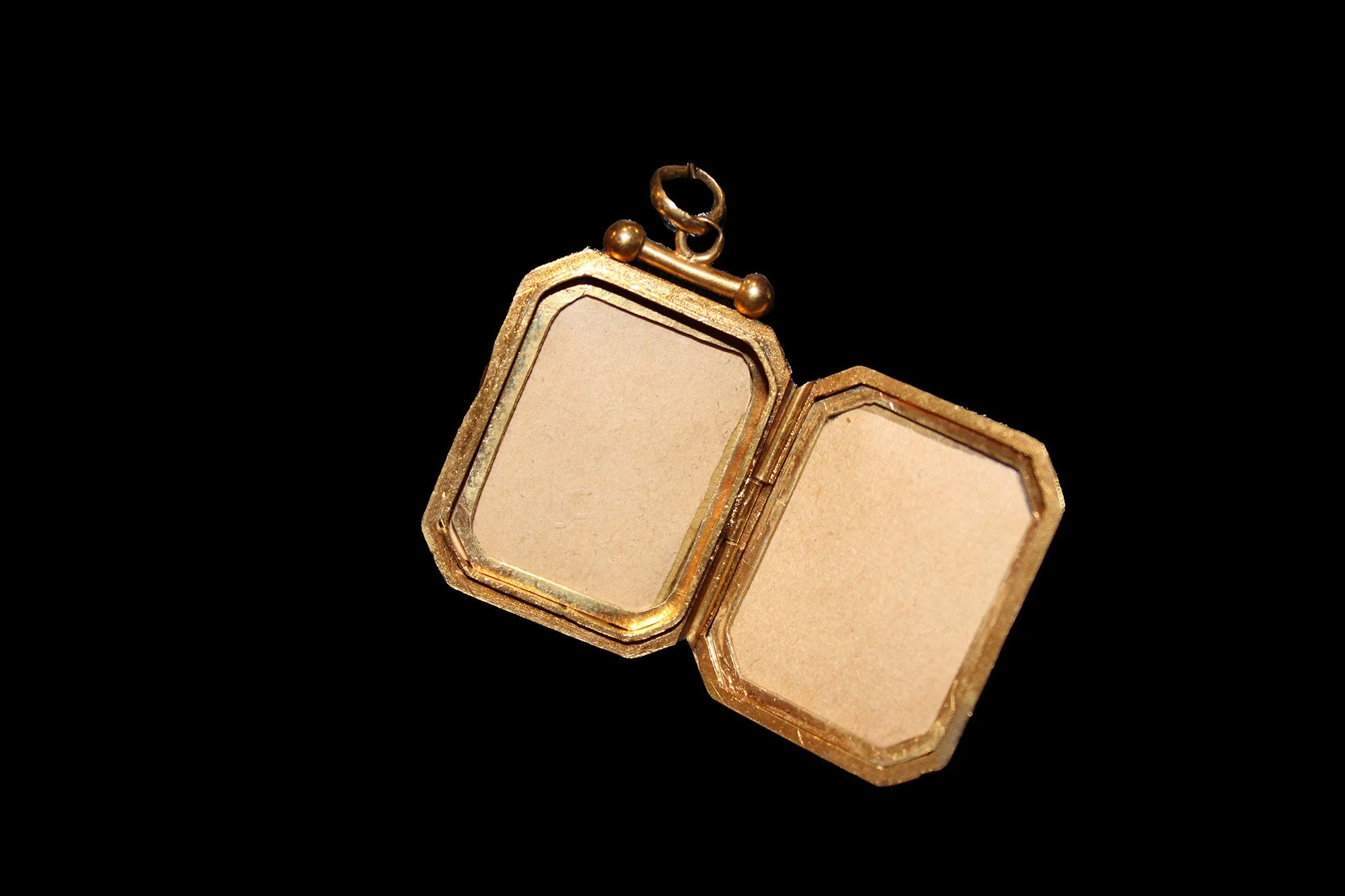
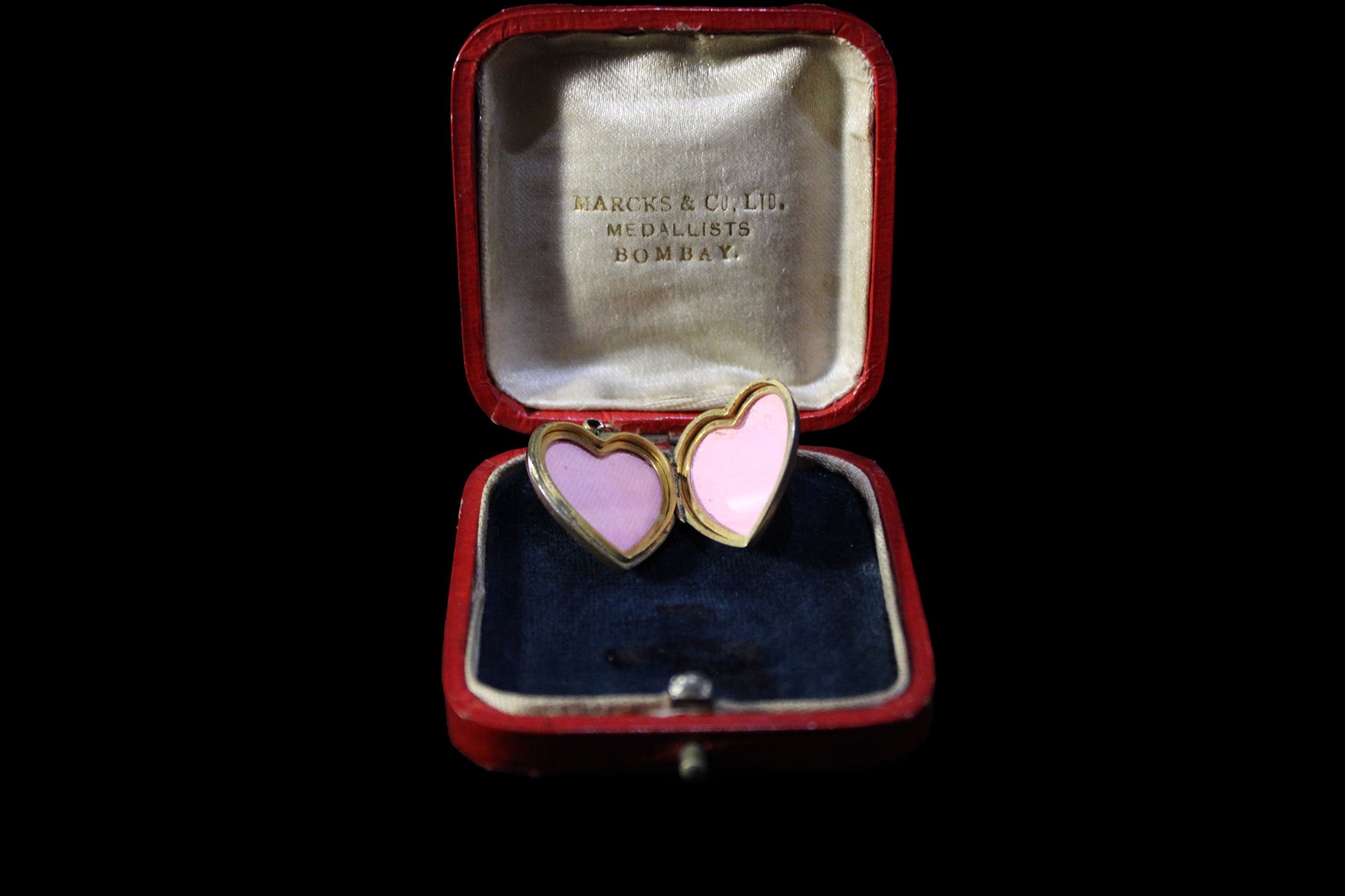
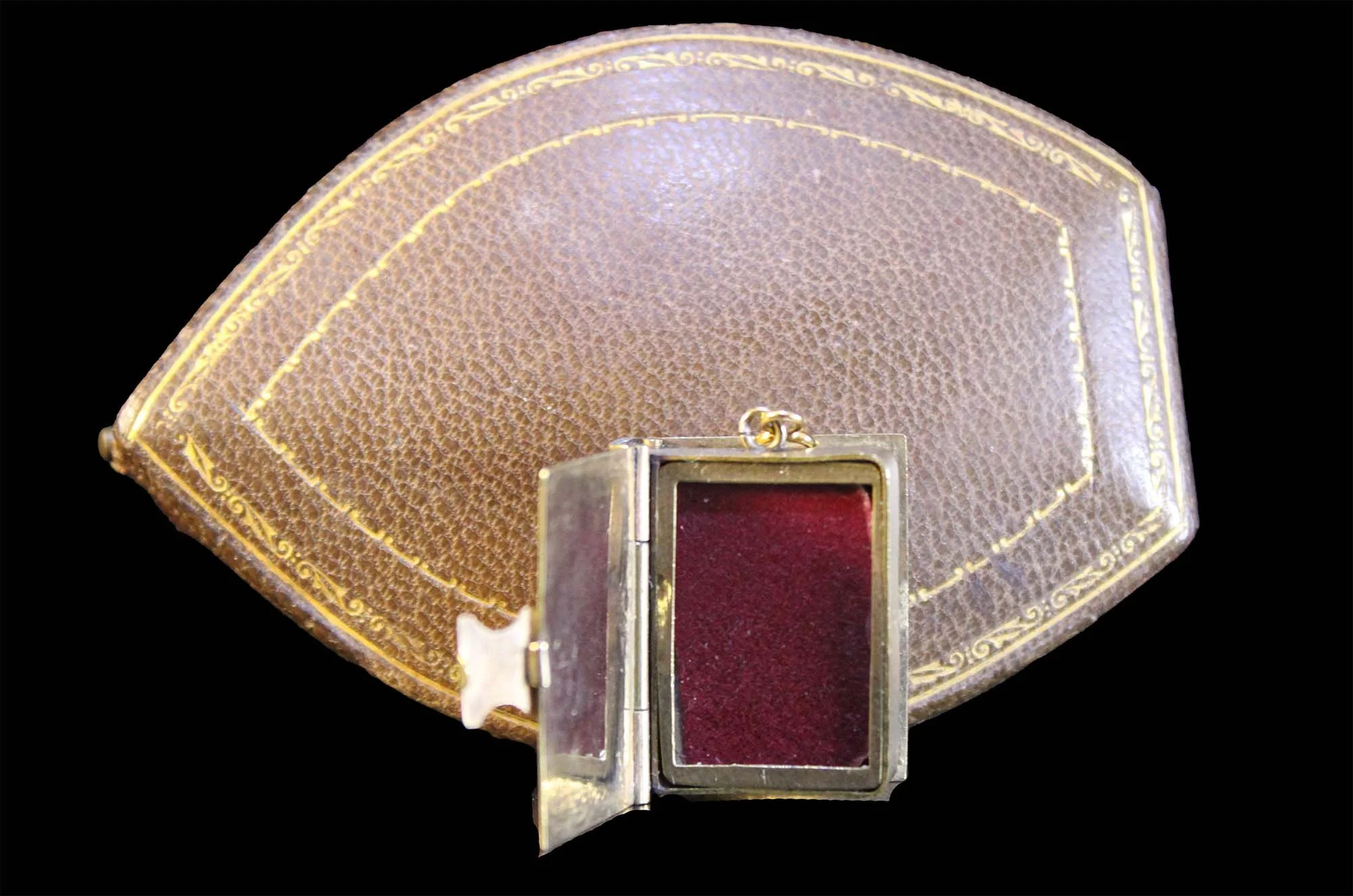
The remarkable construction reflects the Victorian fascination with miniature mechanical ingenuity, private symbolism, and jewelry designed to preserve intimate personal histories. Each of the six compartments contains an oval recess intended to accommodate a miniature photograph, portrait, or other small sentimental keepsake. The arrangement creates a miniature gallery of personal remembrance, allowing multiple individuals or cherished associations to be preserved within a single ornament. The interiors retain contrasting burgundy and violet-colored inserts, suggestive of the rich textile and decorative palette favored during the nineteenth century. Whether these are original or later replacements remains to be established.
The Victorian Cult of Remembrance
Throughout the nineteenth century, lockets occupied a particularly intimate position within the language of personal adornment. Unlike jewelry intended principally to communicate wealth or social standing, the locket was frequently entrusted with the preservation of emotional attachments. The expansion of portrait photography during the Victorian period transformed the possibilities of sentimental jewelry. With the introduction of increasingly accessible photographic processes, including the carte-de-visite in the 1850s, miniature portraits became important expressions of familial identity, romantic attachment, and remembrance. Lockets could contain portraits of spouses, children, parents, siblings, or deceased loved ones. They were sometimes worn openly as declarations of affection, but their contents remained private, revealed only at the discretion of the wearer. A multiple-compartment locket such as this example extended that tradition, accommodating an entire constellation of relationships within a single jewel. Its six compartments may have served as a portable family portrait gallery, preserving the likenesses of successive generations or a closely connected circle of loved ones.
The Symbolism of the Six-Pointed Star
The transformation from a closed, arrow-shaped pendant into a radiating six-pointed star gives this jewel particular visual and symbolic interest. Stars were familiar motifs in nineteenth-century decorative arts and jewelry, appearing in designs associated with celestial beauty, aspiration, constancy, and spiritual guidance. Within sentimental jewelry, celestial imagery could evoke the enduring presence of loved ones across physical distance or death. Although there is no evidence that the maker intended a specific celestial interpretation, the six-pointed arrangement provides an evocative visual parallel to the Victorian conception of family as a constellation of enduring attachments. The distinction between the closed and opened forms is equally compelling. What initially appears to be a modest engraved pendant unfolds into an elaborate private gallery, transforming an outwardly decorative object into an intimate repository of personal memory.
Mechanical Ingenuity and the Goldsmith's Art
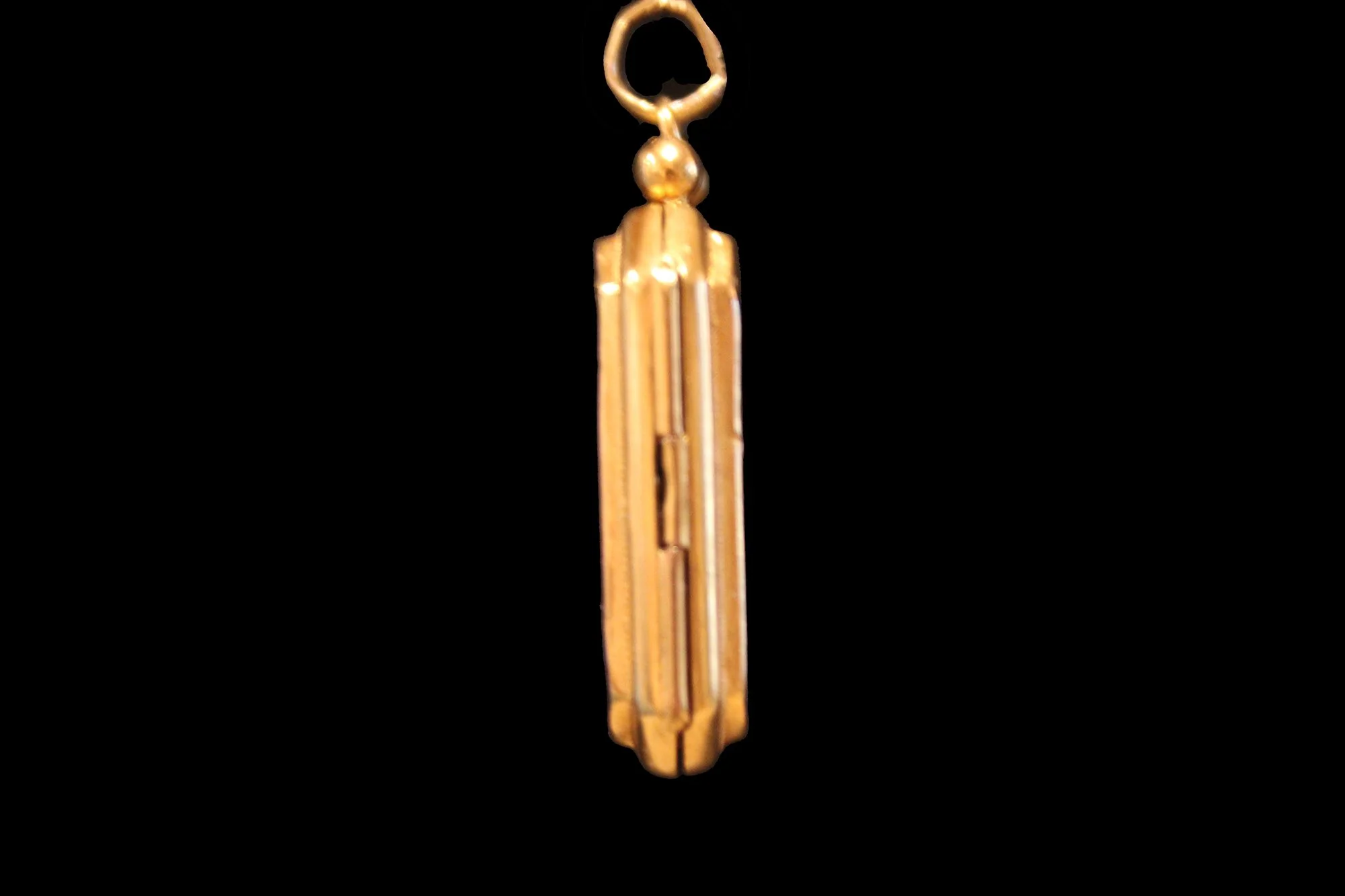
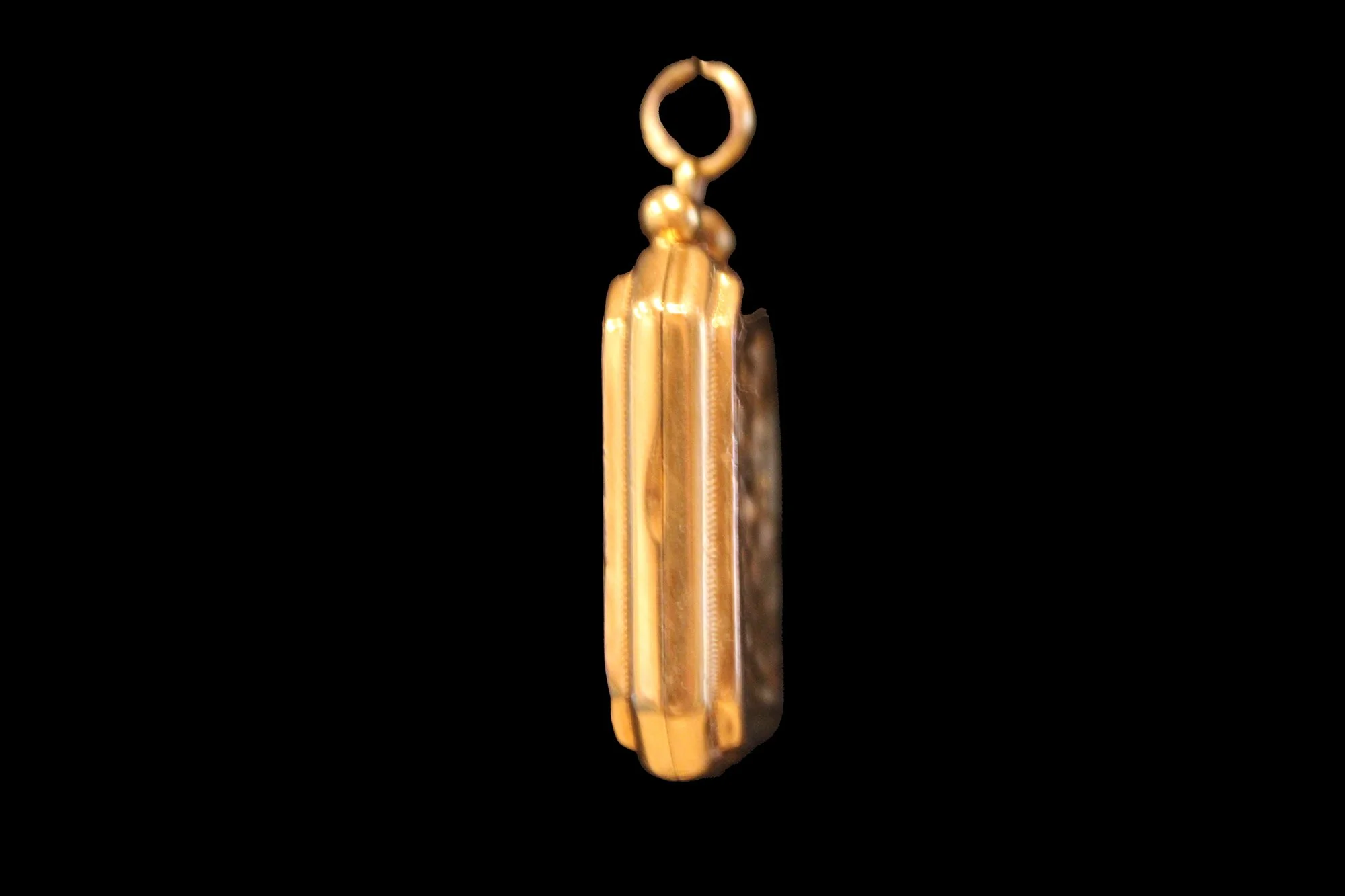
The locket's construction demonstrates the precision required of nineteenth-century goldsmiths working at a miniature scale. 6 shaped gold panels are connected through a system of small hinges, allowing the compartments to fold into a compact, layered arrangement. The closed pendant is secured by an ornamental fastening, while a suspension ring permits the jewel to be worn on a chain. Its surfaces combine polished gold with finely worked borders, engraved floral ornament, and elaborate interlaced initials or monogram-like devices. The contrasting decorative treatments emphasize the precision of the individual panels while maintaining visual continuity across the opened composition. The floral engraving is particularly characteristic of Victorian decorative taste, in which botanical imagery was frequently associated with affection, remembrance, and the sentimental language of flowers. Unlike a conventional single- or double-sided locket, this example combines jewelry, miniature engineering, and personal portraiture in a remarkably compact format.
Historical Significance
This six-compartment folding locket exemplifies the intersection of mechanical craftsmanship and sentimental expression in late nineteenth-century jewelry. Its significance lies not simply in the quantity of portraits it could accommodate, but in the sophisticated transformation through which those portraits were concealed and revealed. The pendant was designed to be both an ornament and a private archive, capable of carrying several personal histories while revealing nothing of their identities when closed. It survives as an evocative testament to a period in which jewelry was frequently entrusted with the preservation of memory, affection, and familial continuity.
For the contemporary collector, the locket offers a particularly compelling expression of Victorian ingenuity: six private spaces for remembrance, united within a single golden ornament.


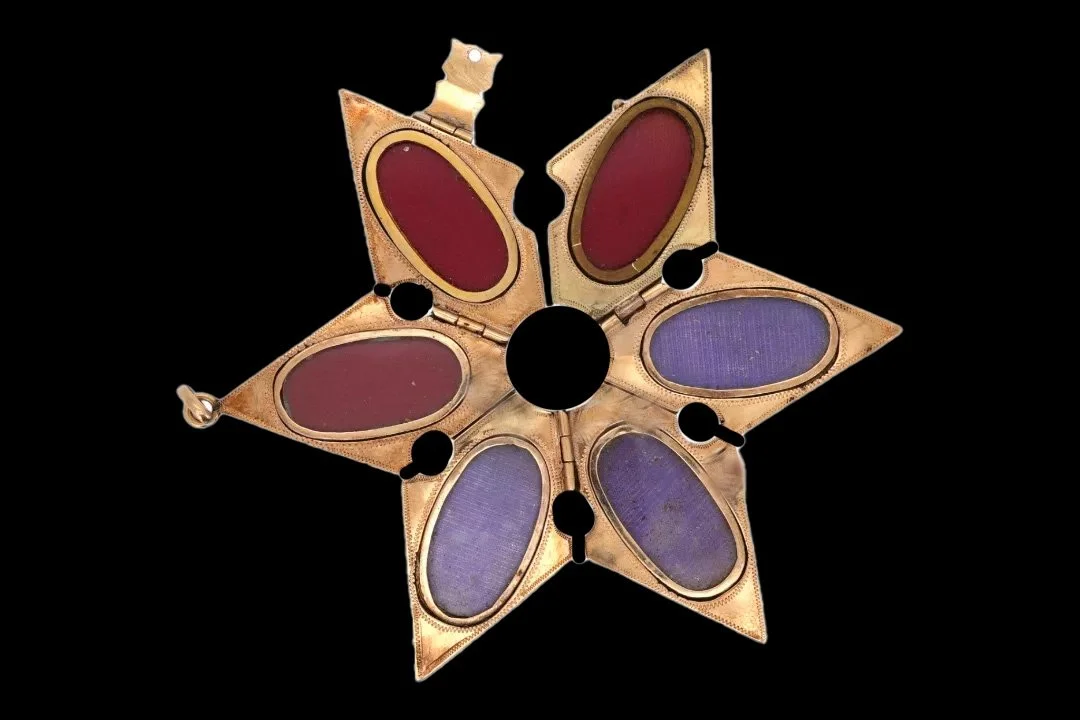 Image 1 of 4
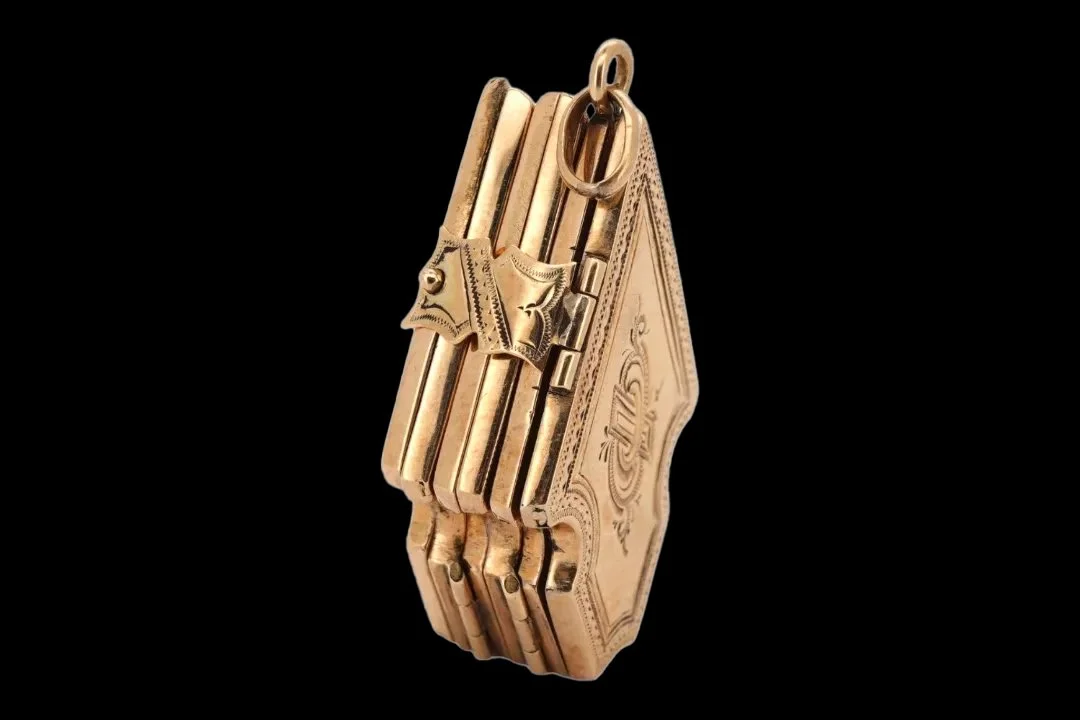 Image 2 of 4
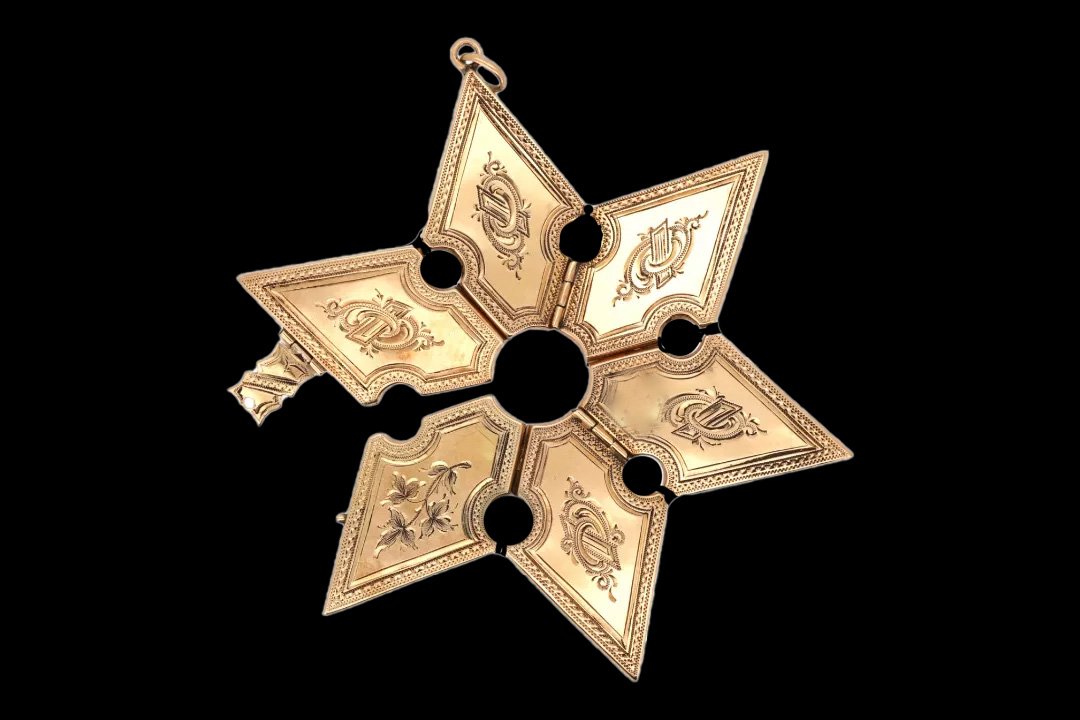 Image 3 of 4
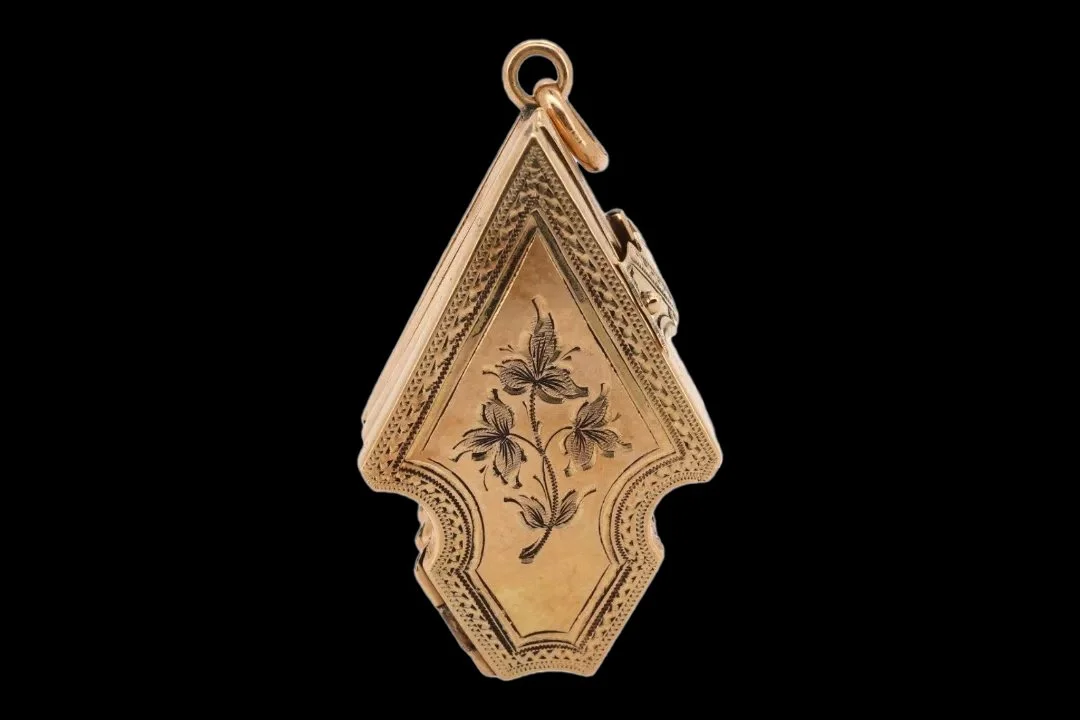 Image 4 of 4