The Language of Blue: A Vintage Gold Cabochon Pendant with Ornate Botanical Goldwork
Twentieth Century Pendant
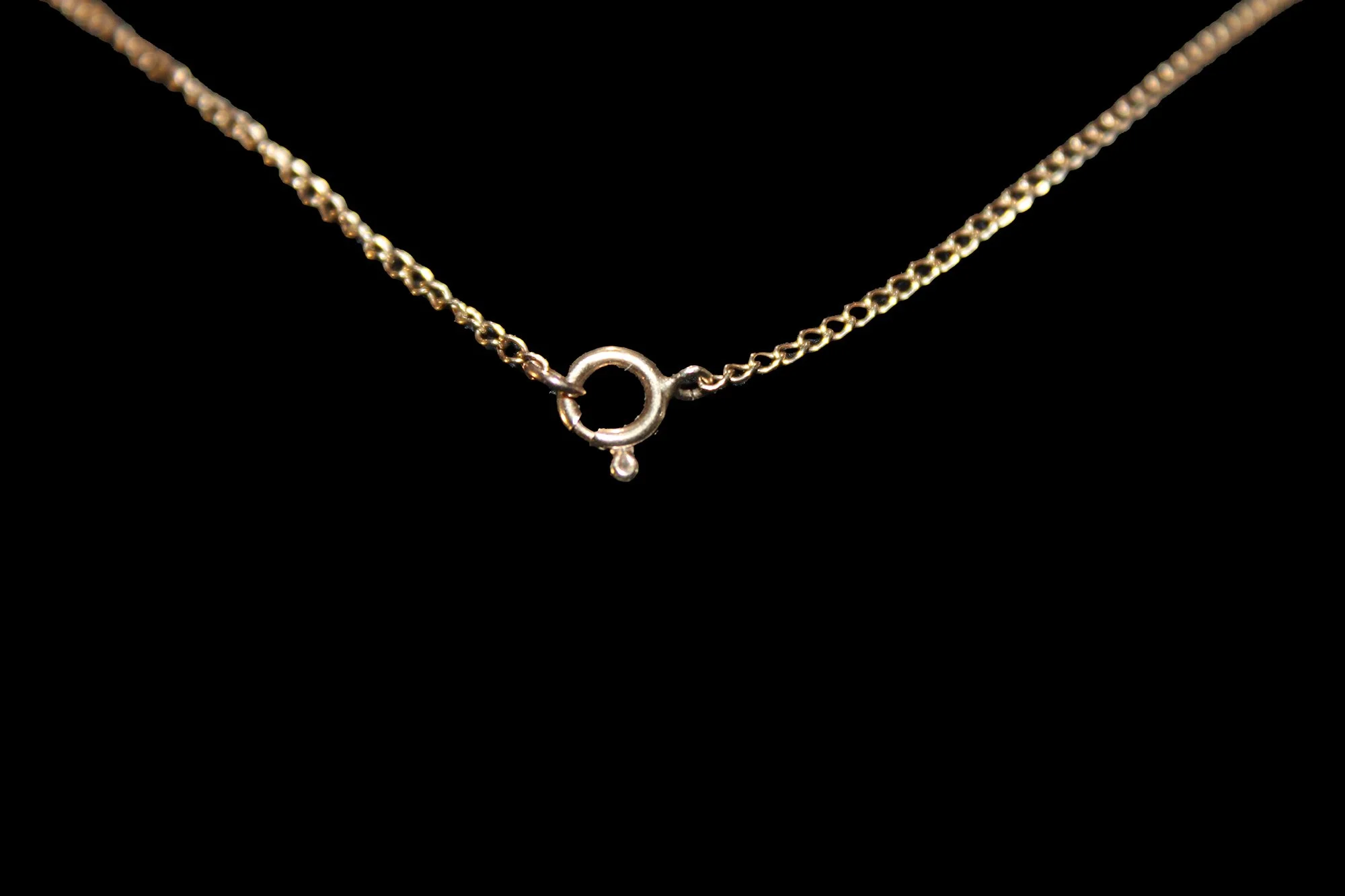
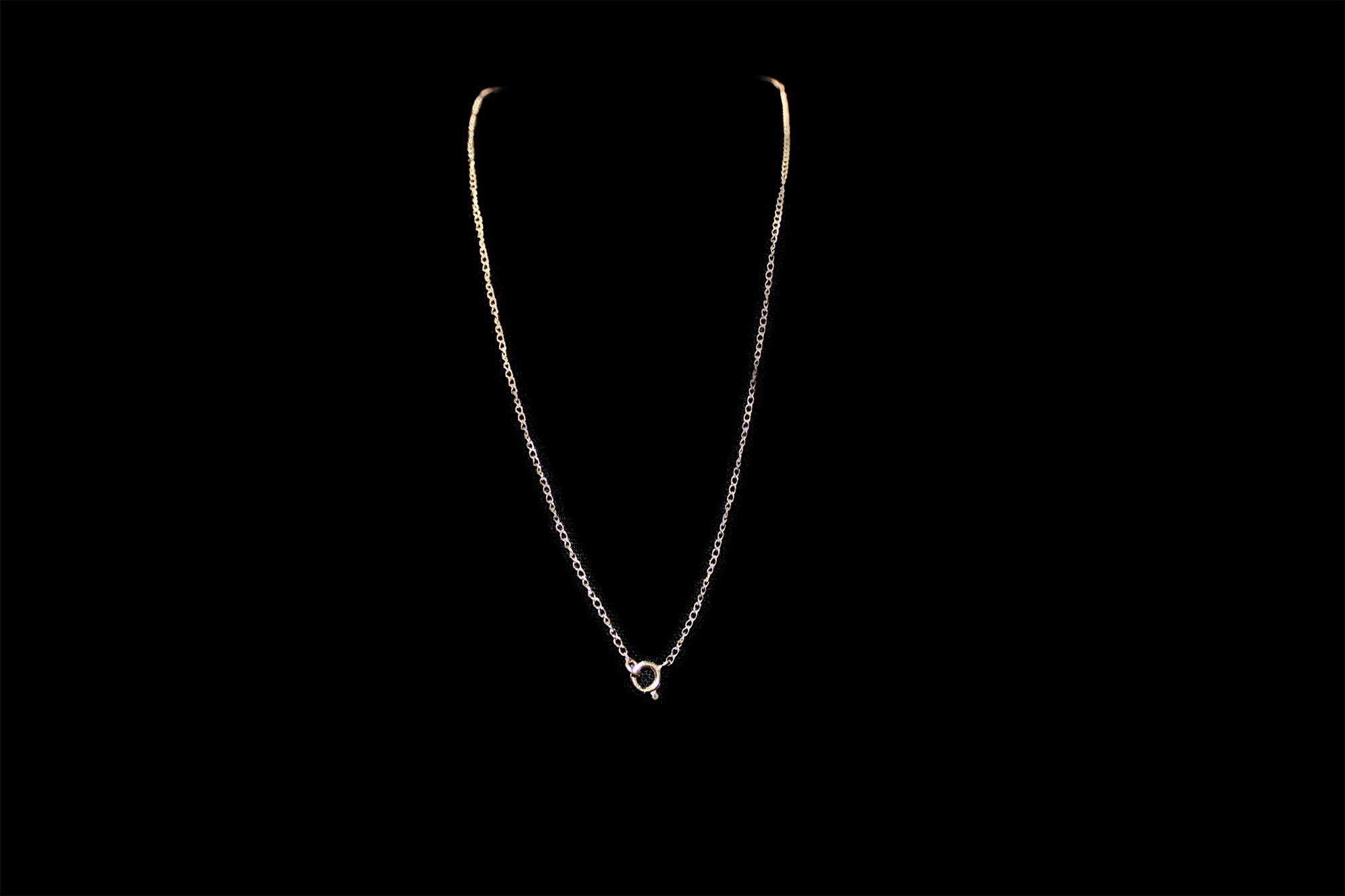
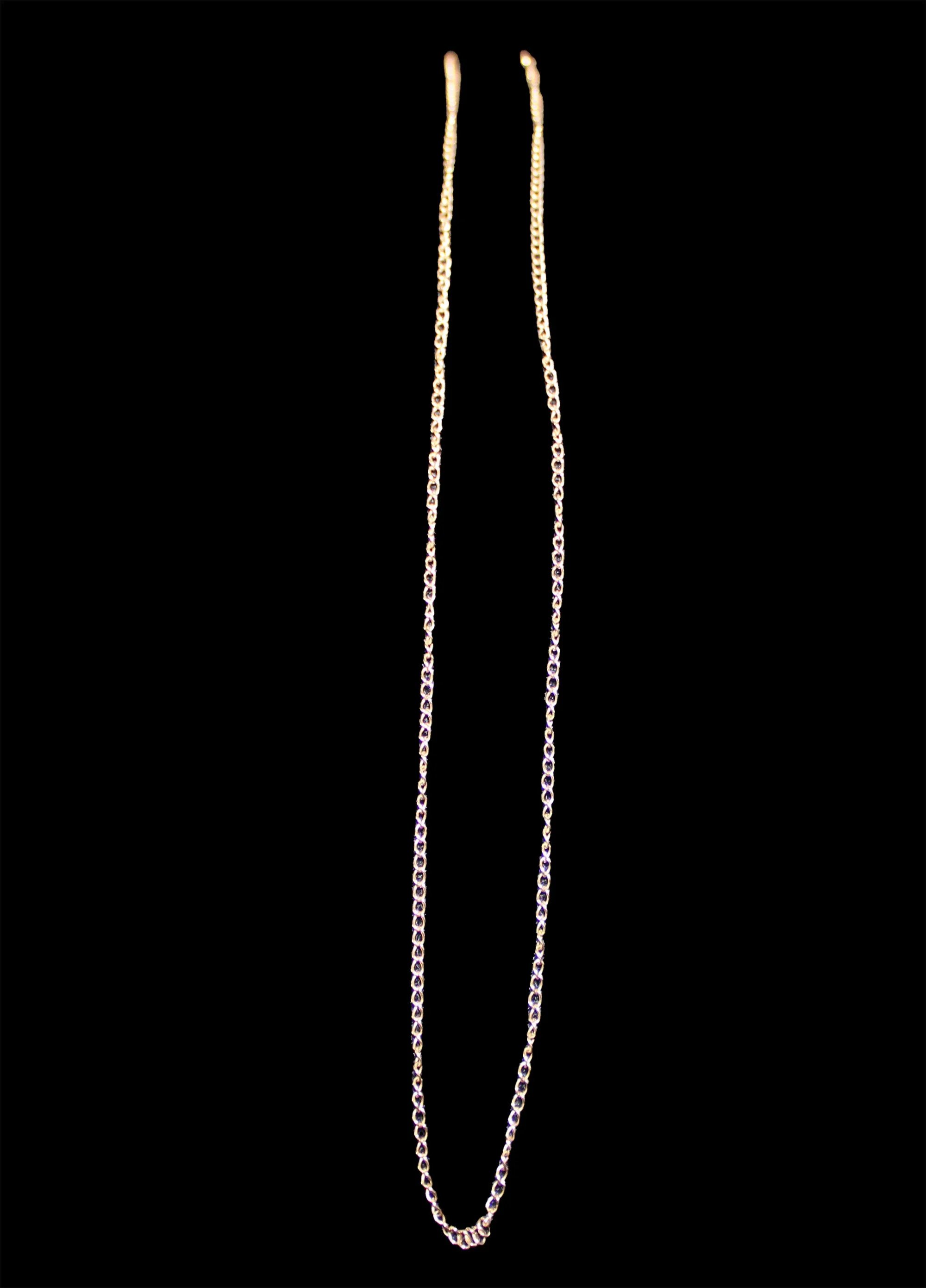
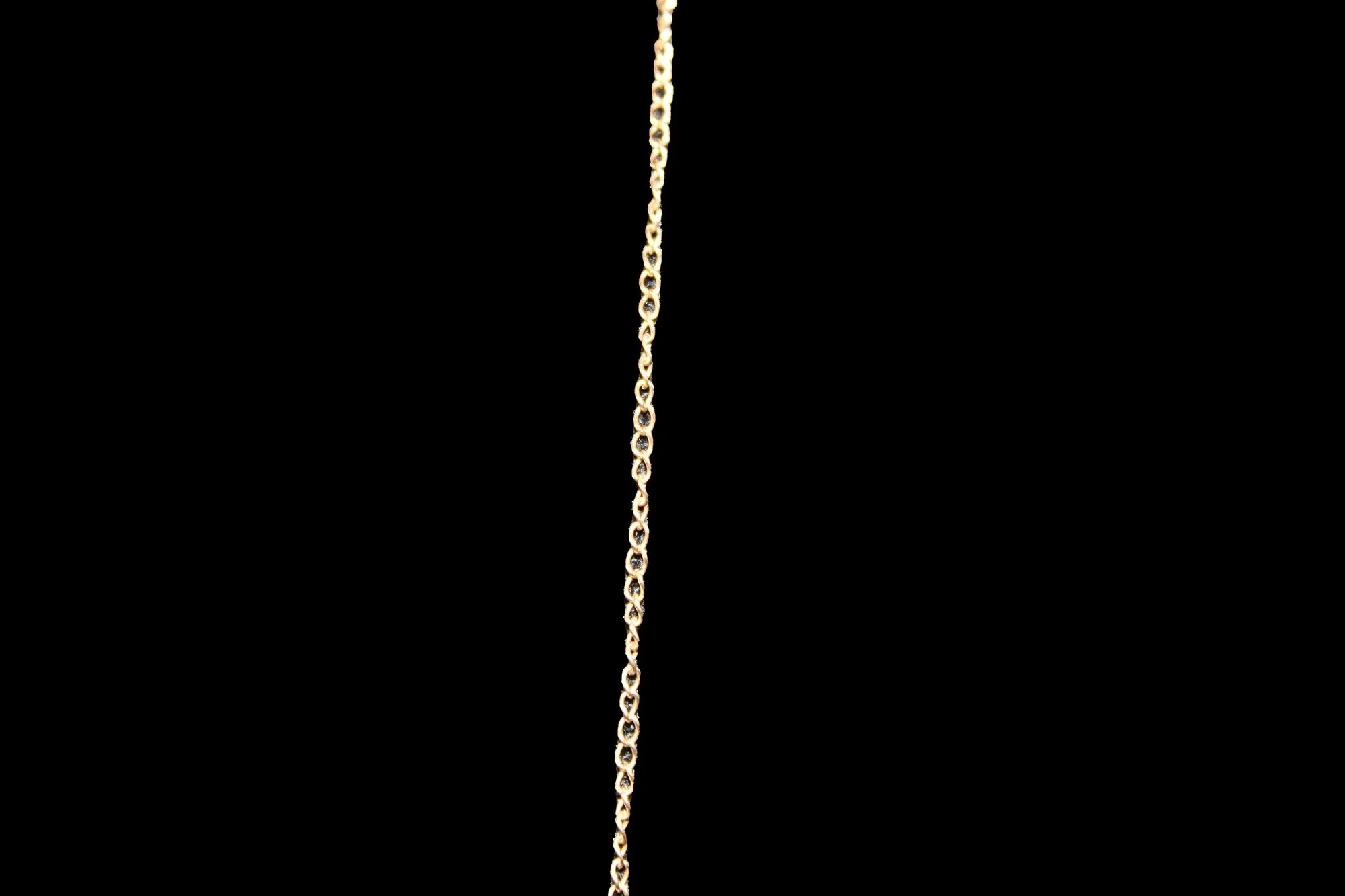
An impressive vintage pendant fashioned in 9-carat yellow gold, featuring a substantial oval cabochon of deep blue gemstone or ornamental material, surrounded by an elaborate openwork border of scrolling foliage. The pendant's composition is distinguished by the contrast between the smooth, uninterrupted surface of the central blue cabochon and the richly textured goldwork that encircles it. The stone's saturated, almost cobalt-blue coloration creates a striking focal point, while its polished, domed surface captures and reflects light with a soft, luminous quality. The cabochon is secured within a continuous gold bezel, emphasizing its oval proportions and providing a clean visual transition between the gemstone and the surrounding ornamental framework. Beyond this polished border, the gold setting develops into an intricate arrangement of curling leaves, scrolling stems, and small floral details. The openwork construction creates areas of light and shadow, lending depth and movement to the design. The pendant is completed by a suspension fitting that allows it to be worn on a chain, transforming the richly ornamented gold setting into a decorative frame for the central blue stone. The reverse reveals the construction of the pendant, with the cabochon enclosed by a gold rim and surrounded by the openwork framework. The gold bears hallmarks indicating 9-carat purity.
Weighing approximately 18.7 grams, the pendant possesses considerable substance, reflecting the importance of both the central cabochon and its elaborate gold mounting.
Blue Gemstones in the History of Jewelry
Blue has occupied a particularly important place in the history of jewelry, decorative arts, and personal adornment. Across many cultures, blue gemstones and ornamental materials have been associated with the heavens, spiritual contemplation, truth, and protection. In ancient Egypt, lapis lazuli was prized for its intense blue coloration and its associations with divine power and the celestial realm. The material was incorporated into royal ornaments, amulets, and ceremonial objects, often in combination with gold. In the ancient Near East, blue stones and glazed materials likewise appeared in objects intended to communicate status, religious significance, and protection. During the medieval period, blue acquired particular importance within Christian visual culture. Ultramarine, historically produced from lapis lazuli, became one of the most prestigious pigments used in European painting, frequently reserved for depictions of the Virgin Mary's robes. The association between blue and spiritual virtue continued into later centuries, when blue gemstones appeared in jewelry intended to express fidelity, sincerity, and enduring affection. By the nineteenth century, the symbolic vocabulary of gemstones had become an important feature of sentimental jewelry. Blue stones, particularly sapphires and turquoise, were frequently associated with constancy, truth, and faithful attachment.


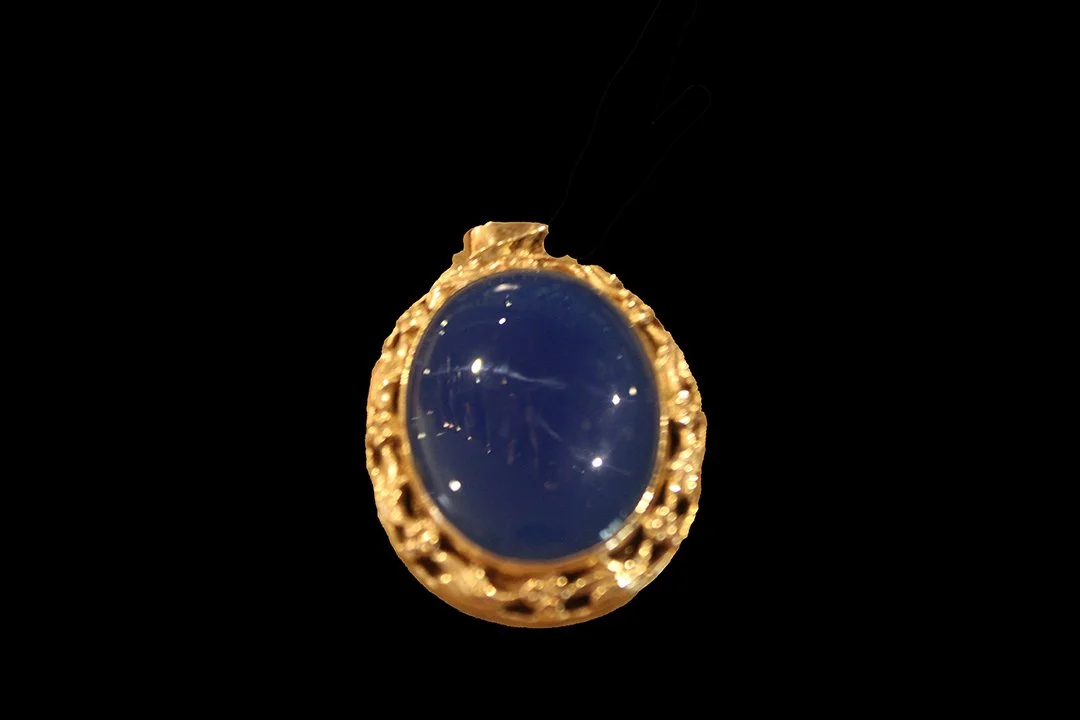 Image 1 of 5
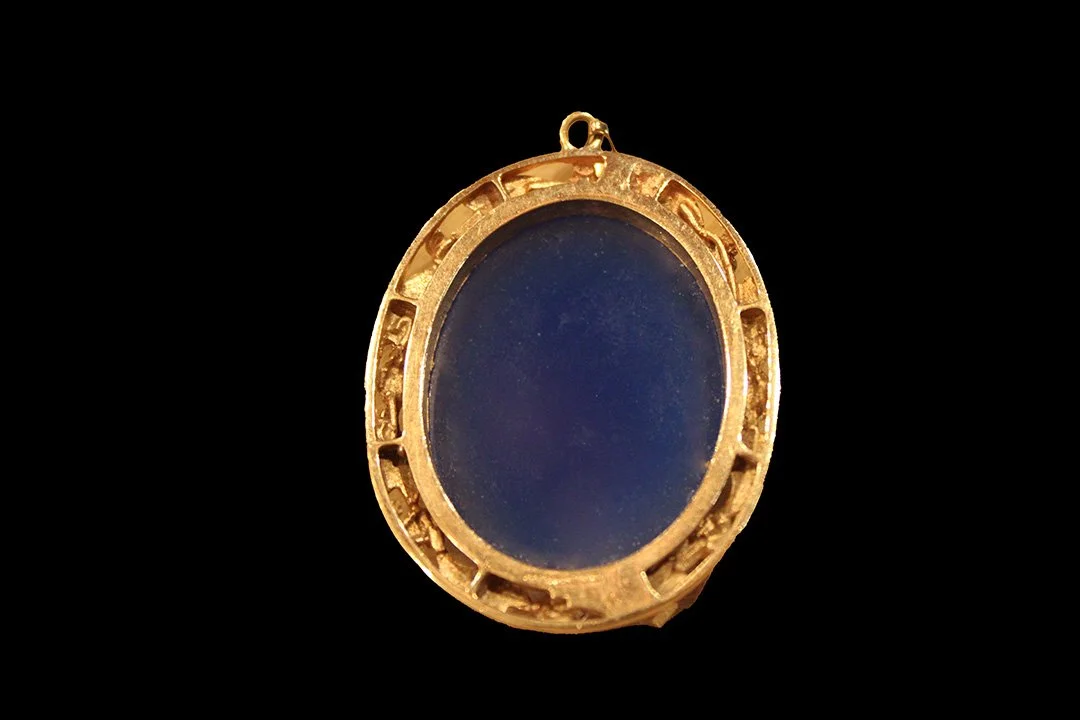 Image 2 of 5
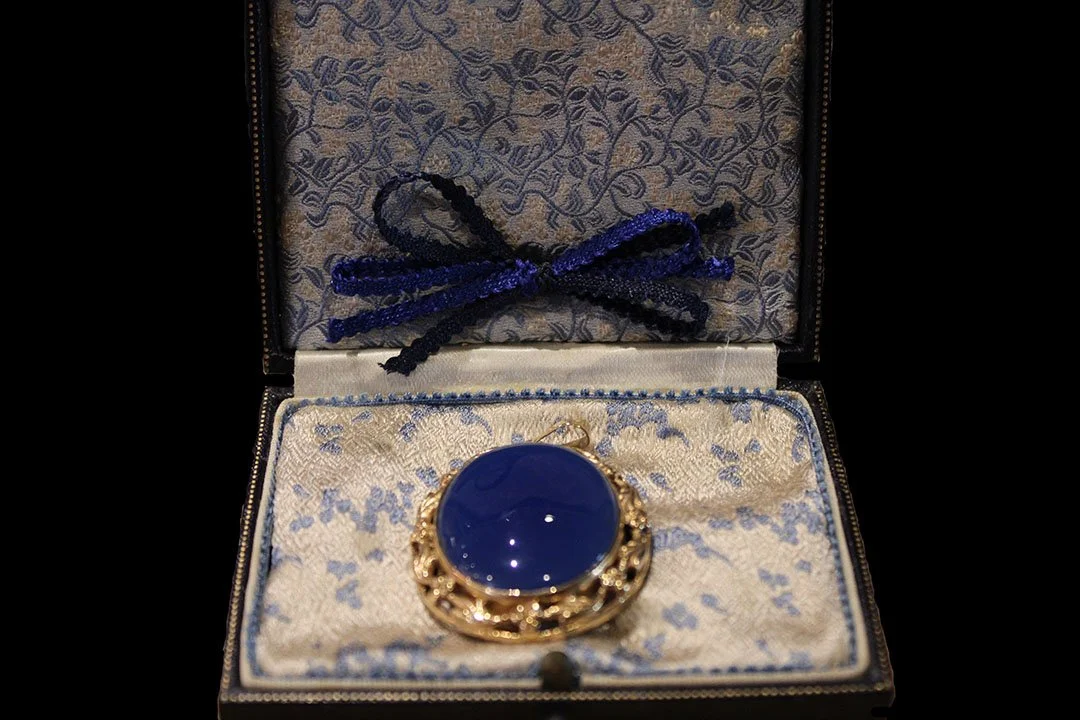 Image 3 of 5
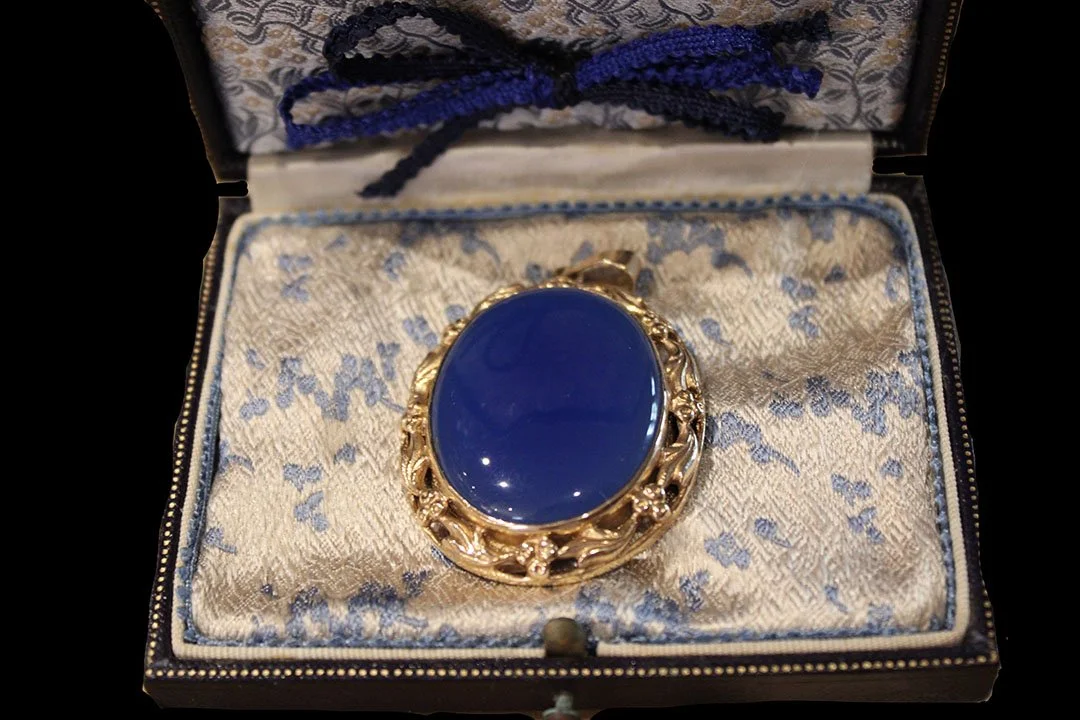 Image 4 of 5
 Image 5 of 5