A Rare 19th-Century Swiss 18K Gold, Royal Blue Enamel & Seed Pearl Vinaigrette
Switzerland | 19th Century | 18K Gold | Enamel | Seed Pearls
An exceptional example of nineteenth-century Swiss goldsmithing and decorative artistry, this exquisitely ornamented vinaigrette combines richly colored enamel, delicate floral painting, and lustrous seed pearls within an intricately constructed 18-karat gold case. Both a functional object of personal refinement and a miniature work of art, it embodies the extraordinary craftsmanship lavished upon fashionable accessories during the nineteenth century.
Of distinctive hexagonal form, the vinaigrette is decorated with panels of vivid royal blue enamel, each embellished with finely painted bouquets of roses and other garden flowers. The floral compositions, rendered in delicate shades of pink, white, blue, and green, stand in striking contrast to the saturated blue ground. Gold borders, scrolling foliate ornament, and radiating enamel textures further enrich the composition, demonstrating the sophisticated interplay of color, light, and precious materials.
The architectural geometry of the case is softened by an elaborate arrangement of natural seed pearls. Rows of pearls frame the enamel panels, while additional pearls form miniature floral rosettes across the upper surfaces. The domed lid is crowned by a single pearl, providing an elegant finishing detail to the jewel-like construction.
Two ornamental scrolling gold suspension loops project from opposing sides, allowing the vinaigrette to be incorporated into a chain or suspended as a pendant. Their symmetrical design contributes to the balanced, almost architectural character of the piece.
The hinged lid opens to reveal a finely pierced gold grille ornamented with an intricate scrolling foliate design. Historically, vinaigrettes contained a small sponge or absorbent material moistened with aromatic vinegar or perfume. The pierced grille permitted the fragrance to escape while concealing the scented material beneath, transforming a practical personal accessory into an object of considerable luxury.
Symbolism of Flowers, Pearls, and Blue Enamel
The decorative vocabulary of this vinaigrette reflects the sentimental associations that permeated nineteenth-century jewelry and decorative arts.
Flowers occupied a central place in the visual language of affection and remembrance. Roses were widely associated with love and beauty, while smaller blossoms could evoke tenderness, innocence, and enduring attachment. The painted floral bouquets adorning this vinaigrette participate in this broader tradition of floral symbolism, although their exact meaning to the original owner cannot be established.
Pearls, prized for their soft luminosity and natural beauty, were traditionally associated with purity, innocence, and virtue. Their arrangement as delicate flowers reinforces the romantic character of the decoration, while the rich blue enamel recalls historical associations with fidelity, constancy, and truth.
Together, these materials create a composition that is both visually sumptuous and suggestive of the emotional language of nineteenth-century personal adornment.
Historical Significance
Vinaigrettes became particularly fashionable during the late eighteenth and nineteenth centuries, when portable scent accessories were valued for their practicality, elegance, and intimate relationship to the wearer.
Swiss craftsmen were celebrated for their mastery of precious-metal work, miniature enamel painting, and finely engineered luxury objects. Their creations circulated through international markets, appealing to patrons who appreciated the combination of technical sophistication and ornamental beauty.
This example is distinguished by its unusual hexagonal form, richly saturated blue enamel, finely painted floral decoration, extensive seed-pearl embellishment, and surviving pierced grille. Its elaborate construction elevates an otherwise utilitarian object into a remarkable example of portable decorative art.
A miniature architectural jewel, this Swiss vinaigrette captures the nineteenth-century ideal that even the most personal and functional possessions could be transformed into objects of extraordinary beauty.


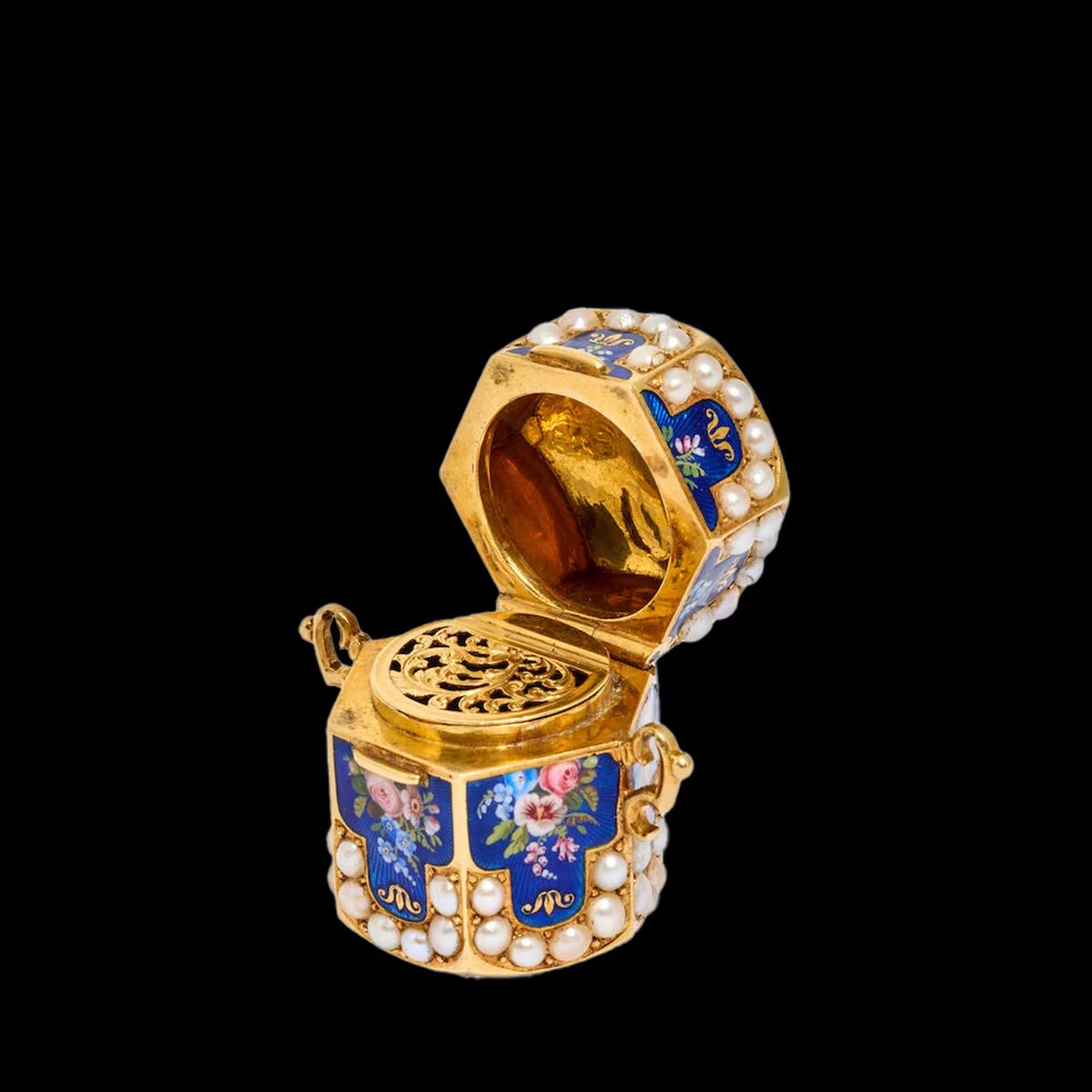 Image 1 of 3
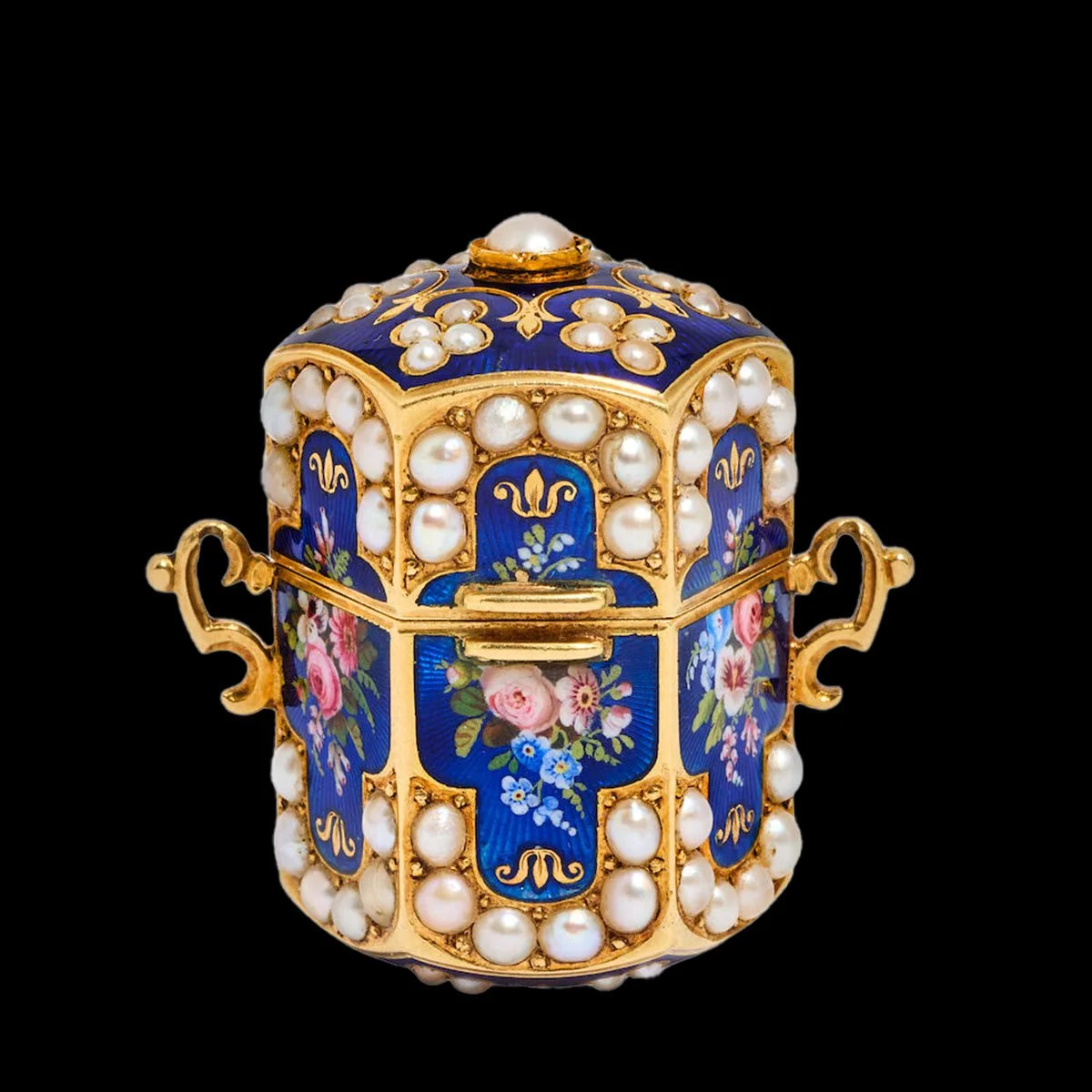 Image 2 of 3
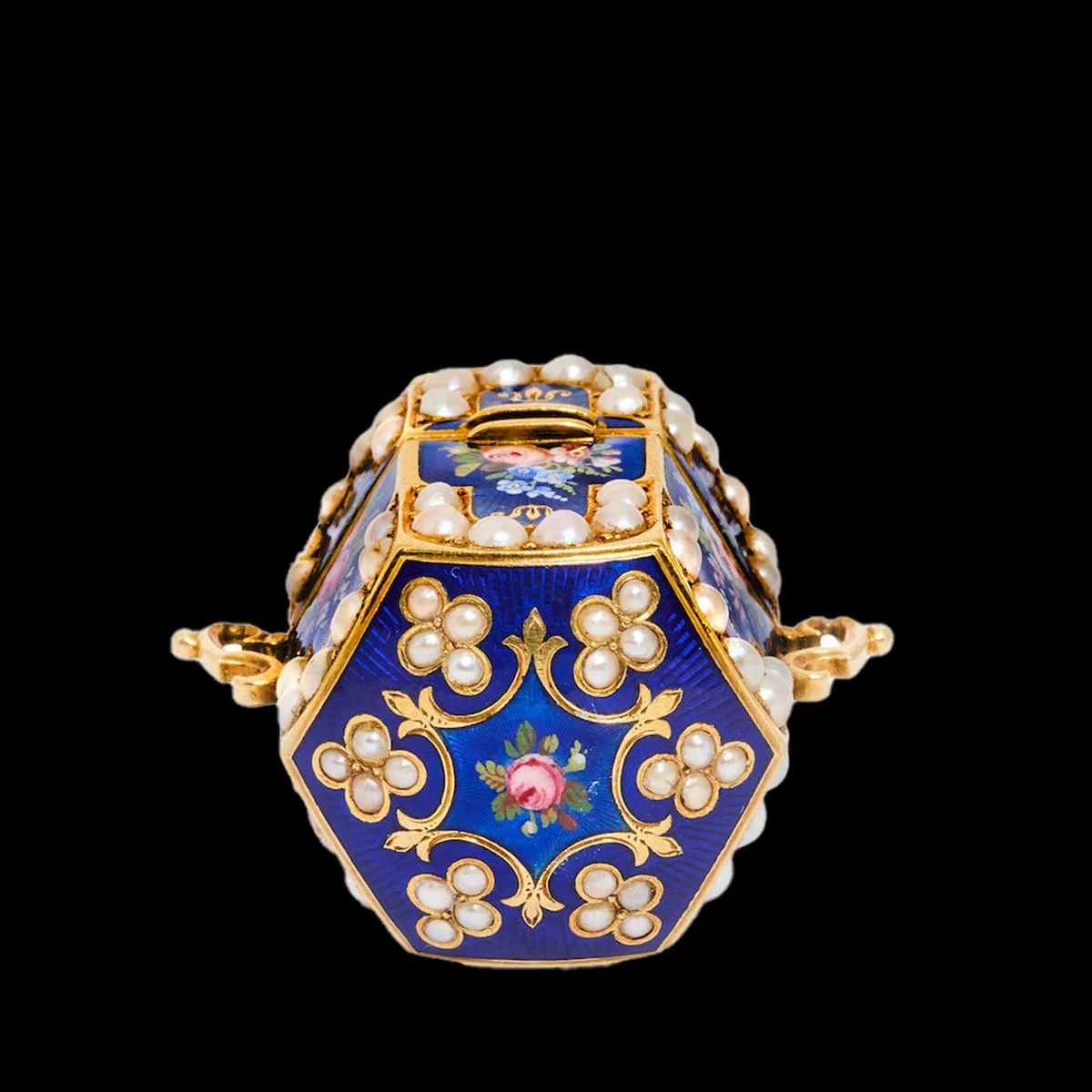 Image 3 of 3