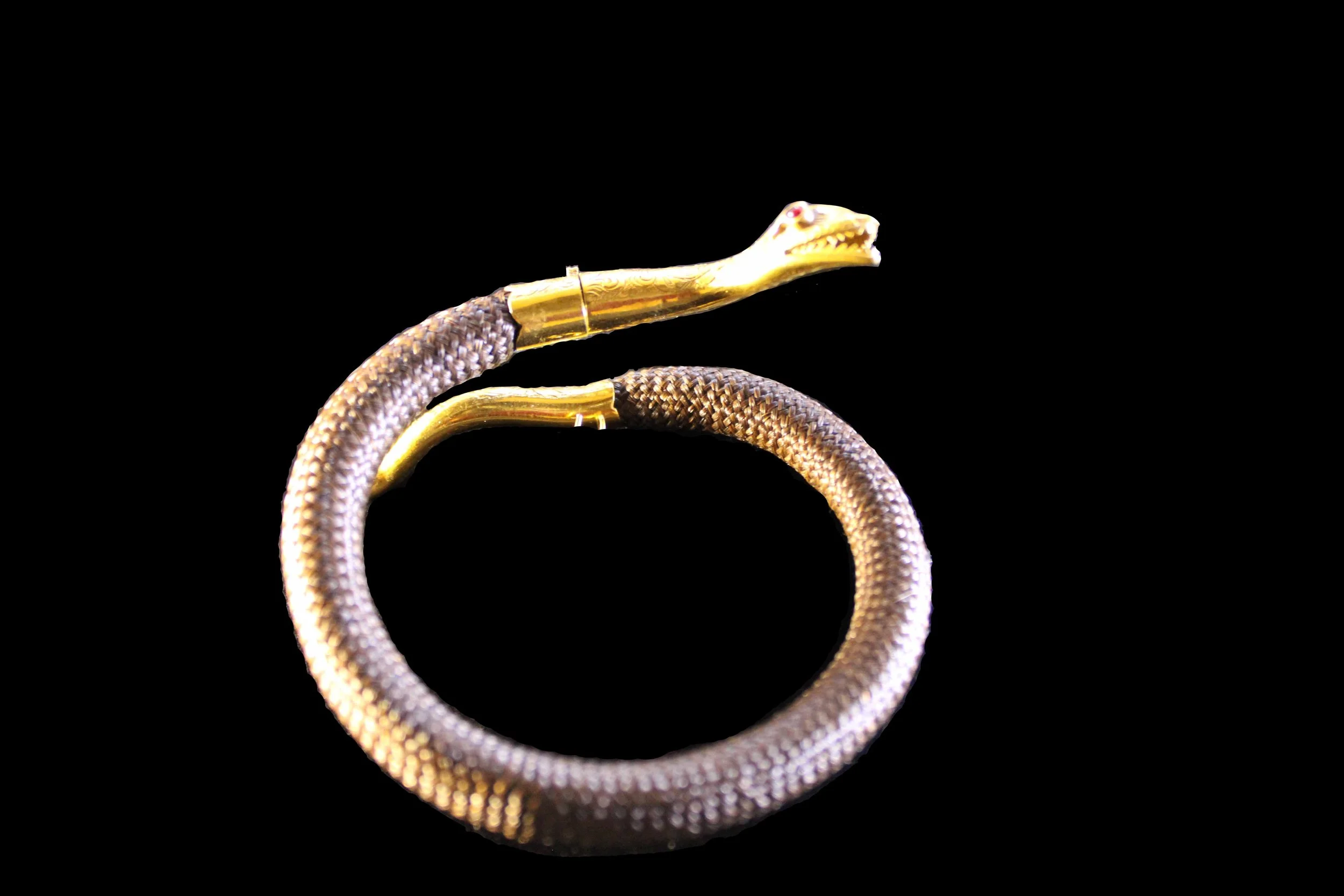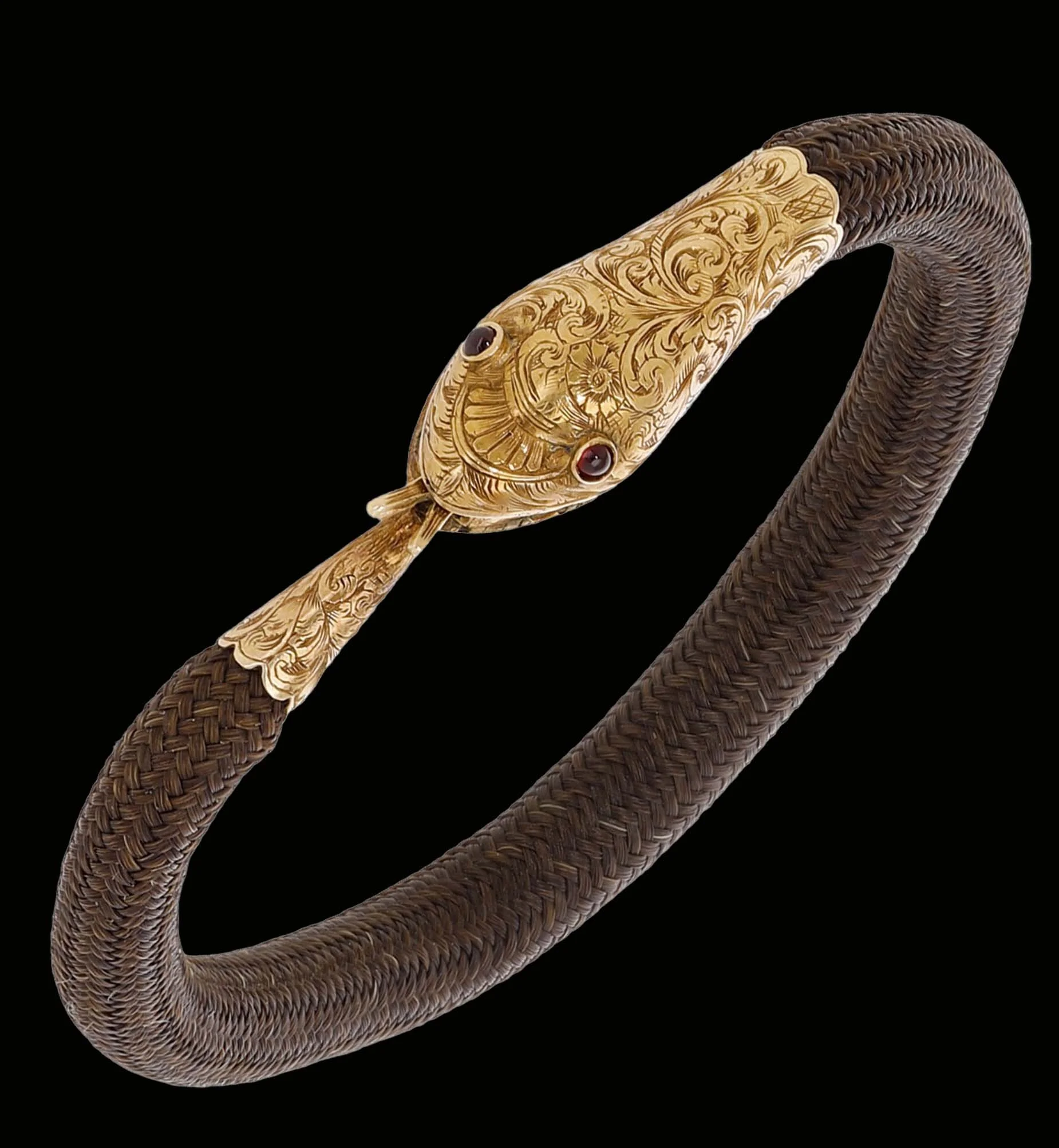
Victorian Ouroboros Hairwork Memorial Bracelet, Dated 1845

$5,000.00
Only 1 available

Victorian England, dated 1845

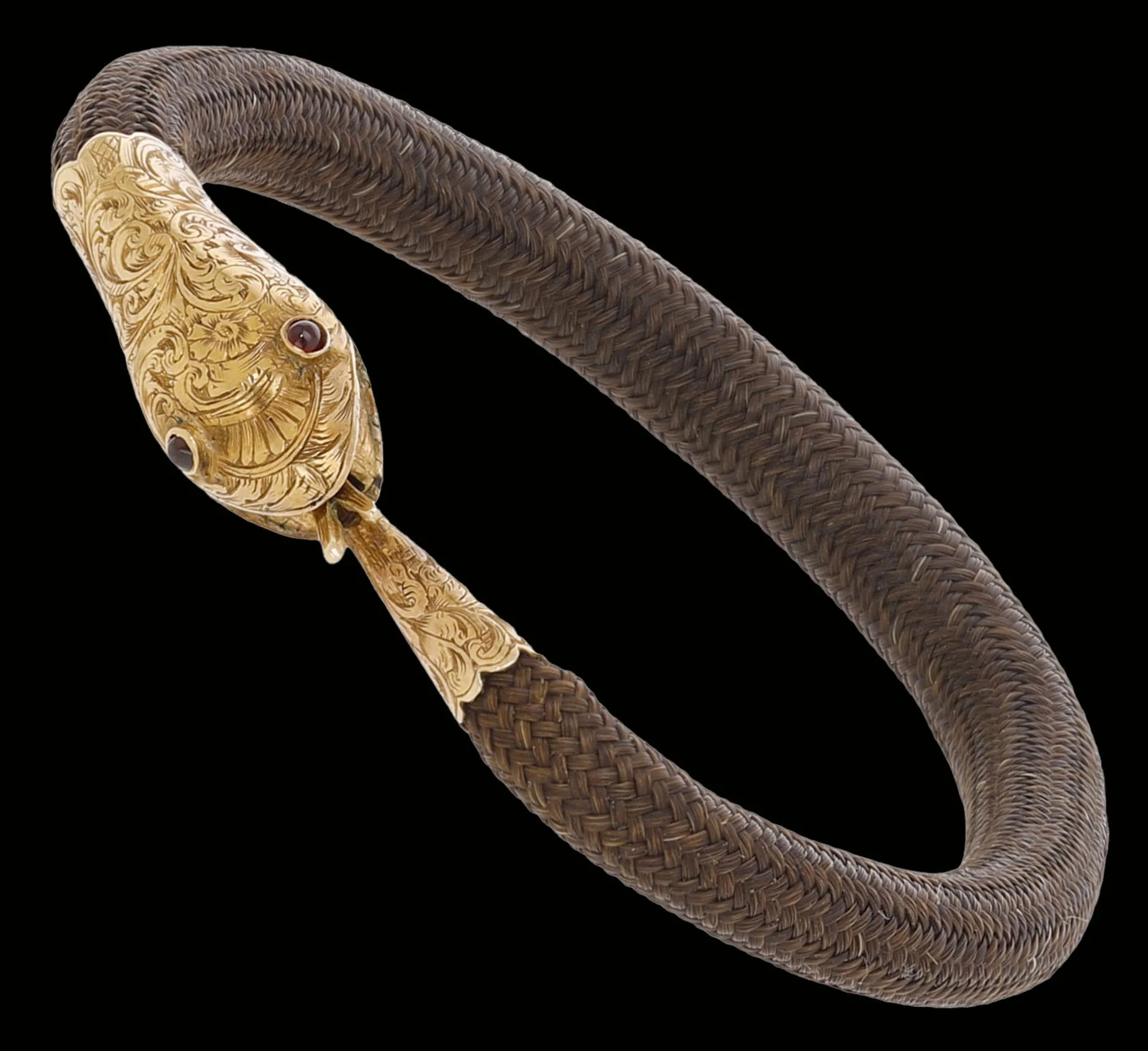
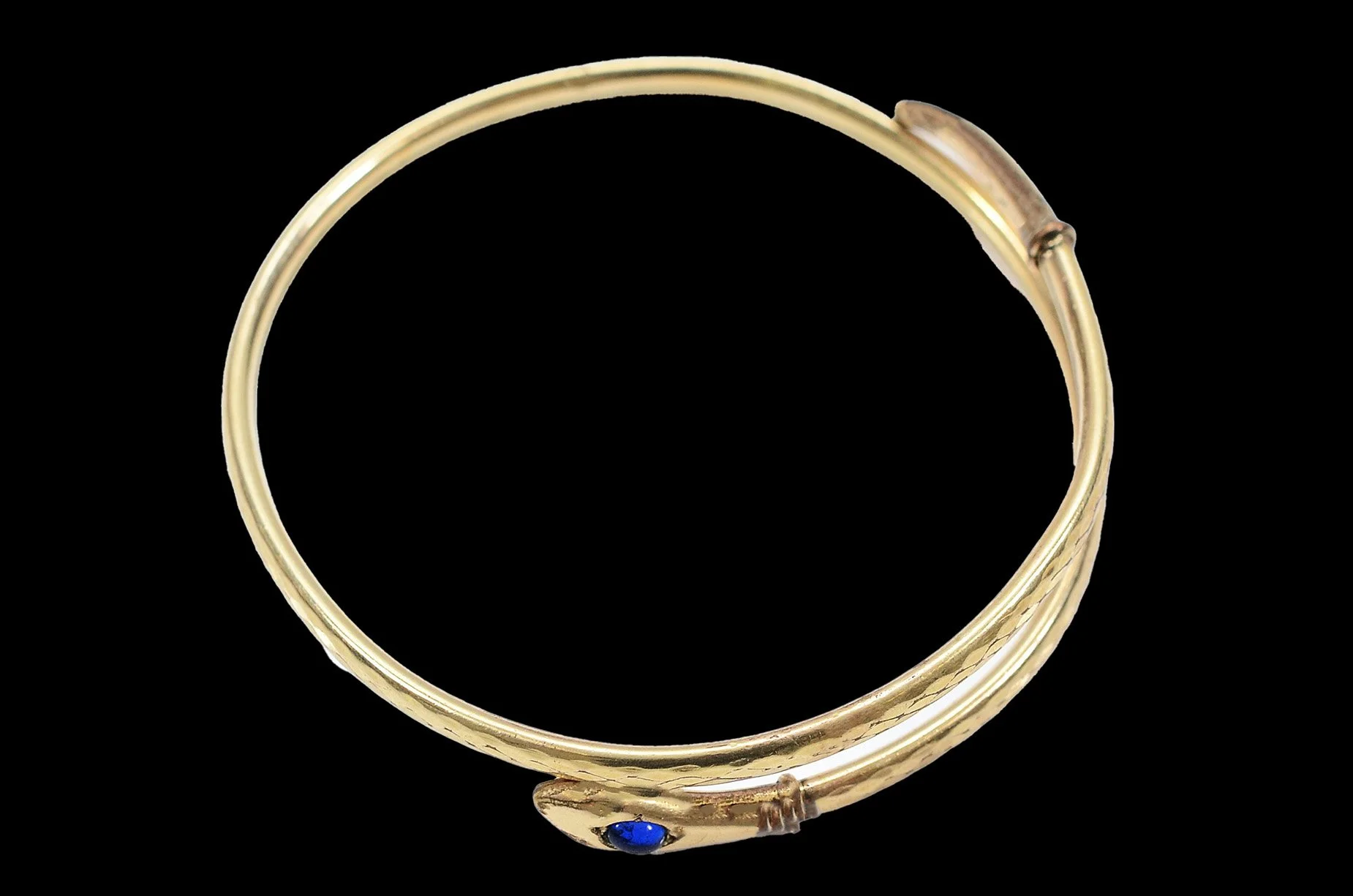
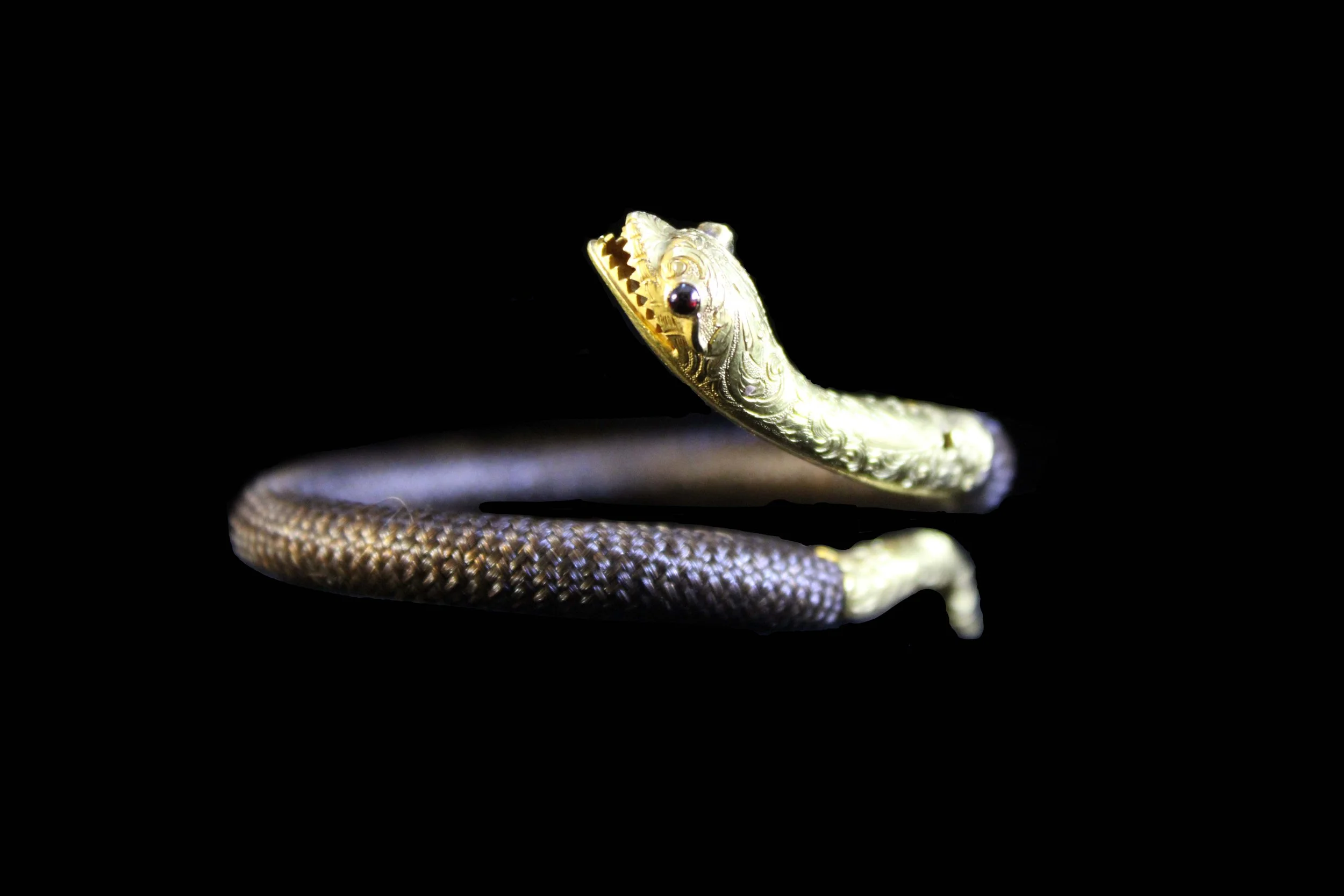
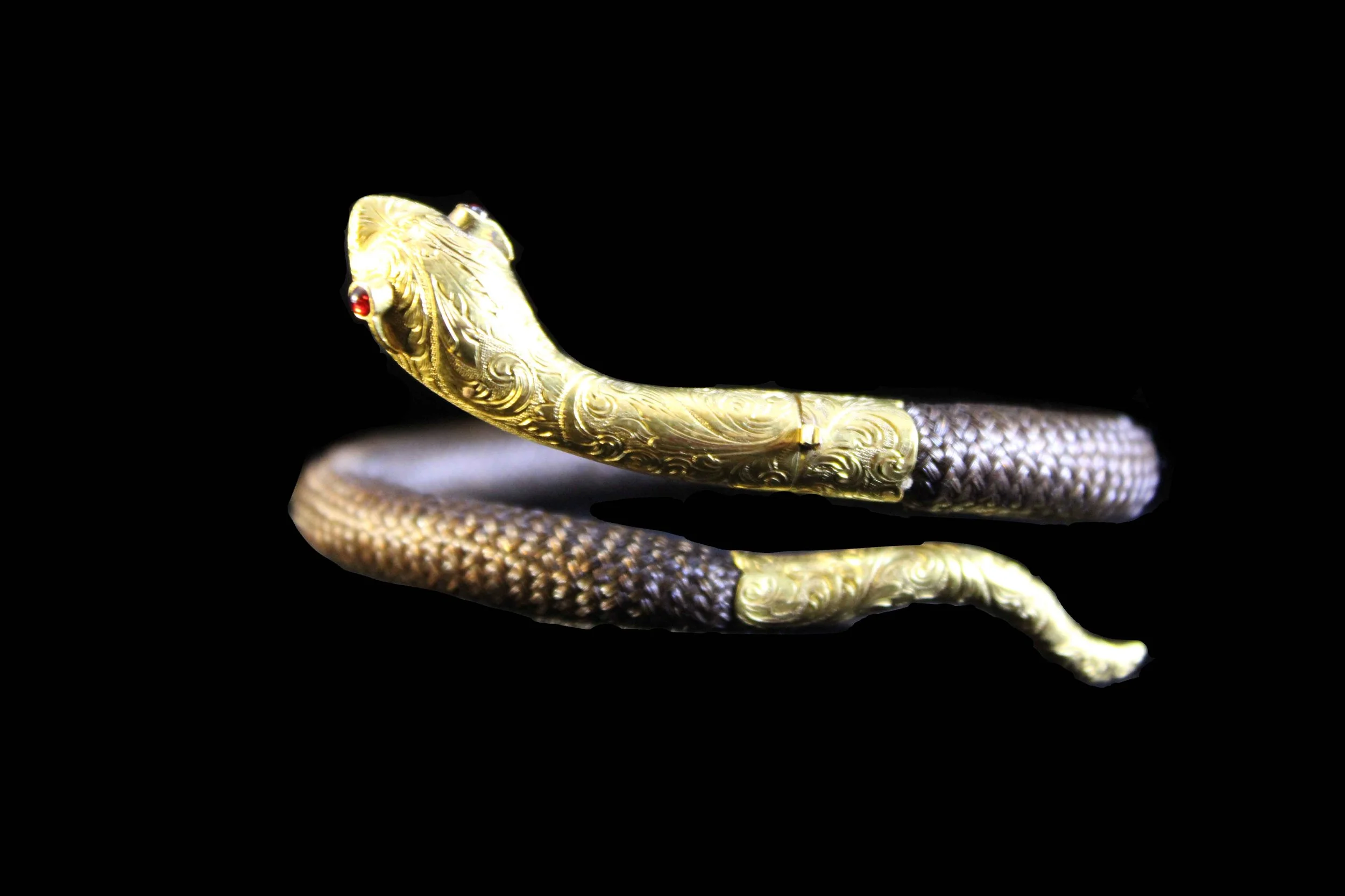
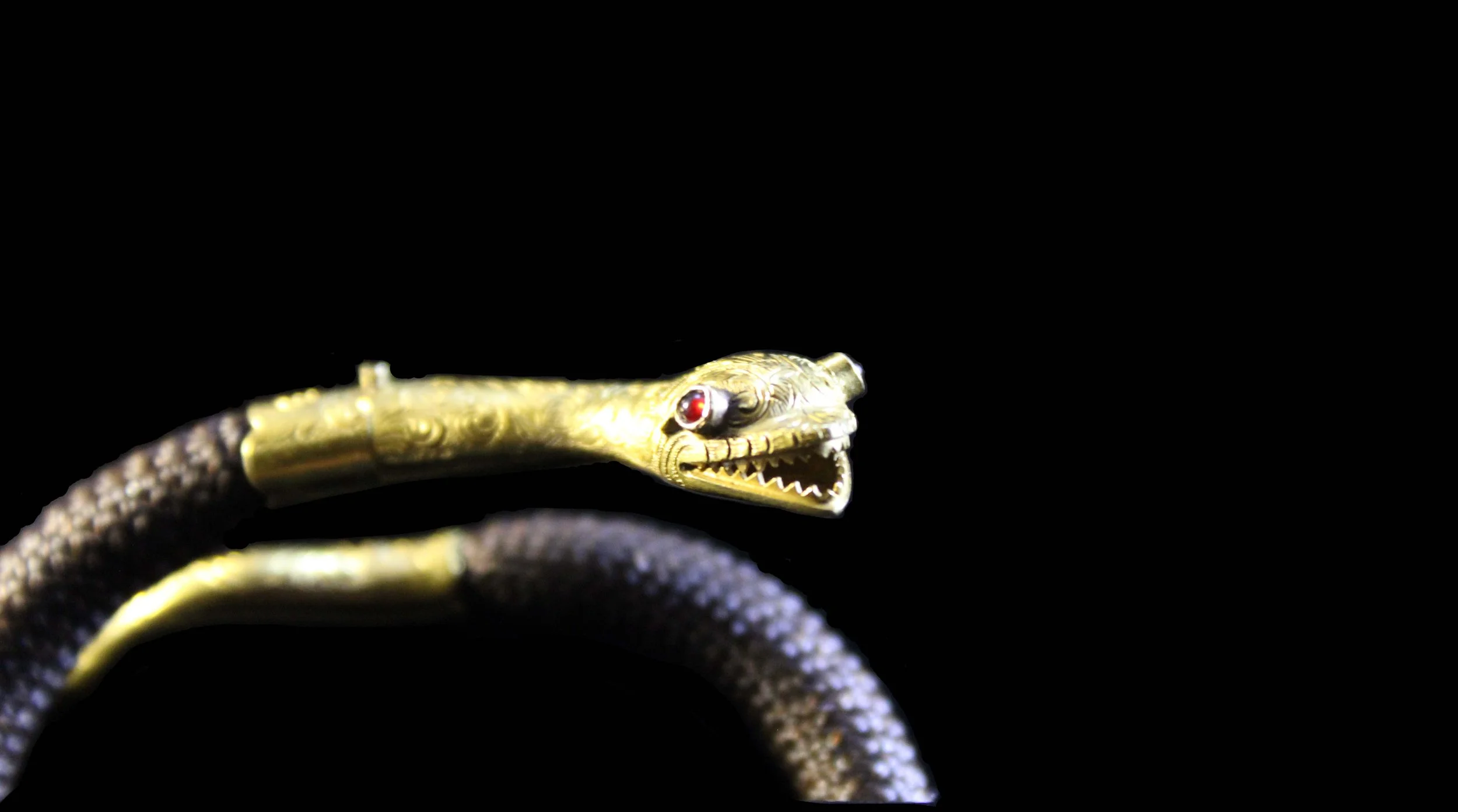
Gold engraved serpent clasp

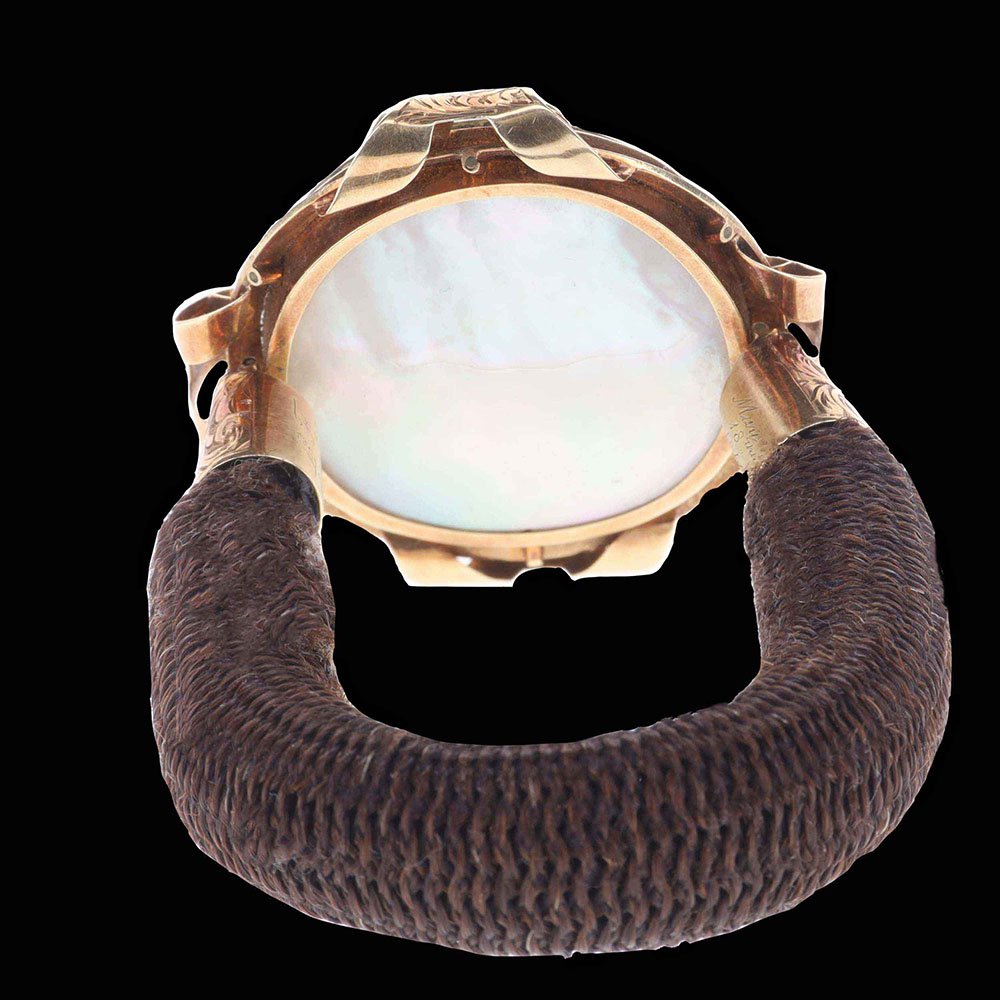
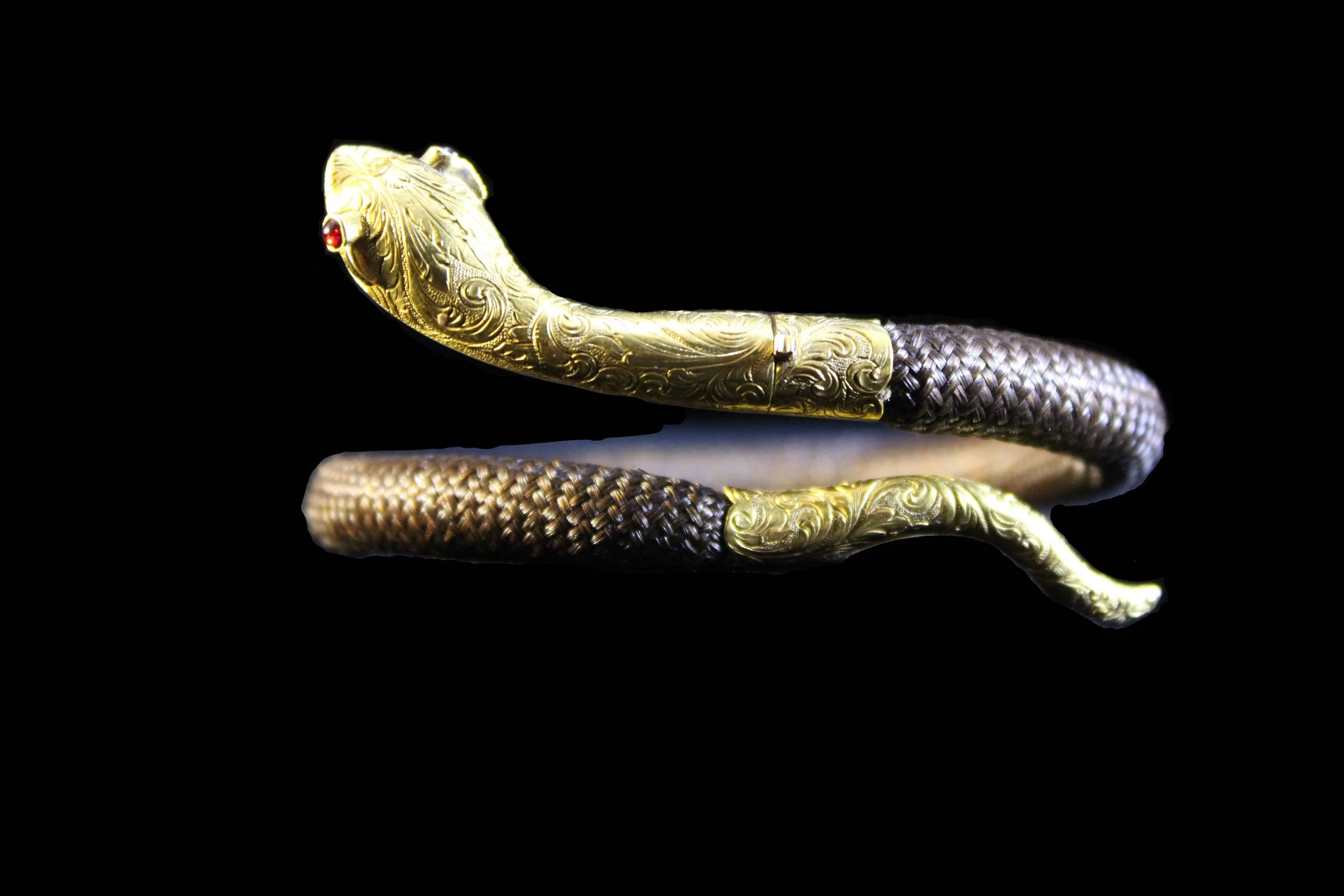
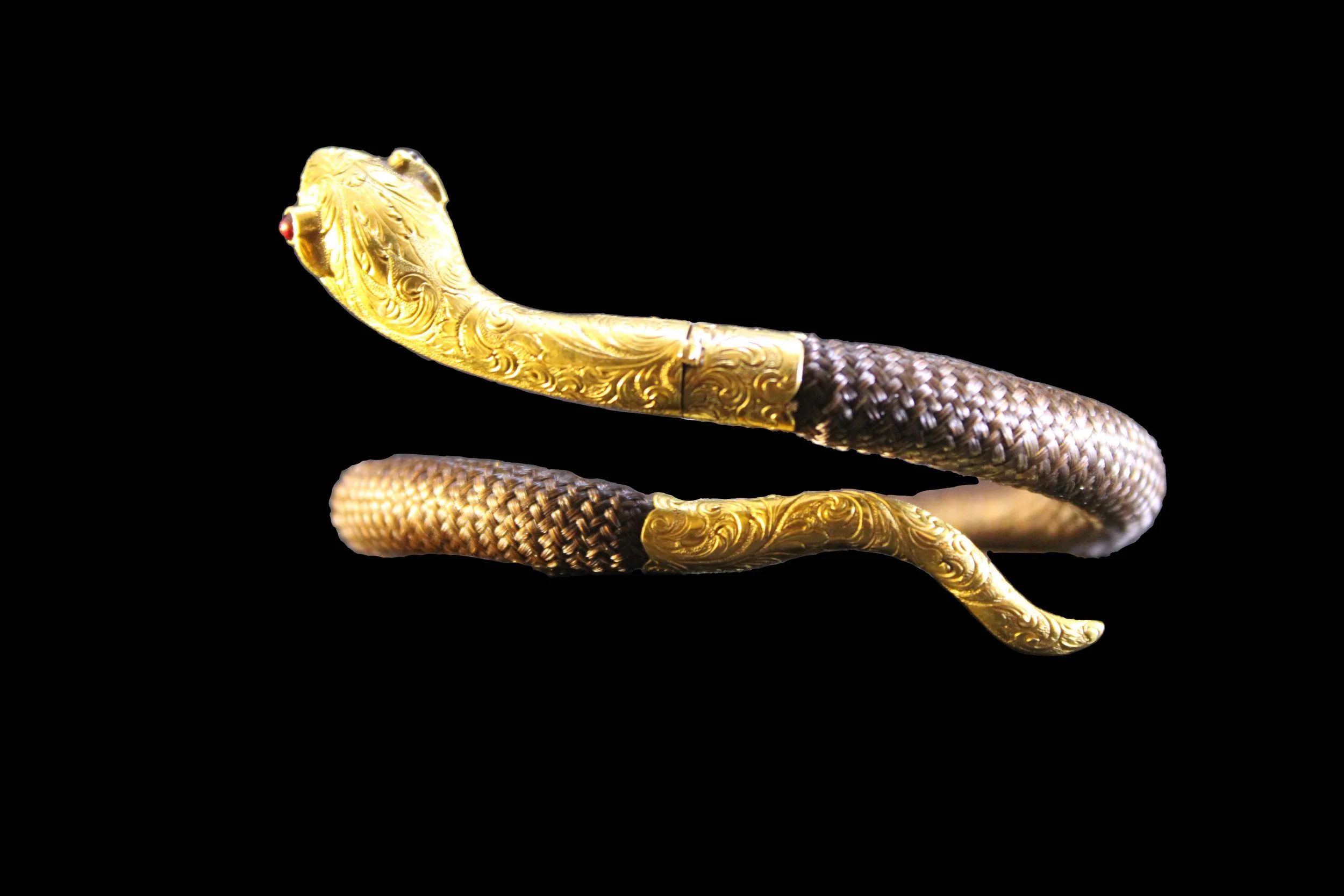
Handwoven hairwork

Cabochon garnet eyes

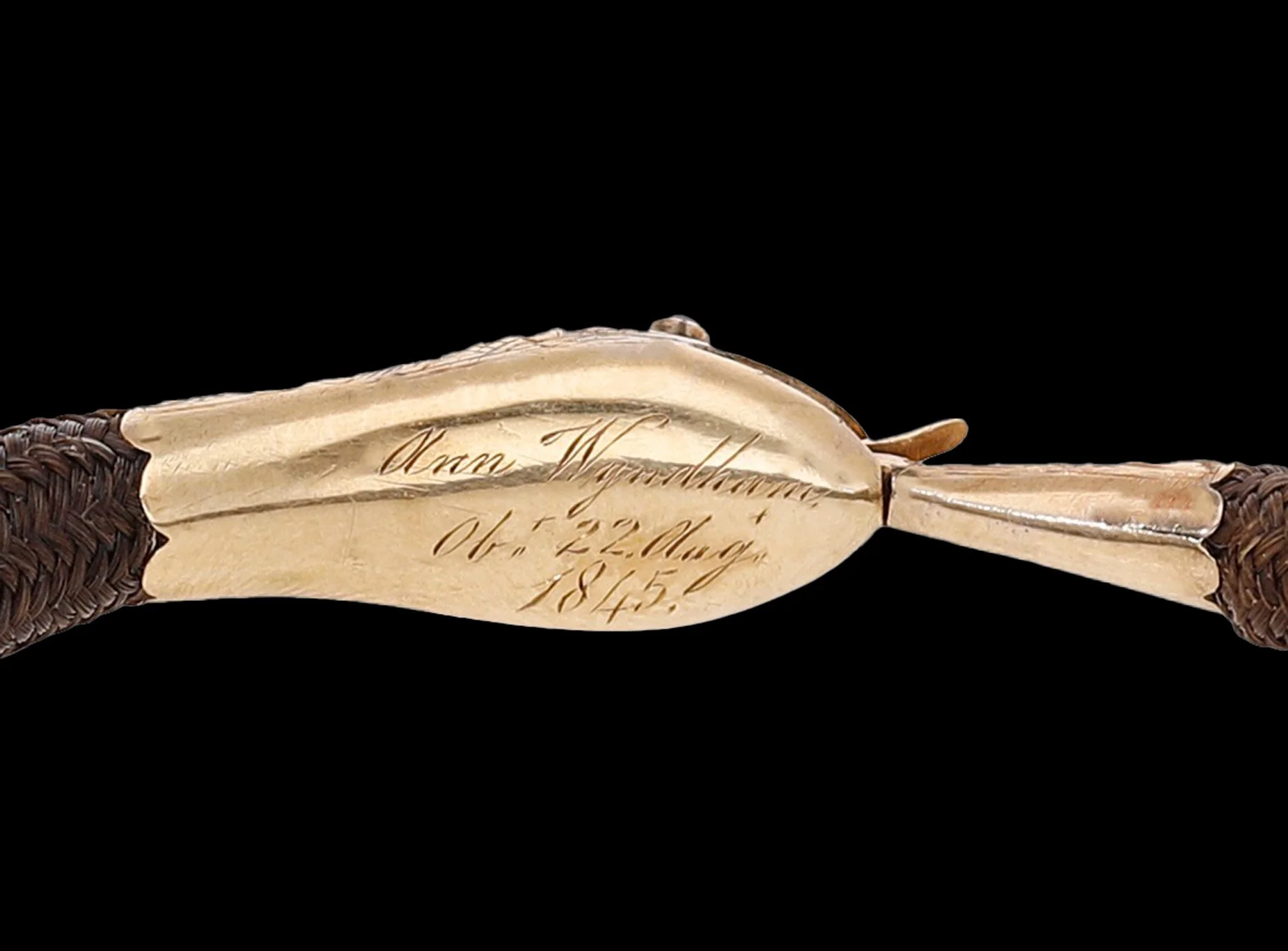
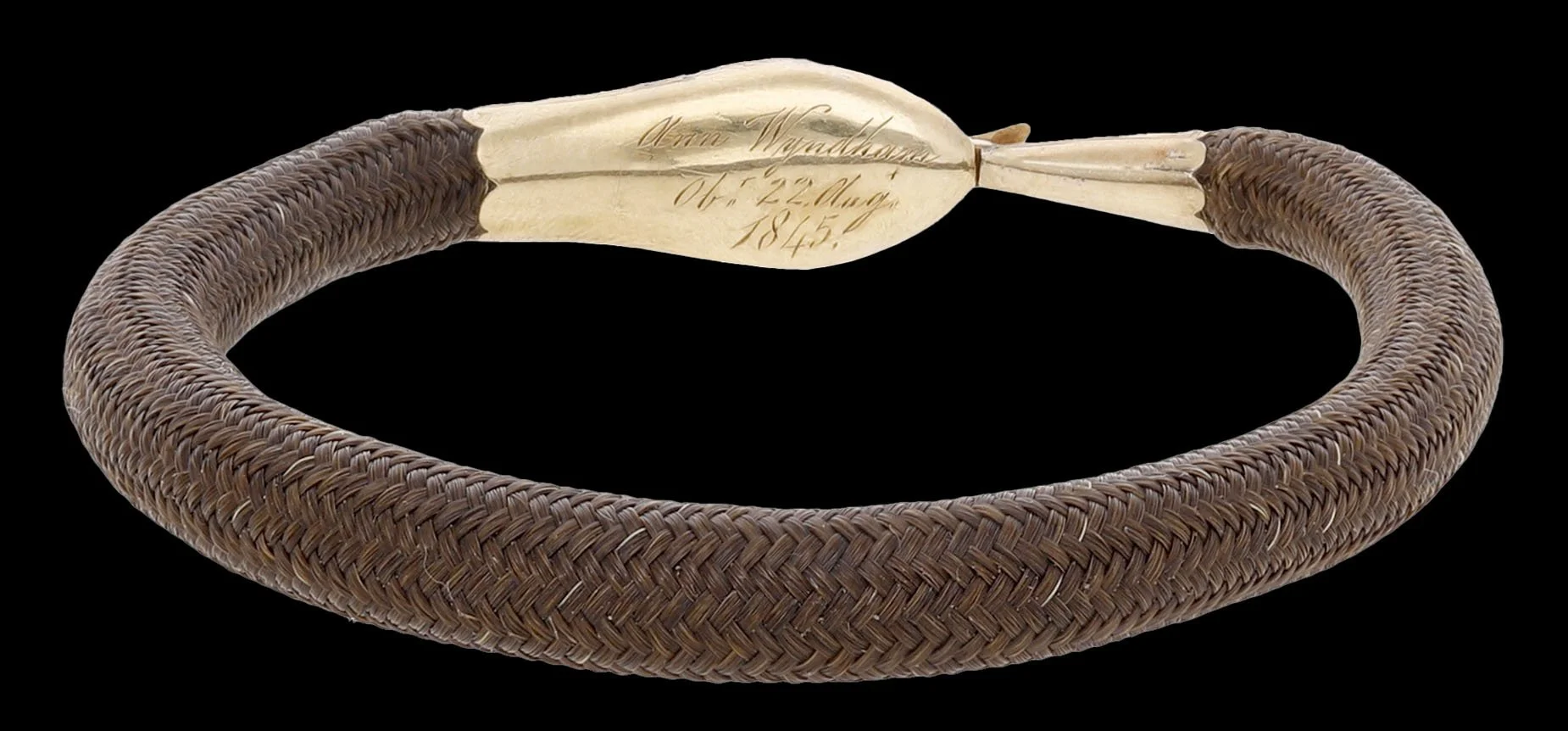
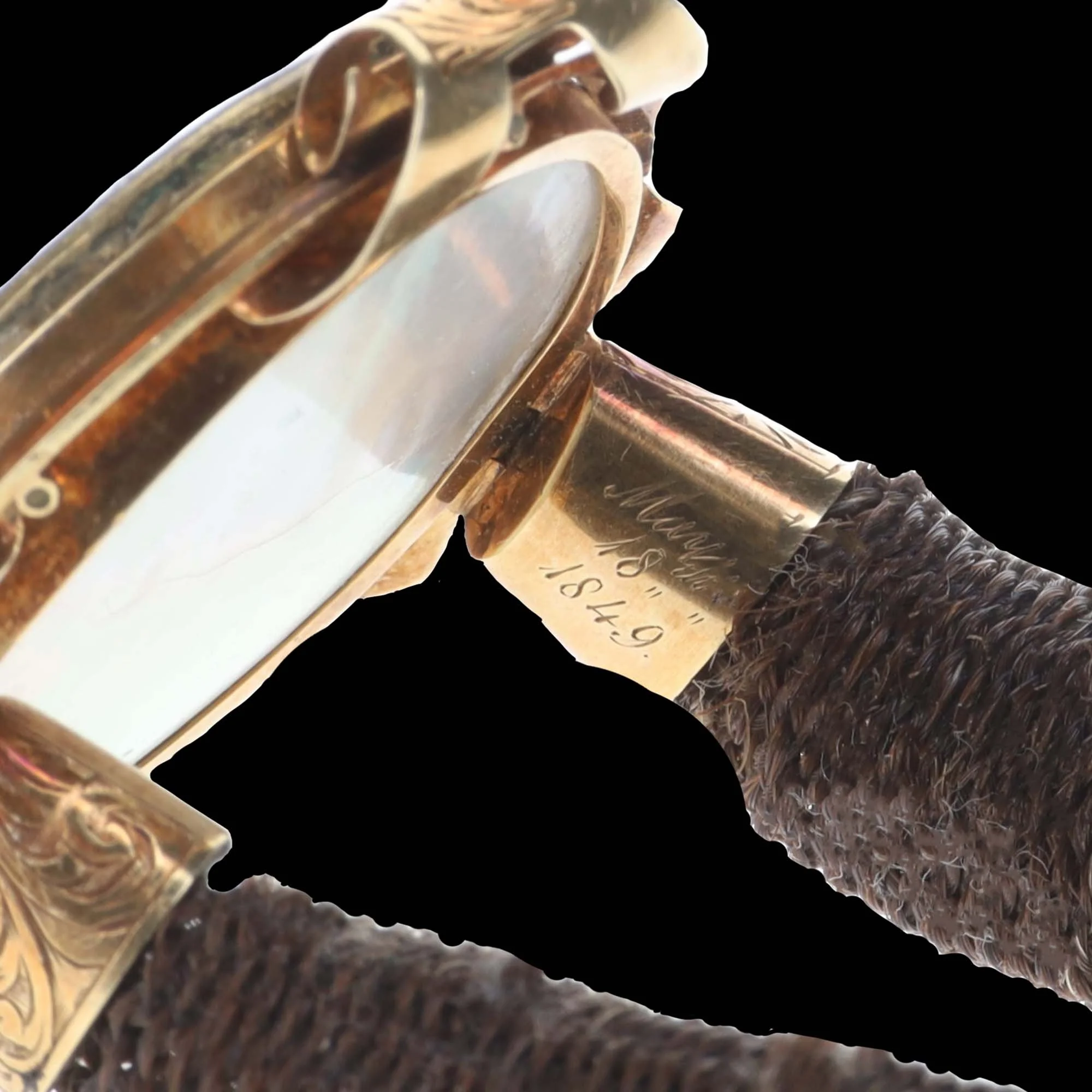
Interior inscription: "Ann Wyndham, Ob. 22 Aug. 1845"

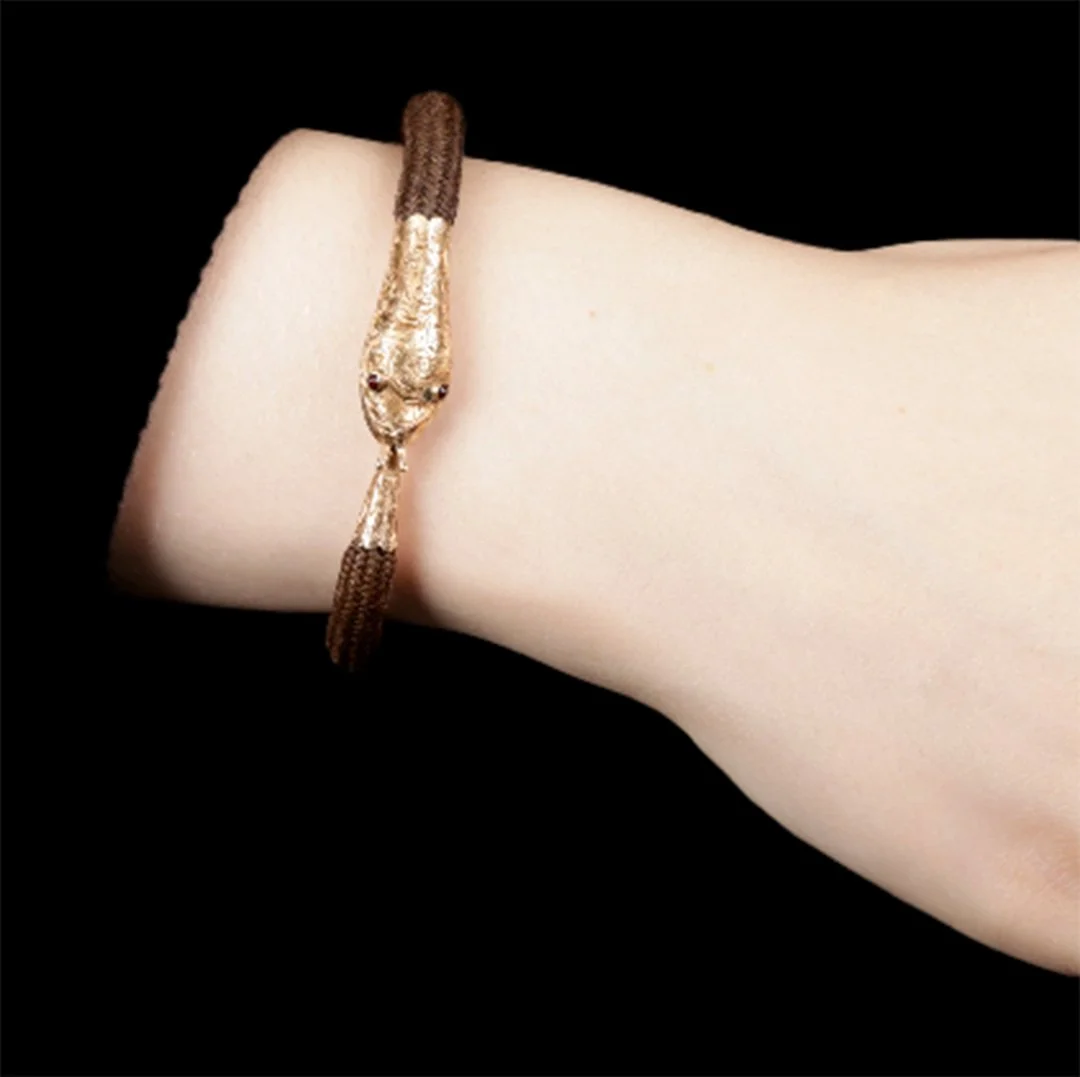
Length: 8.5 inches (21.6 cm)

Gross weight: 15 grams

Purchased at auction London, United Kingdom

Read care instructions from the Collector’s Guide.

Understand the Historical Symbolism of Ouroboros, serpents, hairwork in Antique Jewelry.

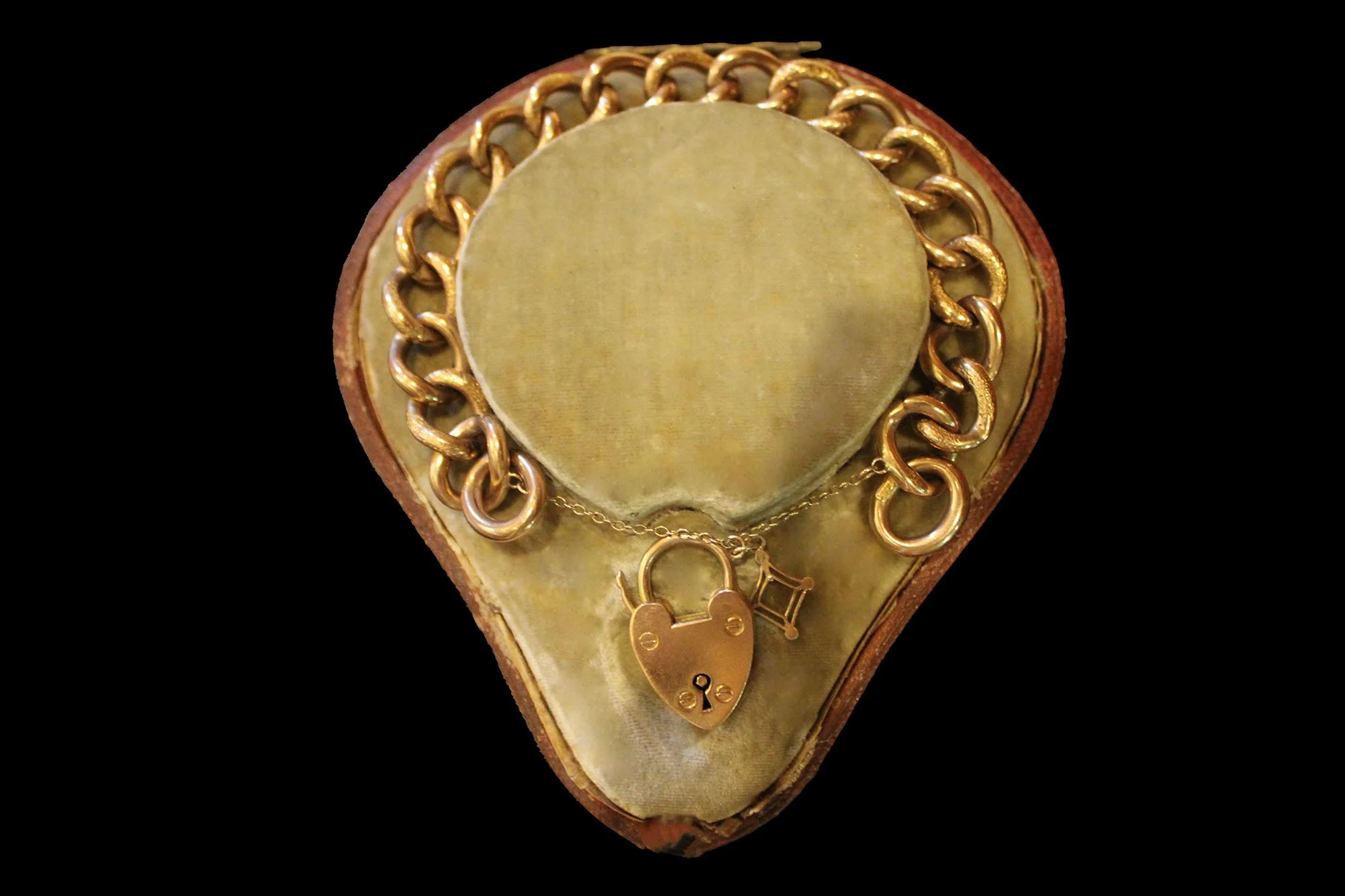
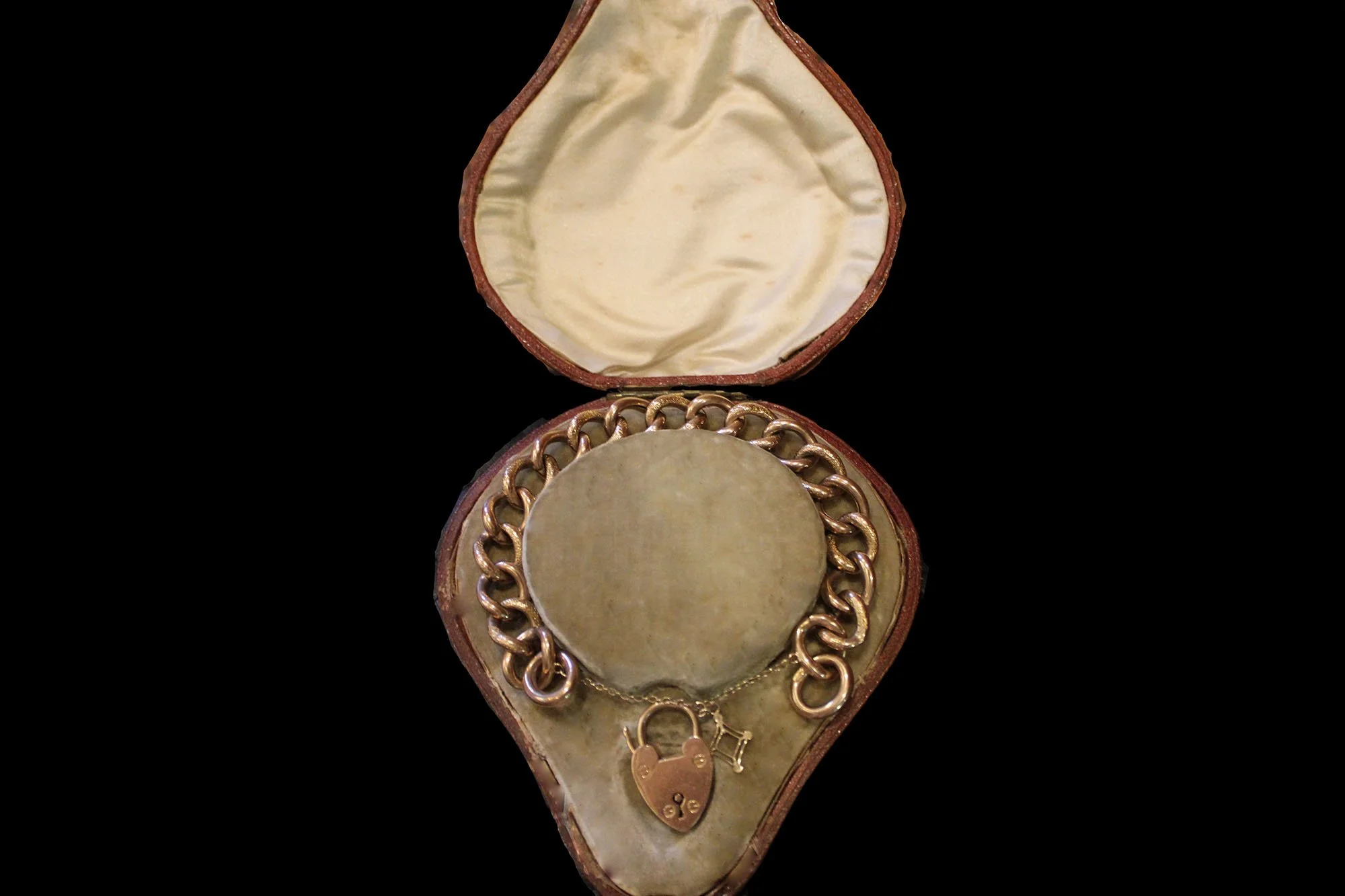
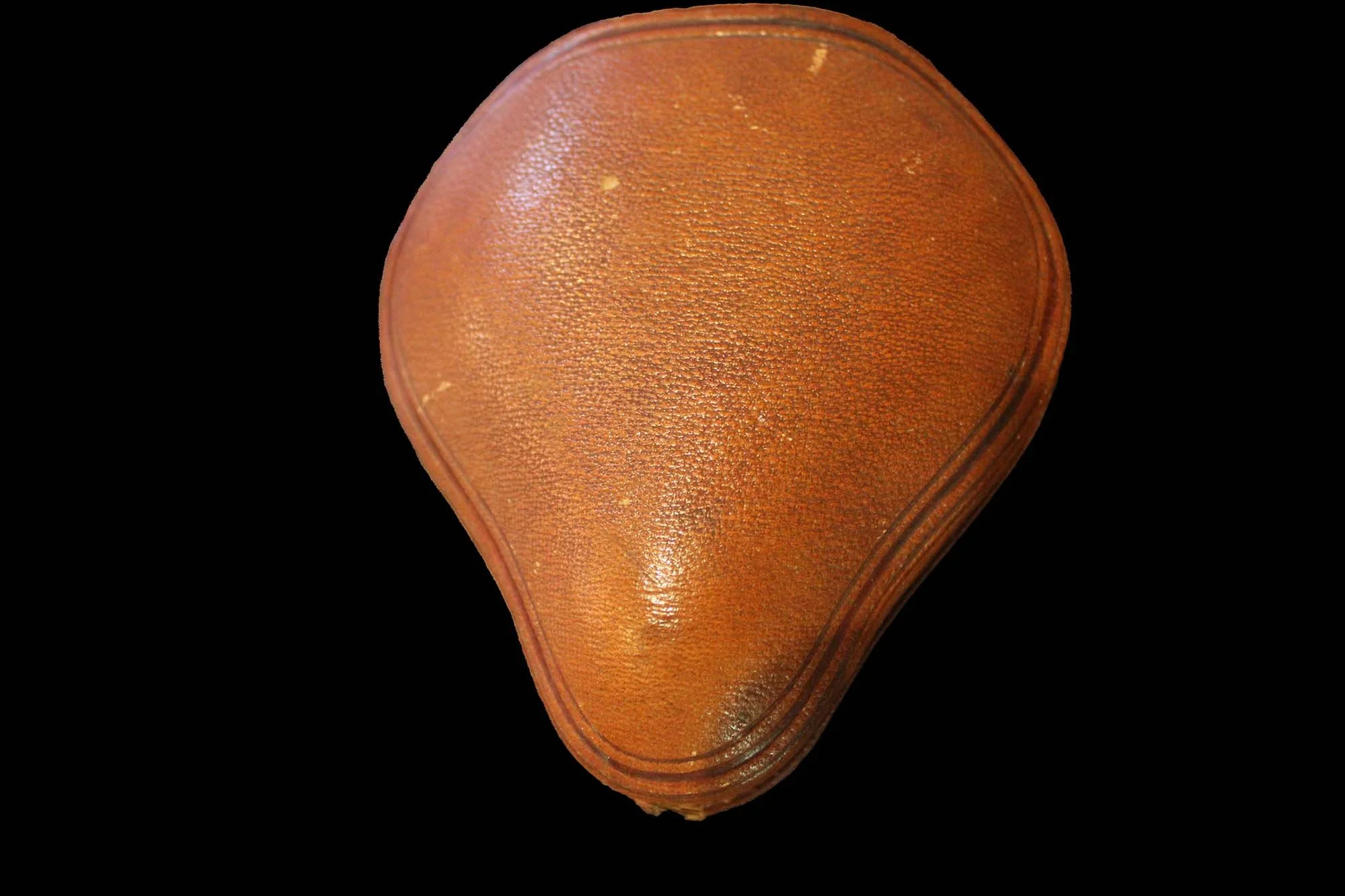
Includes original or period-appropriate antique presentation box.
Victorian England, dated 1845

Gold engraved serpent clasp

Handwoven hairwork

Cabochon garnet eyes

Interior inscription: "Ann Wyndham, Ob. 22 Aug. 1845"

Length: 8.5 inches (21.6 cm)

Gross weight: 15 grams

Purchased at auction London, United Kingdom

Read care instructions from the Collector’s Guide.

Understand the Historical Symbolism of Ouroboros, serpents, hairwork in Antique Jewelry.

Includes original or period-appropriate antique presentation box.
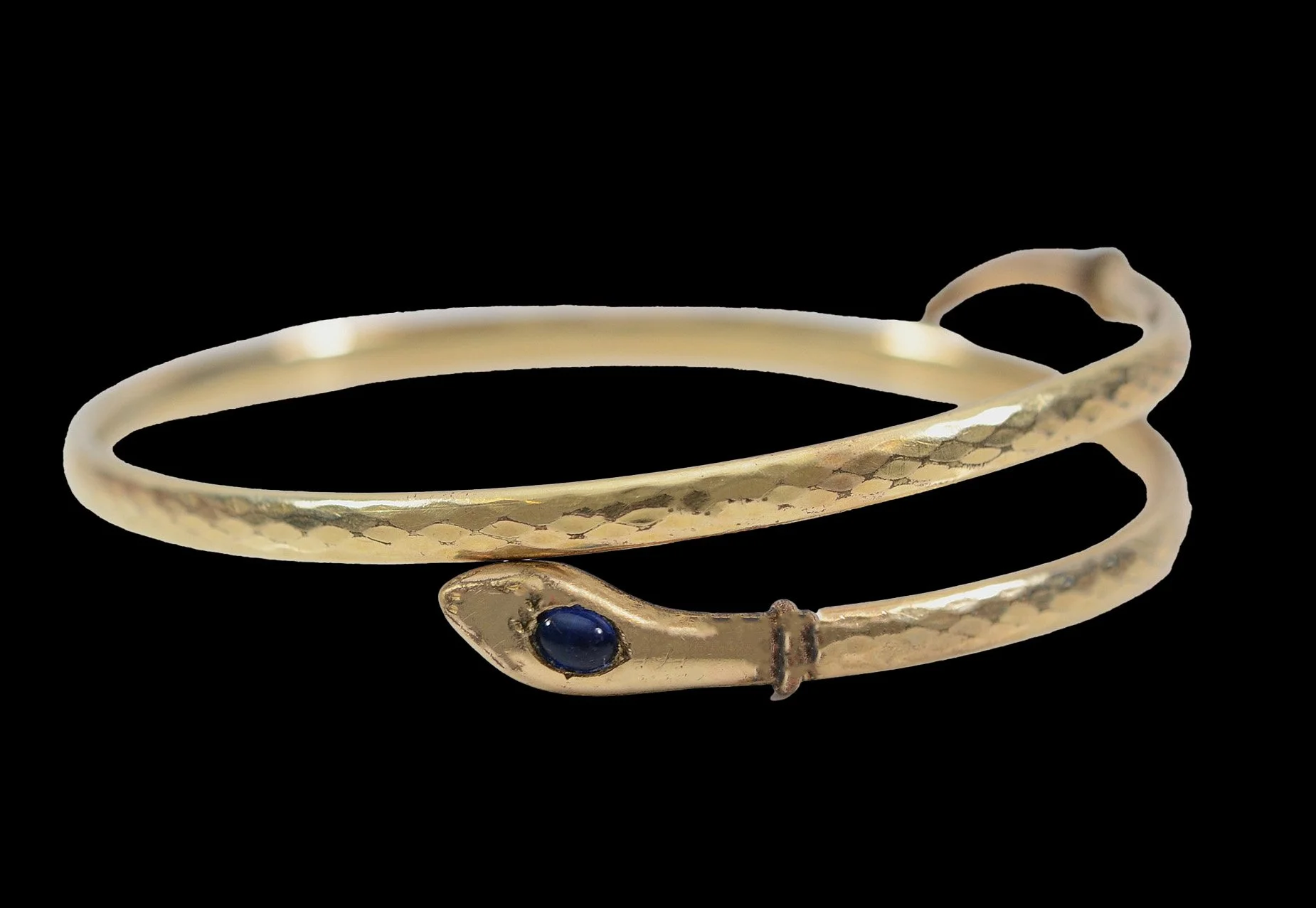
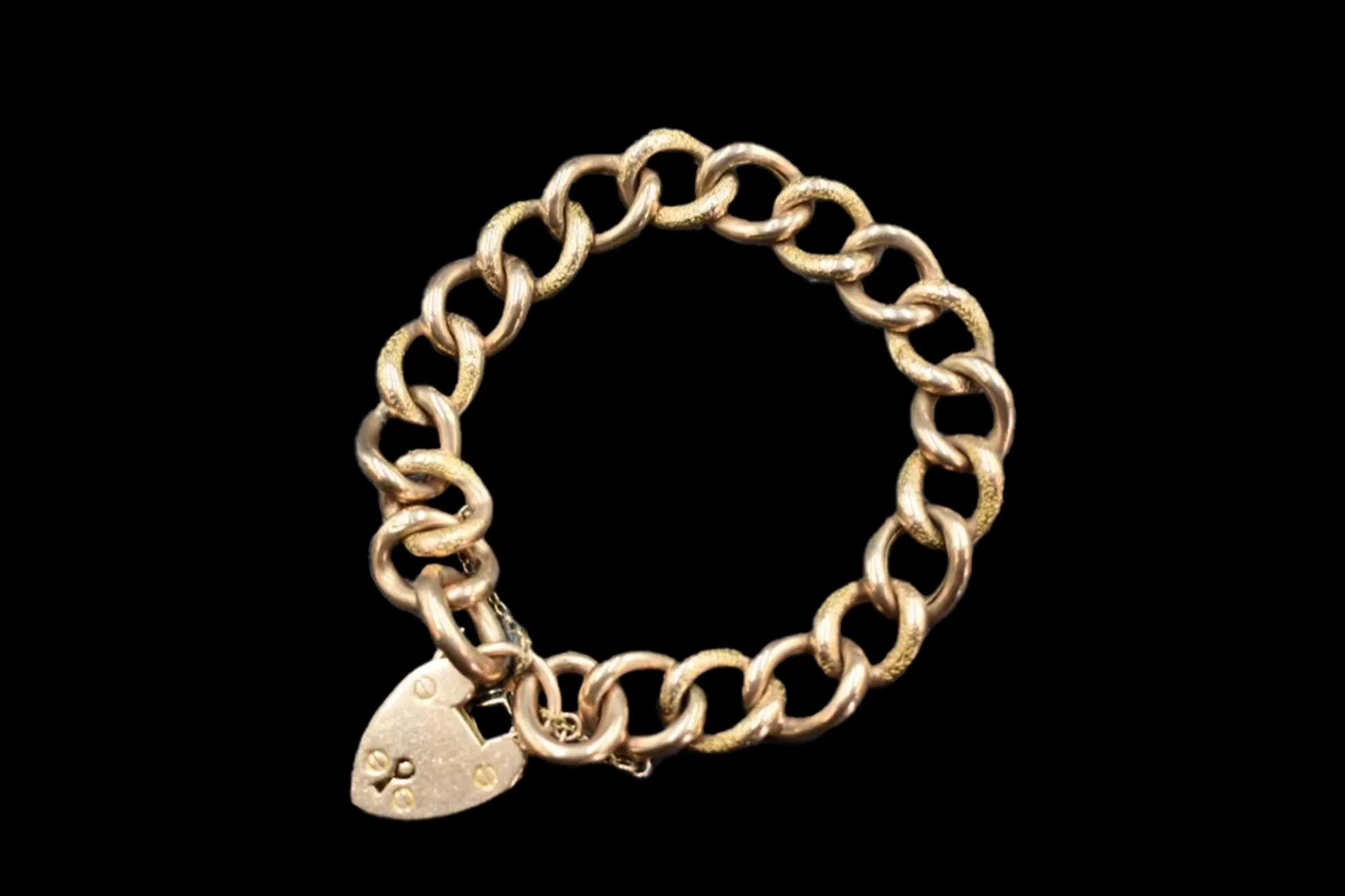
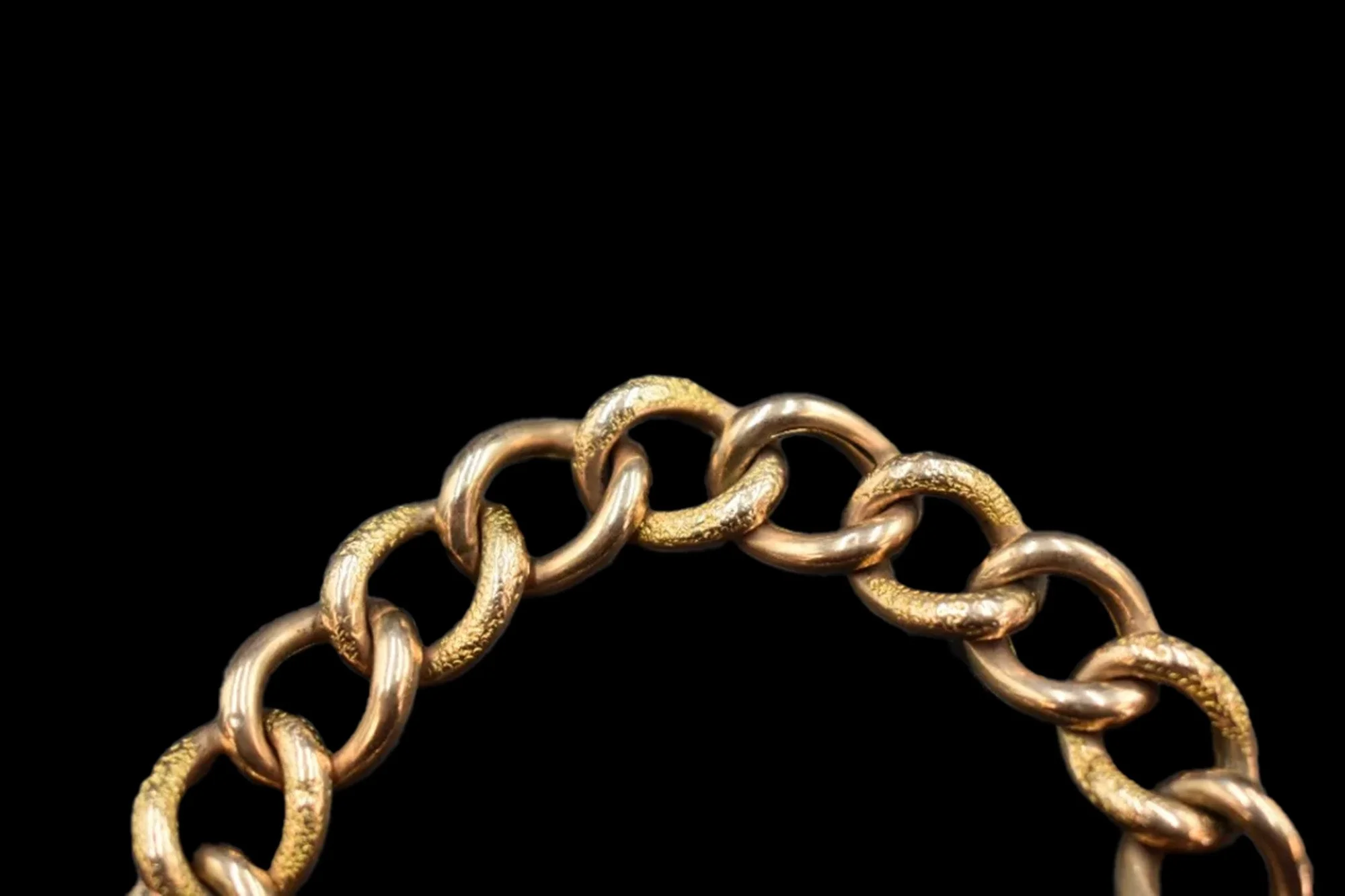
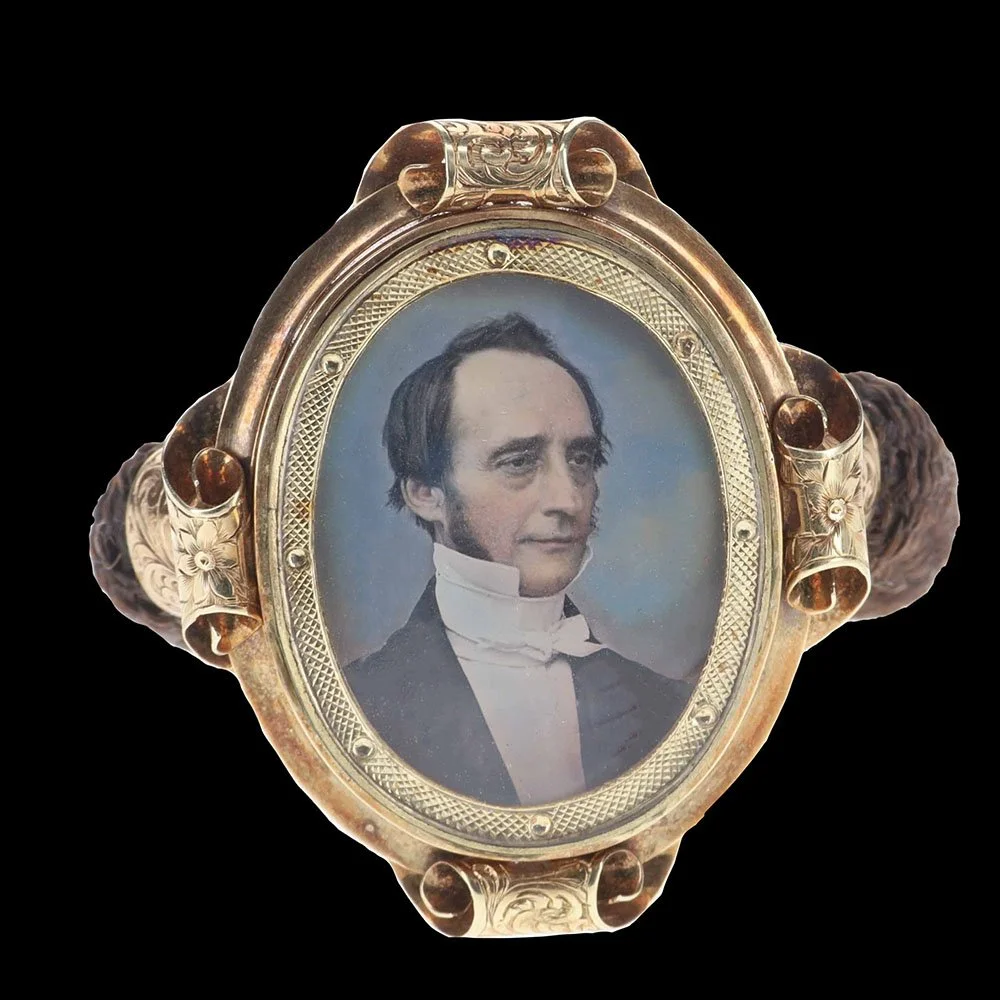
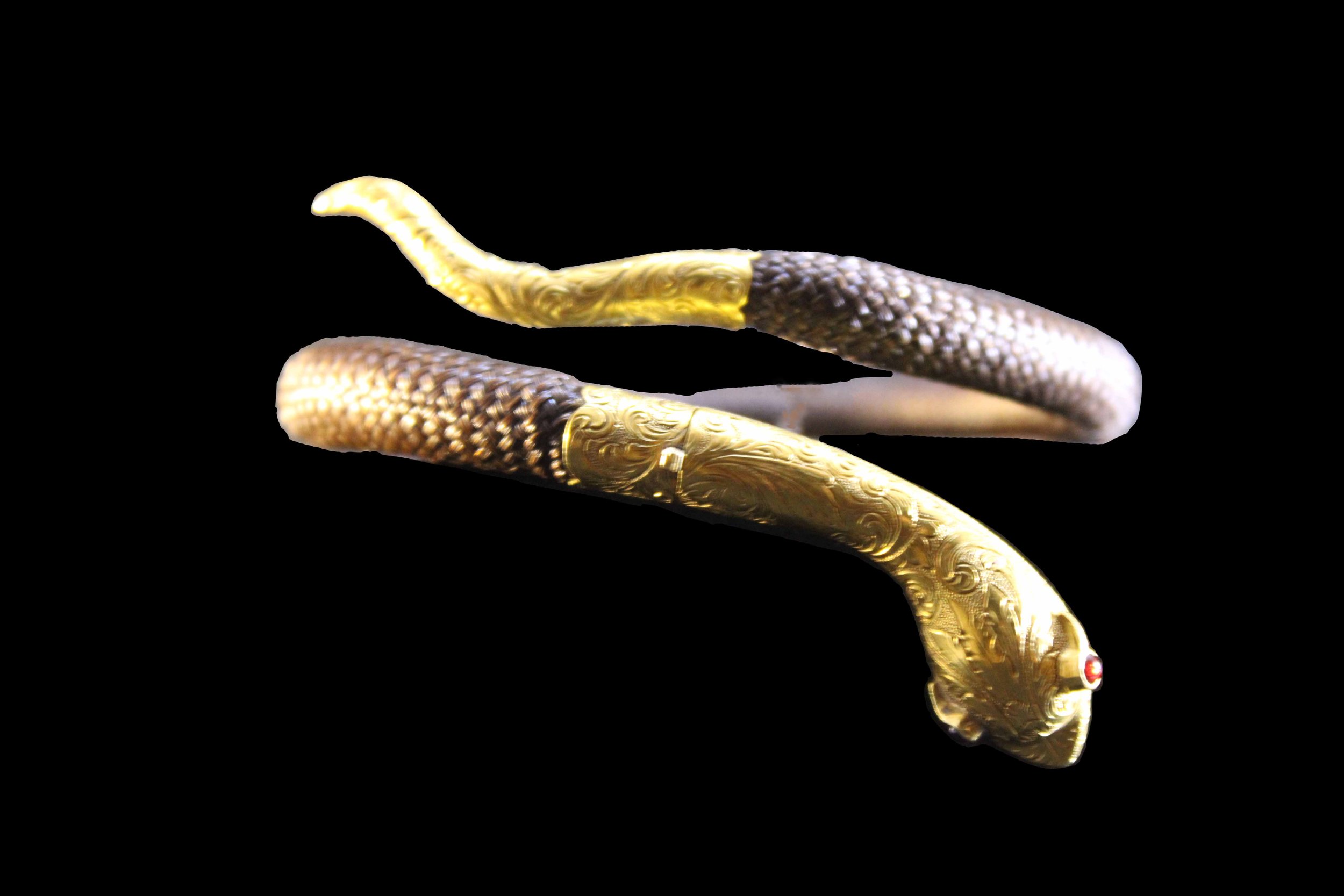
This exceptional Victorian memorial bracelet combines the deeply personal art of hairwork with one of the most enduring symbols of eternity: the ouroboros, the serpent forming an endless circle. The bracelet is fashioned from finely hand-braided natural hair terminating in an exquisitely engraved gold serpent's head clasp, richly decorated with scrolling foliate ornament and set with cabochon garnet eyes.

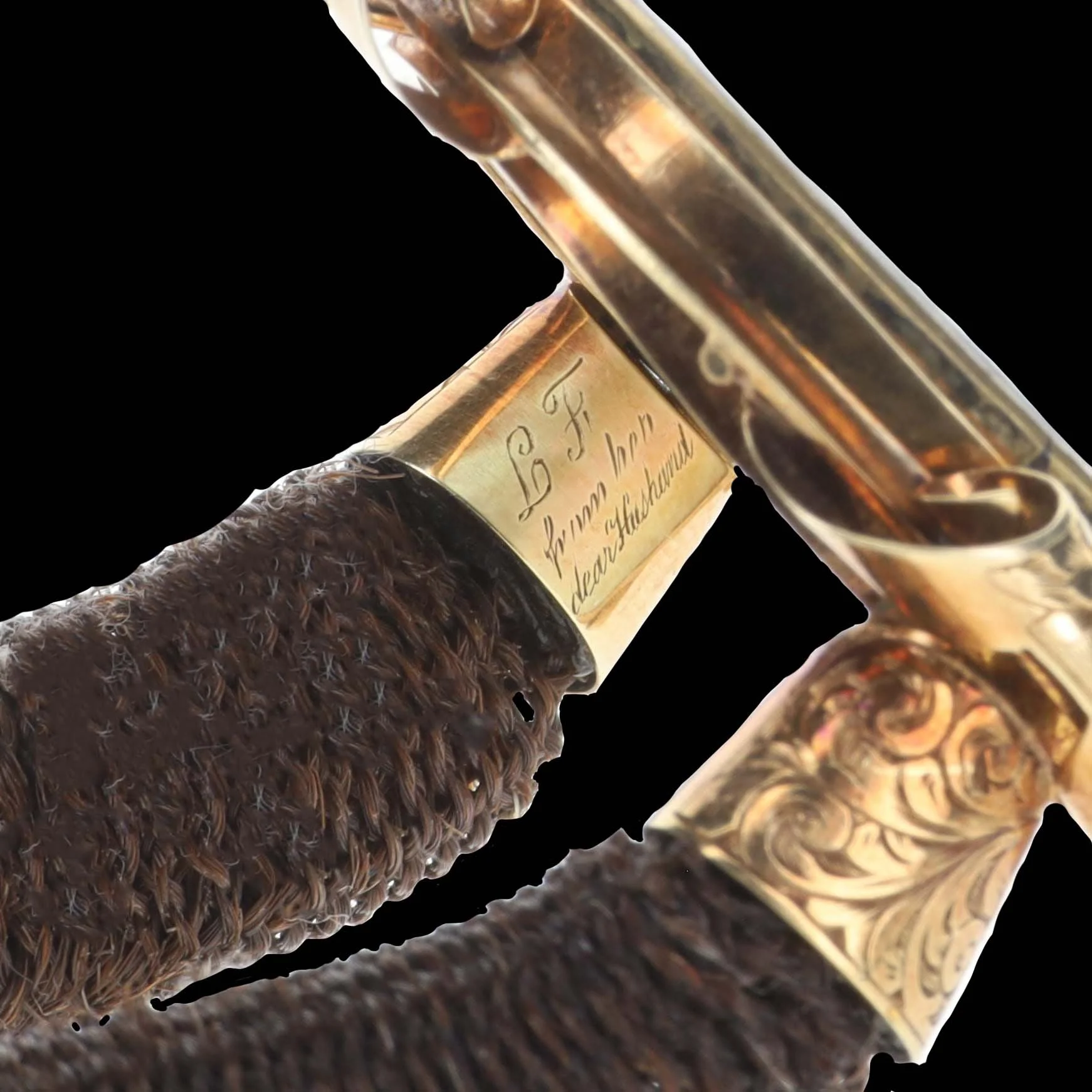
The clasp opens to reveal a poignant engraved inscription:

"Ann Wyndham
Ob. 22 Aug.
1845"

recording the death of the individual commemorated. Such inscriptions transformed these intimate jewels into enduring memorials, allowing the wearer to carry the physical remains and memory of a loved one close at hand.

The meticulously woven hair displays remarkable preservation and craftsmanship, illustrating the extraordinary skill of nineteenth-century hair artists. During the Victorian era, hair was considered uniquely precious because it survived long after death, making it an enduring symbol of remembrance and affection. Memorial bracelets such as this were often commissioned shortly after bereavement and worn for many years as treasured family heirlooms.

The serpent, an ancient symbol dating to Egyptian, Greek, and Roman civilizations, represented eternity, immortality, wisdom, and everlasting love. Popularized once again during the nineteenth century—most famously after Prince Albert presented Queen Victoria with a serpent engagement ring in 1839—the motif became synonymous with eternal devotion and remembrance. The garnet eyes further enrich the symbolism, as garnets traditionally represent fidelity, constancy, and the enduring bonds of affection.

The survival of both the personal inscription and the beautifully engraved serpent clasp makes this an unusually evocative example of early Victorian sentimental jewelry and an important document of nineteenth-century mourning culture.

England, dated 1845