 Image 1 of 6
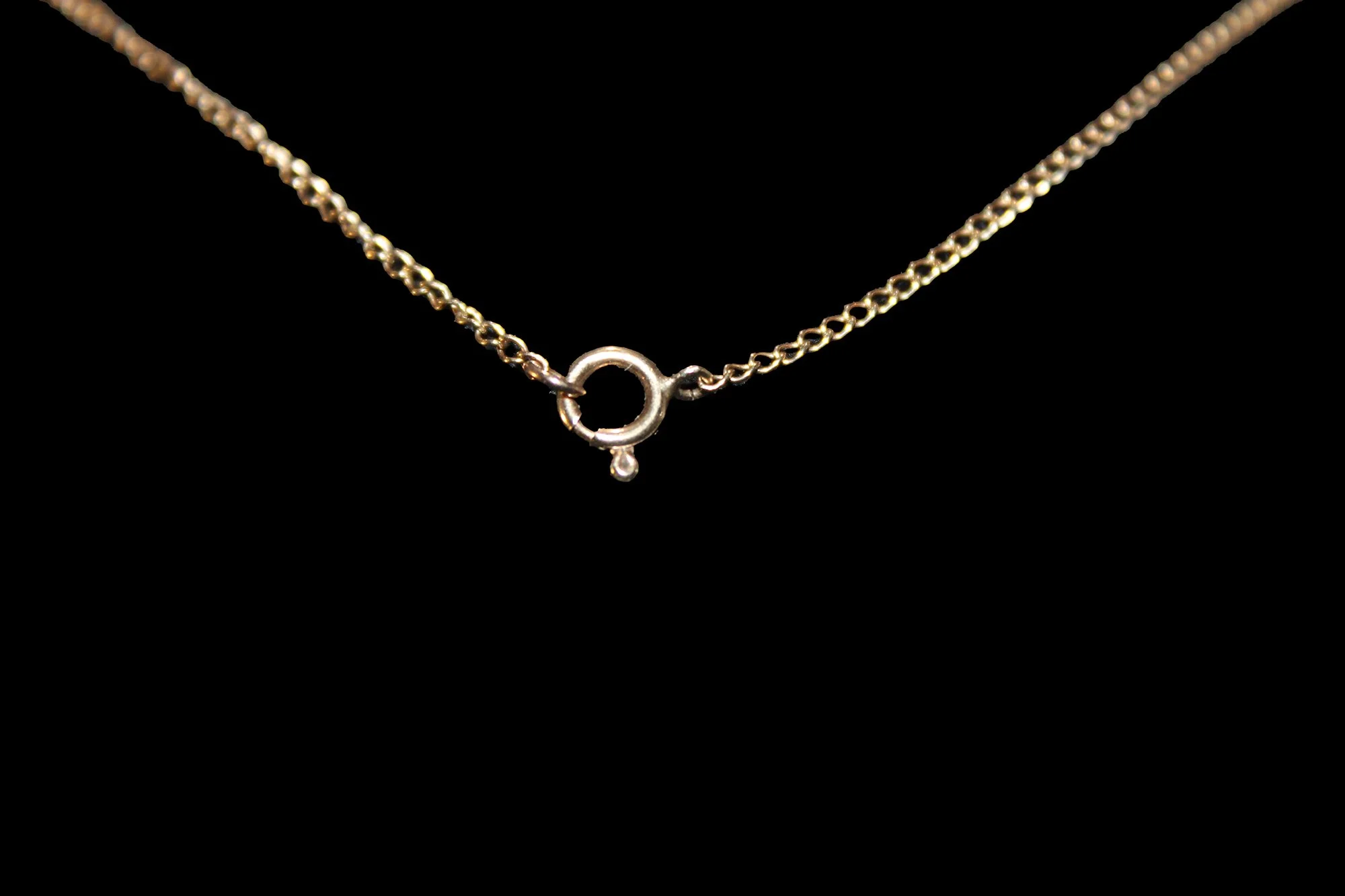 Image 2 of 6
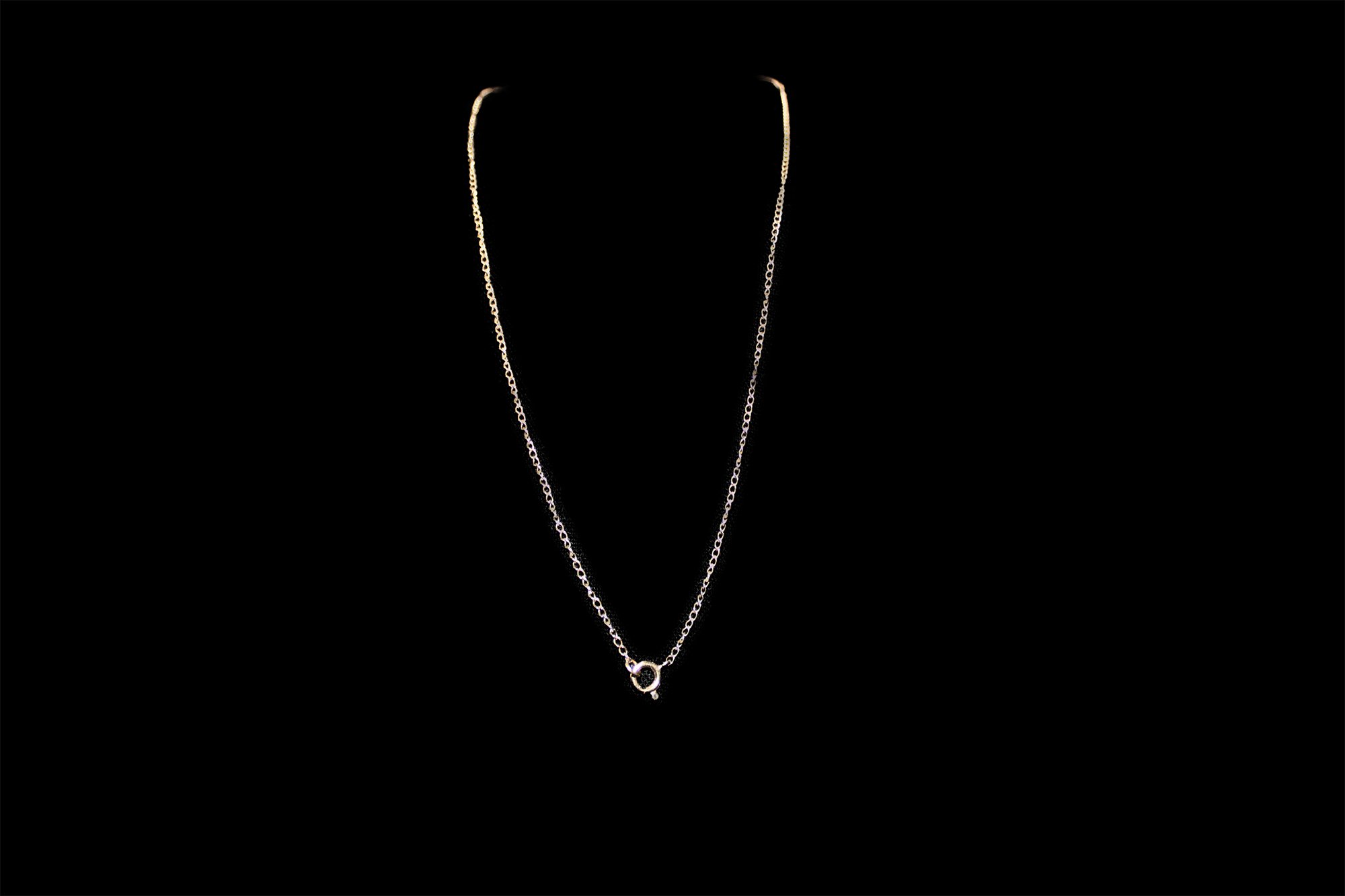 Image 3 of 6
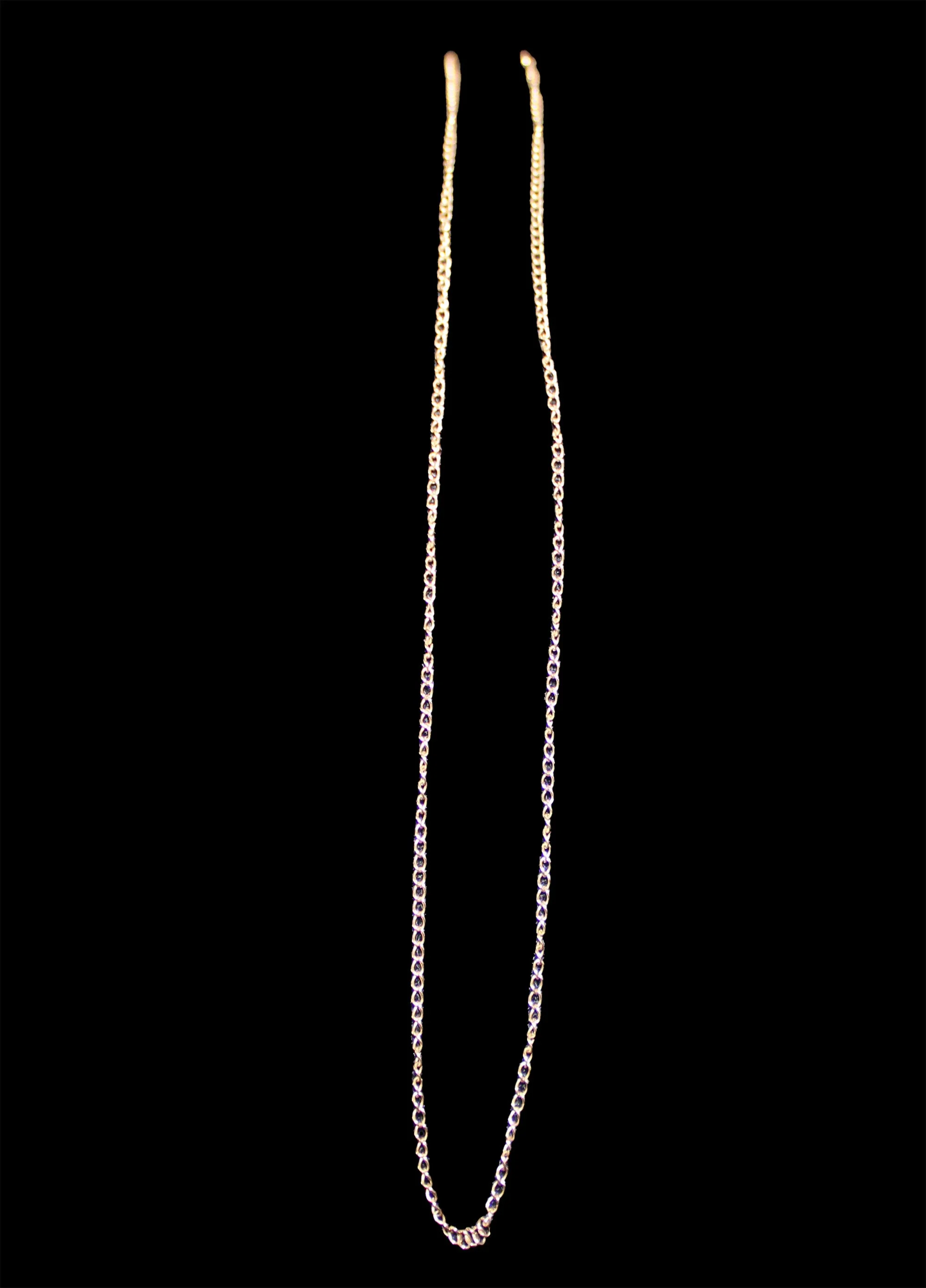 Image 4 of 6
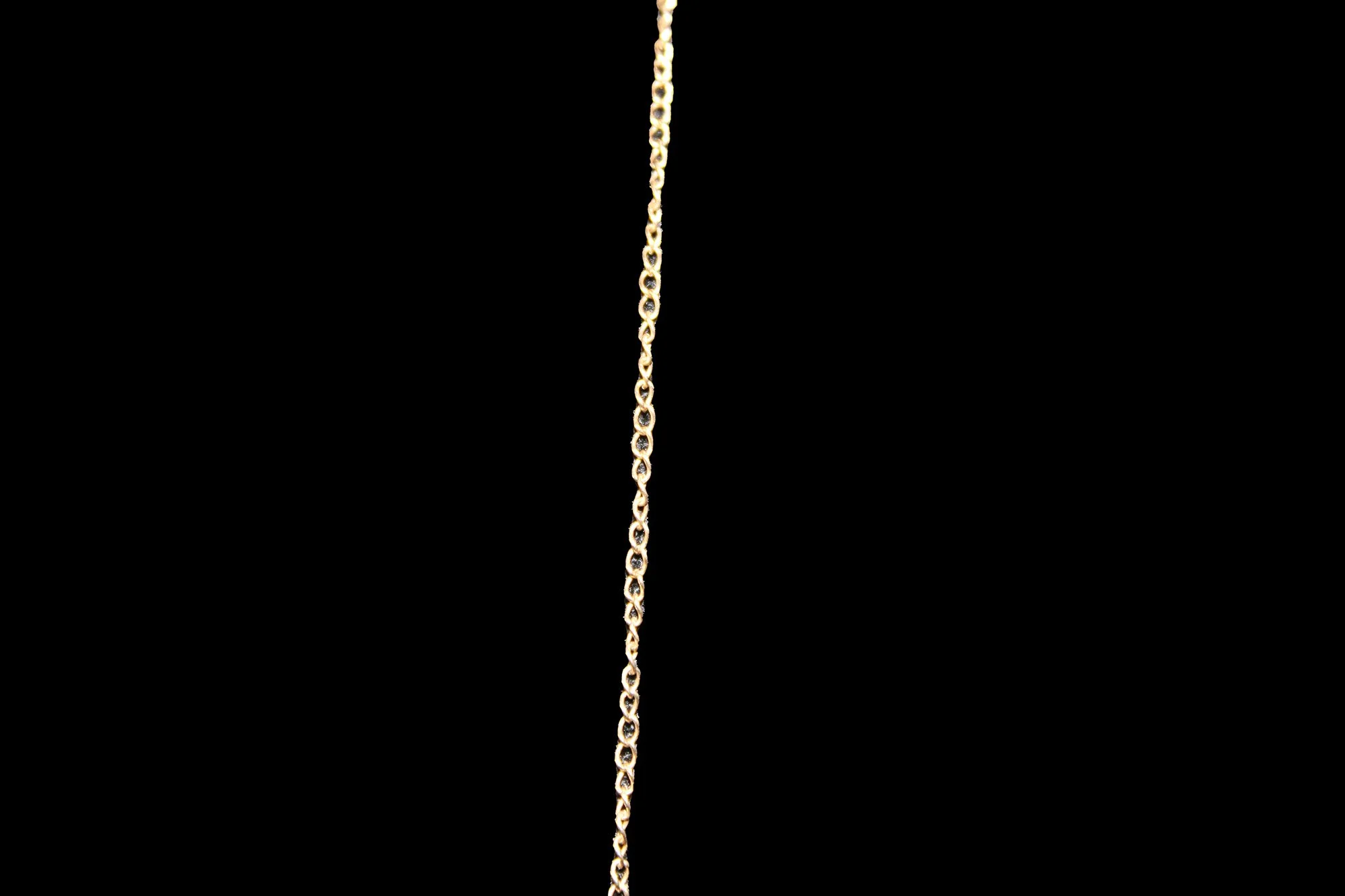 Image 5 of 6
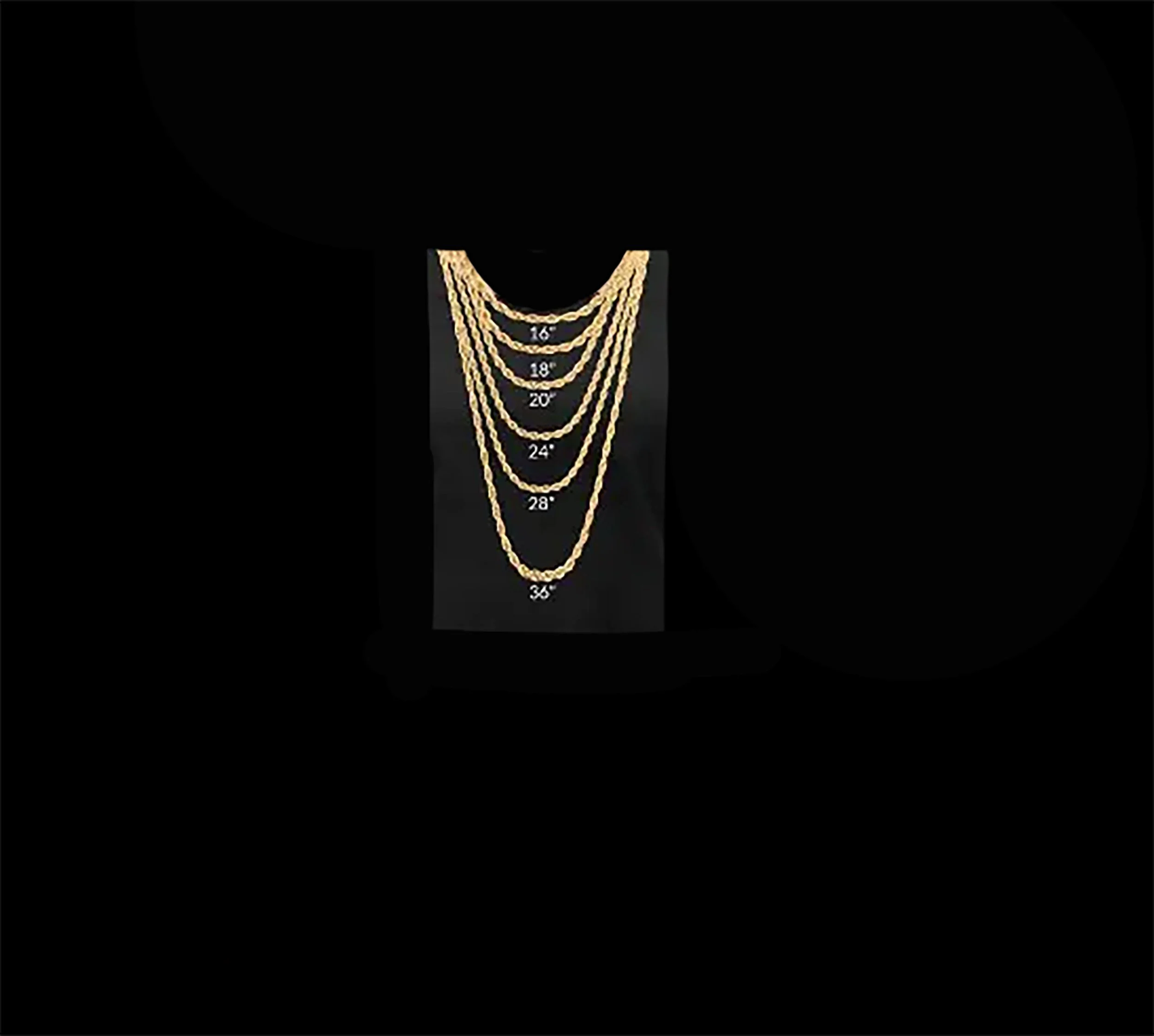 Image 6 of 6
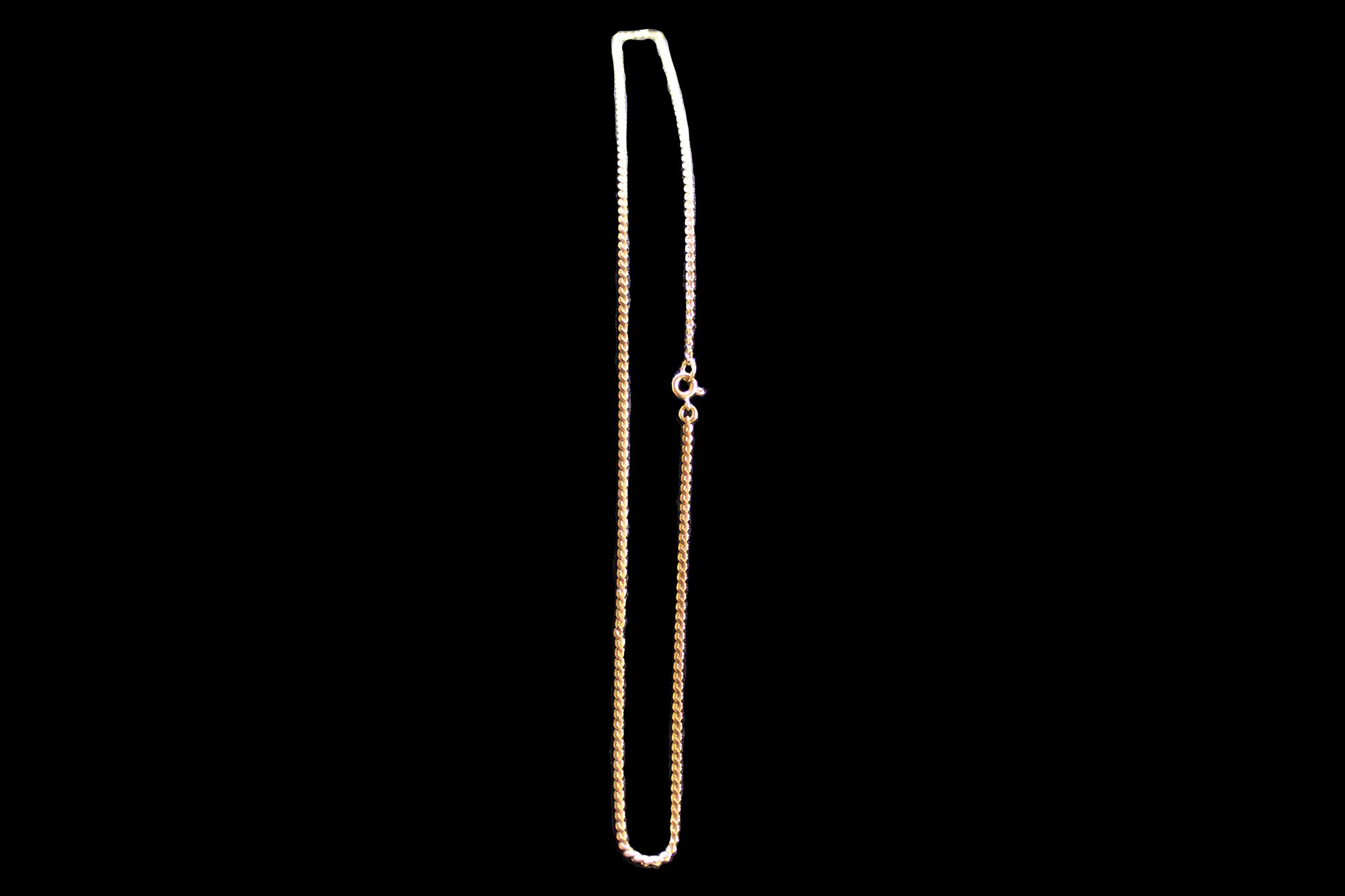
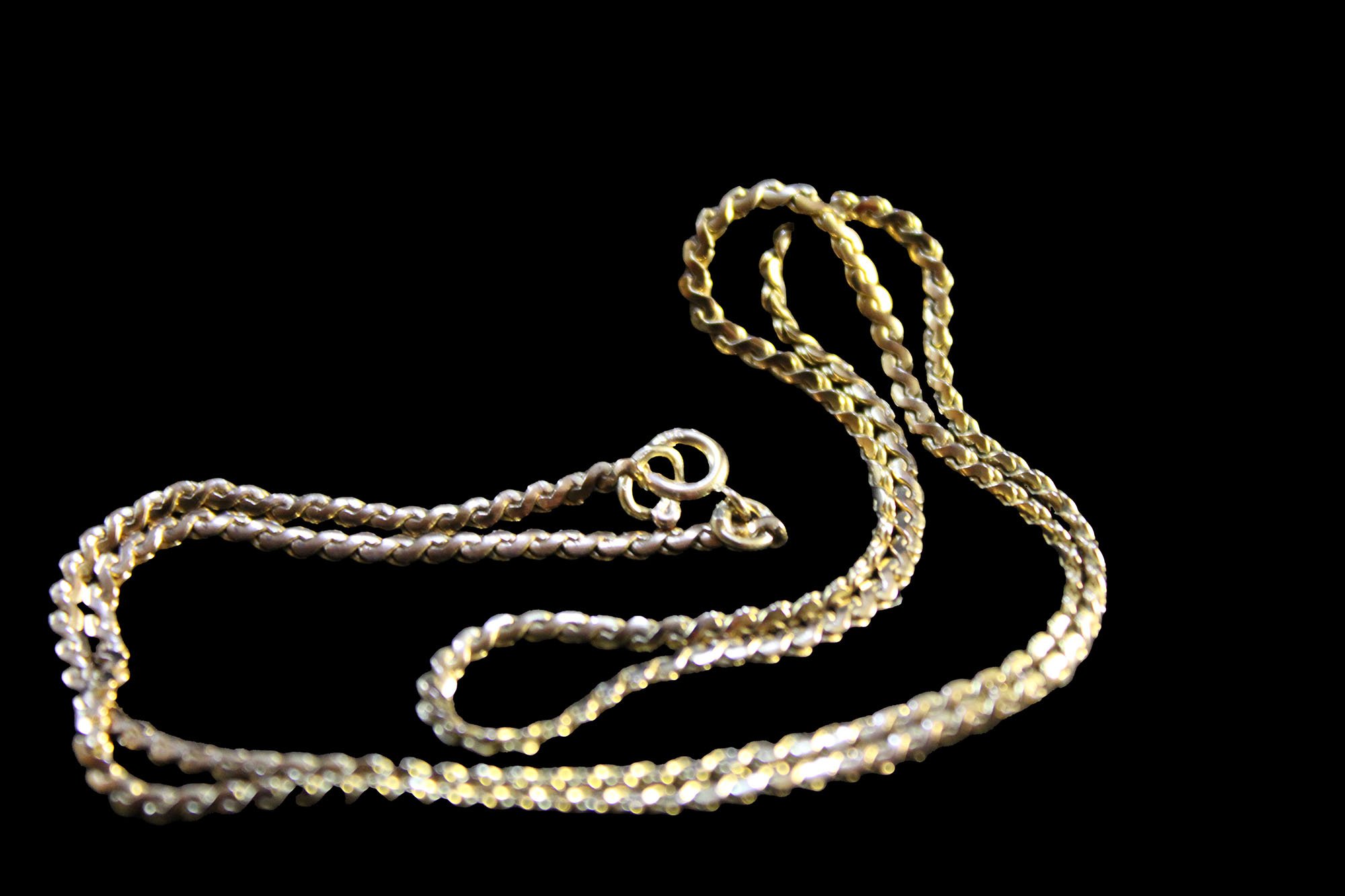
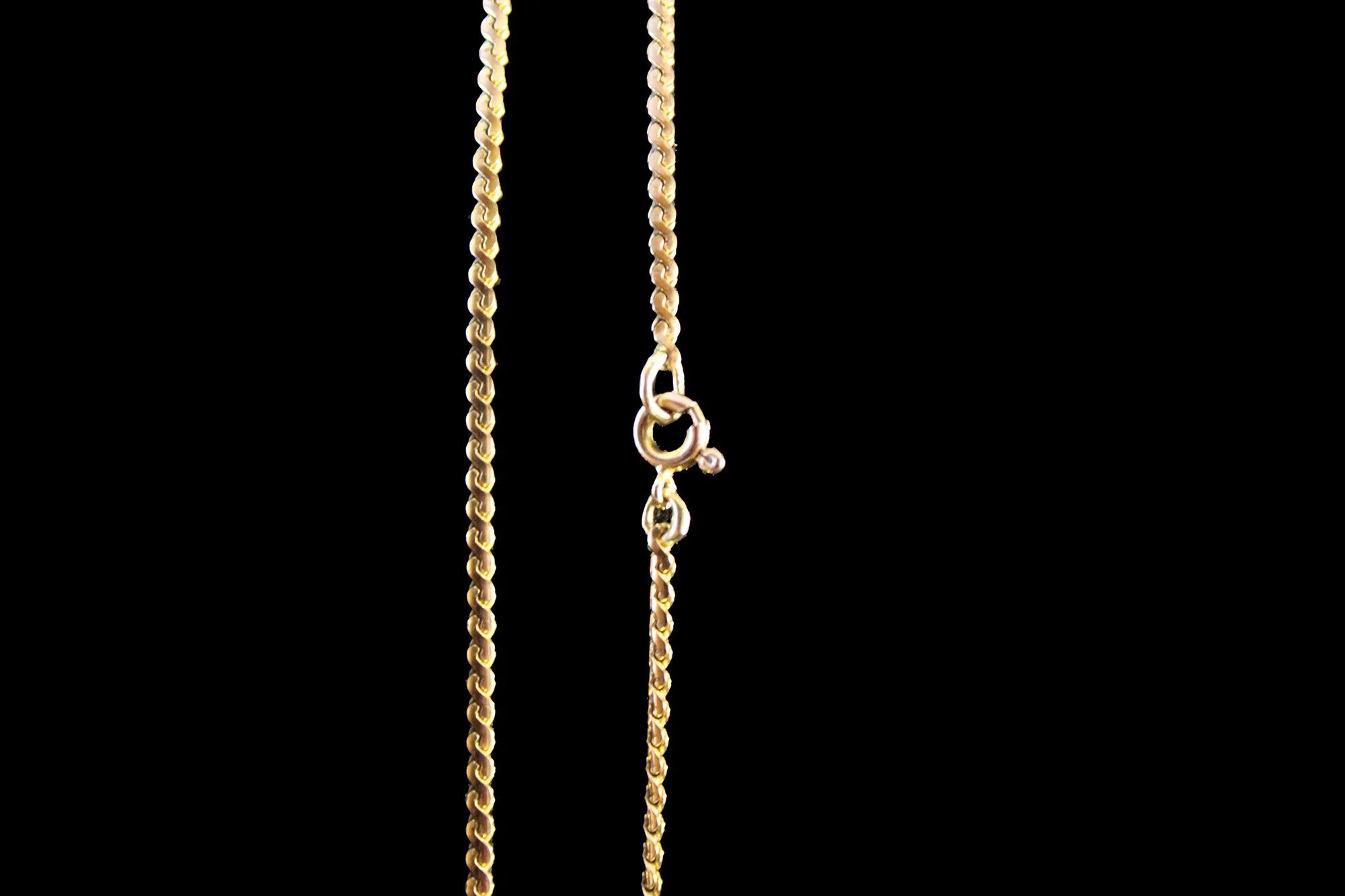
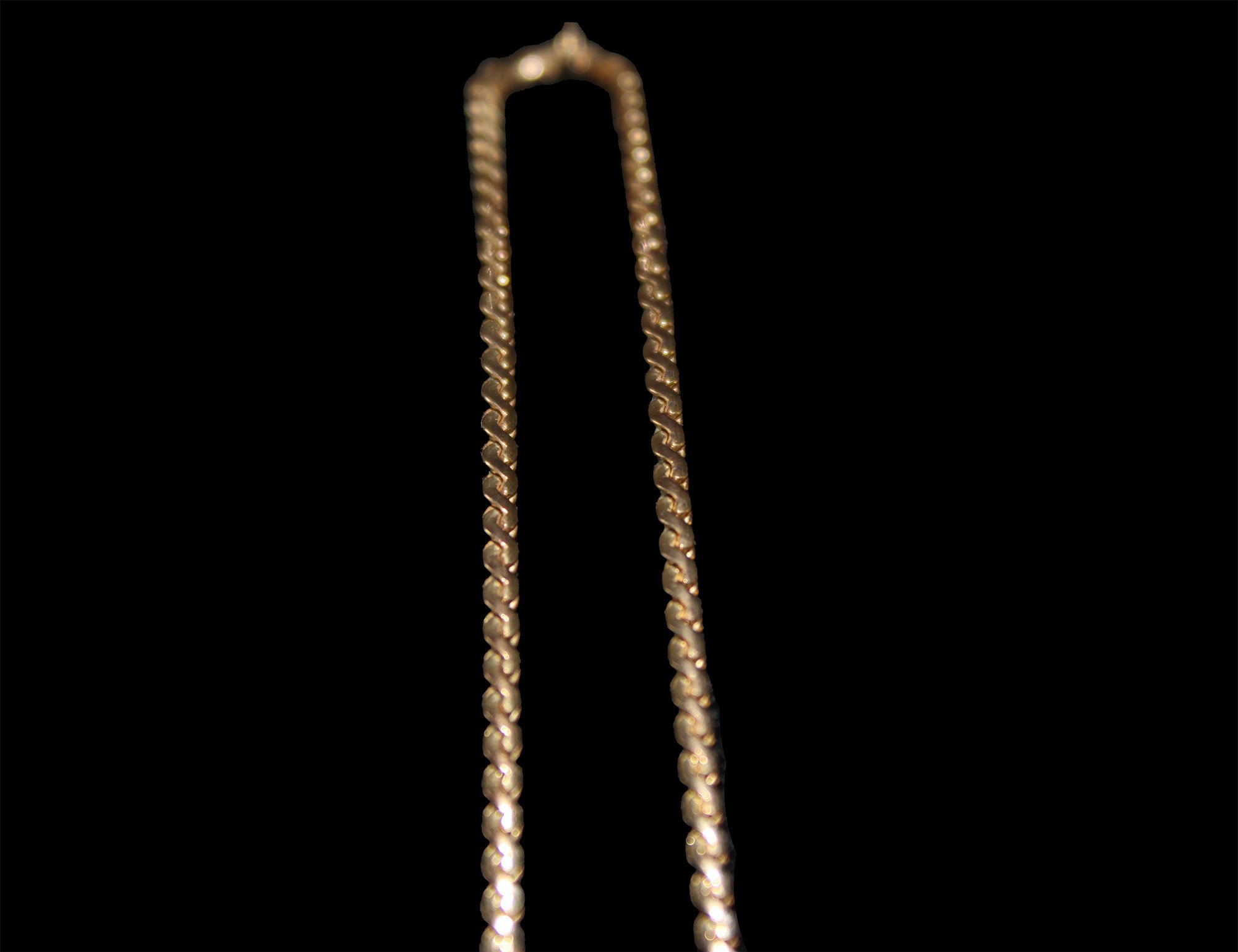
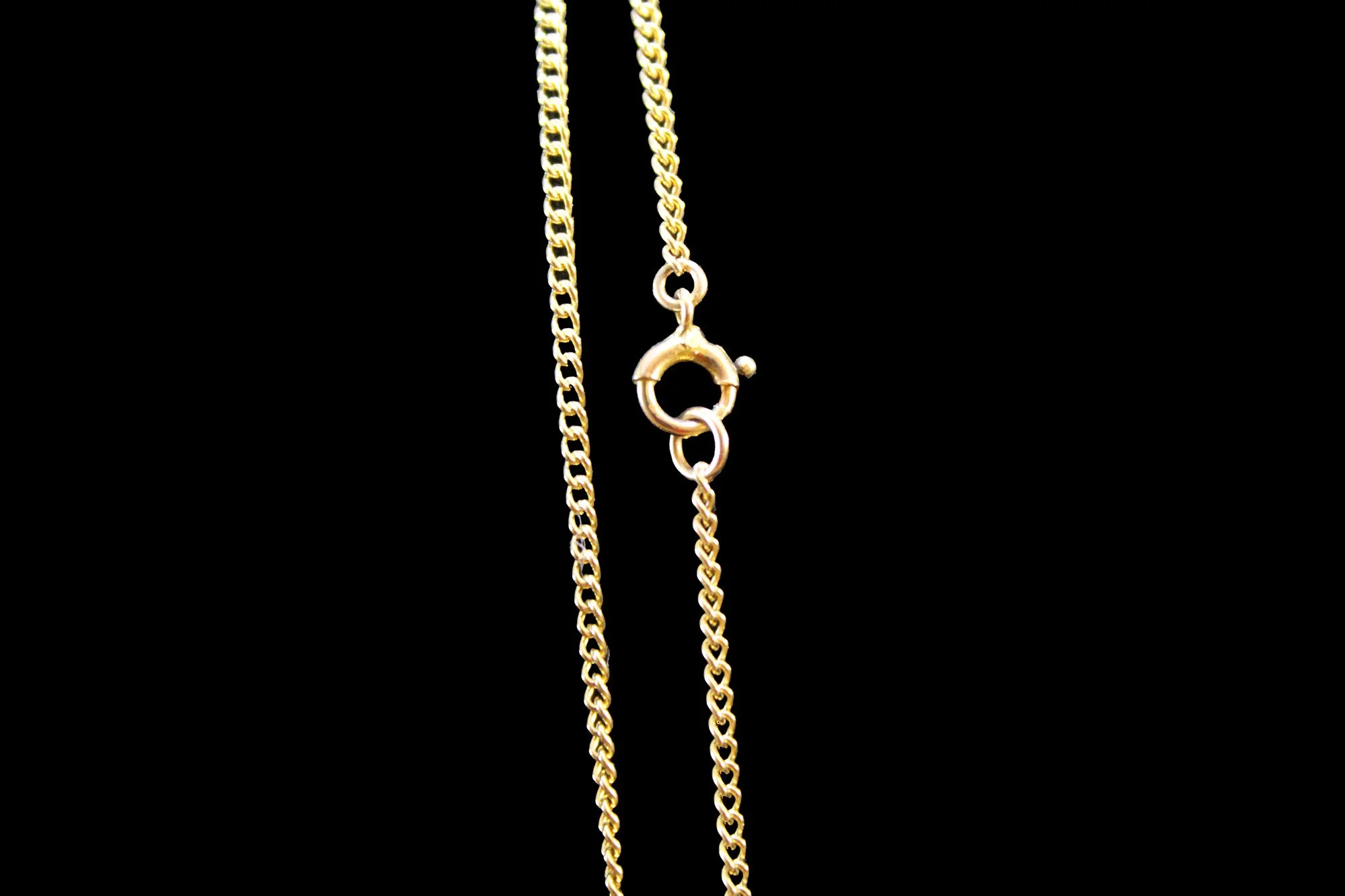
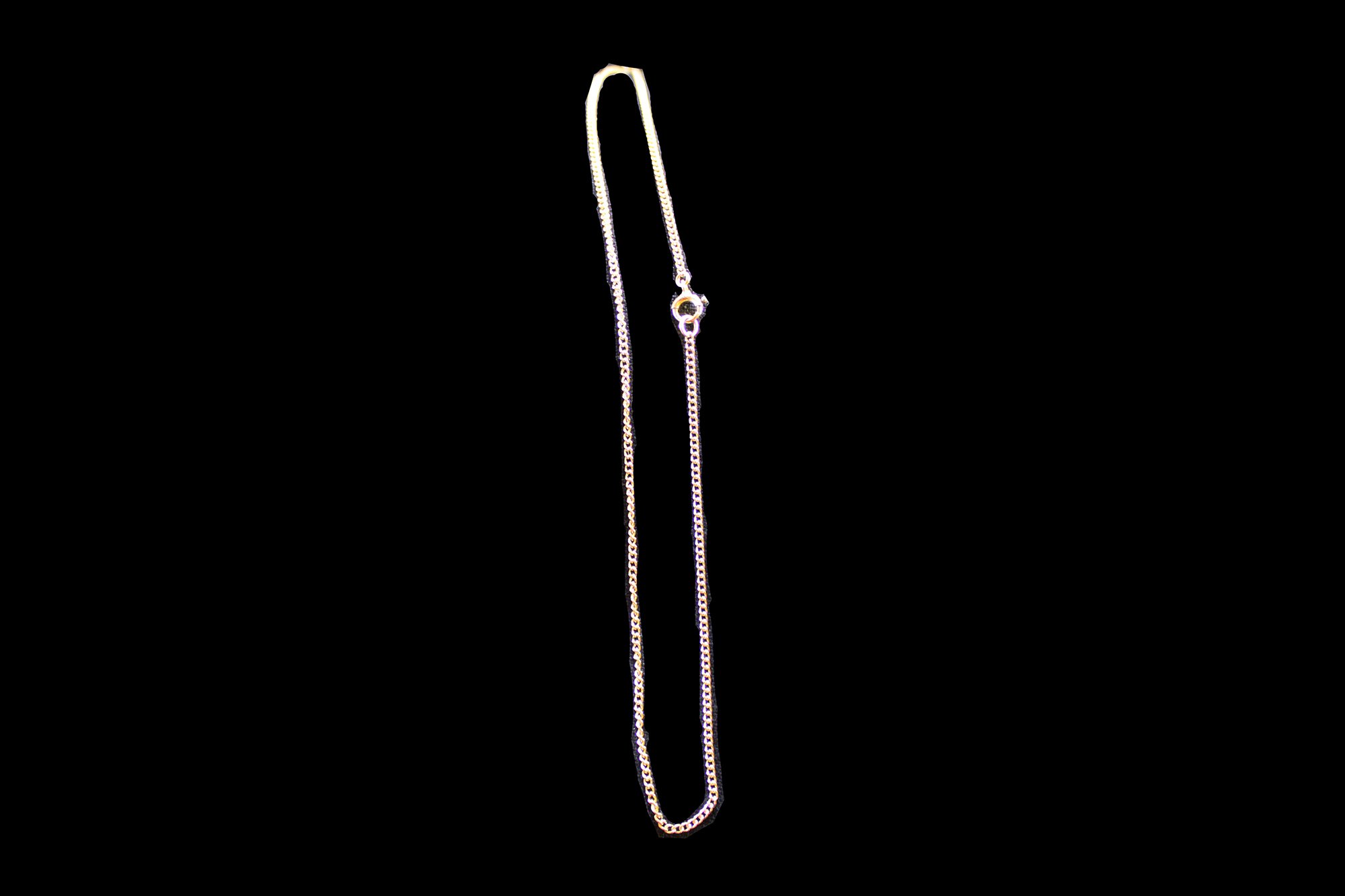
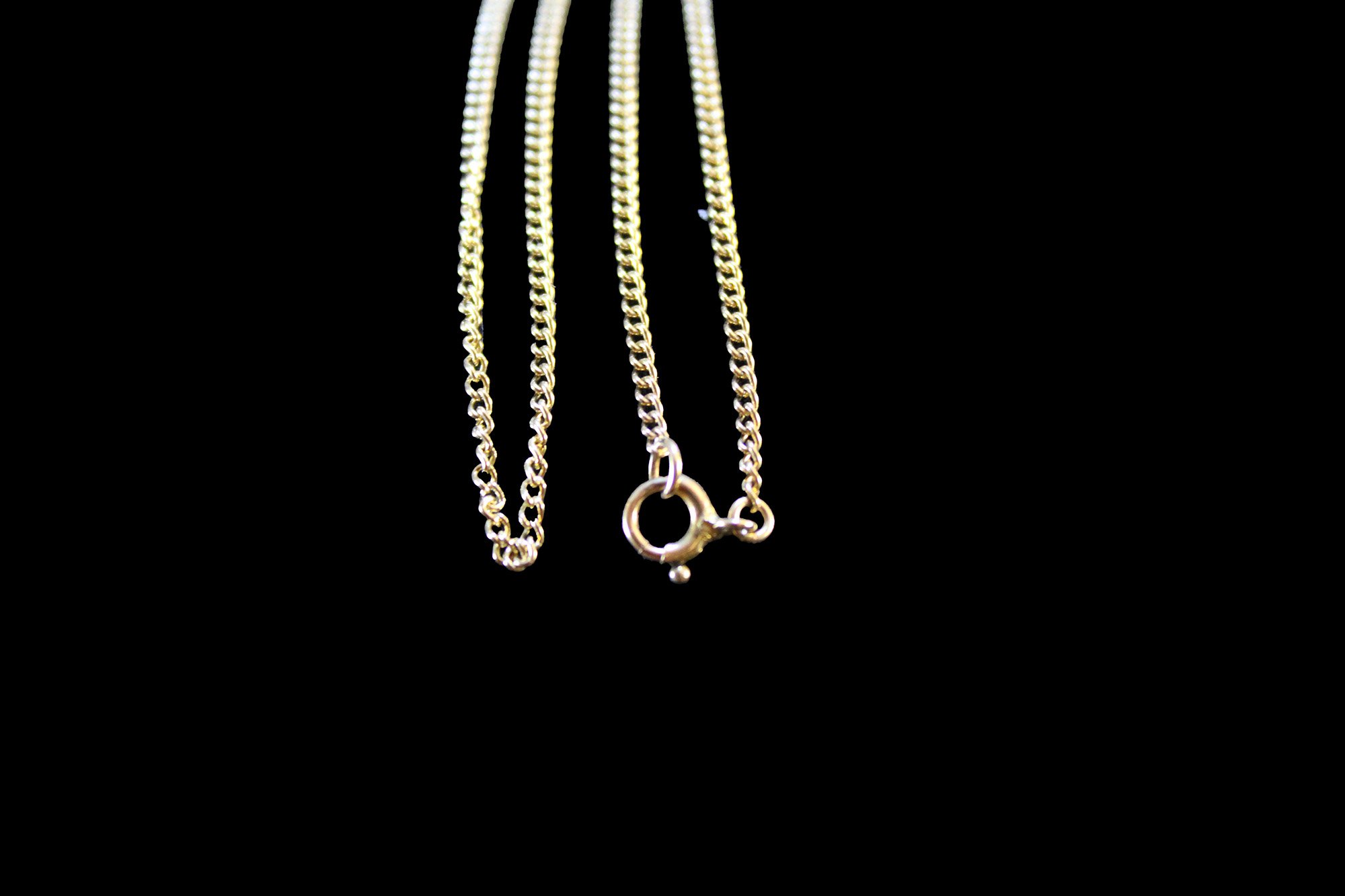
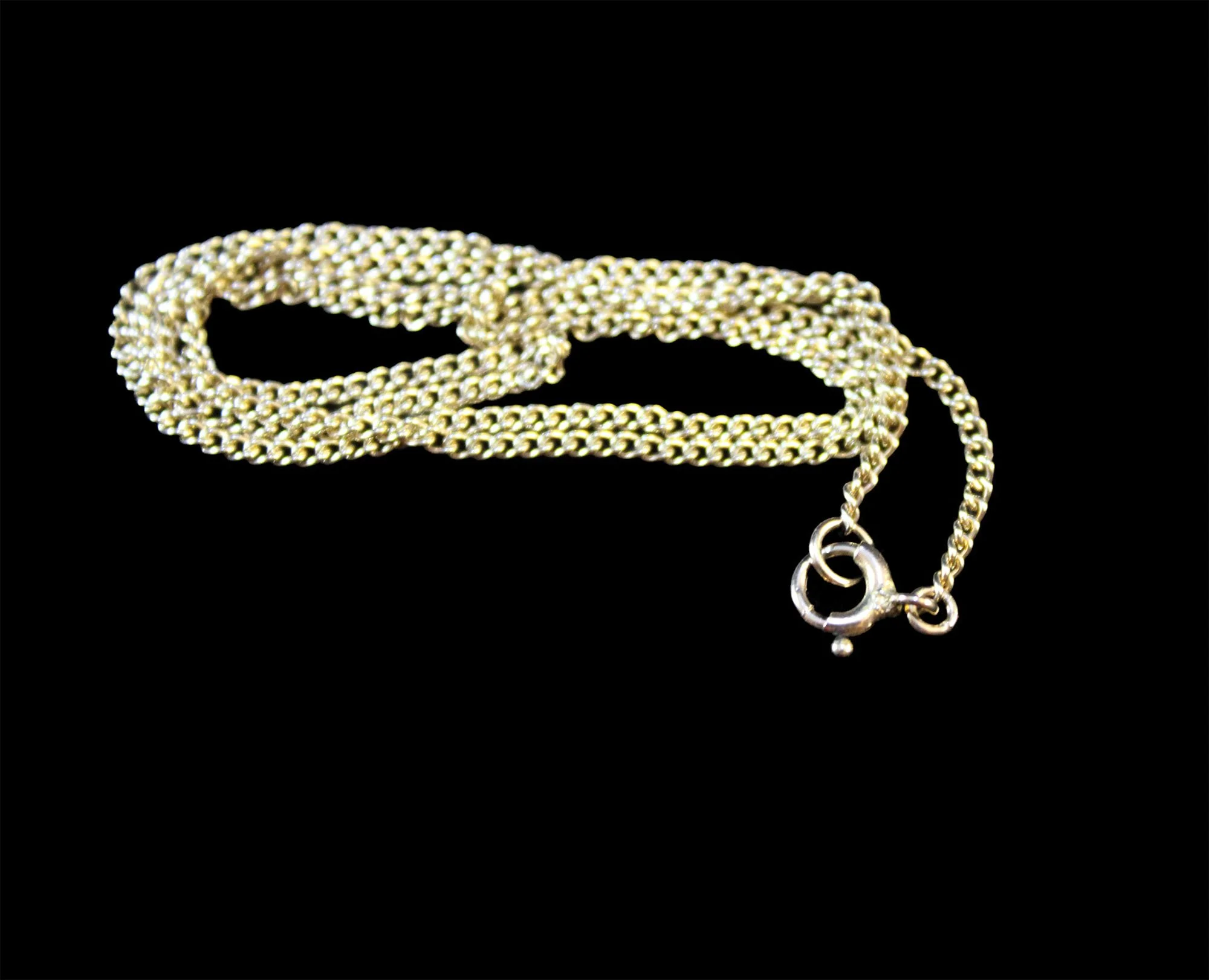
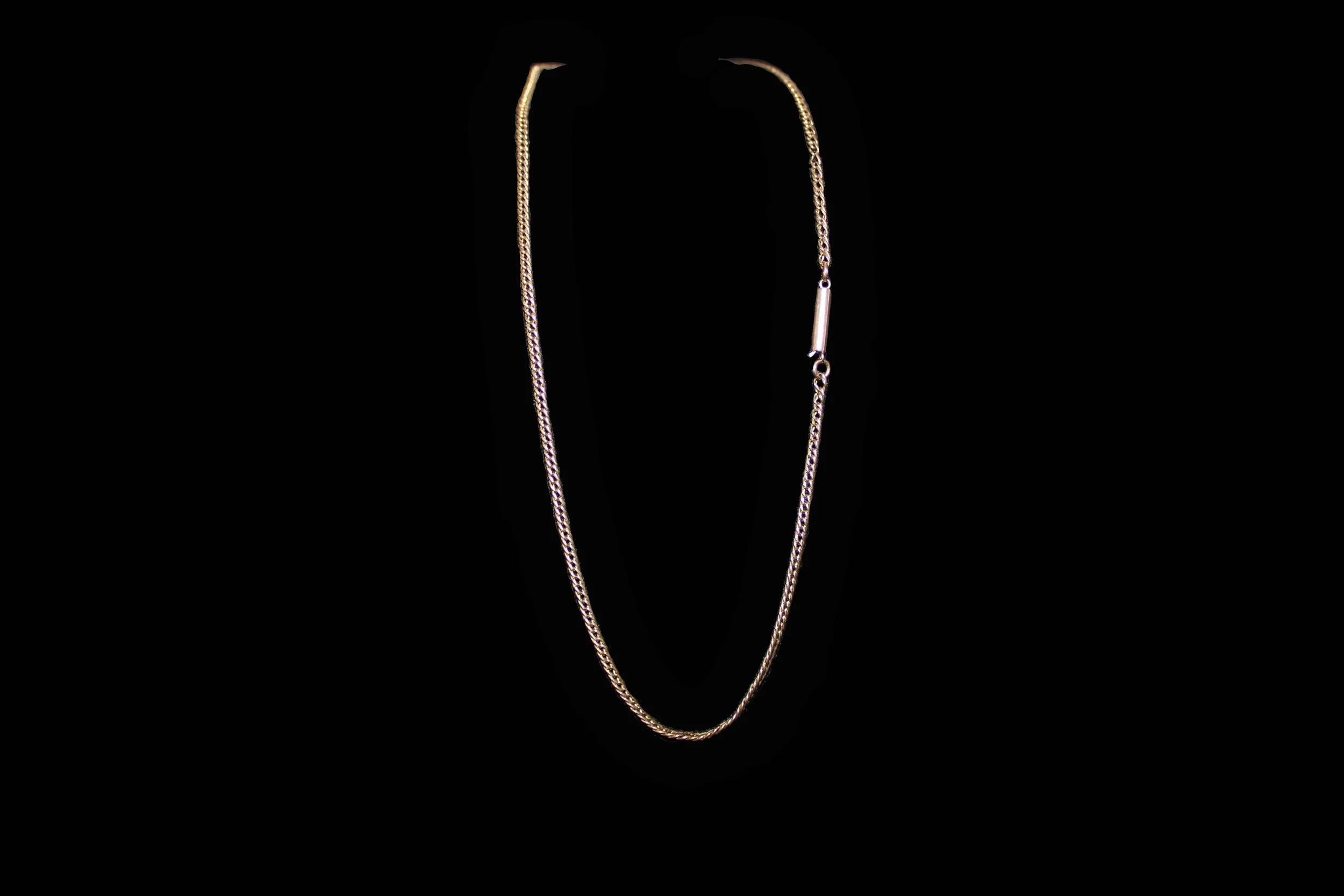
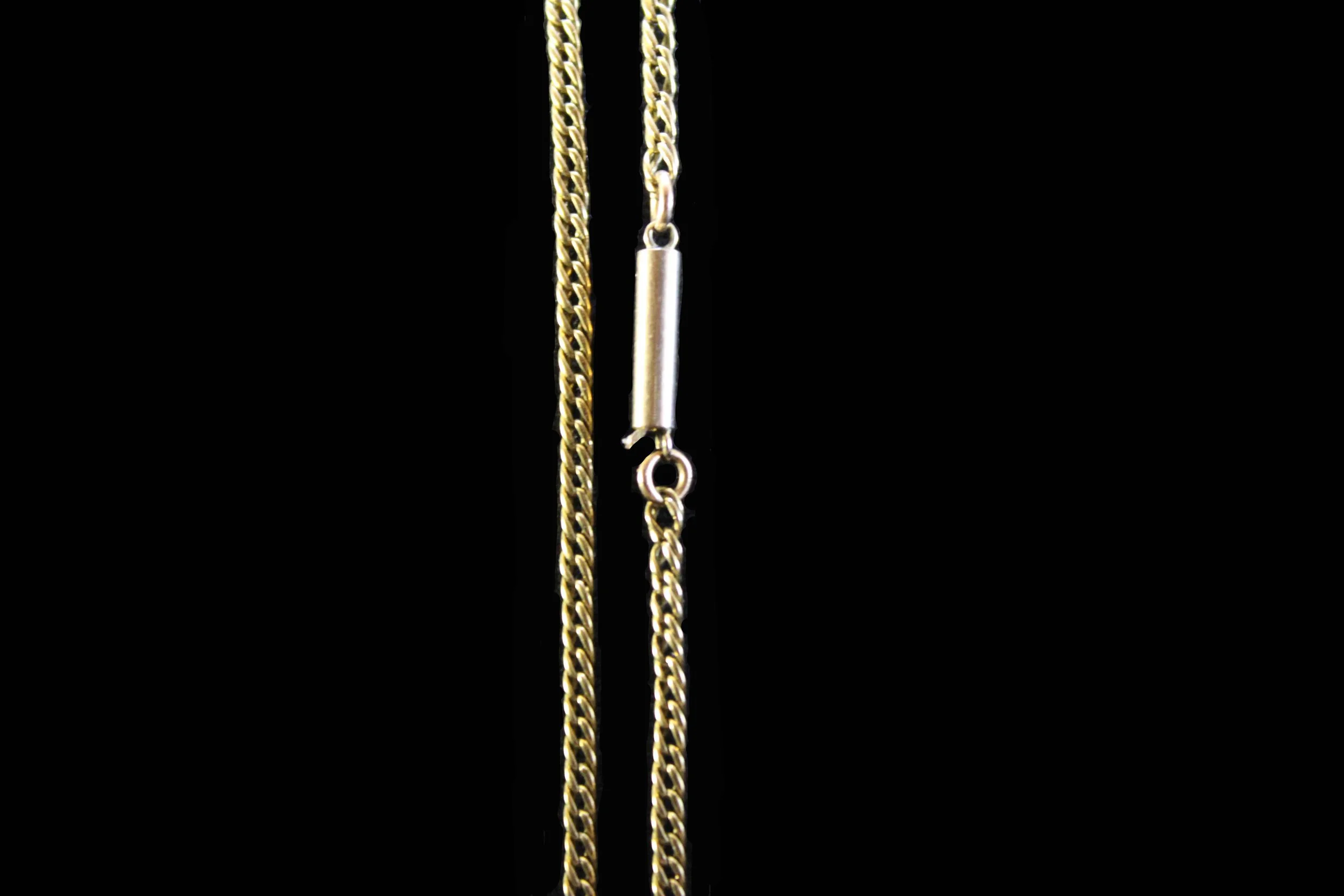
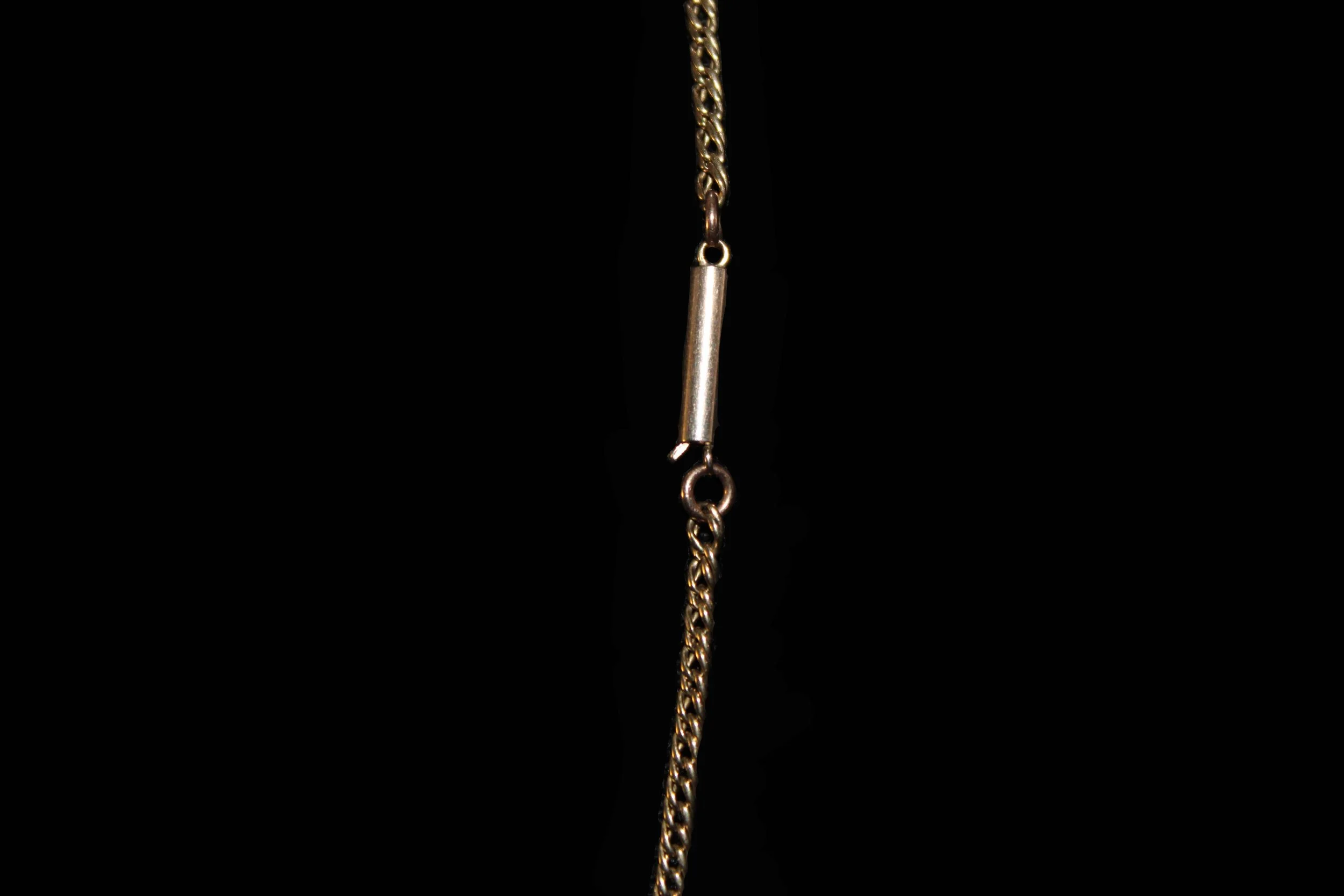
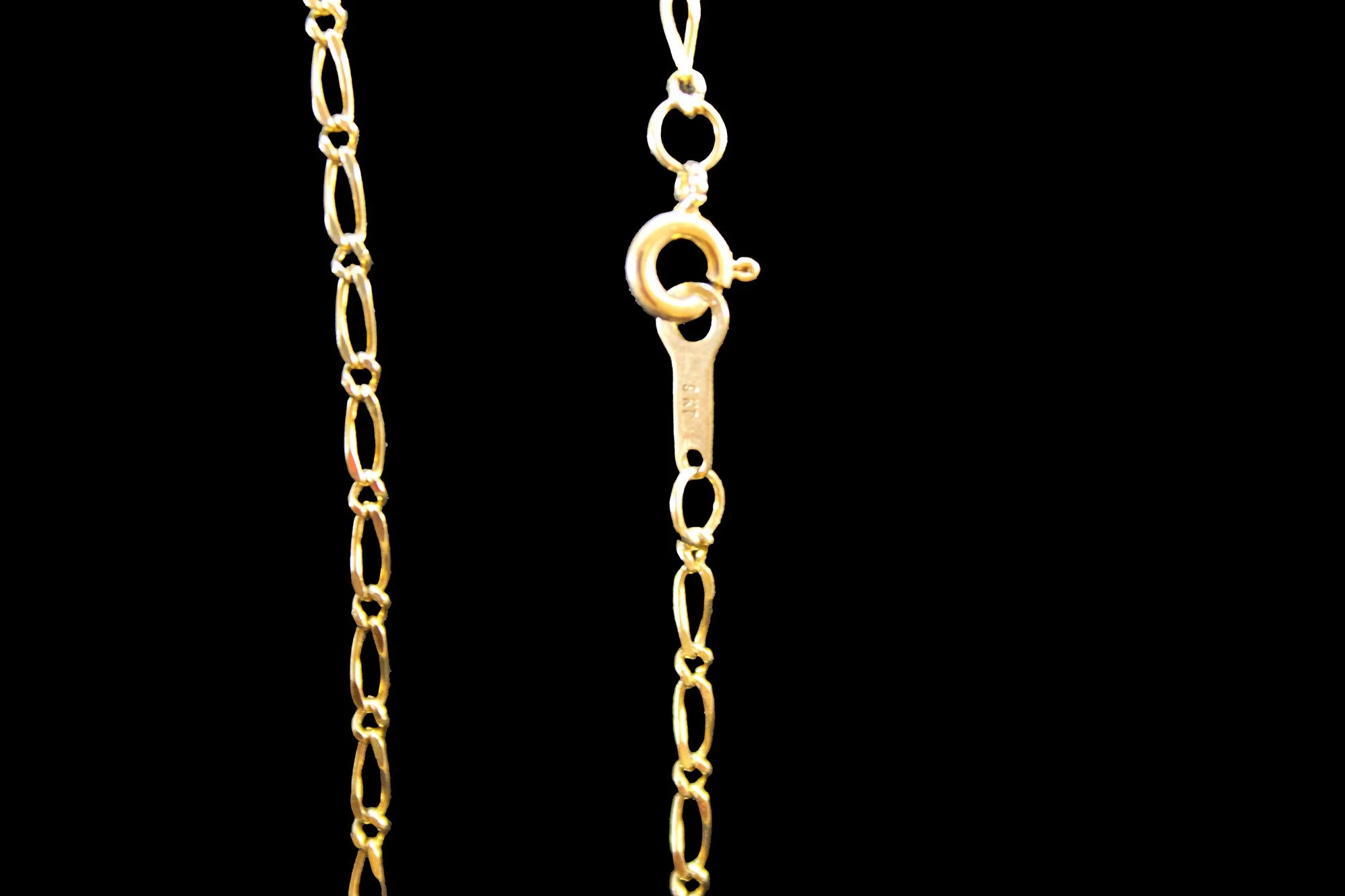
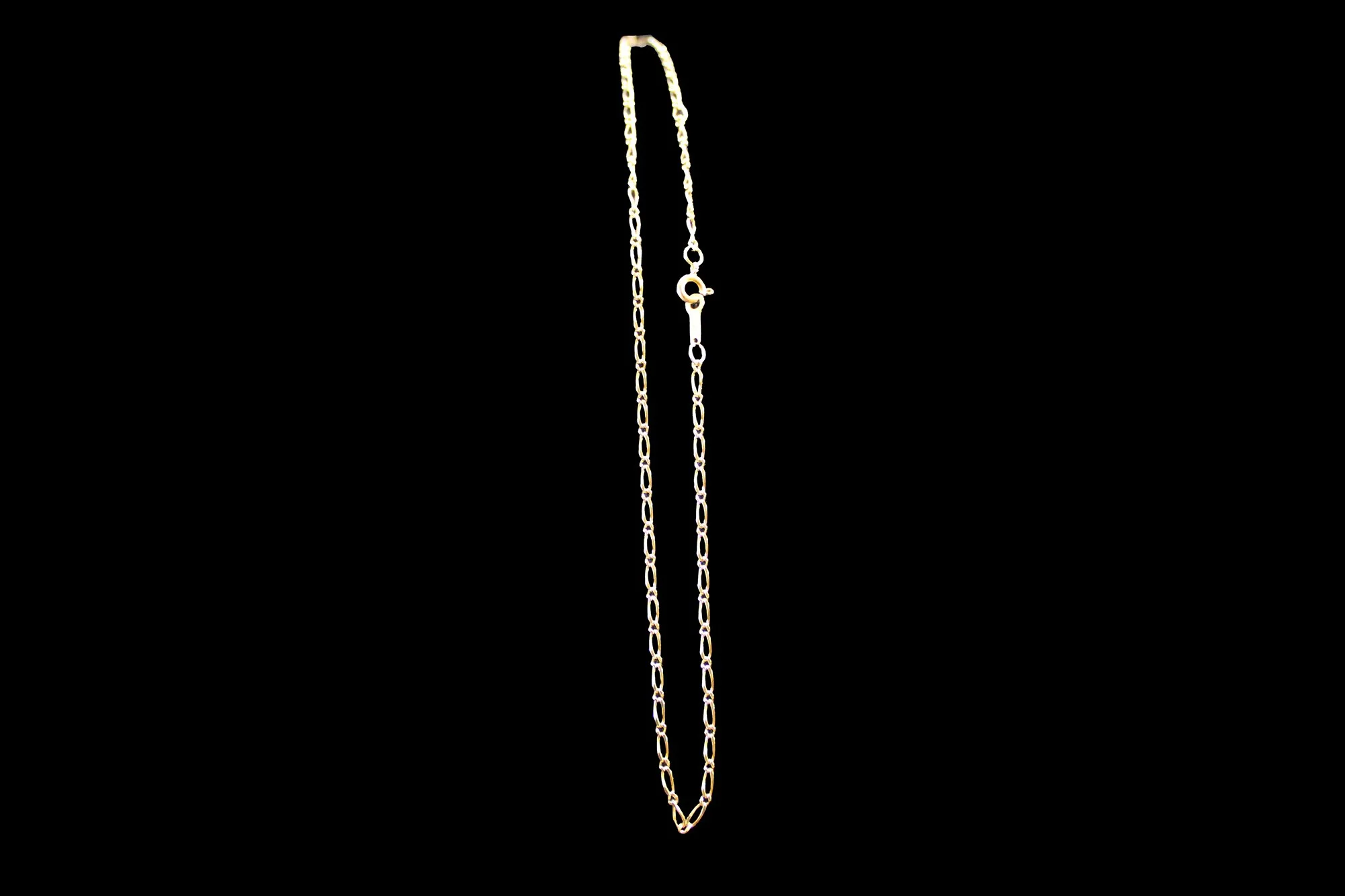
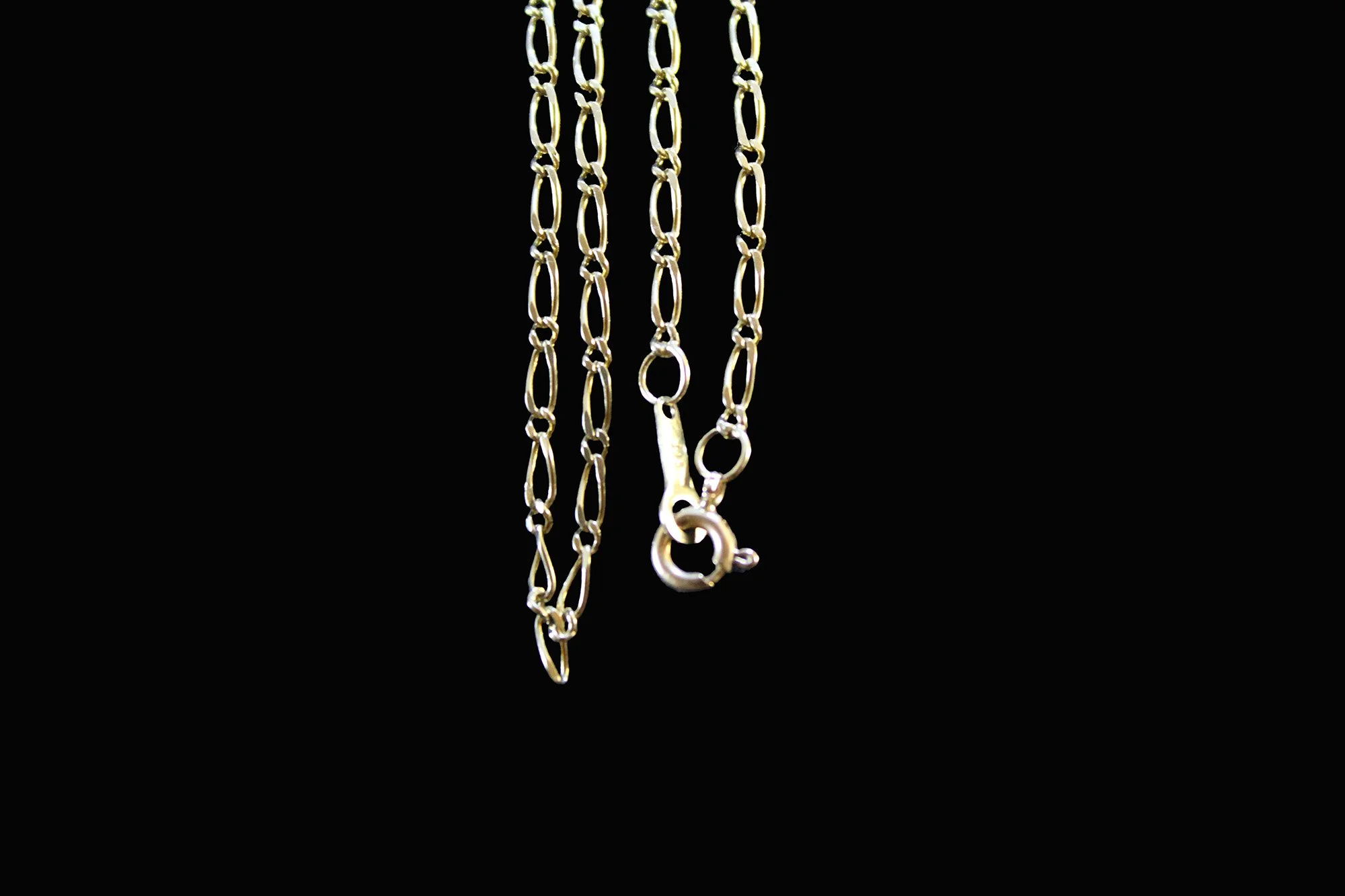
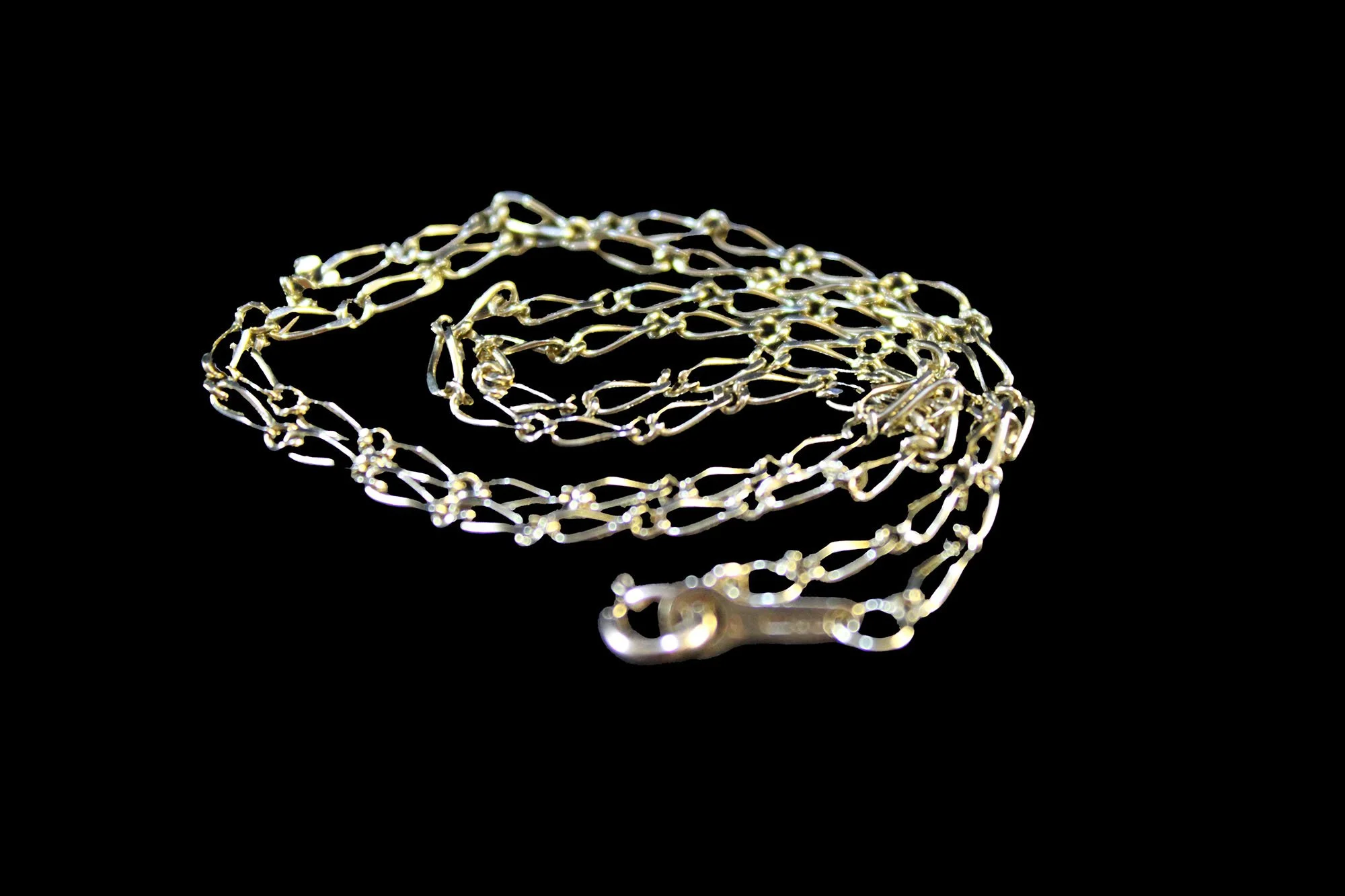
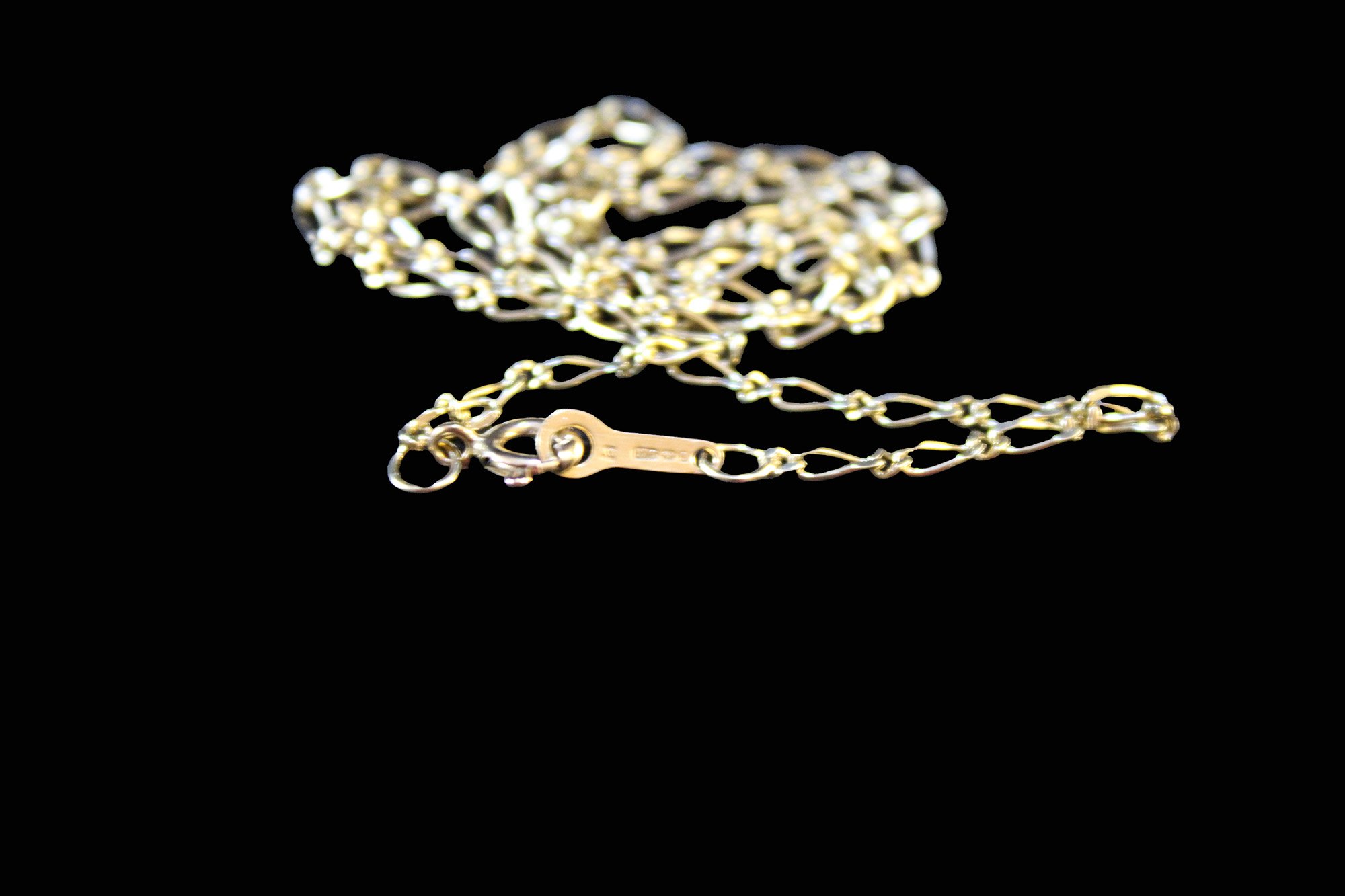
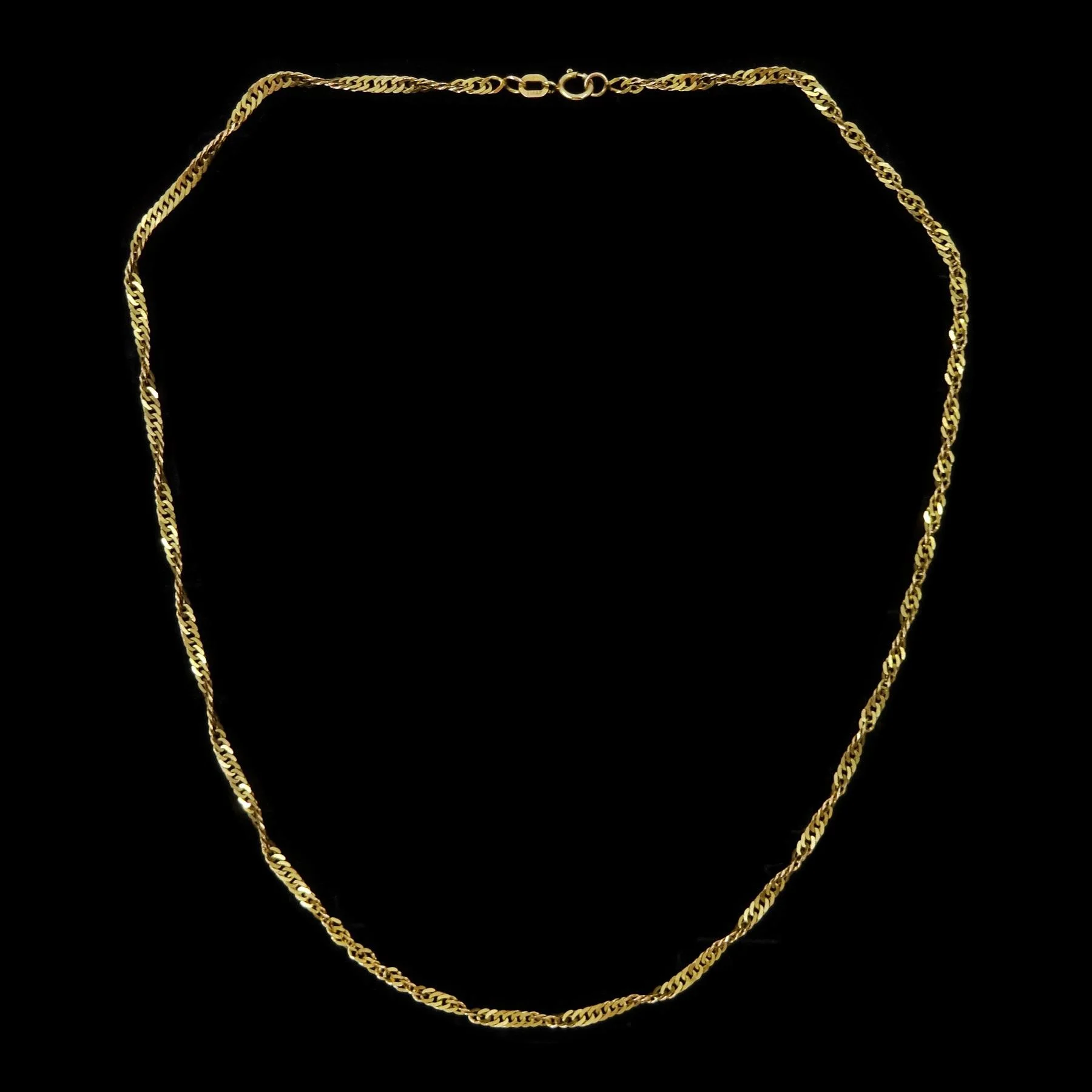
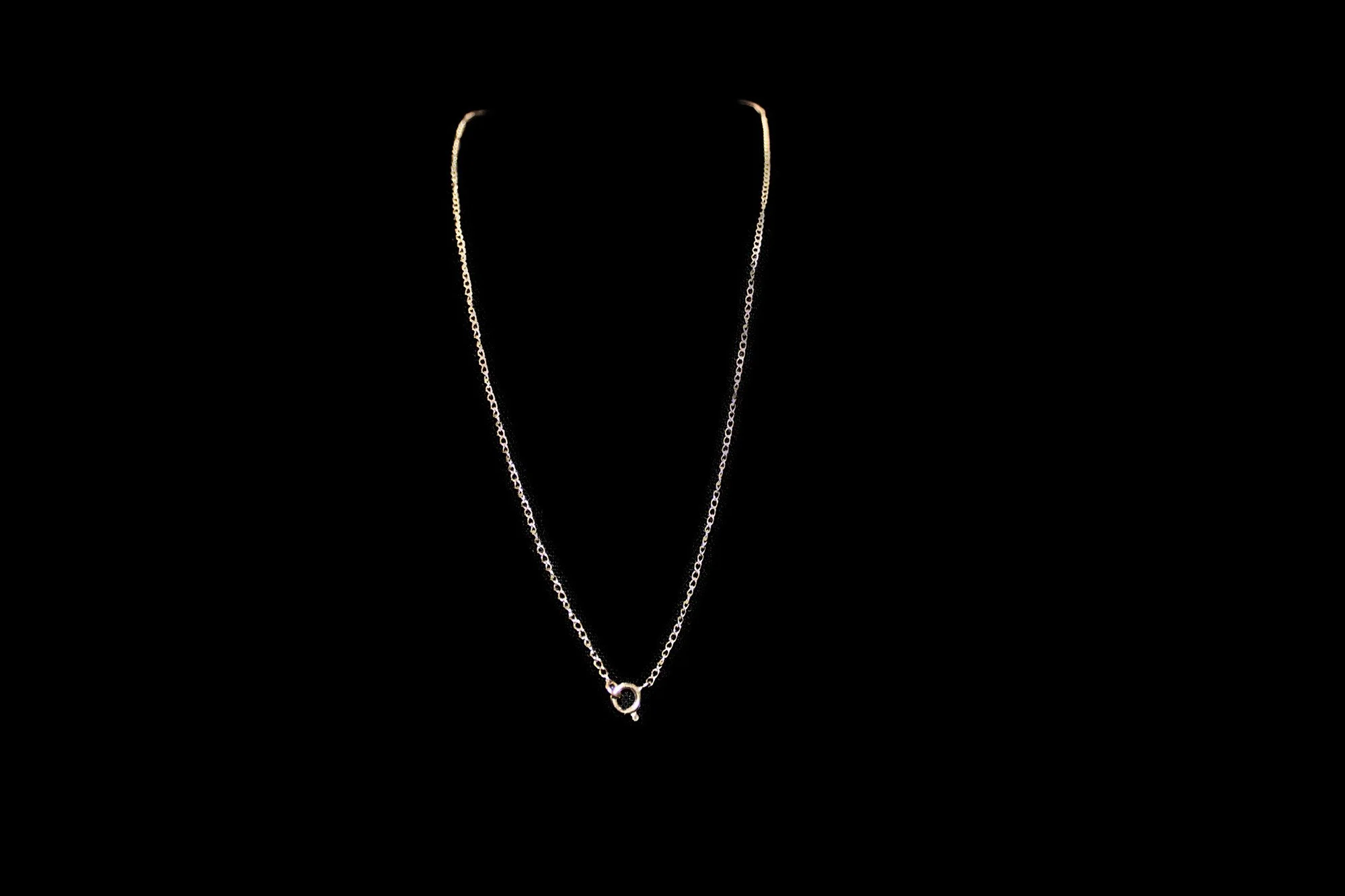
This delicate Victorian cable link chain is composed of a continuous series of small, round interlocking links formed from fine 9-karat gold wire. Each link is individually shaped and joined to create a flexible yet durable chain with a refined, understated profile.
Cable chains such as this were among the most widely used forms of chain construction in the nineteenth century. Their strength and simplicity made them ideal for suspending small pendants, lockets, charms, and sentimental jewels—objects that frequently carried personal meaning in Victorian culture.
The chain terminates in a spring ring clasp, a fastening mechanism that came into common use during the late nineteenth century as jewelry manufacturing techniques became increasingly precise. The spring ring provided a secure yet discreet closure that did not interrupt the visual rhythm of the links.
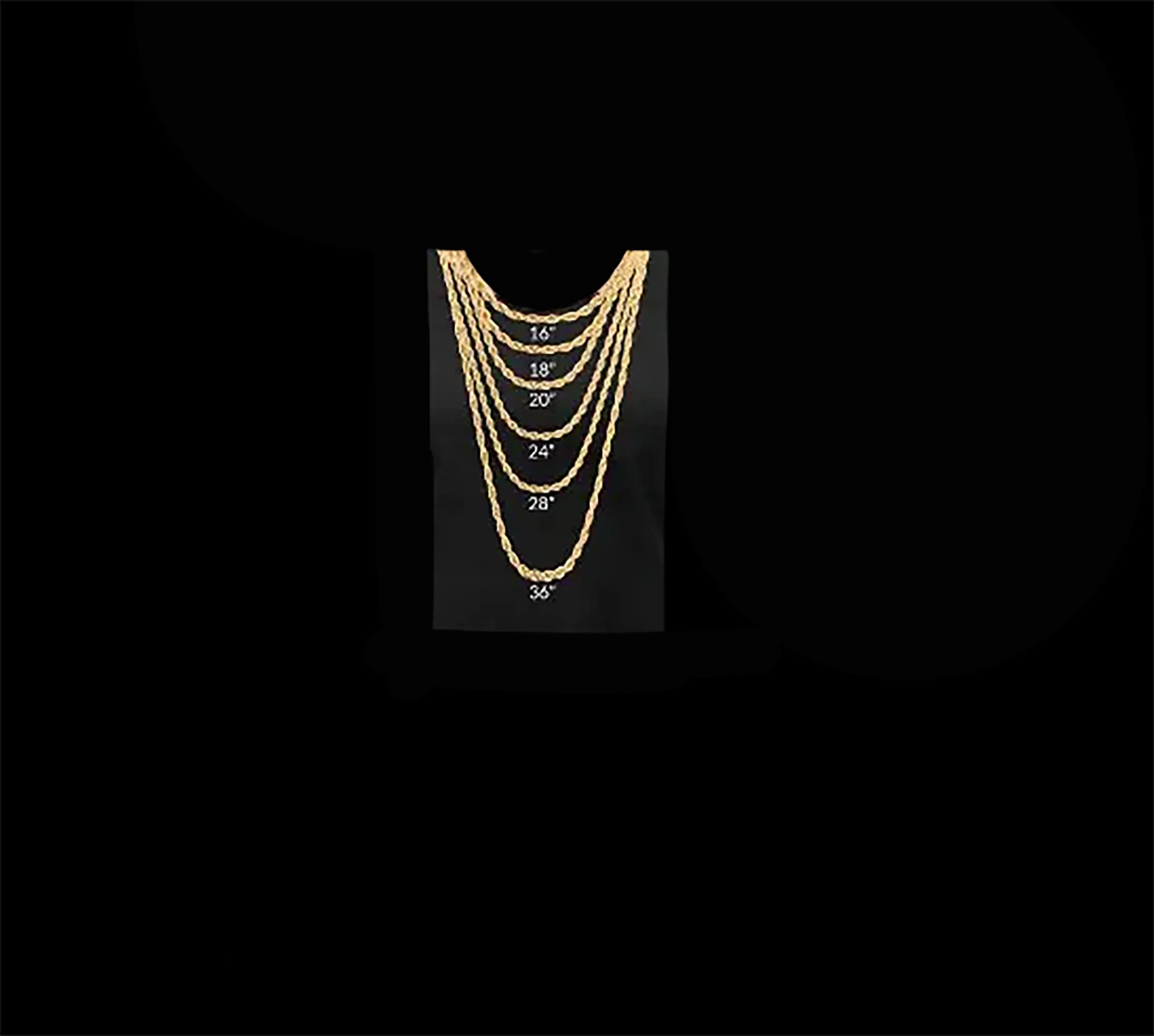
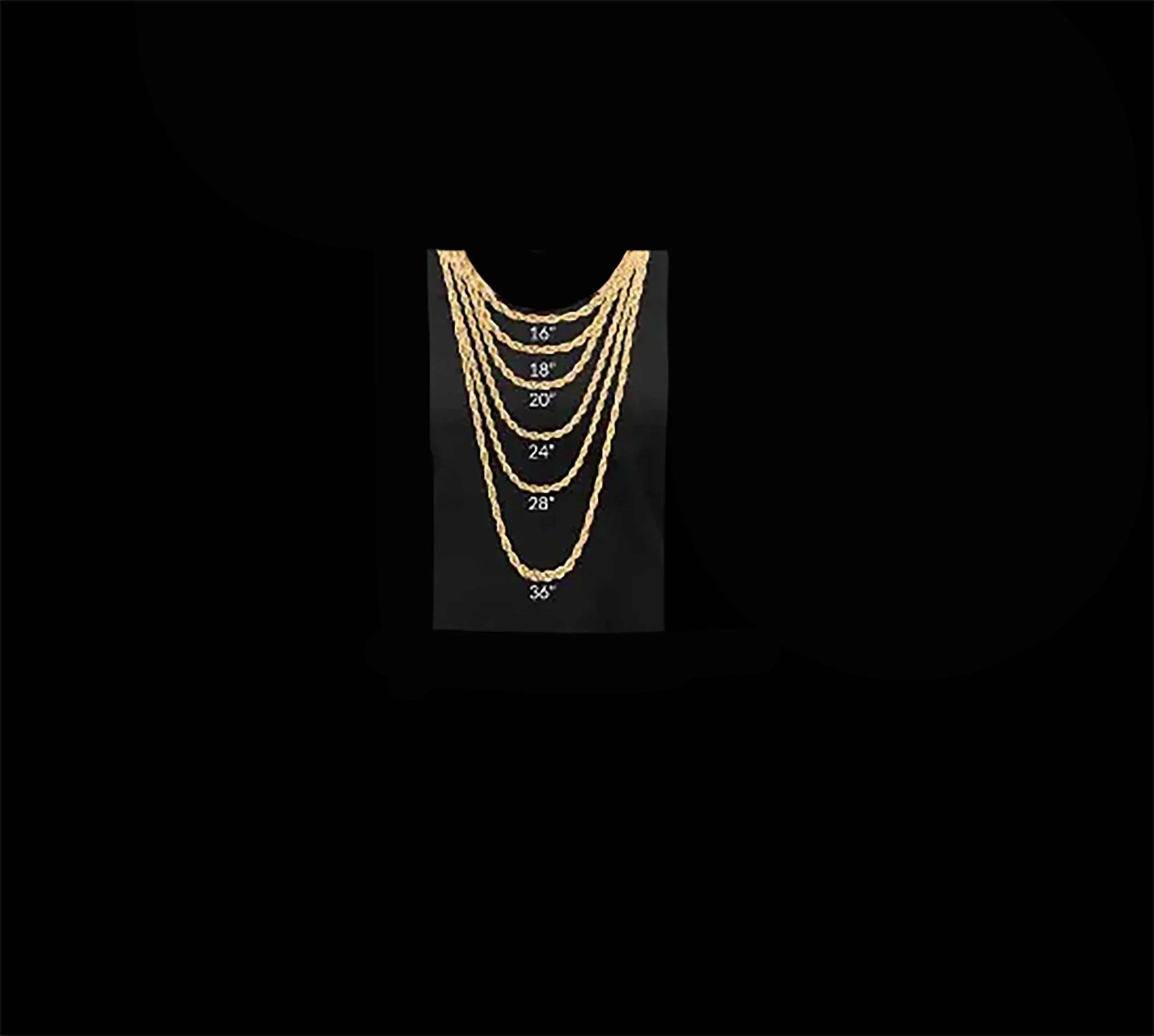
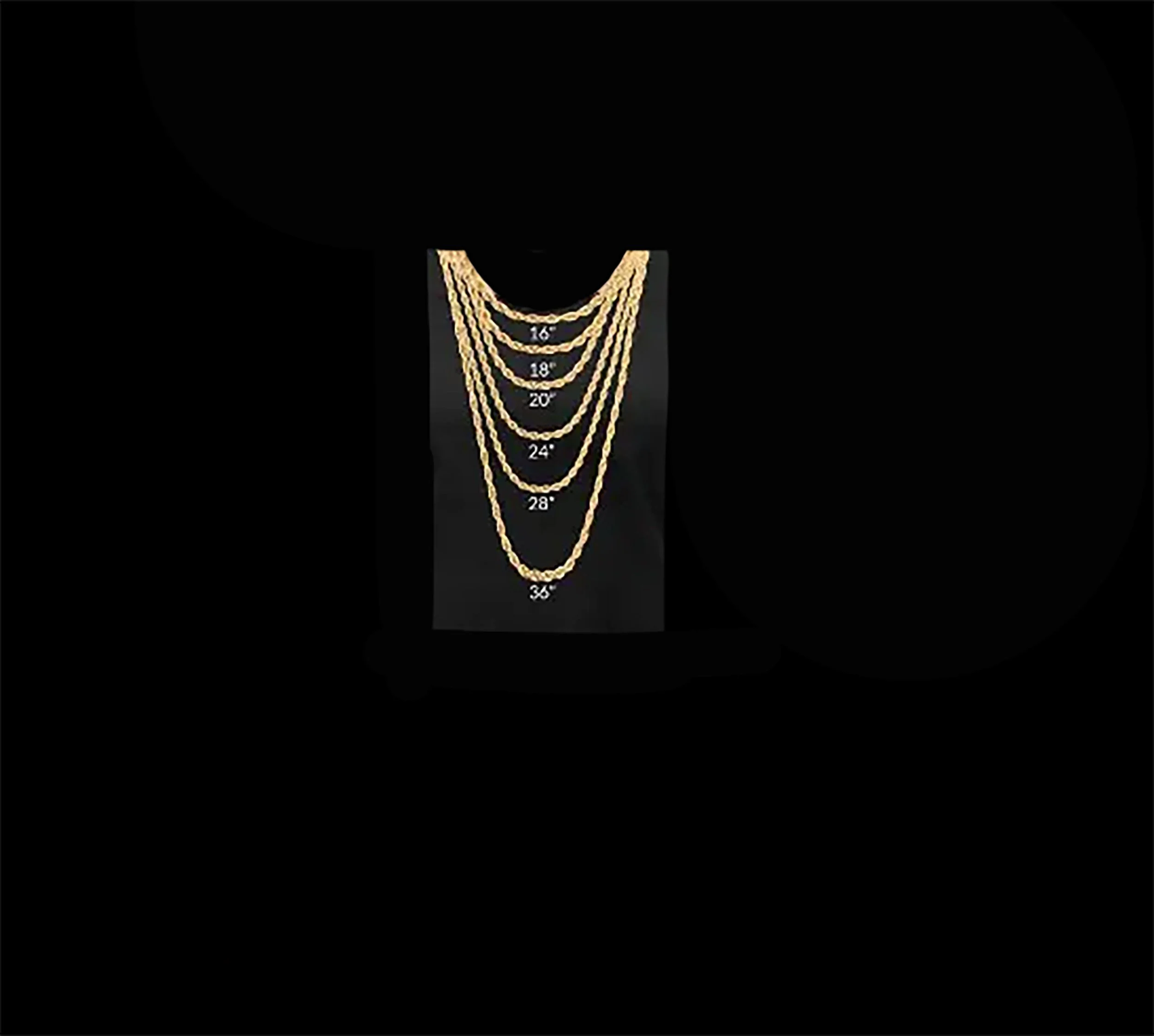
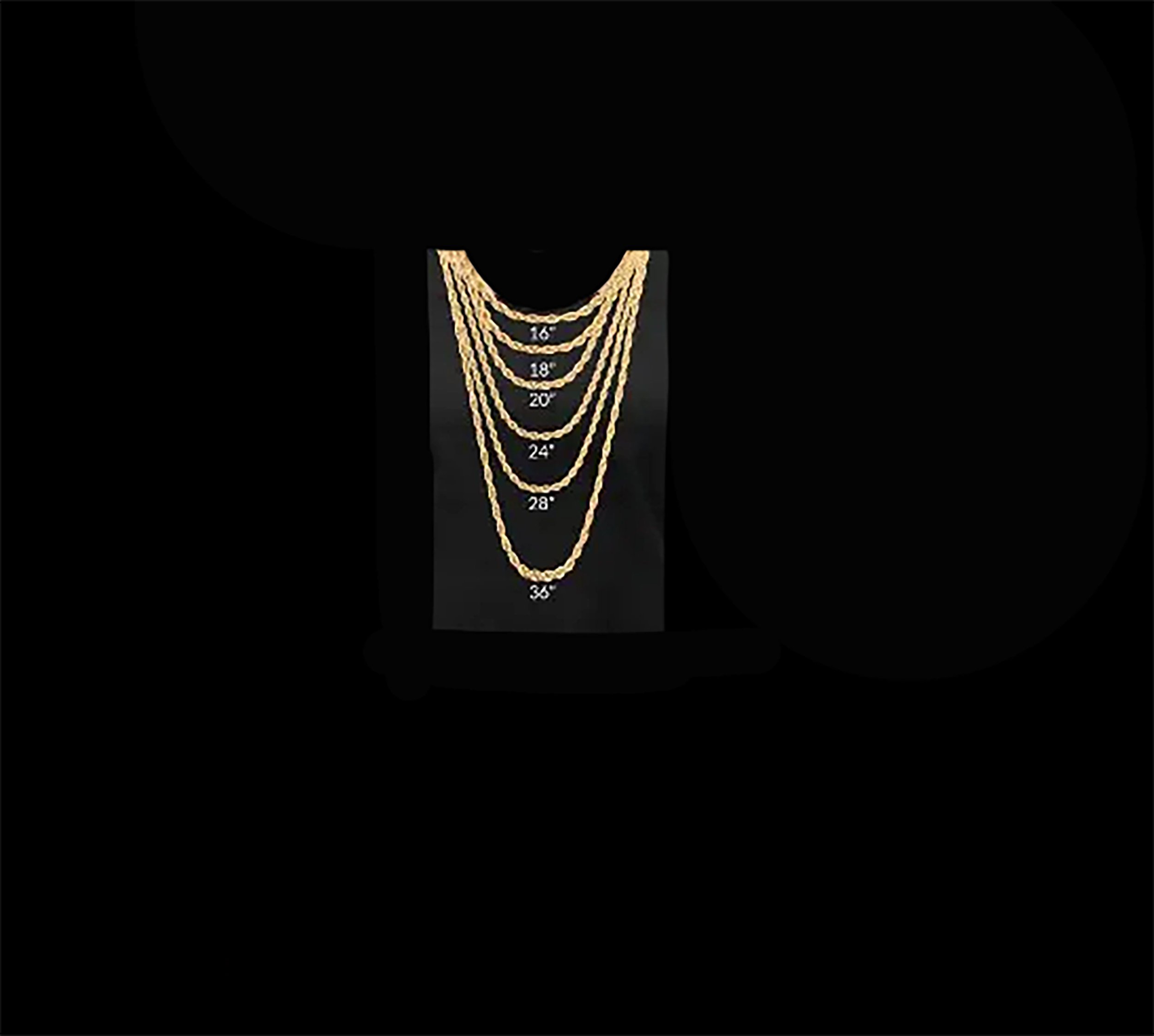
At 18 inches in length, the chain sits naturally at the collarbone, the most common wearing length for pendant chains during the Victorian period. Its light weight—only 2 grams—reflects the fine gauge of the gold wire and the restrained elegance favored in everyday Victorian jewelry.
Historical Context
Cable link chains were valued for their versatility and often accompanied:
lockets containing portraits or hairwork
seal fobs and watch keys
acrostic gemstone pendants
small devotional medals or sentimental charms