A rare late 17th-century gold memento mori finger ring, dating to circa 1680, discovered in situ in Dorset, England, and formally recorded under the British Museum Portable Antiquities Scheme (PAS: DOR-209E7D), with accompanying Treasure report submitted to H.M. Coroner in 2025.
This complete mourning ring is formed in solid gold with a subtly irregular, hand-wrought hoop—its gentle distortion bearing witness to both its age and burial history. The exterior is engraved with a skull in three-quarter profile, a striking and deeply symbolic emblem of mortality. The skull’s hollowed eyes and incised contours evoke the stark visual language of 17th-century funerary art, designed not merely as ornament but as meditation.
The interior bears a finely engraved italic inscription, partially legible as:
“J : J : 06 : 20 : Jan : 80”,
suggesting a commemorative date—likely January 20, 1680—marking the death of an individual now lost to history. The presence of a maker’s mark, possibly depicting a handled ewer, further anchors the ring within the goldsmithing traditions of late Stuart England.
Memento mori rings such as this were intimate objects of remembrance, worn daily as physical and spiritual prompts of life’s transience—“remember you must die.” Unlike later Victorian mourning jewelry, these earlier examples are austere, intellectual, and deeply rooted in religious contemplation.
Recovered from the earth over three centuries after its creation, and accompanied by official documentation and find records, this ring represents not only a personal relic of grief, but a rare and archaeologically significant survival of post-medieval English material culture.


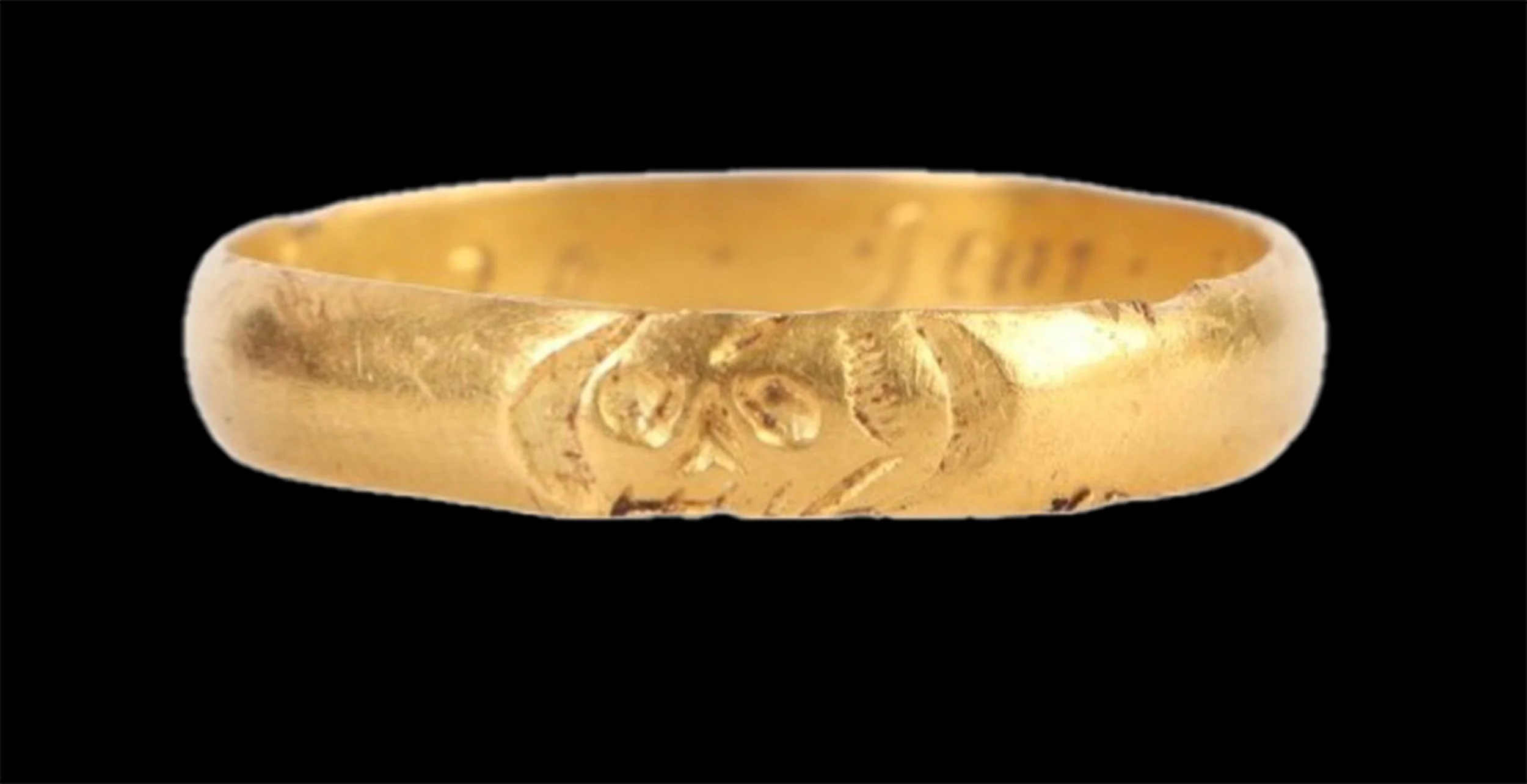 Image 1 of 8
 Image 2 of 8
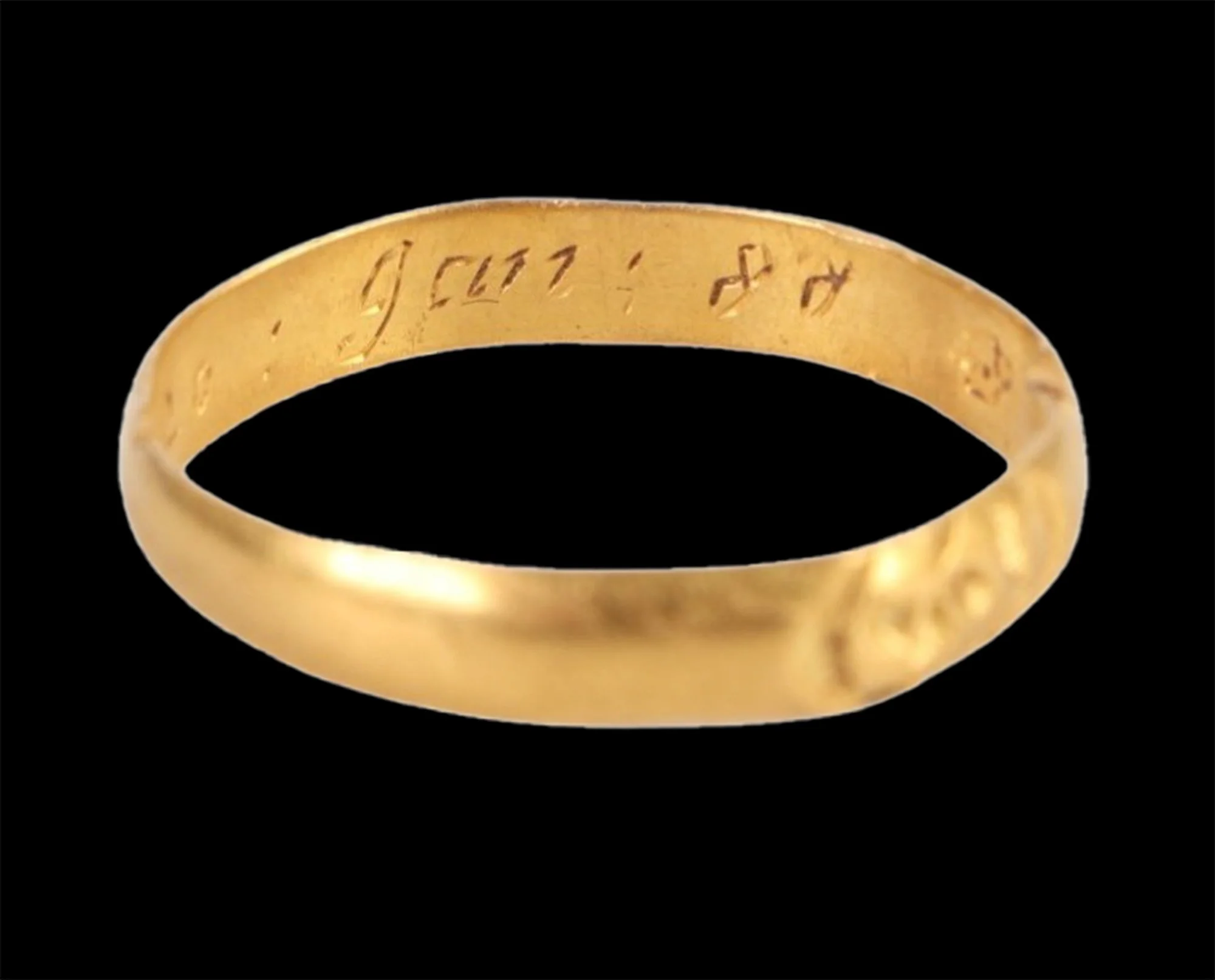 Image 3 of 8
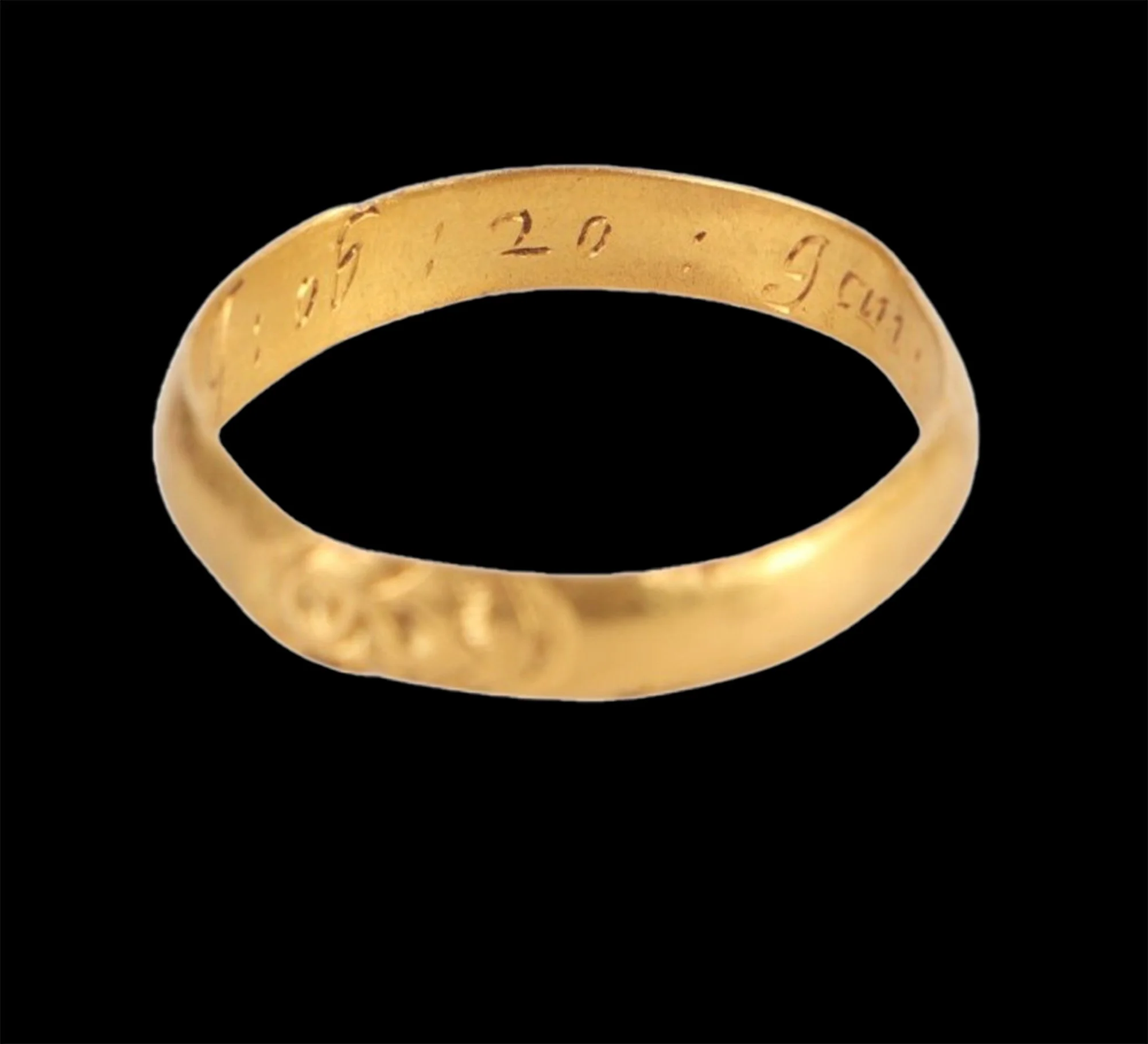 Image 4 of 8
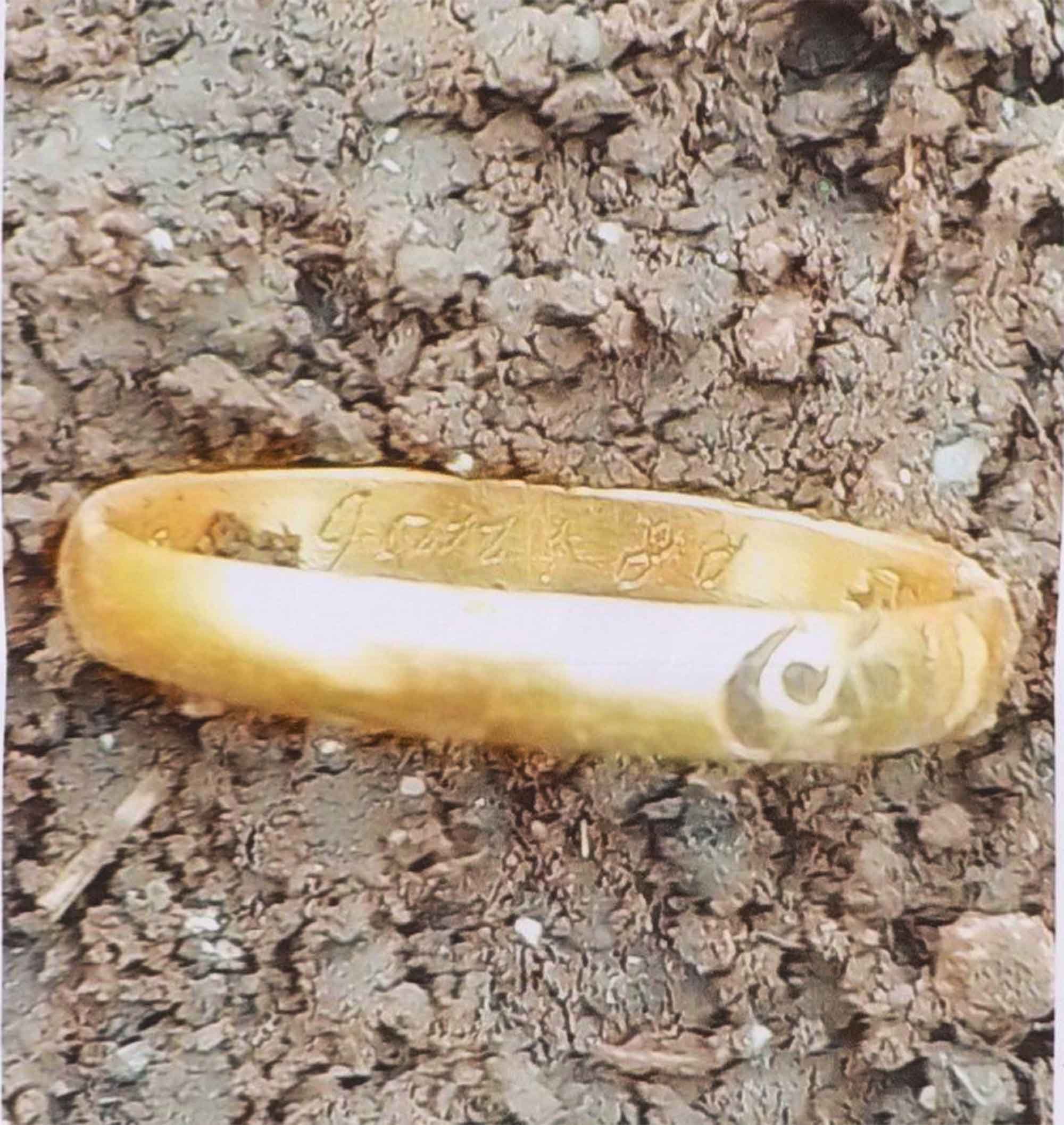 Image 5 of 8
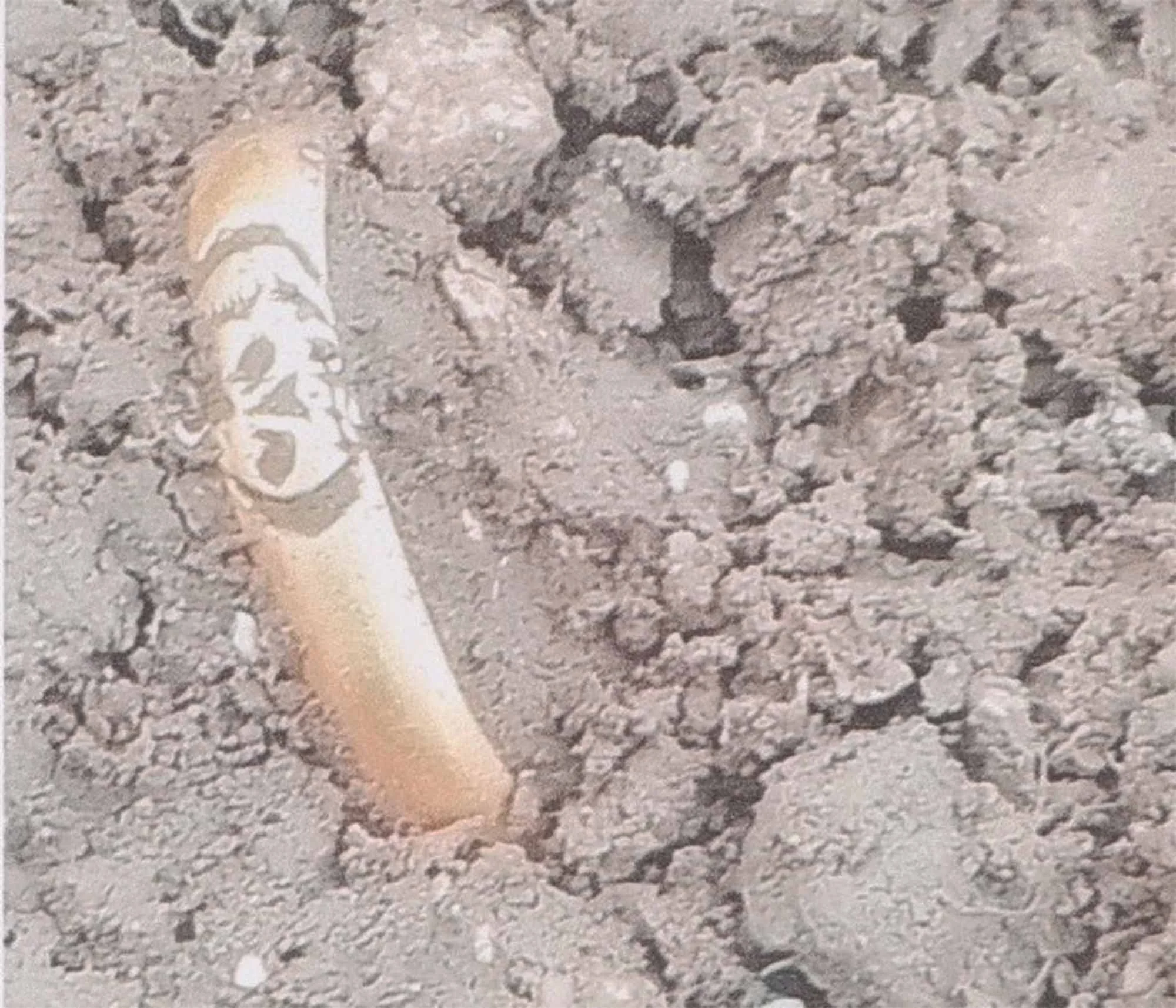 Image 6 of 8
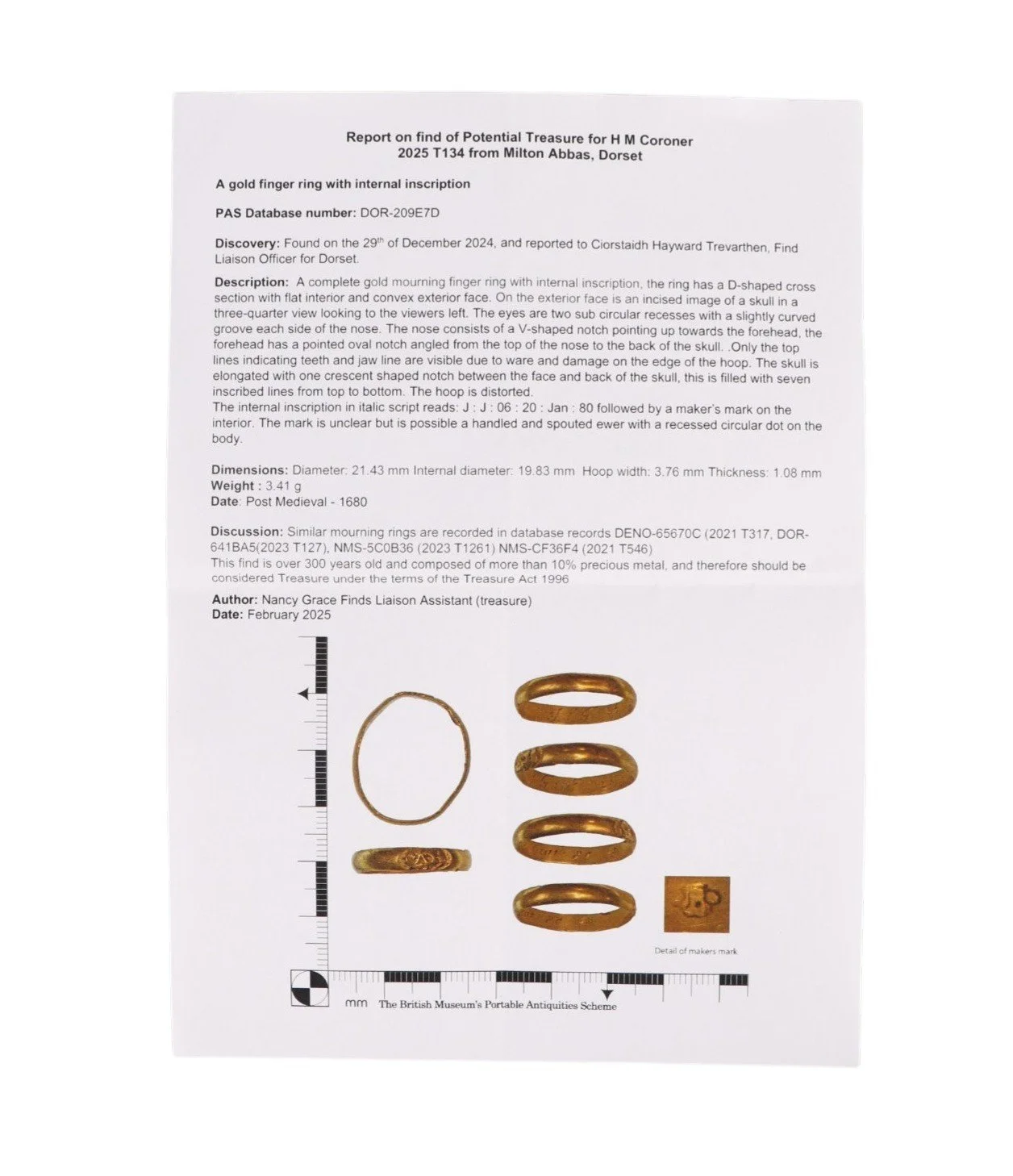 Image 7 of 8
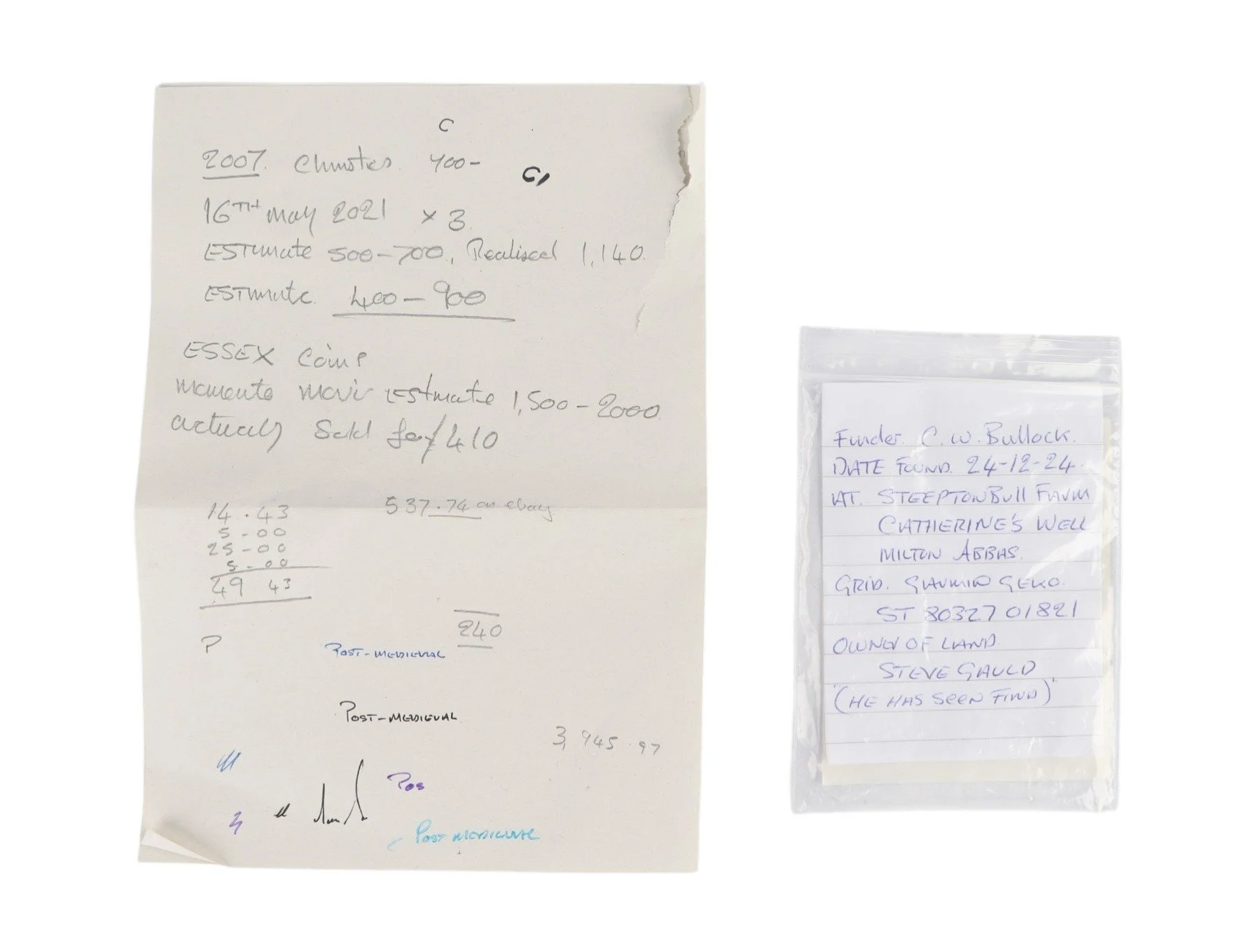 Image 8 of 8